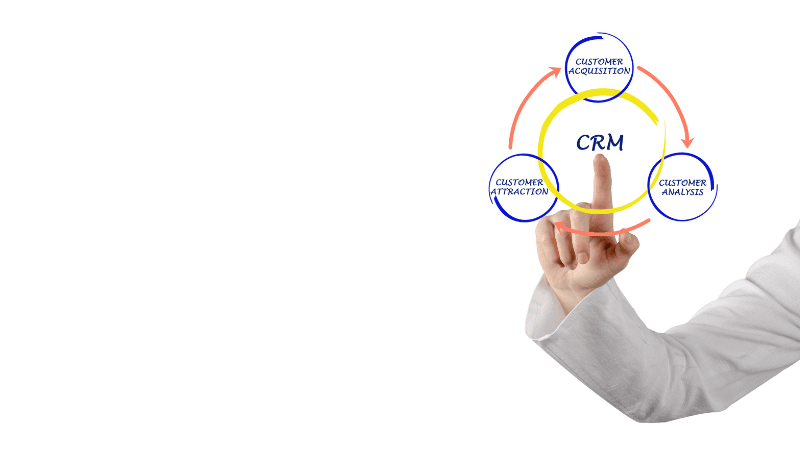
How does a CRM system help increase customer return rates?
If you run a service business, especially in the beauty industry, you've probably encountered similar situations: losing loyal customers, your team forgetting complete customer details, promotions not being sent to the right people, or unintentionally losing customers due to communication across multiple channels. These problems are not minor issues, as they ultimately impact sales and the credibility of your business.
The good news is that you no longer need to rely on the memory of your admin or store owner. If you set up the system well from the start, many businesses are already seeing the results of a CRM system that actually increases repeat business because it makes customer care "consistent and measurable," not just based on the team's mood or free time.
If you want an objective overview of CRM systems for service businesses, how they work, and how they can truly solve structural problems in your store, you can find more information from system-based resources such as https://alvibeauty.com/th-th/crm_info.
What is a CRM system, and why should businesses use it?
Many people hear the term CRM and think it's an IT or system for large companies. But for service businesses, it's a tool that helps "remember customers for us" and helps teams work more systematically.
A Customer Relationship Management (CRM) system integrates customer information, appointments, service history, contacts, and communication results in one place. It provides a clearer overview of each customer's past actions, preferences, frequency of visits, and how to best follow up with them.
The benefits of a CRM system for beauty salons and cosmetic clinics.
If you own a beauty salon or clinic, you'll immediately understand why "data" is just as important as "skill." Customers often return because of the experience and attention to detail, not just because of low prices. This is the clear benefit of a CRM system in the service industry.
Collecting all customer information in one place.
Collecting data scattered across notebooks, Excel spreadsheets, or multiple chat apps makes it difficult for teams to keep up and miss details. However, with a centralized customer data collection, everyone sees the same data, reducing errors and enabling seamless collaboration.
Understanding customer behavior for precise marketing.
Casting a wide net can annoy customers, but if you know who prefers which services, how often they visit, and what kind of promotions they respond to, you can plan more accurately. Analyzing customer behavior allows you to develop offers that people truly "want" to receive.
Reduce costs and increase sales efficiency.
Team time is money for the store. If the team is spending time chasing information, answering repetitive questions, or fixing missed appointments, a system can help reduce redundant work, giving you a clearer view of sales KPIs or campaign results through an easy-to-understand CRM dashboard and reports.
Increase the chances of repeat sales.
Service businesses thrive on repeat customers because the cost of acquiring new customers is always higher. With a customer management program that tracks return cycles, businesses can plan to offer packages/courses/additional services at the right time, rather than simply waiting for customers to remember and contact them.
Improve customer care to be more personalized.
Beauty clients don't just want to "look pretty," they want to feel cared for personally. For example, they want someone to remember their allergies, their favorite stylist, or the kind of look they're looking for. This is where personalized communication instantly makes a salon appear more professional.
Especially if you're doing CRM for a hair salon with many regular customers, consistency is key. Because customers will feel, "This salon remembers me," and that's why they choose to come back.
How does CRM help customers return for service?
Many businesses directly ask how a CRM system helps their business retain customers without lowering prices. The answer is that the system helps you “do the same thing consistently” and “do the right thing at the right time,” which clearly translates into customer retention.
Customer segmentation and tracking
You don't need to send the same promotions to everyone. Just segment your customers based on their behavior, such as those who have been inactive for 60 days, those who frequently color their hair, or those who prefer monthly skincare routines, and then tailor tracking to each group.
Automatic alert and messaging system (Automation)
Marketing automation helps businesses maintain continuous communication even when teams are busy, such as sending appointment reminders, following up after service, or reminding customers when it's their turn to serve them. Systems like this often reduce "forgotten messages" and subtly encourage customer return.
Personalized offers (Personalization)
Customers will immediately feel the difference when they receive messages or offers tailored to their needs, such as discounts on past services or recommendations for ongoing services addressing their skin/hair problems. This isn't pushy selling, but rather helping them choose what's truly right for them.
Creating loyalty and privileges.
If a restaurant has a clear loyalty program, such as a points system, birthday privileges, or discounts for regular customers, it will help customers feel that it's "worth returning" rather than trying a new restaurant every time.
Improving the experience to create a lasting impression.
Customers often return because of the overall experience, from booking and communication to after-service. If you use an online customer management system that streamlines every step, the chances of repeat customers naturally increase.
CRM helps increase sales and relationships.
Many people view CRM as just a data system, but in reality, it helps with both relationships and revenue. Many businesses explicitly state that CRM increases sales because it allows for tracking customers in a step-by-step manner, like a sales pipeline that shows "which stage each customer is in" and what the next steps should be.
The nature of the Single Source of Truth.
A single set of data shared by the entire team helps reduce communication errors and ensures service continuity. Regardless of who the customer contacts, the entire team sees the same transaction history.
Real-time reporting
Real-time reporting allows shop owners to make faster decisions, such as checking if the schedule is busy today, which services are profitable, which technicians have availability, and what kind of promotions are suitable for the time of day.
Reduce data errors.
When data is scattered, errors are easy to occur, such as duplicate bookings, misremembering information, or sending documents to the wrong person. A good system helps structure data, reduces chaos, and ensures teams work to the same standards.
Customer data security
Customer data, including phone numbers, service history, and purchase behavior, is the property of the store. Therefore, security is paramount. Choosing a CRM program with user access management, separate team roles, and clear data protection measures will help reduce the risk of data leaks or loss when employees change.
Frequently Asked Questions — Answering your questions about the CRM system.
What is a CRM system?
It's a system that helps store and manage customer data, contacts, service history, and customer tracking in one place, enabling the store to operate systematically and provide continuous customer service.
Is CRM suitable for small businesses?
This is ideal, especially if you're starting to get repeat customers, have multiple chat channels, or a team of more than one person. The system will help reduce repetitive tasks and minimize mistakes that lead to lost customers.
How does a CRM system help customers return?
This can be achieved through step-by-step tracking , customer segmentation , automated reminders, and targeted communication, making customers feel cared for and encouraging repeat visits.
How does CRM differ from ERP systems?
CRM focuses on customers and relationships (sales/marketing/service), while ERP typically focuses on internal management such as inventory, finance, and back-end processes.
Can Excel be used as a replacement for CRM?
Excel can store data, but collaboration is difficult, it's susceptible to multiple data versions, and it doesn't support real-world system tracking, alerts, and reporting. As a business grows, its limitations become more apparent.
How long does it take to set up a CRM?
If the system is designed for a service-oriented business, it usually starts quickly. Begin by importing basic data, setting up teams and services, and then gradually add features based on actual usage.
Can CRM be used with LINE OA or Facebook Page?
Multiple systems can connect to or work together with chat channels to ensure that communication is not lost and that history is stored in a single system.
Summary of how to choose a CRM.
Before making a decision, first consider the "main problem" facing your store, and then compare the features that are truly necessary.
Ease of use
A good system should be easy to use for the front-line team, require minimal training, and enable everyone to work to the same standards.
To support business growth.
If a store plans to expand its team, open new branches, or add services, the system should be able to support that growth without needing frequent upgrades.
Features that are important to the team.
For example, collecting customer data, customer tracking , automated alert systems, sales reports, and dashboard views to help owners make decisions.
Connecting to other systems.
Connecting your chat/communication channel or existing store system will help reduce repetitive tasks and ensure smooth data flow.
Concluding summary of the article.
If you want customers to return "because of a good experience and a feeling of value," not just because of a discount, working systematically is the safest shortcut. This is why many businesses are seriously looking for CRM systems to increase repeat business. When data is clear, tracking is clear, and communication is clear, the business can grow while maintaining quality.