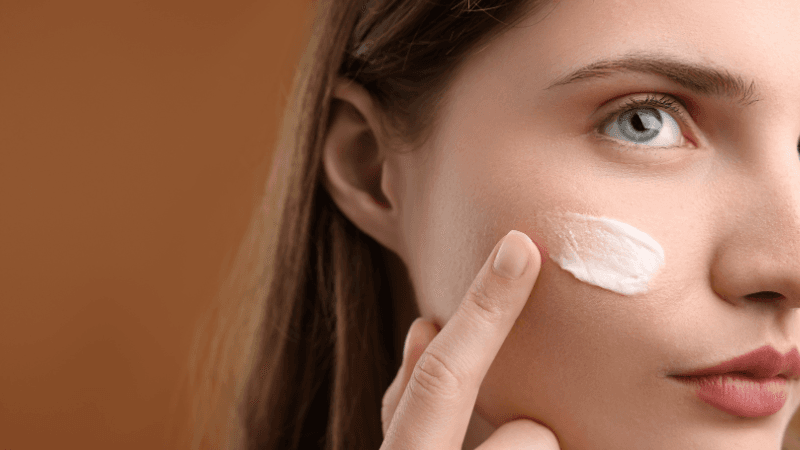
Why does cream roll off my face and what should I do?
The cream spreads well, but when I run my fingers over my face or apply SPF, small pellets appear on my skin. Sometimes this only happens under makeup, but other times the product starts to clump almost immediately. Why does the cream roll off my face ?
The reason could be the amount of product, the sequence of your skincare routine, the combination of textures, or the application method itself. If you'd like to learn more about your skincare routine with a professional, you can find options at https://alvibeauty.com/ru-ua/salons/kremenchuk/cosmetology .
Why does the cream roll off after application?
The first thing to check is the amount of product. A thick layer stays on the skin longer. If you immediately apply another product on top or start vigorously rubbing your face, the remaining product may clump into small clumps.
But why does cream roll off after application if you only use a small amount? Then it's worth looking at your entire skincare routine. There might be a serum underneath the cream, sunscreen on top, then primer and foundation. Individually, the products work fine, but when applied in multiple layers, they start to behave differently.
The problem is especially noticeable in the morning, when you want to apply all your skincare products quickly and move straight to makeup.
Cream is rolling into pellets: what to check first
Cream pilling doesn't necessarily mean it's bad or doesn't suit your skin. Sometimes, changing just one step of application is enough.
Most often it is worth checking:
- Are you applying too much cream, serum or SPF?
- does the previous layer have time to spread before the next one;
- Do not rub the skin for too long after application;
- does the problem only occur when two specific agents are combined;
- Are there too many layers on the face at once?
It's more effective to change one condition at a time. If you reduce the amount of cream you use today, remove the serum, and simultaneously change your SPF, you won't be able to figure out the cause.
Why does cream roll off after applying serum or SPF?
Serum, cream, and sunscreen form several successive layers. If one layer remains on the surface, the next one can begin to displace it as it spreads.
For example, the cream works well on its own. The serum also doesn't cause any problems. But when combined, they tend to clump together. This doesn't necessarily mean one of the products should be thrown out. Sometimes, combinations simply don't work well together.
Try applying products separately on different days or temporarily skipping one intermediate step. This will make it easier to understand where the creasing begins.
Apply SPF with particular care. Rubbing vigorously over several previous layers can make the problem more noticeable.
Why does cream roll under foundation?
Sometimes, your skincare routine looks flawless until you apply makeup. Then, your brush, sponge, or fingers begin to move the base layer, causing clear or grayish pellets to appear on your face.
It's not just your foundation that needs to be checked here. The cause could be too much foundation underneath.
If you use the "serum → cream → SPF → primer → foundation" routine, you're applying several different formulas to your skin at once. The more you rub them together, the more likely it is that one of the layers will start to clog.
Try shortening your morning routine and see if the problem persists. Sometimes one extra step can have a bigger impact than the foundation itself.
How to tell if your cream is peeling or your skin is flaking
These two situations are easily confused.
Cosmetic pellets usually appear after applying the product and become more noticeable when rubbed in. They can roll under your fingers and be easily removed from the surface.
Peeling skin looks different. Dry patches are noticeable even without a new cream, and are often accompanied by tightness, roughness, or discomfort after washing.
Distinguishing between them is useful for another reason. If you mistake makeup pilling for flaking, you might start using peels or acids more often, even though the problem was simply with application technique.
Conversely, real peeling should not be explained solely by the fact that “the cream has rolled off again.”
Cream is rolling off my face: what to do?
If your face cream is rolling off , you don't have to start by buying new cosmetics. First, try a simple experiment.
- Apply a little less cream and see if the result changes.
- Do not apply the next product immediately after the previous one.
- Reduce the number of layers in your morning skincare routine for one day.
- If the problem only occurs after using SPF or foundation, test these two products specifically.
- Distribute the product gently, without rubbing the skin for a long time.
- Do not continue to use the cream if it noticeably changes in smell, color or consistency.
This makes it much easier to find the specific place where the problem occurs.
Why does cream roll off my skin when everything was fine before?
Sometimes the same cosmetics will work well for a few weeks and then suddenly start to clump.
This isn't always due to skin changes. Consider whether a new SPF, toner, serum, or primer has recently been released. It's possible that it's not the cream's formula itself that has changed, but rather the combination of products around it.
The amount of product you use also affects the results. Even your regular cream can start to cake if you apply it in a thicker layer.
Therefore, it is better to determine why cream rolls off the skin by successively eliminating the causes, rather than by immediately replacing the entire cosmetic bag.
Does rolling mean the cream is not suitable?
Not necessarily. It's important not to confuse the two different situations.
If the product causes persistent burning, itching, severe redness, or other discomfort, the question concerns the reaction of the skin itself.
If there is no discomfort and the problem only appears when applying the next layer, the cause may be related to the combination of formulas or the application technique.
This means that a cream may suit your skin, but it may not work well with your serum, SPF, or makeup.
How to understand that the cream is to blame
The easiest way is to check it separately.
Apply the usual amount of product to cleansed skin, without using a serum first and without immediately covering it with SPF or foundation.
If pilling occurs even with this method, pay attention to the amount of product and the application method. If the cream itself spreads evenly, but the problem only occurs after applying the next product, it's likely the combination of the layers that needs to be addressed.
This small test provides more information than trying to change your cream, serum, and makeup base all at once.
Frequently Asked Questions about Rolling Cream
Why does the cream roll off my face immediately after application?
A common cause is applying too much product or vigorous rubbing. Try reducing the amount of cream and see if the results improve.
Why does the cream roll off after using the serum?
Two products may work well separately, but they may clump when separated. Test the cream without the serum, then return it to compare results.
Why does SPF roll off over the cream?
It's possible to have too much of your previous products on your skin. Sometimes a simpler morning regimen and gentle application of SPF without excessive rubbing helps.
Why does foundation roll off along with skincare?
The foundation itself may not be the culprit. The underlying layers of cream, SPF, or primer can shift during makeup application and form lumps.
Do I need to wait after applying the cream?
There's no one-size-fits-all formula. A simple rule of thumb is to apply the next layer when the previous one has spread evenly and doesn't move when lightly touched.
Does rolling mean that the cream is of poor quality?
No. Even the best product can crease due to the amount of product used, the method of application, or combination with other cosmetics.
When is it better to stop using the cream?
If, in addition to rolling, its smell, color, or consistency changes, or the product begins to cause significant discomfort, you should not continue using it.