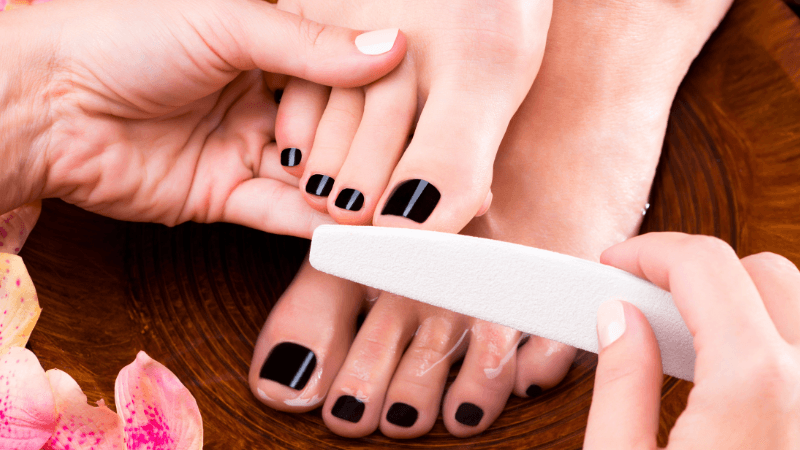
How long does a gel polish pedicure last and when is it time to remove it?
A gel polish pedicure lasts an average of 3-6 weeks. But that doesn't mean it can be worn without side effects. In practice, the "lasting" time and the "safe to wear" time are two different things.
Quick reference:
- 3–6 weeks – how long the coating lasts
- 3-4 weeks – how long does a pedicure look neat?
- up to 4 weeks is a safe period of wearing
If you rely only on appearance, it’s easy to miss the moment when the coating needs to be removed.
Short answer: How long does a gel polish pedicure last?
A gel polish pedicure typically lasts 3-6 weeks. However, for some, the finish lasts longer, while for others, it starts to peel after just 2 weeks—it all depends on the nails, shoes, and the quality of the technician's work.
There are 3 different terms for a pedicure
To avoid mistakes with timing, it's important to distinguish between three coating conditions—this is what differentiates normal nail care from nail problems.
How long does the coating last visually?
Gel polish can last up to 5–6 weeks without chipping, giving the impression of never having to remove it.
How long does a pedicure last before it looks neat?
Typically, it takes 3-4 weeks. After that, regrowth becomes noticeable, even if the coating is intact.
How long is it safe to wear gel polish?
Optimally, up to 3-4 weeks. After that, the pressure on the nail plate increases, and the risk of damage increases.
It is this period that is the main guideline, not the appearance.
It's important to consider your skin's condition and age-related changes, as in some cases the safe period may be shorter—more on this in the article Pedicure after 50 and the specifics of foot care .
What determines how long a pedicure lasts?
The wear time of a gel polish pedicure is individual and depends on several factors. It's influenced by nail growth rate, application technique, quality of materials, shoe wear, and the moisture level of the nail plate. Therefore, the same polish will perform differently on different people.
For example, if you constantly wear closed shoes, the stress on your nails is higher, and the coating starts to peel off faster.
If you notice your polish starting to lose its neat appearance faster than usual, it's important to focus not only on durability but also on regularity. You can read more about this in our article on how often you should get a pedicure and what factors determine it.
Why pedicures may last less
If gel polish on your feet doesn't last as long as expected, there's almost always a specific reason.
If the coating starts to peel off after just 2-3 weeks, it's almost always no accident. For a deeper dive, read the article on why heels crack and how to prevent it —it covers the real causes that are most often ignored.
Master's mistakes
Insufficient preparation of the nail or improper drying leads to early detachment.
Footwear and load
Tight or rigid shoes create constant pressure on the nail.
It's also important to consider seasonality: in summer, skin dries out more quickly, and in winter, pressure on the foot increases, which directly affects the durability of the coating. Read more about this in the article " Summer and Winter Pedicures and How Foot Care Changes ."
Nail condition
Thin, soft or damaged nails will not hold the coating as well.
Therefore, the same pedicure can last differently on different people.
When should you remove gel polish, even if it lasts?
Relying solely on appearance is a mistake. There are signs that indicate it's time to update your coating.
There are signs that indicate it's time to refresh your nail polish. If the regrowth becomes noticeable, peeling occurs, the nail changes color, or discomfort occurs, these are signs that it's time to refresh your nail polish.
In such situations, it's best not to delay your nail appointment. Usually, at this point, simply choose a nearby professional and schedule a convenient time to avoid damaging your nails. For example, you can browse available pedicure options in Dnipro in the AlviBeauty catalog: https://alvibeauty.com/ru-ua/salons/dnipro/nailServices/pedicure .
Many people wait until the last minute, relying solely on appearance. But there are signs that shouldn't be ignored—more on this in our article on how to tell when it's time to update your pedicure to avoid damaging your nails.
What happens if you wear a pedicure for too long?
Even if gel polish looks fine, wearing it for a long time can cause problems.
Over time, stress on the nail increases, microdamage occurs, and the risk of detachment increases. This isn't always visually noticeable, but the nail structure is already changing.
That is why you need to focus not on “holding on”, but on the condition.
Mistakes that shorten the life of your pedicure
To make your pedicure last longer and avoid problems, it's important to avoid common mistakes.
The most common ones are:
- wearing the coating for too long
- ignore the first signs of detachment
- remove gel polish yourself
- constantly wear tight shoes
If in doubt, it's best to focus not only on appearance but also on expert advice—for example, you can learn more about how often you should get a pedicure and what factors determine that.
If you want to not only understand the timeframe but also immediately choose a specialist and a convenient time, it's easier to book a pedicure in Kyiv directly and focus on practical solutions.
Frequently Asked Questions
How long does a pedicure with gel polish last?
On average, 3–6 weeks. The duration depends on nail growth, stress, and the quality of application.
How long can you wear a pedicure without harm?
Ideally, leave for up to 3–4 weeks. After that, the risk of nail damage increases.
When should I remove gel polish from my feet?
In case of peeling, severe regrowth, color change or discomfort.
Is it possible to wear a pedicure for more than a month?
Sometimes the coating lasts longer, but wearing it for more than 4-6 weeks is not recommended.
Why does gel polish last less?
Due to mistakes by the technician, stress, shoes or nail characteristics.
Related articles
If you want to not only understand the timeframes but also fully control the results of your pedicure, start with these resources:
- Why do heels crack and how to avoid it?
- Pedicures in Summer and Winter: How Foot Care Changes
- How often should you get a pedicure and what does it depend on?
It's important not only to consider the season but also to understand the root cause of the problem. Focus not on the time of day, but on the condition of your feet.