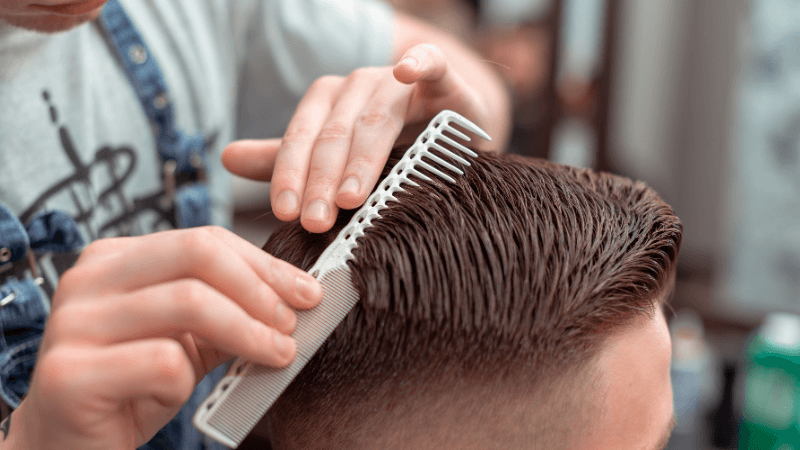
Modern Men's Haircuts: Fashionable and Stylish Options for 2026
Choosing a haircut doesn't start with the name, but with how a man usually wears his hair every day. Some people prefer a short cut without the hassle of styling, while others want volume on top, bangs, or the ability to change the direction of their hair. You can browse men's haircuts athttps://alvibeauty.com/ru-ua/salons/poltava/hairdressers/mensHaircuts , and in this article, we'll explore the differences between modern men's haircuts and what to look for before visiting a hairstylist.
What men's haircuts are in fashion in 2026?
Today, a haircut's relevance isn't determined by its fashionable name alone. What matters most is the combination of hair shape, length, texture, and how comfortable it is to wear every day.
Short cuts like buzz cuts and crops, faded shapes, and more textured ones remain popular. Medium-length cuts offer more options for volume, side parts, and movement. If you keep the top longer, you can choose a quiff, undercut, or a slicked-back style.
Therefore, fashionable men's haircuts for 2026 can look completely different. One man might opt for a short, textured crop, while another might opt for a more voluminous cut with a longer top. The general principle is that a haircut should work not only immediately after leaving the salon, but also in everyday life.
What modern men's haircuts can you choose?
Short Haircuts: Buzz Cut, Crop, and Fade
The buzz cut is perfect for those who prefer minimal length and a clean shape. The hair is kept short, so complex styling is usually not required. However, the look depends heavily on the neatness of the contours and the transition between lengths.
A crop allows for a little more freedom. A textured crop features noticeable individual strands on top and often sweeps the hair forward. It's perfect for those who want to maintain the practicality of a short haircut but add texture.
A fade isn't a specific haircut, but a way to create a transition from short to longer hair. Therefore, it's important not just to tell your stylist, "I want a fade," but also to specify the length on top and how contrasting you want the sides.
Haircuts with texture and volume: Crop and Quiff
If you want more movement in your hair, consider texture and volume. A quiff typically requires more length on top than a crop. The hair is lifted and swept back or slightly to the side.
This option allows you to change your hairstyle, but it will take more time in the morning. If your hair holds its shape well, the task is easier. If it quickly loses volume, you may need a blow-dryer and a little styling product.
The crop is simpler in this regard: the shape is shorter, and the texture can look expressive even without complex styling.
Long Top Haircuts: Undercut and Slick Back
An undercut emphasizes the noticeable difference between the top and shorter sides. The contrast can be dramatic or subtle—it's best to discuss this with your stylist beforehand.
A slick back requires the hair on top to be long enough to be slicked back. This is where hair type comes into play: some hair easily holds its shape, while others require a blow-dryer or styling product.
If you're looking for a more relaxed look, you don't have to go for a dramatic transition. A longer top can be paired with soft sides for a more natural look and a more relaxed growth curve.
How modern men's haircuts differ from each other
A name alone doesn't always convey the final look. Two stylish men's haircuts may differ in just a few details, but they can be visually perceived as completely different.
When comparing, it is worth paying attention to:
- the length of the hair on top and on the sides, the smoothness or contrast of the transition, the presence of bangs and a parting;
- hair texture, volume, styling direction, and how well the shape is maintained without styling.
For example, short sides with noticeable volume on top create a more pronounced contrast. A soft transition in length creates a more relaxed silhouette. Bangs can completely change the look of a crop, and a side part adds structure to a longer shape.
Therefore, it is better to choose not only between the words Fade, Quiff or Undercut, but between specific visual features.
How to choose a modern men's haircut
First, it's worth assessing your hair type. Straight, wavy, and curly hair hold their shape differently. Hair thickness also matters: the same haircut can look completely different on thicker hair than on thinner hair.
Face shape can also be taken into account, but it shouldn't be turned into a rigid rule. It's more helpful to consider several factors at once: the natural direction of your hair, its texture, your usual length, and your willingness to style it.
If a man doesn't like using a hair dryer or styling products, it's best to avoid styles that require constant volume. If, on the other hand, he likes to change the direction of his hair, part it, or comb it back, the length on top should be preserved.
So the choice becomes practical: not “what’s most fashionable now,” but “what modern men’s haircut will be comfortable for me to wear.”
Which men's haircuts are easier to style every day?
Short cuts are usually the simplest. A buzz cut requires virtually no styling. A crop often only requires a few simple touch-ups or subtle texture enhancements.
A quiff requires more attention because its signature feature is volume. A slick back also depends on the hair's direction and usually requires at least minimal hold.
An undercut can be either simple or elaborate, depending on how much length is left on top and how it's intended to be worn.
Therefore, it's best to choose men's haircuts without complicated styling based on your actual routine. If you only want to spend a minute or two on your hair in the morning, it's a good idea to let your stylist know right away. Then they can suggest a style that won't require daily grooming.
What to show the hairdresser before a haircut
A haircut's reference is much more helpful than its name alone. Even crop, fade, and undercut come in many variations.
Before your visit, you should prepare:
- two or three references and show what length on top, shape of the temples, bangs or transition you like;
- Explain how you usually style your hair, whether you use a hair dryer, and how much time you want to spend on your hair care in the morning.
You can show your stylist what you don't like in other photos. For example, the sides are too short, the fade is too harsh, or there's too much volume on top. This often helps clarify the desired result.
A good reference isn't a directive to copy someone else's appearance. It's a way to agree on hair length, shape, and direction.
Frequently Asked Questions
What men's haircuts are considered modern and fashionable now?
Trendy styles range from short buzz cuts, crops, and fades to more voluminous quiffs and longer-topped cuts. It's not just the men's haircut trends that matter, but also how well the chosen style suits your hair and grooming habits.
How to choose a modern men's haircut for your hair type?
It's important to consider your hair's texture, thickness, natural growth direction, and ability to maintain volume. If your hair is difficult to style, it's more practical to choose a style that holds up naturally.
Which men's haircuts are easier to style every day?
Buzz cuts and short crops typically require minimal time. Quiffs, slick backs, and other styles with noticeable volume or direction often require a blow-dry or styling tool.
What is the difference between Fade, Crop, Quiff and Undercut?
A fade describes the way the length transitions at the sides and back. A crop is a short cut with texture on top. A quiff emphasizes volume and a lifted front. An undercut features a distinct difference between the longer top and shorter sides.
What modern haircuts can be worn with bangs or partings?
Bangs or a side part can be combined with various hair shapes, as long as the top is kept at the right length. The specific option depends on the texture and natural direction of the hair.
What should I show my stylist to get the haircut I want?
It's best to use several photos and explain what exactly you like: the length on top, the sides, the transition, the bangs, the parting, or the direction of the hair.
Which men's haircuts hold their shape best as they grow out?
Haircuts with a gentle transition in length and without a sharp contrast between zones typically respond more smoothly to changes. However, much depends on the growth rate and hair structure.
How do you know if a haircut will work without complicated styling?
Consider how your desired shape is maintained. If your hair constantly requires volume, blow-drying, and hold, you won't be able to completely avoid styling. If the shape is maintained thanks to the length and cutting technique, daily maintenance will be easier.