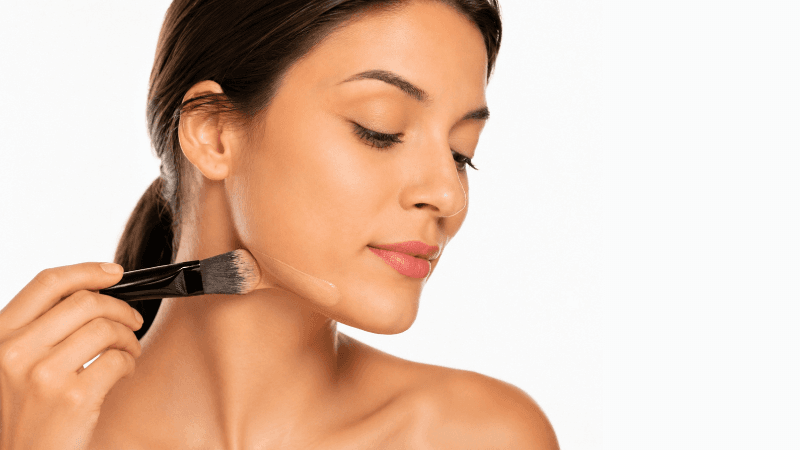
Why foundation accentuates skin texture and what to do about it
Without makeup, skin looks quite even, but after applying foundation, pores, dry patches, or fine lines suddenly become more noticeable. Sound familiar? To understand why foundation accentuates skin texture , it's first important to determine what exactly has changed after applying it. Sometimes it's the condition of your skin, sometimes it's the product itself or the amount of product used. If your skin condition raises questions and you'd like to discuss your skincare routine with a specialist, consider visiting a cosmetologist in Kremenchuk .
Texture alone doesn't mean there's something wrong with your skin. Pores, fine lines, and a slight texture are all normal features of vibrant skin. Foundation doesn't have to smooth your face like a filter. The problem begins when the texture appears noticeably more pronounced after application than before.
What exactly can foundation make more noticeable?
Before changing your makeup bag, look at your face in normal daylight. Different areas may look uneven for various reasons.
Most often, the tone emphasizes:
- pores near the nose and on the cheeks;
- dry or flaky areas;
- fine lines around the eyes and mouth;
- uneven texture and individual traces of post-acne.
It's important to distinguish between color and texture. A redness or spot can be visually covered with pigment. A pore, line, or depression can't simply be "painted over" with another thick layer. Sometimes, it's precisely the attempt to further conceal texture that makes it more noticeable.
Why does foundation highlight pores?
The question of why foundation accentuates pores often arises, even among those who use primer. Pores may be visible before makeup, but after applying the product, additional contrast appears around them: the pigment is distributed across the skin's surface, leaving a textured appearance.
The effect is especially noticeable when applying a large amount of product to one area. Instead of visual smoothing, the result is a dense layer that accentuates surface irregularities.
Powder doesn't always help either. Too much powder, especially on dry areas, can make the finish appear more matte and rough.
Therefore, primer isn't a one-size-fits-all solution. If pores are still clearly visible after applying it, it's worth looking not only at the base but also at the foundation itself, its amount, and finish.
Dryness and flaking: why foundation reveals what's almost invisible without makeup
A dry patch is sometimes barely visible on clean skin. After applying pigment, its edges become more visible, making it appear as if the foundation has "created" the peeling.
That's why there's no single explanation for why foundation accentuates skin texture . If unevenness is visible even before applying makeup, the problem likely lies in the skin's surface. If your skin looks comfortable without foundation, but after applying a specific product, your face becomes rough, it's time to evaluate the product itself.
However, there's no need to rush to remove dry patches with a harsh scrub before applying makeup. The cause of persistent peeling is a skincare issue, and it's more important to understand how it interacts with makeup.
When the problem is in the foundation itself
Even with normal skin condition, two foundations can look completely different.
The result is influenced by the product's texture, coverage density, and finish. A very dense layer provides better coverage of the skin's tone, but can also make its micro-relief more visible. A highly matte finish can sometimes highlight dry areas, while a pronounced shimmer can draw attention to the texture where light reflects off the surface.
This doesn't mean there's one "right" finish for everyone. It's much more helpful to see how a specific product performs on your skin.
If the reason why foundation accentuates pores is only an issue with one specific product, while coverage looks fine with another, the reason is unlikely to be limited to skincare.
Why More Foundation Can Only Make It Worse
When you want to conceal an uneven spot, the natural reaction is to add a little more product. However, the skin's texture is different in color from the spot itself: additional pigment doesn't physically even out the surface.
A thick layer can collect near pores, dry areas, or fine lines. So, instead of a smoother complexion, the opposite effect occurs.
The principle here is simple: apply a small amount first, observe the result, and add more coating only where you really need to even out the color.
This is especially useful to remember if you want to understand why foundation emphasizes skin texture after the second or third layer.
Why primer doesn't always hide texture
Primer can visually smooth out certain areas or change the behavior of the next product, but it does not erase the natural texture of the skin.
If you apply a lot of dense foundation on top of the primer and then several more layers of powder, the amount of makeup may overlap the possible effect of the base.
Therefore, the situation of "I bought a primer, but my pores are still visible" is entirely possible. In this case, it makes sense to evaluate the entire product combination rather than looking for another base.
What can I change to make my foundation less likely to highlight my skin texture?
If you want to understand how to make the coating visually smoother, start not by buying a new product, but by understanding when the problem appears.
- Look at your skin before applying makeup. If dryness or flaking is already noticeable, it's worth checking the condition of your skin first.
- Try reducing the amount of foundation and adding a second layer only locally.
- Compare the result with another type of coating or finish if the problem occurs with only one product.
- Don't try to cover up all the relief with a lot of powder.
- If you use a primer, evaluate the result without it: an additional layer is only necessary when it truly improves coverage.
This approach is more useful than the endless search for the “perfect” foundation, because it helps you understand the cause of your particular situation.
How to tell if it's your skin or your foundation
The easiest guide is to compare your skin before and after applying the product.
If dry patches and flaking are clearly visible even before applying makeup, the problem begins before foundation. If skin appears even, but pores or fine lines become noticeable after applying a certain product, it's worth checking the texture, finish, and quantity of the product.
If the problem only occurs in certain areas, there's no need to change your entire makeup routine. Pores may be more prominent near the nose, foundation tends to gather in lines under the eyes, and a thick layer of foundation looks unsightly in dry areas.
It’s much easier to find the cause than to completely change your skincare and makeup routine every time.
Frequently Asked Questions
Why does foundation highlight pores?
Pores become more visible when the coverage creates additional contrast with the skin texture or gathers around it. The amount of product, its texture, and finish also influence the results.
Why are pores still visible even with primer?
Primer can reduce their visual visibility, but it doesn't eliminate the natural texture. The effect also depends on the foundation and the number of subsequent layers.
Why does foundation look grainy on my skin?
This is what coverage can look like on dry areas, when there is too much product, or if a particular formula does not spread well across the skin's surface.
Can powder enhance skin texture?
Yes, especially if there's a lot of it or the skin in that area is dry. Powder can make the surface appear more matte and rough.
How to prevent foundation from emphasizing skin texture?
First, identify what exactly has become more noticeable. Use less product, add coverage locally, and evaluate whether the texture and finish of a particular product suits your skin.
Is it possible to completely hide skin texture with foundation?
Makeup can't completely eliminate natural pores, lines, and micro-relief. The realistic goal is to avoid visually enhancing them and maintain natural coverage.
How do you know if it's the foundation that's the problem?
If your skin looks comfortable without it, but the problem only appears after applying a specific product, it's worth checking its quantity, texture, and finish.