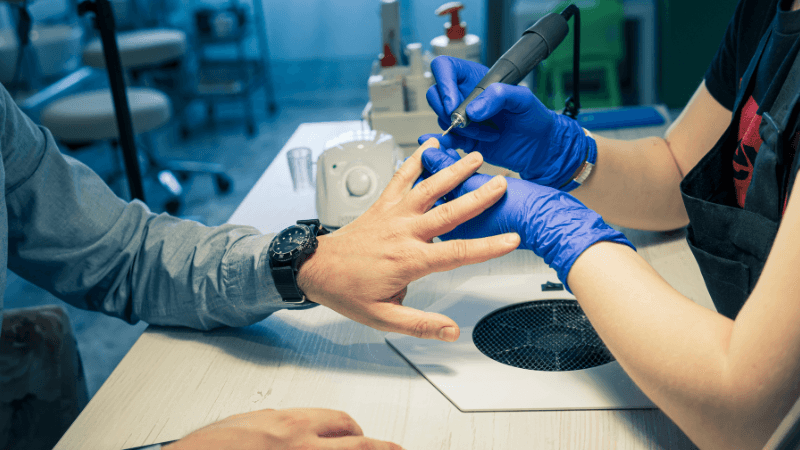
Men's Manicure: Why You Should Get It and How to Choose a Professional
A men's manicure is a hygienic treatment for nails and hand skin. It's not about polish, design, or a "feminine procedure." Neat, well-groomed hands are part of a professional look, just like good shoes and a good haircut. Check out the professionals who work with male clients at alvibeauty.com/ru-ua/salons/dnipro/nailServices/manicure—they have real reviews and open schedules.
Why do men need manicures? 5 reasons.
Why get a manicure for men is a question often asked by those who haven't tried it yet. It usually doesn't arise after the first time.
Hand health
Hangnails aren't just a cosmetic issue. They're an open wound that invites infection. Inflammation, pain, and sometimes felon—all of this begins with a torn hangnail. Regular manicures address the cause, not the symptom.
Ingrown nails are another common problem for men's hands. When trimmed incorrectly, the nail is pushed into the side fold. A nail technician can shape the nail correctly, and the problem disappears.
Image and first impression
Hands are visible during handshake, negotiations, and document handling. Research shows that people evaluate hands within the first 30 seconds of a meeting—just as much as their face and clothing. Well-groomed hands don't attract attention. Unkempt ones attract the wrong kind of attention.
Problem prevention
Men's hand skin hardens faster than women's. Cuticles grow more rapidly. The nail plate is thicker and denser, meaning problems accumulate more quickly. Regular care every 2-3 weeks prevents the condition from reaching a point where it takes an hour to fix instead of 40 minutes.
How is a manicure different from a woman's?
A men's manicure is a separate procedure with its own rules. It's not a shortened version for women.
Men's nails are shaped to fit the fingertip. No sharp edges or elongations. The nail follows the natural curve of the finger.
Men's nails are thicker and denser. The technician uses different tools and spends more time on the procedure. The average procedure takes 40–45 minutes—longer than many expect.
The cuticle in men grows faster and rougher. It needs to be processed more often and more carefully.
The products are fragrance-free and shine-free. A professional technician uses fragrance-free oils and creams to avoid leaving a scent on your hands.
No design if you don't need it. A hygienic manicure ends with polishing or oiling—no coating.
Types of men's manicure without coating
For most men, a bare manicure is sufficient. The nails look clean, well-groomed, and completely natural.
Classic edged
Nails are steamed in a bath, shaped with a file, and the cuticles are trimmed with a tool. This is suitable for neglected hands with rough cuticles and hangnails. It takes 45–60 minutes. Read on to learn how to tell if your manicurist is working safely —sterilizing tools is especially important for trim manicures.
Hardware
The cuticle is processed with a cutter without steaming. It's quick—30–40 minutes. Suitable for regular care when hands are not neglected. Soft skin on the hands is the preferred option.
European (unedged)
The cuticle is pushed back with a wooden stick without cutting. This is the safest method and is suitable for delicate and sensitive skin. The downside is that it requires more frequent repetition as the cuticle grows quickly.
Men's manicure with coating
Nail polish is no longer a rarity in men's manicures. It's becoming the norm among professional men.
Transparent strengthening
A clear polish or strengthener. The nail looks natural, and the coating is invisible. It protects the nail plate and adds shine. Ideal for first-time users—no one but you will notice the difference.
Matte finish
Dark, deep shades—gray, black, navy blue, burgundy. A matte finish looks sophisticated and expensive. Popular among business men and style-conscious individuals.
Colored - for those who want
Black, gray, and navy blue are classic. A gray gradient. An accent nail in a single color. A matte French manicure—the tip isn't white, but a neutral nude. There are no rules, just preferences. Book an appointment with manicurists in Dnipro who specialize in male clients.
How to choose a manicurist for men
How to choose a manicurist is an especially important question for men who are going for the first time.
- Ask directly if the technician works with male clients. Experience is important—men's nails and skin require a different approach. A technician who only does women's manicures may not be familiar with these nuances.
- Check sterilization. This is especially important for trimmed manicures. An autoclave is a mandatory standard. Read the nail technician's safety checklist —it also applies to men's appointments.
- Check reviews. Look for mentions of male clients—this is a good sign that the stylist has experience.
- Tell the technician what you want. You need to tell them: no coating/clear coating/matte coating. And how much time you have. A good technician will tailor the procedure to your needs.
How often should men get a manicure?
- Ideally, every 2-3 weeks. This is how long it takes for the nail to grow noticeably and the cuticle to begin to grow. If you do it less often, you'll have to spend more time on the neglected condition.
- At least once a month. With this schedule, hands look acceptable. But within a month, the cuticles have time to grow back, and hangnails reappear.
- If you're having a long first visit, plan on an hour. This isn't the norm, but a one-time situation. Subsequent visits will be shorter.
Frequently Asked Questions
Why do men's manicures?
Health – preventing hangnails, ingrown nails, and inflammation. Image – well-groomed hands are part of a professional look. Comfort – well-shaped nails don't snag or break.
What type of manicure is best for men?
For first-time users, there's a hygienic, uncoated version. Hardware-based polish is for regular care when hands aren't overly groomed. Trimmed polish is for overgrown hands with rough cuticles. Matte-finish polish is for those who want a professional look.
What kind of manicure should men have?
In short, a shape that fits the fingertip, no hangnails, and no flashy designs unless needed. The main thing is clean and well-groomed. Finish is optional—from a clear strengthener to a solid matte finish.
What is the sequence for performing a men's manicure?
Softening bath → filing → cuticle treatment → polishing → oil or coating. 40–45 minutes with regular care. Up to an hour on the first visit after a break.
How often should men get a manicure?
Once every 2-3 weeks is optimal. Once a month is the minimum. It depends on how fast your nails grow. Read on to learn how to restore your nails if they've gotten too old —the same care principles apply to men's hands, too.
Related articles
- How to know if your manicurist is working safely: a checklist
- Manicure before an important event: how many days in advance should I book?
- What kind of manicure is appropriate for the office: choosing based on the dress code
- A manicure salon is a space where perfection is born.
- How to find a manicurist online .