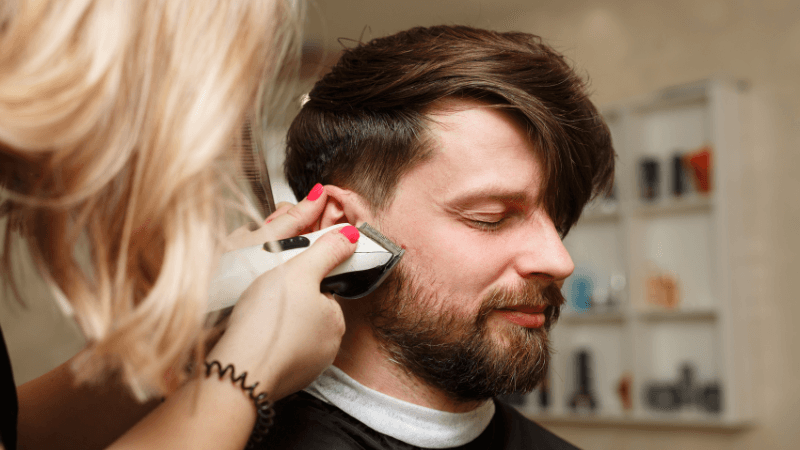
Men's medium length haircuts
A medium-length cut offers more flexibility than a short one: you can part your hair, swept back, leave bangs, or maintain a natural flow. But the sheer number of options makes choosing difficult. The same long top can look completely different depending on the length of the sides, the direction of the hair, and whether you're ready to style it in the morning.
Therefore, choosing medium-length men's haircuts is easier than just choosing the name. First, decide what length you want to keep and how you plan to wear your hair on a regular basis. You can learn more about men's haircuts in Poltava athttps://alvibeauty.com/ru-ua/salons/poltava/hairdressers/mensHaircuts .
What is considered average hair length for men?
Medium length doesn't have a single, universal centimeter limit. Even specialized materials use different ranges. It's more practical to focus on the hair's capabilities: it's long enough to have a noticeable parting, bangs, volume, or a slicked back style, but it's not yet considered a full-length hairstyle.
Length distribution is crucial. You can keep the top longer and noticeably shorten the sides, or you can leave more hair on the sides and back. Therefore, men's haircuts for medium-length hair differ not so much in overall length as in silhouette.
If you like a specific reference, look first at three zones:
- top,
- whiskey
- and the back of the head.
It is their combination that determines whether you get a compact shape, a loose flow, or a more pronounced version with long bangs.
What medium-length men's haircuts can you choose?
Some styles open up the face and sweep the hair back. Others retain bangs or a parting. There are also options where the length is distributed more evenly. Therefore, it's easier to compare haircuts based on how they look in everyday life.
Flow and curtains: shapes with natural hair movement
Flow, or Bro Flow, is perfect for those who prefer a free-flowing style without rigid geometry. Length remains noticeable, and strands are typically swept back or slightly to the side. Natural movement is more important than precise hold.
Curtains have a different accent: a center parting and front strands that diverge to the sides. Long bangs become part of the silhouette and partially frame the face. If the center parting falls naturally, this style is usually easier to wear every day than a style that requires constant blow-drying.
Quiff and Pompadour: haircuts with volume and comb-over
A quiff involves adding length to the front. Hair is lifted and swept back or slightly to the side, creating a fuller look on top.
The pompadour relies on even more pronounced volume and contrast between the top and sides. This shape requires control: if the hair naturally falls forward or in different directions after washing, achieving the desired silhouette will be more difficult without a blow-dryer.
Therefore, it's important to choose these options not only based on appearance. Consider whether you're willing to regularly change the direction of your hair.
Slick Back and Undercut: Longer Top Options
The slick back is easily recognized by its slicked-back style. It's important to keep enough length on top so the hair can be pulled back in one direction.
The undercut works on contrast: a longer top is paired with much shorter sides. It can be styled:
- back,
- to the side or more freely,
- Therefore, the same base gives several ways to wear the haircut.
If you want to keep the hair on top but remove excess volume at the temples, a men's haircut with an elongated top may be more convenient than a shape with the same length all over.
Men's bob and layered haircuts
The bob is distinctive in that the length isn't just on top. The sides and back are also part of the shape. This creates a softer silhouette than haircuts with short sides.
Layered cuts use varying lengths of strands to prevent the hair from looking like one heavy mass. Layers can highlight texture and natural waves. This style is especially appealing to those who want more length and don't want to constantly pull their hair back.
How does a long men's haircut differ from a medium length one?
The terms overlap somewhat. A long men's haircut doesn't necessarily mean shoulder-length hair. It often refers to a style that retains noticeably more length on top, in the bangs, on the sides, or at the back compared to a traditional short haircut.
Therefore, long men's haircuts can also be medium-length. For example, a short sideburn with a long top is one approach. A bob with long sides is another.
When hair can be pulled back into a noticeable ponytail or length becomes the dominant feature of the entire hairstyle, demand gradually shifts toward long men's haircuts. For our purposes, intermediate styles are more important, where the length allows for styling freedom but still remains a part of the cut.
Men's medium length haircuts without styling
The phrase "no styling" sounds convenient, but it shouldn't be taken literally. The longer your hair, the more its shape is affected by the direction of growth, sleep, humidity, and drying method.
It's easier to wear a style that works with the natural direction of your hair. If your parting naturally falls in roughly the right place, you won't have to re-shape it every morning. The same goes for flow cuts or layered styles with natural texture.
Styles with high volume, a sharp back sweep, or a direction opposite to the natural hair growth usually require more time.
Therefore, when choosing men's medium-length haircuts without styling , it is better to look not for a promise of "nothing to do," but for an option without complicated daily styling.
How to Choose a Medium-Length Men's Haircut
Start not with the name of the haircut, but with how you want to wear your hair.
If you like an open forehead, consider a slicked back, quiff, slick back, or flow. If you want to keep some front strands, consider a curtain cut, a cut with long bangs, or a bob.
The next issue is the sides. Short sides make the difference between the top and sides more noticeable. Keeping the length on the sides creates a softer silhouette.
Then evaluate the style. A center or side part that follows the natural direction of the hair is usually easier to maintain. A more voluminous or slicked-back style will require more attention.
So, a medium-length men's haircut is chosen not by a single fancy name, but by a combination of length, style, and the time you are willing to spend on your hair.
What to show the hairdresser before a haircut
A name alone is often not enough. Flow, undercut, or even bob can all look different.
It's best to save several references with similar lengths and determine in advance what you like about them:
- how much hair to leave on top;
- how short should the temples be;
- Do you need long bangs?
- do you want a center or side parting;
- plan to wear your hair back or loose.
If a particular area is important, mention it before the haircut. Saying "I want to keep the length on top" gives the stylist more useful information than just the style name.
Frequently Asked Questions
What men's haircuts are suitable for medium length hair?
Options include flow, curtains, quiff, pompadour, slick back, undercut with a longer top, man bob, and layered cuts. Choose based on the desired hair direction, the length of the sides, and how much time you're willing to spend on styling.
What is considered average hair length for men?
There's no single standard. Typically, we're talking about a length that allows for defined bangs, a parting, a slicked-back style, or a loose, layered look, but isn't yet considered a full-blown long hairstyle.
Which medium-length men's haircuts are easier to wear without complicated styling?
Styles that follow the natural direction of the hair are simpler. Flow cuts, loose layered options, or a traditional parting often require less control than a high pompadour or a crisp slick back.
How does a long men's haircut differ from a medium length one?
"Medium length" describes hair length, while "extended" often describes the shape of a relatively shorter haircut. Therefore, these terms can overlap.
How to choose a medium-length men's haircut if you don't want to spend a lot of time styling your hair?
Pay attention to where your hair falls after you blow-dry it, and choose a style that utilizes that flow. The less you have to change your natural parting, lift your hair, or pin it back tightly every day, the easier it will be to maintain.
What should I show my hairdresser to maintain the desired length and shape?
It's best to take two or three reference photos and show the desired top, sides, back, and bangs separately. This way, it's easier for the stylist to understand the specific result you're looking for, rather than just the haircut's name.