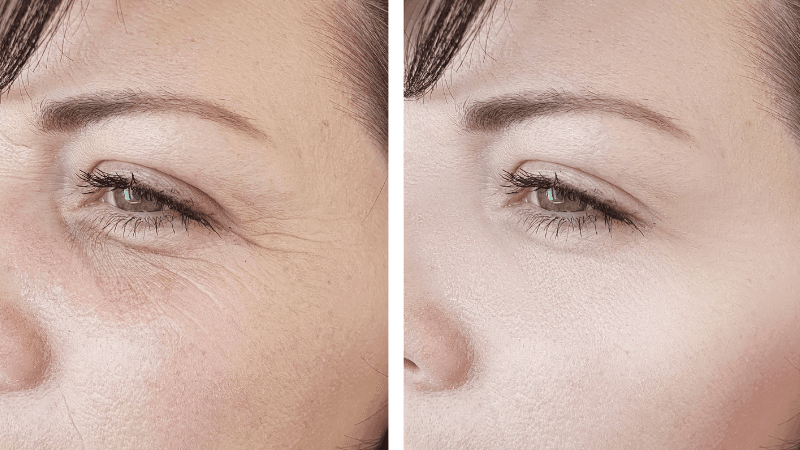
Why does one side of the face age faster than the other?
In the photo, the right cheek appears slightly heavier, there are more wrinkles near one eye, and one nasolabial fold is somehow more noticeable than the other. Sound familiar? Just because one side of your face seems to be aging faster doesn't necessarily mean there's something wrong. Slight asymmetry is natural, but with age, the difference between the sides can become more noticeable. If you'd like to assess the changes without a selfie, but rather with a professional, you can consult a cosmetologist by following the link to the website https://alvibeauty.com/ruua/salons/vinnytsia/cosmetology .
Let's take a look, without the horror stories, at why one side of the face ages faster and which of the reasons can actually be changed.
Why the face may age unevenly
The face isn't initially made up of two perfectly identical halves. The shape of the bones, the position of the soft tissues, the muscle function, and even the usual facial expressions vary slightly. With age, these small differences sometimes become more noticeable.
This is also confirmed by studies of facial asymmetry: with age, the degree of difference between the right and left halves of the face can increase. But this doesn't necessarily mean one side is "bad" and the other "young." More often, it's a combination of several small factors.
What a girl usually notices first:
- one nasolabial fold is deeper than the other;
- there are more small lines near one eye;
- one eyebrow or corner of the lips is positioned slightly differently;
- the contour of one cheek appears heavier.
Facial expressions and muscles don't work quite the same way.
Try smiling in front of a mirror. For most people, the movements on the right and left sides aren't perfectly mirrored. One side may be more active in smiling, squinting, or raising an eyebrow.
Therefore, wrinkles on one side of the face may appear more pronounced. This is especially noticeable in areas where facial expressions are repeated many times: near the eyes, between the eyebrows, and near the nasolabial fold.
But there's no need to deliberately "smile less" with one side of your face. Facial expressions are a normal part of life, and slight asymmetry in itself is not a medical condition.
Natural facial asymmetry becomes more noticeable with age.
One side of the face may have slightly different soft tissue volume, cheekbone position, or muscle function. While the skin is firm and elastic, the difference is barely noticeable. Later, it may become more noticeable.
Therefore, when one side of the face ages faster , it is more correct to think not about one mysterious reason, but about the sum of features that over the years have acted slightly differently on the right and left.
Why wrinkles on one side of the face may be worse
Wrinkles are just one of the features we use to evaluate a face. The appearance of age is also influenced by the volume of tissue, the position of the eyebrows, the contour of the cheeks, pigmentation, and the quality of the skin.
Because of this, the phrase "the right side looks older" doesn't always mean there are simply more wrinkles on the right. Sometimes one line is deeper, and sometimes several details are different.
How we look at ourselves is also important. A front-facing camera, side lighting, and a familiar angle can easily exaggerate subtle differences. Therefore, a single selfie isn't the best tool for assessing aging.
Can sleeping on one side increase facial asymmetry?
When sleeping on your side, your face actually comes into contact with the pillow, and your skin experiences mechanical pressure and deformation. Studies have shown that characteristic compression lines can form during sleep.
But caution is key here. Another study found no simple link between preferred side of sleep and which side women had more wrinkles or sagging tissue on. Therefore, the formula "sleep on the right side, and you'll definitely age faster on the right side" is overly simplistic.
Sleep is one possible factor, not the only explanation.
How UV and photoaging affect the sides of the face
There's more evidence here. UV radiation accumulates damage to the skin and, over time, is associated with wrinkles, age spots, and loss of skin smoothness. This process is called photoaging.
If one side of the face receives more sun exposure over the years, the signs of photoaging could theoretically also be distributed unevenly. A study of people with long-term asymmetrical UVA exposure through a window found differences in wrinkles, roughness, and skin unevenness between the sides.
This is one of the reasons why daily sun protection is more beneficial than a fashionable attempt to “erase” the difference that has already appeared.
What can you do if one side of your face looks older?
If you're concerned about why one side of your face ages faster and it remains a question every time you look in the mirror, start not with procedures, but with observations.
Can:
- check to see if you are applying sunscreen evenly over your entire face;
- notice repetitive facial expressions, but do not try to control them completely;
- pay attention to your usual sleeping position without the idea of “lying still all night”;
- maintain skin with basic hydration and sun protection;
- compare changes in the same lighting, not in random selfies.
Moisturizing skincare can make fine lines less noticeable, and regular sun protection helps prevent further sun damage. But creams can't reshape the facial anatomy or make the two halves of the face mathematically identical.
When facial asymmetry is no longer just a cosmetic issue
A slowly changing slight asymmetry and a sudden change in half of the face are completely different situations.
If one side of your body suddenly becomes weaker, droops, or exhibits significant asymmetry, along with numbness, speech impairment, or other acute symptoms, don't seek a solution in cosmetics. This is a reason to seek medical attention.
If the changes are gradual and the issue is purely aesthetic, it is best to first calmly evaluate them with a specialist, and only then decide whether any adjustments are necessary.
Frequently asked questions
Why does one side of the face age faster than the other?
There's usually no single cause. Appearance can depend on natural asymmetry, facial expressions, accumulated sun exposure, skin condition, and other individual factors.
Why are wrinkles more noticeable on one side of the face?
One side may be slightly more active in facial expressions, have different anatomy, or receive different external loads. Therefore, individual lines on the right and left sides sometimes appear different.
Can sleeping on one side increase facial asymmetry?
Sleeping on your side puts pressure on your skin, but research doesn't support the simple rule that your preferred side will make you look older. Sleeping on your side should be considered one possible factor, not the sole cause.
Why is one nasolabial fold deeper than the other?
The cause may be natural facial asymmetry, differences in facial expressions, and age-related changes in soft tissues. It's impossible to determine the exact cause from a single fold without assessing the face as a whole.
Is it possible to reduce the difference between the right and left sides of the face?
Sometimes, it's possible to reduce the impact of external factors—for example, by protecting your skin from the sun and maintaining a proper skincare routine. But the goal shouldn't be to create a perfectly symmetrical face: slight differences between the sides are natural.
When does facial asymmetry require medical attention?
If it occurs suddenly or is accompanied by weakness, numbness, speech impairment, or other unusual symptoms, a medical evaluation is needed, not a cosmetic experiment.