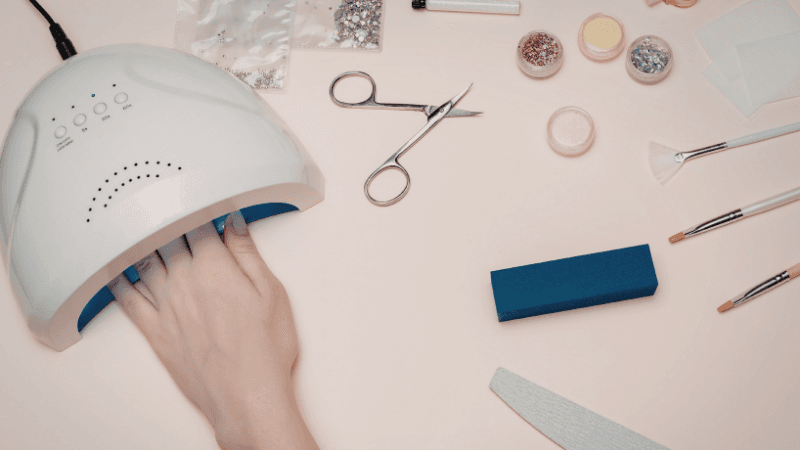
How to know if your manicurist is working safely: a checklist
A safe manicurist is one who opens instruments in front of the client, wears gloves and a mask, and sanitizes their hands beforehand. They'll check in on your well-being during the procedure and ask about any allergies. You can verify the professional's reliability even before your first appointment.
Looking for someone to trust with your nails? Alvibeauty.com/ru-ua/salons/dnipro/nailServices/manicure has reviews only from people who've actually visited the specialist. Twelve checklist points are below.
What you can catch from a bad manicurist
During a manicure, the instruments come into close contact with the skin. Micro-damages—even those you can't feel—become entry points for pathogens.
Consequences of contact with non-sterile instruments:
- Onychomycosis is a fungal infection of the nail. It's difficult to get rid of: treatment can take several months.
- A felon is a purulent inflammation of the tissue around the nail. In severe cases, the nail peels off completely.
- HPV (human papillomavirus) causes warts on the nail fold that grow over time.
- Hepatitis B and C are transmitted by cutting yourself with a contaminated instrument. The chance is small, but it cannot be ruled out.
Medical reality, not scaremongering.
What to check before recording
Real reviews, not pretty photos
Everyone has a portfolio of beautiful nails. Finding real feedback on a tidy workspace and the quality of cuticle care is harder. Look for repeat business: repeat clients are the best indicator of quality.
If you're not sure where to start your search, read our blog article on how to find a trusted professional online . We'll explain what to look for in a professional's profile before your first visit.
On AlviBeauty, you can only leave a rating for manicurists in Dnipro after a confirmed appointment—fake reviews are excluded.
Prices are listed openly
A professional who doesn't quote prices before an appointment often doesn't disclose other details of the work either. Pricing transparency is the first sign of an organized approach.
Photo of the workplace
Take a look at the profile photo of the workspace and assess the workspace. A tidy desk, closed tool containers, and cleanliness are signs of a systematic approach. A medical record is a mandatory document for a technician. A client is required to present it upon request.
If a manicure is part of your business look, read about what kind of manicure is appropriate for the office —it includes tips on choosing a polish that matches your dress code.
What to check in the chair
Gloves and a mask on the master
Gloves and a mask are standard, not a bonus. A technician who accepts nails without gloves is a reason to leave. Each client requires a new pair of gloves. Both clients need a mask, as nail dust gets airborne during machine treatments.
The instruments are opened in front of you.
After sterilization in an autoclave or dry heat sterilizer, the instruments are sealed in craft bags with an indicator. The indicator is a strip that changes color when properly sterilized. The technician opens the bag right before your eyes before the procedure.
Remember: an ultrasonic bath removes contaminants but does not kill fungal spores or viruses. Only an autoclave or dry heat sterilizer ensures complete sterility.
The instruments are lying on the table without packaging - find out when and how they were processed.
Hand sanitizer before starting
The technician applies sanitizer to your hands and theirs before the procedure. It takes 10 seconds and reduces the risk of infection. If it doesn't happen, ask questions immediately.
Disposable consumables from new packaging
The file, buff, orange stick, and wipes are disposable. Everything disposable is opened right before your eyes, right before the procedure. The file or buff is left on the table from the previous client—you're ready to leave.
The technician asks about allergies and the condition of the nails.
During the first visit, a good nail technician will clarify any allergies to the materials, fungus, or other nail conditions. Diabetes, anticoagulants, and nail fold papillomas are all conditions that a competent specialist will adapt or refer you to a doctor.
If your nails have become thin or brittle after your previous application, read how to restore your nails after gel polish . There you'll find expert advice on restoring your nail plate.
The master is interested in your feelings
He asks if it hurts or if it burns under the lamp. If your nails burn under the lamp, it's a sign of a burn. A good technician takes out his hand, turns it palm up for a few seconds, and continues. He says, "Be patient," which is a bad sign.
The correct response to a cut
Even experienced professionals get cuts. The difference lies in their reactions. The procedure is as follows: apply an antiseptic to the wound, then a hemostatic agent to stop the bleeding, then continue the procedure. After the procedure, the professional recommends treating the wound at home for 1-2 days.
I just blotted it with a napkin and continued - a violation of sanitary standards.
What to check after
A safe manicure doesn't end in the salon. The condition of your cuticles and nail polish in the first few days after the procedure reveals whether the manicurist performed the procedure correctly. Check two points.
Cuticle the next day
A little redness immediately after a manicure is normal. Inflammation, pain, or pus the next day is not. This is a sign of trauma or the onset of infection. Treat the wound with an antiseptic. If it doesn't resolve within 1-2 days, consult a dermatologist.
Coverage in 3-5 days
Gel polish shouldn't peel off during the first week. Peeling at the cuticle or edges indicates an error in prepping the nail plate before application. If you notice peeling, don't remove the coating with your hands.
If the coating didn't last even a week , we'll look at all the possible causes and ways to fix it.
Red flags: leave immediately
- Unpackaged instruments on the table pose a risk of contamination with fungi, bacteria, and HPV.
- The technician works without gloves, which poses a direct risk of cross-contamination.
- No antiseptic on your desk is a violation of basic hygiene.
- Disposable consumables are not changed - there is direct contact with the previous client's infection.
- Pain when working with cuticles - trauma, risk of inflammation.
- The technician does not respond to the cut - a violation of sanitary standards.
- Ultrasonic bath instead of autoclave - instruments are not sterile.
The criteria listed are universal—they're equally important for both women's and men's manicures. Read "Men's Manicure: Why You Need It and How to Choose a Professional " for an explanation of the specifics of choosing a specialist for men.
A question to ask the master
Ask directly: "How do you sterilize instruments?"
A safe technician will answer without irritation. They'll name the equipment—an autoclave or a dry heat sterilizer. They'll say they store their instruments in Kraft bags with an indicator.
A technician says, "I disinfect everything," without further elaboration—that's not an answer. Disinfection and sterilization are different procedures. Disinfection kills some microorganisms. Sterilization destroys everything, including fungal spores and viruses. Only an autoclave or dry heat sterilizer can ensure complete sterility.
Checklist: 12 points for a safe master
Before recording
Real reviews from confirmed repeat customers, prices are open, and photos show a clean workspace.
In the chair
Protective gloves and a mask are worn. The sealed paper bag is opened right in front of you. Hands are sanitized before the procedure. All supplies are new and sealed. Questions about allergies and nail health are asked during the first visit. The technician monitors your condition. Cuts are treated with antiseptic first, then with a hemostatic agent.
After
The next day, the cuticles are free of inflammation. The coating does not peel off during the first week.
Use this checklist for every appointment. Before an important event—a wedding, graduation, or business meeting—book in advance. Read How Many Days in Advance to Book a Manicure Before an Important Event for precise timeframes and tips.
Frequently Asked Questions
- How do you know if a manicurist is good?
Look for three things. The instruments are opened in front of you from a craft bag with an indicator. The technician wears gloves and a mask. Reviews from real clients confirm repeat visits. A returning client means a good technician.
- What infections can a manicurist bring in?
Unsterile instruments can be a source of onychomycosis, felon, and human papillomavirus (HPV) infections, which can cause characteristic growths on the nail fold. Hepatitis can be transmitted through cuts with contaminated instruments, although the risk is small but still present. This risk is minimized by autoclaving and using disposable equipment.
- How to ensure safety during a manicure?
Check out the technician before your appointment, using reviews and photos of their workstation. While in the chair, make sure the instruments are opened in front of you. Ask directly about sterilization. If you're not satisfied with anything, you have the right to leave before the procedure.
- What is the most harmless manicure?
Hardware manicure without cutting the cuticle. Minimal risk of cuts and infection. The cuticle is the nail's protective barrier. The less trauma it receives, the lower the risk of infection. Safety is determined by the sterility of the instruments, regardless of the technique.
- Is it possible to ask the technician to show how he sterilizes instruments?
Yes. This is your right as a client. A qualified specialist will calmly demonstrate the sterilization technique and name the equipment. If the technician avoids answering the question or becomes irritated, this is a warning sign.
- Can a nail file be reused?
No. The file and buff are disposable and discarded after each client. Metal instruments undergo a full sterilization cycle and are stored in sealed bags with an indicator until the next client.
Related articles:
- Gel polish manicure: why it peels and how to avoid it
- How to restore nails after gel polish: tips from the experts
- Manicure before an important event: how many days in advance should I book?
- A manicure salon is a space where perfection is born.
- How to find a manicurist online
- All about men's manicures: why and how to choose a specialist
- What kind of manicure is suitable for the office: choosing according to the dress code .