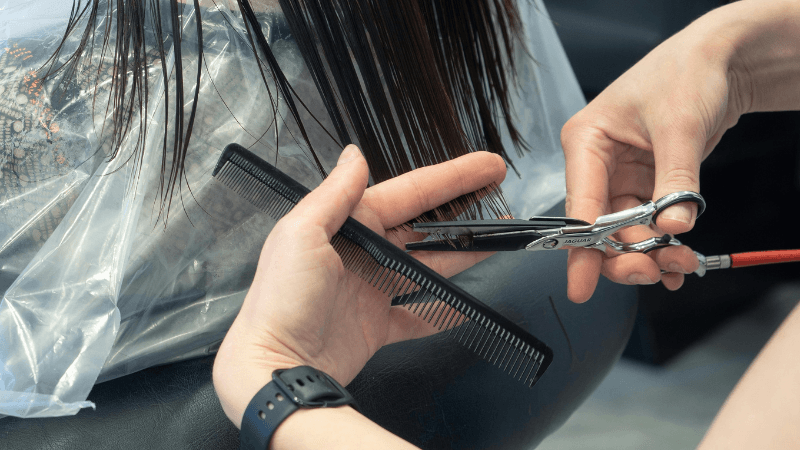
How to communicate with your barber to get the hairstyle you want.
Have you ever had a detailed conversation with your hairdresser, only to have the hairstyle you see in the mirror completely different once the cape is pulled off? This happens more often than you think, and the main reason isn't usually the hairdresser's skill, but a gap between what you say and what they understand. Before we delve into communication techniques, check out these salon options here ( https://alvibeauty.com/th-th/salons/bangkok/hairdressers ). Then, this article will explain how to communicate effectively with your hairdresser to get the hairstyle you want, from preparation and terminology to when you should consider changing hairdressers.
Why is my haircut still not what I'm looking for even after talking to the hairdresser?
The main reasons stem from three factors. First, your description is too broad. Your "just a little bit short" might not accurately reflect the stylist's understanding. Second, you didn't specify the desired style, leaving the stylist without a clear idea of your limitations. Third, the hairstyle in the picture you brought might not suit your face shape and hair type, forcing the stylist to make adjustments without prior explanation. Knowing the causes, the next step is to provide clear information before visiting the salon.
Preparing before going to the salon: Things to tell the technician clearly.
Tell us the desired hair length.
Specify your desired hair length in precise measurements, not broad terms like "a little shorter." Include centimeters or a point of reference on your body, such as shoulder length, chin length, or mid-back length. Also, mention how often you usually get your hair cut so the stylist can accurately estimate the length before your next appointment.
Describe your preferred shape and style.
Choose a hairstyle that suits you based on your past experiences. For example, you might have liked layered hair or tried bangs and felt they didn't suit your face. This information helps the stylist visualize the style faster than explaining a new style from scratch. Also, mention how much time you usually spend styling your hair each day, as some styles require more maintenance than you might think.
Terminology and ways to describe hairstyles that hairdressers can easily understand.
Knowing some essential hair styling terminology can save a lot of communication. "Layers" refer to layering the hair to create varying lengths and add dimension. "Hair weight" refers to the overall thickness of the style; heavier hair creates a denser, fuller look, while lighter hair adds volume. Also, always mention your hair type, as curly, straight, or fine hair require different cutting techniques. Consulting your stylist about these points beforehand significantly reduces the chance of misunderstandings compared to verbal explanations alone.
Communicate clearly with the technician to ensure mutual understanding.
Words that help to communicate clearly.
Instead of saying "make it pretty," specify the desired outcome. For example, "I want a style that's easy to style in the morning," or "I want a style that's easy to manage and doesn't require long blow-drying sessions." Clearly stating the desired outcome helps the stylist choose the right technique from the start.
Phrases to avoid because they can be misunderstood.
"Let the stylist decide" sounds friendly, but it easily opens up the possibility of the result not being what you expect. If you're really unsure, set limits beforehand, such as, "You can give me your opinion, but please don't make it shorter than shoulder length." This gives the stylist room to use their expertise while still keeping the result within a range you're comfortable with.
When should you choose a professional instead of a general handyman?
No matter how well you prepare or how clearly you communicate, some hairstyles require the experience of a specifically trained hairdresser. If you've discussed your desired style in detail but repeatedly haven't achieved the desired look, it's a sign that the problem may not be communication, but rather the hairdresser's level of experience. In this case, switching to a hairdresser with expertise in the specific style you want and dedicating time for consultation before starting is a more direct solution than repeatedly explaining your needs. If you're looking for a team that's willing to listen and plan your desired style with you before the actual cut, consider a team of professional hairdressers in Bangkok who prioritize understanding your desired style from the very beginning.
Frequently Asked Questions
How do you communicate effectively with your barber to reach a mutual understanding?
Clearly specify the length, style, and type of hair from the start, including both the desired and undesired styles.
Should I show this picture to my hairdresser?
Images are very helpful because they reduce misinterpretation of spoken words, but you should also explain what you particularly like about the picture.
Why did I tell the hairdresser, but the style I got wasn't right?
It's mostly due to overly broad language or a lack of clear definition, not always because the craftsman lacks skill.
If you've had a good conversation but haven't gotten the desired result, what should you do?
Consider that the problem may no longer be a communication issue, but rather a level of experience on the part of the stylist. Switching to a stylist who specializes in that particular style is often a better option.
When should you switch to a professional mechanic?
If, after repeatedly discussing the details, the result still isn't what you want, it's a sign that it's time to find a stylist with experience in the specific style you desire.