Nail Extensions: Everything You Need to Know Before Your First Visit
- Nail extensions – what you need to know before you sit in the salon chair. Hands give us away instantly. Not age, not fatigue – it's our nails. Long, neat, and perfectly shaped – and it transforms our entire look. That's why many people decide to get extensions. And the first question that comes to mind is: what if it's harmful? What if it hurts? What if it doesn't work? We'll break it down honestly – without marketing or scaremongering. You can schedule your first consultation and extensions here at https://alvibeauty.com/ru-ua/salons/kyiv/nailServices .
Who is eyelash extension suitable for and who is not?
Short nails that break on the third day after a manicure. Thin nails that bend with every touch. A nail-biting habit you can't seem to break. These are the three most common reasons people come to get their first nail extensions.
Eyelash extensions are right for you if:
- nails are brittle and don't hold their length,
- the plate is thin and soft,
- you want a specific shape that you can’t grow on your own,
- or you just want to do it once a month and forget about it.
Extensions are not suitable if:
- there is a fungal infection on the nails, there is onycholysis (separation of the plate from the bed),
- Are you currently on a course of antibiotics or chemotherapy?
- hormonal drugs, breastfeeding or pregnant - in the latter
- In this case, it is better to discuss it with your doctor separately.
These aren't horror stories. It's simply biology: under certain conditions, the material's adhesion is compromised, creating an environment under the coating that exacerbates the problem. During a consultation, a technician will always examine the condition of your nails and skin—and, if necessary, will be honest.
Types of extensions: gel, acrylic, polygel, gel tips
Not all nail extensions are created equal. The materials used vary, and the choice depends on what you want and the type of nails you have.
Gel extensions
The most popular option. The gel is flexible, looks extremely natural, and is odorless. It hardens under an LED or UV lamp. It lasts for 2-3 weeks.
Choose gel if your nails are thin and brittle—the material creates a protective framework. And if a natural look is important, gel nails are very difficult to distinguish from natural ones.
Acrylic extensions
Gel's older, more durable brother. It air-cures without a lamp. It's stronger, denser, and lasts for about three weeks. If cracked, it's easily repaired, eliminating the need to redo the entire process.
One downside: the monomer smell during the procedure. It's not a deal-breaker, but those sensitive to odors should warn the technician in advance.
Polygel
A hybrid of gel and acrylic. It has no pungent odor, cures in a lamp, comes in a tube, and comes pre-colored. It lasts 3-4 weeks. It's currently the most popular material among professional nail technicians—it's forgiving, easy to shape, and creates a beautiful shape even on very short nails.
Gel tips (top forms)
The most gentle option. The overlay is placed on top and filled with gel, minimizing the filing of the natural nail. It lasts up to a month. It's a good choice if you're wary of filing or are new to nail extensions.
Gel, acrylic, or polygel—what to choose?
If you're new to the procedure and don't know what to choose, don't decide for yourself. That's why we offer a pre-procedure consultation.
A good rule of thumb:
The technician looks at your nails and suggests a material based on your nail type. If your nails are soft and thin, it's likely a gel or polygel. If you want the longest possible shape and durability, acrylic. If you're worried about filing, try gel tips.
Alvibeauty studio's nail technicians conduct a short consultation before each initial nail extension: they examine your nails, ask about your lifestyle, and only then suggest a suitable option. Choosing the right material isn't your responsibility; it's the technician's . For information on choosing a nail technician you can trust with your nails, read the article "How to Choose a Manicurist: What to Consider ."
How to Prepare for Eyelash Extensions – 5 Rules
Read this carefully. This is something almost no one tells clients in advance—but it determines how well the extensions will last. For more information on proper preparation, see the article How to Prepare for a Manicure or Pedicure Before Your Visit .
- First, avoid soaking your nails at least three days before your appointment. Ideally, a week before. Wet cuticles and steamed skin will impair the adhesion of the gel—the gel simply won't adhere properly.
- Second, don't apply cuticle oil the day before the procedure. Oil creates a greasy film on the cuticle—the enemy of any extension.
- Third, come with clean, unpainted nails. Don't remove polish with acetone right before the appointment—the technician will do it properly.
- Fourth. Don't try to "fix" your nails yourself before your appointment. The more you touch them, the harder it is for the technician to work on the surrounding skin.
- Fifth. Decide on the shape and length in advance. Look at references, save images. It doesn't have to be an exact copy, but a general direction will greatly speed up the process and help you achieve exactly what you want.
How the procedure works – for the client, not for the technician
You sit down in the chair, and the first thing the technician does is look at your nails. She evaluates the nail plate, cuticles, and skin condition. If you have any questions, she asks them right away.
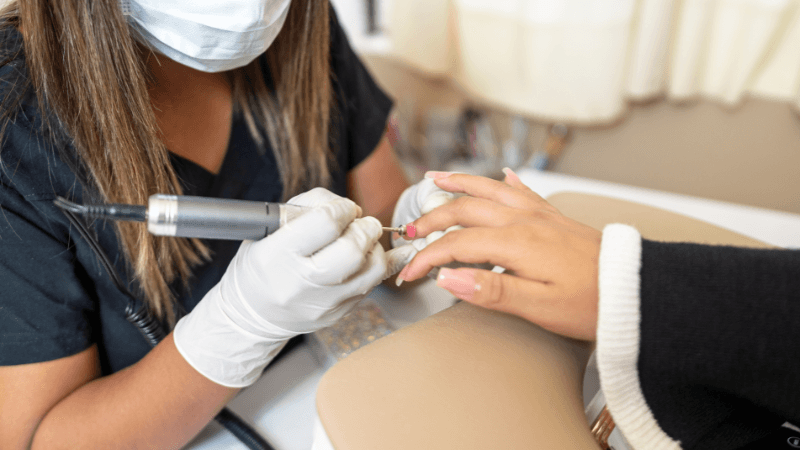
Next comes the preparation: hardware manicure, degreasing, and adhesion primer. Then, a form or tip is applied, and the gel is applied layer by layer, each layer being cured under a lamp.
The final stage involves filing, shaping, polishing, and applying cuticle oil. The entire process takes 2-3 hours. Polygel takes a little longer.
It shouldn't hurt . A slight warmth from the lamp is normal. A burning sensation is a sign that the base is too acidic. If something isn't right, tell the technician right away; don't keep quiet.
Nail Extension Myths: What's True and What's Not
Over the years, many stories have accumulated around eyelash extensions. Let's examine four of the most enduring.
Myth one: extensions destroy natural nails.
The truth: it's not the material that's damaging—it's the unqualified technician. Excessive filing, improper removal, and harsh acidic nail polish are the real causes of thinning nails. With the right technique, the natural nail underneath the extensions is safe.
Myth two: fungus grows under the gel.
Truth: Fungus develops in damp conditions and unsterile instruments. It's not caused by gel. Pseudomonia (greenish spots under the nail) is a bacteria that appears where the nail polish has peeled off and the nail technician has applied new material over it without cleaning it. Choose a studio that autoclaves their instruments—and you won't get fungus.
Myth three: acrylic is the most harmful.
Truth: Modern acrylic materials do not contain methyl methacrylate, which is what caused allergies in older formulas. Modern acrylic is safe when used correctly. The only real drawback is the monomer smell.
Myth number four: it’s scary the first time and it takes a long time to get used to it.
Truth: If you choose the right length and shape, discomfort is minimal. The first couple of days will feel unusual, especially if your nails were previously very short. This will pass quickly.
Caring for extended nails after the procedure
Once you leave the salon, the real treatment begins. Here are a few tips to really prolong your results.
The first 24 hours
Avoid saunas, steam rooms, or hot tubs. Temperature fluctuations during the first 24 hours will disrupt adhesion and may cause the coating to peel off.
The first hours
During the first few hours, avoid tapping your nails on hard surfaces. The material hasn't yet reached its final strength.
Dishes, cleaning, washing - only with gloves.
This applies to all manicures, but it's especially important for nail extensions. Water and chemicals break down the coating from the inside.
Cuticle oil - every day
The pterygium grows more slowly, the skin around the nail looks neat, and the coating lasts longer.
Acetone and solvents
Avoid acetone and solvents completely. Even when removing regular nail polish from extensions, use only acetone-free products.
Correction
Correction – every 3-4 weeks. Don't wait longer than 6 weeks. The longer the nail grows, the greater the stress on the natural nail plate in the growth zone, and the higher the risk of breakage.
Removing nail extensions yourself is not recommended . Peeling and filing them off at home means removing the top layer of the natural nail along with the gel. This type of removal leaves nails thin and transparent. Only a professional can do this properly.
For information on how to care for your nails between visits, read the article "Care for your nails at home between visits to the nail technician ."
Frequently Asked Questions
How much do nail extensions cost in Kyiv?
Prices vary widely. Home-based services start at 200 UAH. Professional studios in the city center start at 900 UAH and up. Prices depend on the material, length, design, and experience of the artist. One thing you definitely shouldn't skimp on is skill.
Gel or acrylic – which is better for the first time?
For first-time extensions, gel or polygel are often recommended. They're more flexible, easier to tolerate if you're not used to the length, and easier to remove. Acrylic is a good choice if you need maximum strength or a very long extension.
Is it possible to get eyelash extensions during pregnancy?
Officially, it's not recommended during the first trimester. After that, consult your doctor. The smell of acrylic monomer is definitely best avoided during pregnancy.
What are the disadvantages of nail extensions?
Honestly, the procedure takes 2-3 hours, requires regular touch-ups every 3-4 weeks, and can't be removed without damaging your nails. Another downside is that you need to get used to the length in everyday life. Therefore, it's best to go for a medium length the first time.
How do you know when it's time for a correction?
Not by the calendar, but by your nails. A loose nail near the cuticle is noticeable, the polish is starting to fade, or a chip has appeared. Any of these signals is time to make an appointment. For more information on the frequency of appointments, see the article " How Often Can You Get a Manicure: Recommendations from Professionals ."
Related articles:
If you want to dig deeper, here are some articles that logically follow this topic.