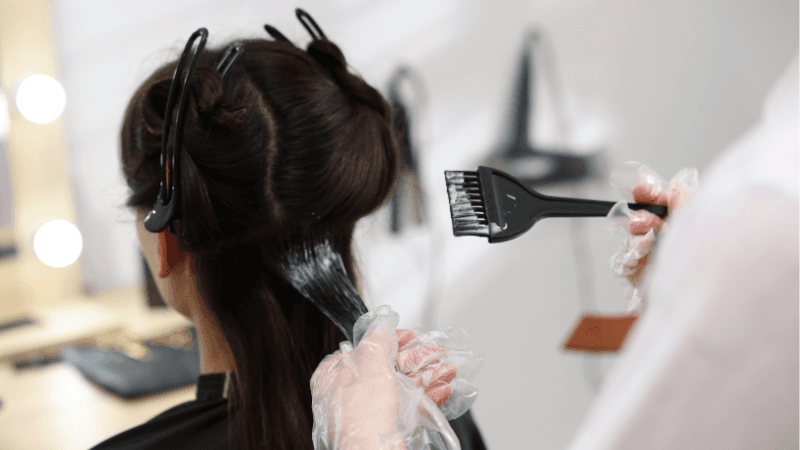
Hair coloring or hair care: when you need a specialist
After changing your hair color, it can become dry, tangled, or lose its shine. Sometimes, proper hair care for color-treated hair can help, but if you're experiencing breakage, spots, or the effects of bleaching, it's best to consult a professional. On AlviBeauty, you can compare hairdressing services in Kyiv , view procedures, prices, and choose a professional.
What happens to hair during coloring?
To allow the color pigment to penetrate, the dye opens the hair cuticle. After the procedure, hair may lose moisture faster, become more porous, and react more sensitively to heat.
Bleaching can reduce elasticity and increase breakage. Therefore, coloring damaged hair shouldn't be planned solely based on a photograph of the desired result. It's important to first assess the condition of the hair length and the results of previous treatments.
When home care is enough for your hair
Home care is suitable if the color is even, the hair doesn't break, and the problem is limited to minor dryness or lack of shine. In this situation, proper care of color-treated hair helps maintain the color.
Basic care after hair coloring
Usually it is enough:
- mild shampoo and conditioner;
- masks once or twice a week;
- leave-in conditioner and heat protection;
- warm, not hot water.
Post-color hair care should take into account the frequency of washing, the use of curling irons and flat irons, and sun exposure. A mask won't compensate for constant heat styling without protection.
Signs that a homemade mask is no longer enough
The mask may reduce dryness, but it won't even out patchy skin or repair serious damage.
A specialist consultation is necessary if:
- hair breaks off or wet strands stretch a lot;
- the color has become patchy or an unwanted shade has appeared;
- After bleaching, the length became stiff and tangled;
- The ends are crumbling and the condition gets worse after washing.
In such cases, hair restoration after coloring should begin with determining the cause. Sometimes professional care is required, sometimes toning or color correction. Sometimes it's best to postpone a new coloring.
When is hair coloring needed and when is hair restoration needed?
Coloring solves color problems. Toning refreshes the shade or neutralizes yellowness. Restoration addresses dryness, porosity, brittleness, and loss of elasticity.
If the color is even but the lengths have become dry, re-dyeing won't improve its condition. If the hair has retained its density but the color is patchy, a mask alone won't improve the results.
You need to determine what exactly you're unhappy with: the color or the length. It's also important to determine whether your hair can withstand the new treatment.
Why you shouldn't choose a procedure by name alone
Dull color can be due to pigment leaching, high porosity, or buildup from styling products. Yellowish blonde may require toning. However, if breakage is severe, it's more important to first assess the extent of the damage.
When you shouldn't re-color your hair without consultation
Re-dyeing is especially risky after aggressive bleaching, several home treatments in a row, using an unknown dye, or if the hair is brittle or transitioning from a dark to a light shade.
Tell your stylist if you have previously used henna or basma: the plant pigment may alter the results of the new procedure.
If you don’t know when you can re-color your hair, consider:
- composition and technique of the previous coloring;
- strength and porosity of length;
- presence of lightening;
- desired change in shade;
- scalp condition.
Sometimes, just coloring the roots is enough. In other situations, it's safer to opt for a softer tint or postpone the procedure.
How to prepare for a consultation with a specialist
Before your appointment, remember when your hair was colored, what color was used, and whether any bleaching, stripping, or at-home touch-ups were performed. Have photos of your desired shade ready.
Don't hide your unsuccessful experiments. This information will help you understand whether color can be corrected without re-lightening and how to prepare damaged hair for coloring.
How to choose the right service and specialist
The hairstylist's specialization, experience with the required technique, and examples of similar work are important. Before booking, clarify whether a consultation is available, whether a test strand is required, how many steps the color change will take, and what post-treatment care is required.
If you want to understand how to care for your color-treated hair , ask about washing frequency, heat protection, color maintenance, and the appropriate time interval between treatments.
Frequently Asked Questions
When is it better to do hair care – before or after coloring?
Basic care is essential at all times. If you notice noticeable dryness and brittleness, check your hair's condition before coloring. After coloring, care helps maintain moisture and color.
Is it possible to dye dry and brittle hair?
The decision depends on the condition of the hair, the composition of the dye, and the chosen coloring method. If the wet strands are very brittle and stretchy, consult a hairdresser first.
How can I help my hair if it becomes dry after dyeing?
Reduce heat styling and use a gentle shampoo, conditioner, mask, and leave-in protection. If the condition worsens, consult a professional.
When can I re-color my hair?
There's no universal time frame. It's important to consider the type of dye, the condition of your hair, and the intensity of your previous treatment.
What to do if the color appears in spots?
Don't cover up the results with new color. This could be due to differences in porosity or residual pigment. A colorist should determine the corrective method.
How to maintain hair color after dyeing?
Use gentle cleansing, warm water, conditioner, heat protection and sun protection.
When home care won't help anymore?
Consult a specialist if you experience severe breakage, stretching when wet, patchy color, unwanted shade, or persistent worsening of hair condition.