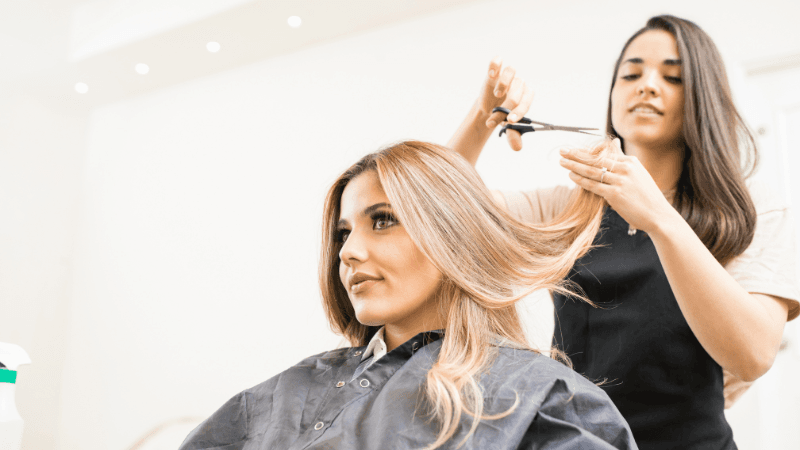
What types of hairdressing services are there?
Hairdressing services are more than just a haircut. At the salon, you can change the length and shape of your hair, style it, color it, treat it, restore it, or add extensions. Therefore, before making an appointment, it's important to understand the different hairdressing services available and what kind of professional is best for your needs.
For those who have already decided on a procedure, it is convenient to compare hairdressing services in Kyiv on the website https://alvibeauty.com/ru-ua/salons/kyiv/hairdressers by cost, duration, and salon location.
What is included in hairdressing services?
Types of hairdressing services can be divided into several main areas:
- haircuts and length correction;
- styling and hairdos;
- coloring and toning;
- care and restoration;
- change in hair structure;
- hair extensions and correction.
This classification of hairdressing services helps you choose a professional more quickly. A basic haircut or simple styling is usually performed by a hairdresser. Complex coloring requires a colorist, and extensions require a specialist with a specific focus.
Haircuts, styling and hairstyles
The main types of hairdressing services include women's, men's, and children's haircuts, shape correction, trimming of ends, and bangs. Sometimes, a slight length update is enough. However, if your hair is uneven and styling it daily takes a long time, it's best to discuss a new style with your stylist.
Styling creates temporary volume and direction in hair using a blow dryer, flat iron, or styling products. The hairstyle is usually more complex and may include braids, updos, and stronger hold. For an everyday look, styling is often sufficient, while for a wedding, photo shoot, or special occasion, an updo is chosen.
Hair coloring and colorist services
Coloring includes root treatments, solid color, toning, highlighting, bleaching, complex techniques, and gray camouflage. Toning typically corrects the shade and is less long-lasting than permanent color.
You should consult a colorist when transitioning from a dark color, significantly lightening your hair, correcting a poor result, or working with damaged hair. Before the procedure, it's important to tell your stylist about your previous coloring experiences, henna or basma treatments, perms, and any home experiments. This will help them more accurately assess your hair's condition and choose a safe procedure.
Hair care, restoration and restructuring
Hair care treatments maintain smoothness, shine, and softness. Restorative treatments are chosen when hair has become dry, brittle, or dull after bleaching, frequent coloring, or heat styling.
This group includes reconstruction, lamination, hair Botox, and other professional treatments. They can make combing easier and reduce the appearance of dryness, but they don't provide permanent results. The effect depends on the composition, the initial condition of the hair, and home care.
Keratin straightening, perming, and permanent styling alter the hair's behavior or structure. Before such treatments, a hairstylist should assess the hair's strength to avoid overloading already weakened strands.
Hair extensions and other specialized services
Hair extensions help quickly increase length or thickness. Capsule and tape-in techniques are the most common. After the procedure, touch-ups, proper home care, and professional hair removal are required.
Before your appointment, the stylist will assess the condition of your hair. If it's thin or weak, additional hair care may not be appropriate. In this case, they'll recommend treatment or restoration first, and then make the decision about extensions later.
When you need a specialist
The services hairdressers provide depend on their training. A standard hairdresser performs haircuts and simple styling. A stylist helps choose a shape and style, a colorist works with complex colors, and an extension specialist is responsible for installation, correction, and removal of extensions.
A specialist is especially needed if you want:
- radically change color;
- correct unsuccessful coloring;
- restore severely damaged hair;
- get extensions;
- choose a new haircut to suit your appearance and lifestyle.
If you experience severe hair loss, itching, or scalp irritation, consult a trichologist or doctor. This is not a typical hairdressing service.
How to choose the right service
First, determine your goal: change the length, shape, color, texture, or condition of your hair. Then, consider your hair's length, thickness, damage, and previous treatments.
Before recording, it is useful to:
- select a master of the required specialization;
- clarify the full cost and duration;
- ask if a preliminary consultation is necessary;
- find out what care will be required after the procedure.
Modern hairdressing services often overlap. For example, after bleaching, you might need toning and restoration, and after a haircut, you might need styling. Therefore, it's better to choose a procedure that reflects the actual condition of your hair and the desired result, rather than a specific trendy name.
Frequently Asked Questions
What services are considered hairdressing?
These include haircuts, styling, hair styling, coloring, care, restoration, straightening, curling, and hair extensions. The specific list depends on the salon's specialization and the stylists.
What is the difference between styling and a hairstyle?
Styling creates temporary shape and volume. The hairstyle is usually more complex, has a stronger hold, and is often done for a specific occasion.
When to see a colorist?
For complex shade changes, lightening, correcting unsuccessful coloring, or working with damaged hair.
Is a consultation necessary before the procedure?
This is especially important before radical coloring, texture modification, or extensions. A consultation helps assess the condition of the hair, the potential results, the cost, and the number of steps.