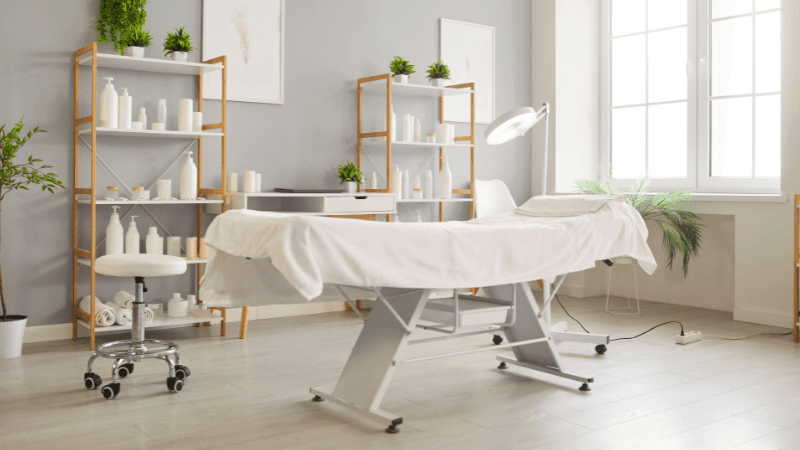
Types of cosmetic procedures
Cosmetology procedures aren't a guessing game, but rather three clear categories: skincare, hardware, and injection cosmetology. Each offers its own level of intervention, pace, and results. We'll explore the differences between these procedures and how to choose the one that's right for you—without rushing or unnecessary jargon. And if you want to get straight to the point, here are the procedures included in our cosmetology program at our Dnipro salon .
What are cosmetic procedures?
Cosmetology procedures are facial and body skin care methods that address specific aesthetic concerns, from simple moisturizing to serious correction of age-related changes. Cosmetology is performed by a cosmetologist or a cosmetologist-esthetician. The difference lies in their education and certification in injectable and instrumental techniques: a physician can perform a full range of procedures, including beauty injections, while an esthetician can only perform skincare and basic techniques.
All facial procedures are divided into three categories based on the depth of their impact. Skin-care treatments focus on the surface of the skin and are suitable for regular, gentle care. Machine-based treatments utilize technology—lasers, radio waves, and ultrasound—and produce more noticeable and lasting results. Injectable treatments intervene most deeply: the product is injected directly into the skin's layers, so a physician's involvement is essential.
Non-invasive treatments: what's included and when is it enough?
Skincare cosmetology is the most gentle category: no skin punctures, no long recovery time, and minimal contraindications. This includes facial cleansing (we wrote about the types of cleansing in detail in a separate article), chemical peels, thermolifting, non-needle mesotherapy, and microcurrent therapy.
Chemical peels renew the top layer of skin using acids, helping with pigmentation, post-acne, and a dull complexion. Thermolifting gently warms the deeper layers, stimulating collagen and elastin production—the effect is cumulative yet natural. Needle-free mesotherapy and microcurrent therapy deliver beneficial substances to the skin and stimulate metabolic processes without a single puncture.
Treatments are usually sufficient if the goal is to maintain skin tone rather than address existing wrinkles or ptosis. This is more of a regular maintenance routine than a one-time solution.
Hardware cosmetology: what methods are used and for what purpose
Hardware cosmetology utilizes technology where manual techniques and acids are no longer effective. SMAS lifting and RF lifting work at the muscular-aponeurotic layer, tightening the facial contours without surgery through natural cell regeneration. Laser rejuvenation and photorejuvenation (IPL therapy) even out skin tone, combat pigmentation and rosacea, and stimulate collagen production. Microneedling involves controlled microtraumas of the skin that trigger skin renewal from within. Laser hair removal also falls into this category technically, although it addresses a different issue.
The difference with treatment methods lies in the depth and durability of the results: hardware treatments act not only on the surface, and the effect lasts longer, but recovery may also take a little longer.
Injectable cosmetology: what do beauty injections do?
Injectable cosmetology is when results are targeted and achieved quickly, and the product is injected directly into the desired layer of skin. Botulinum toxin therapy relaxes facial muscles and smoothes expression lines. Biorevitalization involves hyaluronic acid injections that restore skin firmness and elasticity and replenish moisture lost with age. Injectable mesotherapy infuses the skin with microelements and stimulates cell regeneration. Contouring reshapes the face, reshapes the volume and proportions, PRP therapy uses the patient's own blood plasma for rejuvenation, and thread lifting tightens facial contours using self-absorbable threads.
All injection procedures are performed exclusively by a cosmetologist with a medical degree—this is not a case where you should skimp on the specialist's qualifications.
Indications and contraindications: who is suitable for cosmetic procedures?
Indications for cosmetic procedures are determined individually based on skin type, age, and specific aesthetic concerns, such as pigmentation, wrinkles, decreased skin tone, and enlarged pores. There are several general contraindications, applicable to most procedures: pregnancy and breastfeeding, acute inflammatory processes and skin infections, cancer, bleeding disorders, and individual intolerance to any of the product's components.
The exact list of indications and contraindications for a specific procedure will be determined by the doctor during the consultation; choosing an injection or hardware technique based on an online description is not recommended.
How does a consultation with a cosmetologist proceed?
The first visit to the cosmetologist begins with a skin diagnosis: the specialist assesses your skin type and sensitivity, clarifies your medical history, and discusses previous treatments. Based on this, a personalized plan is proposed—a specific procedure or course of treatments, as well as a recovery period, if needed. The cosmetologist will warn you in advance about possible side effects and what to avoid before and after the procedure, from sun exposure to active acids in your home care routine.
If a specialist immediately suggests a specific, expensive procedure without examining or asking about your skin's condition, this is a reason to be wary, not a reason to agree.
How to choose a cosmetic procedure: where to start
If the list of three categories is more intimidating than helpful, here's a simple guide. Want to maintain your skin and prevent problems? Start with skincare; it's forgiving and requires no downtime. If you have a specific concern—pigmentation, tone, fine wrinkles—instrumental methods address it more precisely and last longer. If you need quick and visible results by a specific date, injectable cosmetology is the way to go, but only after a consultation with a doctor.
And the main rule that always applies: the procedure is chosen not by advertising or a friend with a similar problem, but by a cosmetologist - after examining your skin.
Frequently asked questions about cosmetic procedures
What types of cosmetic procedures are there?
All cosmetic procedures are divided into three groups: care (non-invasive), hardware-based, and injection-based—a detailed analysis of each category is provided above.
What cosmetic procedures are considered the most effective?
There's no clear winner—effectiveness depends on the specific treatment. Botulinum toxin therapy is often effective for expression wrinkles, hardware-based techniques for skin tone, and regular treatments for prevention.
Is it possible to have cosmetic procedures during pregnancy?
Most injection and device procedures are contraindicated during pregnancy and breastfeeding. Skin care treatments should only be used after consultation with a doctor, who will evaluate the ingredients used.
How often can you have cosmetic procedures?
It depends on the type: treatments can be done on a regular schedule—every few weeks—while hardware and injection treatments require intervals ranging from several weeks to several months—the exact schedule is determined by a cosmetologist.
How long does recovery take after cosmetic procedures?
Treatments typically require no recovery time. After mechanical procedures, slight redness may occur for 1-2 days, while injection procedures may cause slight swelling or bruising, which resolves within a few days.
How to choose a cosmetic procedure if you don’t know where to start?
Start with a consultation with a cosmetologist, rather than searching for a procedure based on your symptoms. A specialist will evaluate your skin and offer a plan that will address your specific needs, not the most popular one on the internet.