Блог
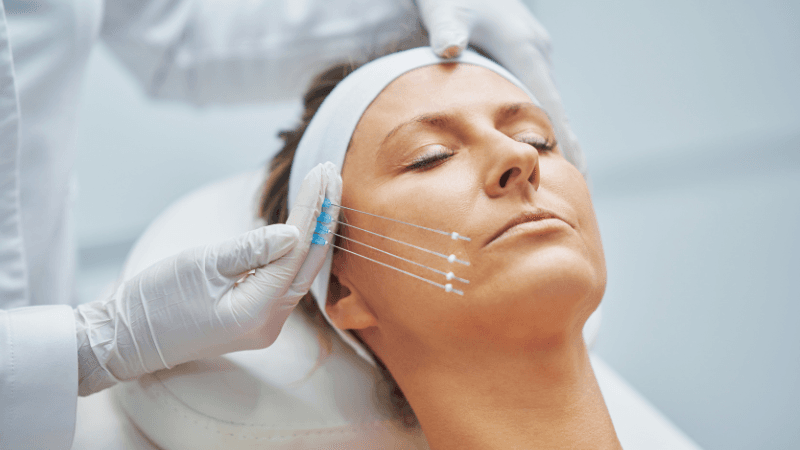
Thread Facelift: Myths, Risks, and Real Results
If you're increasingly considering a facelift, but the idea of surgery is daunting and age-related changes aren't yet severe enough to warrant surgery, thread lifting may be an option. Thread lifting allows you to reshape your face without surgical incisions, but the procedure has limitations and isn't suitable for everyone.
Let's take a closer look at how the method works, what results to expect, and what's important to know before the procedure. You can find the right cosmetology service and location for the procedure in the cosmetology section in Kharkiv .
Thread lifting: what it is and how it works
What is thread lifting? Briefly, it's a minimally invasive procedure in which special threads are inserted under the skin. Depending on the type of thread, this method can be used for tissue stabilization, facial contouring, or skin reinforcement.
Mechanical fixation of tissues
The barbed threads are anchored in the tissue and hold it in its new position. Initial changes may be noticeable immediately after the procedure, but the final result should be assessed after swelling has subsided and the initial recovery period has completed.
Formation of a collagen framework
After the thread is inserted, connective tissue gradually forms around it. This process can maintain the achieved effect even after partial or complete absorption of the material.
Insertion of threads through micro punctures
The doctor inserts the threads using a needle or cannula through small punctures. Incisions and sutures are usually not required. The procedure is usually performed under local anesthesia.
Thread lifting encompasses several methods. Their effectiveness depends on the material, shape, and placement method of the threads.
Types of threads: how they differ
Different types of threads are used for thread lifting. The choice determines the severity of the correction, the duration of the results, and the recovery process.
Mesothreads: smooth and spiral
These threads are used primarily for tissue reinforcement. They do not provide significant mechanical lifting and are generally considered for minor age-related changes.
Threads with notches
The notches help hold the tissue in place. These threads are used to correct facial contours or specific areas. Aptos and Happy Lift are examples of brands, but a doctor should select the specific system after a medical examination.
Gold and platinum threads
This is a separate group of non-absorbable sutures. They are used less frequently, and the presence of precious metal does not necessarily mean the results will be more pronounced or last longer.
Who is thread lifting suitable for?
The procedure may be considered for cases of initial or moderate tissue sagging, loss of facial contour, and localized age-related changes. Indications can only be determined during an in-person examination.
Age alone is not the primary criterion. The doctor evaluates the density and condition of the skin, the severity of ptosis, the volume of soft tissue, and the expected result.
Contraindications to the procedure
Thread lifting may be contraindicated in the following conditions:
- blood clotting disorders;
- taking medications that affect coagulation;
- inflammation or infection in the intended injection area;
- tendency to form keloid scars;
- pregnancy and breastfeeding;
- some autoimmune and oncological diseases.
The final decision will be made by the doctor after collecting the patient's medical history. You should not stop taking anticoagulants or other prescribed medications on your own before the procedure.
Age restrictions
There's no strict universal age for thread placement. At 20–25 years of age, the procedure is usually unnecessary unless there are objective indications. In older age, the result depends not on age but on the severity of the changes and the condition of the tissue.
If there is significant excess skin, threads may not provide the desired lift. In this situation, the doctor may suggest an alternative correction method or a consultation with a plastic surgeon.
How does the procedure work?
First, the doctor conducts an examination, determines any medical conditions and medications being taken, and assesses the tissue condition. Afterward, the type of thread, the injection pattern, and the treatment area are selected.
- Preparation and consultation
An in-person consultation is necessary because a photograph cannot accurately determine skin density, the degree of ptosis, and the appropriate thread placement depth. Before the procedure, the doctor should explain the limitations, possible complications, and recovery guidelines.
- Insertion of threads
After cleansing the skin, marking it, and administering local anesthesia, the doctor inserts threads through small punctures. The duration of the procedure depends on the area and the number of threads used. It usually takes about 30–60 minutes.
- Rehabilitation
Swelling, bruising, soreness, a feeling of tightness, and temporary unevenness of the skin are possible during the first few days. Your doctor may recommend limiting exercise, facial massage, sauna use, and other activities during the recovery period.
Timeframes and restrictions vary, so you should follow your doctor's personal recommendations rather than universal instructions from the internet.
How long does the effect last?
The exact time frame cannot be determined in advance. It depends on the type of threads, the placement technique, the condition of the tissue, age, lifestyle, and facial expressions.
After the placement of absorbable mesothreads, the results can last for several months. They provide primarily a reinforcing effect and are not intended for significant tissue tightening.
Threads with barbs may provide a longer-lasting effect. However, it's impossible to promise a specific time frame without an examination. Natural age-related changes continue, even if connective tissue has formed around the threads.
Results may vary between two patients with the same threads. This is influenced by the initial tissue condition, changes in body weight, habits, facial expressions, and adherence to recovery recommendations.
Myths about thread lifting
There are both exaggerated fears and inflated expectations surrounding the procedure.
Before recording, it is important to separate the specifics of the method from the advertising promises:
- Thread lifting is sometimes considered a very traumatic procedure. In fact, it's considered a minimally invasive method, requiring no surgical incisions. However, the insertion of threads still causes tissue damage, so swelling, bruising, and soreness are possible after the procedure.
- Another myth concerns the need for general anesthesia. In most cases, local anesthesia is used.
- Other types of anesthesia may be required depending on the extent of the procedure and medical indications.
Concerns about inevitable scarring are also exaggerated. After thread insertion, small punctures remain, which usually heal without noticeable marks. However, the risk of prolonged healing or scarring cannot be completely eliminated.
Risks and possible complications
What are the risks of thread lifting? In addition to the expected swelling, bruising, and discomfort, complications are possible after the procedure, requiring a doctor's examination.
Asymmetry may occur due to uneven tension, improper placement, or displacement of the threads. A slight difference in the first few days is sometimes due to swelling, but this should be assessed by a doctor.
Increasing pain, severe redness, increased temperature, and discharge from the puncture site may indicate inflammation or infection. If these symptoms occur, consult a doctor.
If the thread is placed too superficially, it may become visible under the skin. In some cases, adjustments to its position or removal of the material may be necessary.
Minor bruising and swelling are common temporary side effects. Their severity and duration depend on the individual's individual characteristics and the extent of the procedure.
Thread lifting or SMAS lifting
These are different methods and cannot be considered direct substitutes for each other. Threads mechanically fix the tissue, while hardware-based SMAS lifting targets deeper layers using focused ultrasound.
The thread method can be used for localized correction and tissue fixation in cases of mild to moderate ptosis. Initial changes after thread insertion are usually noticeable sooner than the results of an ultrasound procedure.
Hardware-based SMAS lifting can be offered to patients who don't require mechanical tissue movement. Results develop gradually and depend on the equipment used, the parameters of the procedure, and the initial condition of the skin.
The choice of method is made after an in-person examination. The doctor takes into account the severity of the changes, tissue thickness, contraindications, and the expected result. If there is significant excess skin, none of these methods can always replace a surgical lift.
Exosome therapy as an additional method
Exosomal preparations are used in cosmetology to support regenerative processes. These procedures do not provide mechanical tightening and do not replace thread lifting.
Exosomes are extracellular vesicles involved in signaling between cells. The feasibility and safety of the procedure depend on the composition of the drug, its administration method, and the available evidence base.
Biorevitalization typically involves the administration of hyaluronic acid-based products. Exosomal products have a different mechanism of action, so comparing methods solely on the basis of "which is better" is inappropriate.
The need for exosome treatments or other additional procedures after thread placement is determined by the doctor. The sequence and intervals are determined based on tissue recovery. Combining multiple procedures into a single session is not recommended.
Frequently Asked Questions
How long does the effect of thread lifting last?
The duration of results depends on the type of threads, the condition of the tissue, and the insertion technique. It's impossible to give an exact time frame without an examination. Mesothreads generally provide a gentler and shorter-lasting effect than barbed threads.
What are the possible consequences and complications?
Expected temporary reactions include swelling, bruising, soreness, and a feeling of tension. Potential complications include inflammation, asymmetry, contouring, thread displacement, or thread extrusion.
Who should not undergo thread lifting?
The procedure may be contraindicated in cases of bleeding disorders, inflammation in the treatment area, pregnancy, breastfeeding, and certain systemic diseases. A complete list of contraindications will be determined by the physician after reviewing the patient's medical history.
Which is better: thread lifting or SMAS lifting?
These methods address different issues. Threads mechanically fix tissue, while ultrasonic SMAS lifting targets deeper layers without introducing material. The choice depends on the tissue condition and the desired degree of correction.
How many times can threads be applied to the face?
There is no set number of procedures. The possibility of repeat implantation depends on the tissue condition, the results of the previous procedure, the type of threads used, and the presence of complications.

Cosmetology for women over 50
If you increasingly notice fatigue in the mirror even after a good night's sleep, and your facial contours seem to have "slipped" over the past year, you're not alone, and it's not due to laziness or lack of self-care. After age 50, your skin undergoes processes that homemade creams can't address, but properly selected cosmetic treatments for women over 50 can.
Now, let's go straight to the point: what's changing, what can be done about it, and how to choose the right one for you. We'll be happy to help. Visit our website: https://alvibeauty.com/ru-ua/salons/kharkiv/cosmetology.
What happens to your skin after 50 – and why?
After age 50, estrogen levels in the body decline—this isn't just some abstract figure you'll find in a brochure, but a real reason why skin loses its density and elasticity. Estrogen directly affects the production of collagen and elastin—the proteins that keep skin firm—and the amount of hyaluronic acid, which is responsible for hydration. When these levels decline, the face loses its contours, and wrinkles—those that used to smooth out overnight—persist. This is a natural process, not a sign of anything wrong. That's why rejuvenating treatments after age 50 are now chosen not for "beauty," but as a conscious effort to care for skin that genuinely needs extra support.
Home care after 50: what's actually possible and what's not
A good cream is a base, not a solution. Home skincare after age 50 can moisturize and support the skin's barrier to some extent, but it doesn't penetrate deeply enough to influence collagen production or tighten the skin's contours—the molecules of most active ingredients are too large to penetrate beyond the top layer of skin. This isn't a reason to abandon home remedies—just be honest about their role: a hydrating serum in the morning and a nourishing cream in the evening prolong the results of treatments and support the skin between visits to a specialist, but they alone won't solve the problem of tightening or volume correction. They complement professional care, not replace it.
Hardware techniques: how hardware cosmetology helps the face
Hardware-based methods work gently and gradually, with no downtime, making them often the first step toward renewed skin. They're particularly effective against pigmentation and mild tissue sagging—changes that are already noticeable but don't yet require more serious intervention. The advantage of these procedures is that you can immediately return to your normal life—no need to take time off or stay home for several days.
What clinics most often offer:
- SMAS-lifting is an ultrasonic lifting of deep layers of skin without surgery; the effect builds up over several months and lasts up to two years.
- RF lifting is a radiofrequency heating that stimulates the body's own collagen and tightens the facial contours from the inside.
- Laser facial resurfacing renews the top layer of skin, evens out skin tone, and smooths out fine wrinkles in just a few sessions.
- Photorejuvenation (IPL) – works with pigmentation and vascular manifestations, returning the skin to an even, rested tone
A cosmetologist usually combines two or three methods from this list—this way, the effect is more noticeable than from one isolated procedure.
Injectable procedures: what is most often chosen after 50
If hardware methods are no longer sufficient, the next step is injection procedures after 50 years.
Contour plastic surgery restores volume in areas where the skin is particularly thin—cheekbones, nasolabial folds, temples. With age, it's the loss of volume, not just wrinkles, that makes facial features look tired. Biorevitalization with hyaluronic acid restores hydration to tissues from within, not just from the surface—the effect is noticeable after just the first or second treatment.
Botulinum toxin therapy relaxes facial muscles where wrinkles have become static and do not smooth out with rest, while plasma therapy and mesotherapy initiate the skin's own restorative processes, relying on its own resources rather than external fillers.
Mesotherapy works well as a maintenance course between more serious treatments—skin requires regular, not one-time care. The doctor will select a combination of techniques individually, based on your specific skin needs: there's no one-size-fits-all procedure for everyone over 50.
Thread lifting and regenerative methods
Thread lifting is a non-surgical way to tighten the facial contours: biodegradable threads secure the tissues in the desired position while simultaneously stimulating collagen production at the injection sites, so the effect builds gradually and lasts for over a year. Recovery after the procedure is short—a few days of mild swelling—and the results become truly noticeable within a week. Regenerative methods, such as exosome therapy, are also worth mentioning. This is one of the most cutting-edge developments in cosmetology, helping the skin regenerate at the cellular level and combining well with other treatments, enhancing their effects rather than replacing them.
When is plastic surgery needed?
There's a clear line that's important to be clear about: if you have significant tissue ptosis or a significant loss of facial contour, cosmetic procedures after age 50 provide supportive, but not dramatic, results—and a good specialist will tell you this upfront, rather than suggesting a tenth course with no effect.
In this case, it makes sense to consider plastic surgery—for example, blepharoplasty for drooping eyelids, which interfere not only with appearance but sometimes also with vision, or a circular facelift for significant age-related tissue sagging, when a dramatic, rather than maintenance, result is needed.
This is not a "failure" of cosmetology, but simply a different tool for a different task - and the decision about it is always made together with the doctor, after an honest assessment of what will actually produce the desired result.
How to choose the right procedures for yourself
The best guide isn't a procedure trend or reviews from friends, but a consultation with a cosmetologist who will evaluate your skin and create a personalized plan. Cosmetic procedures after 50 aren't a single "magic" technique, but always a comprehensive approach: every skin ages at its own pace and has its own unique challenges, meaning the treatment plan is tailored individually, not based on a template.
To avoid getting lost in your choice, follow a few simple steps:
- Start with a consultation with a dermatologist-cosmetologist - it is difficult to understand the depth of skin changes on your own
- Discuss expectations honestly: what can realistically be adjusted now, and what will take time and several stages
- Check the contraindications for you personally - each method has its own
- Go from simple to complex - hardware methods often provide a good start, and then the plan can be expanded.
Contraindications and what to pay attention to
Each technique has contraindications, ranging from blood clotting disorders and anticoagulant use to a tendency toward keloid scarring, exacerbations of skin conditions, a history of cancer, and pregnancy or breastfeeding. These are not mere formalities, but rather factors that directly impact the safety of the procedure and the outcome.
Therefore, before any intervention, an in-person consultation and examination is essential—the specialist should see your skin in person, ask questions about your health, and only then propose a plan, rather than acting on a template based on a "photo on the internet."
Frequently Asked Questions
What procedures should a cosmetologist perform after age 50?
Most often, this is a combination of hardware methods (SMAS-lifting, RF-lifting) and injections (biorevitalization, contour plastics) - a specific set is selected by a doctor after an examination.
What is the best injection for a woman after 50 years?
Biorevitalization for hydration and contour plastic surgery for volume restoration are usually combined, but the solution is always individual.
How to tighten the oval of the face after 50 years?
SMAS lifting and thread lifting work well – both affect the deep structures of the skin without surgery.
What is the most effective rejuvenation procedure after 50?
There is no single “most effective” procedure—its effectiveness depends on which specific skin problem is most pronounced in you.
How quickly can you rejuvenate your face after 50 years?
Hardware methods provide a noticeable effect after just a few sessions, but lasting results usually take several months to form.
Are there any contraindications for procedures after 50 years?
Yes, each method has its own list of possible treatments, from blood clotting problems to exacerbations of skin diseases, so an in-person consultation is required.
When is cosmetology no longer helpful and surgery is necessary?
When tissue ptosis is severe and the facial contour has changed significantly, a specialist will honestly recommend a surgical solution.
Intimate cosmetology: what is it and what procedures are included in it?
Before deciding whether you need an intimate cosmetology procedure in Kharkiv , it's important to understand the key: what intimate cosmetology is and where it extends. Below, step-by-step, just like a consultation with a caring doctor, we'll explain what it is, what types of procedures exist, who performs them, and how to determine which is right for you.
How does intimate cosmetology differ from aesthetic gynecology?
Intimate cosmetology is a branch of aesthetic medicine that focuses on gentle, minimally invasive methods of intimate care: non-surgical, non-anesthetic, and performed on an outpatient basis. Briefly, what is intimate cosmetology ? It promotes tissue firmness and tone, mucosal elasticity, hydration, and an aesthetically pleasing appearance in the intimate area, achieved not by a scalpel, but through injections, hardware techniques, and care.
It's worth separately understanding what aesthetic gynecology is and why it's not the same thing: it's a medical specialty with a broader range of interventions, including surgical ones, whereas intimate cosmetology focuses specifically on aesthetic, non-surgical techniques.
What types of procedures are included in intimate cosmetology?
Let's look at what intimate cosmetology includes and what types of intimate cosmetology actually exist—they can be conveniently divided into three groups.
The goal of all procedures is the same: to increase sensitivity and elasticity of the skin and mucous membranes, and to restore volume lost due to age-related changes or after childbirth:
- Injectables: intimate contouring (correction of volume and shape with hyaluronic acid-based fillers), intimate biorevitalization (moisturizing the mucous membrane from the inside), intimate filling, PRP-lifting (plasmolifting) of the intimate area (own plasma for tissue restoration), G-spot augmentation.
- Hardware: laser intimate rejuvenation - thermal exposure stimulates collagen production, which improves tissue elasticity and tone, and relieves discomfort in the intimate area.
- Skincare: intimate peeling, intimate whitening, intimate mesotherapy—lighter techniques that improve the aesthetic appearance of the intimate area without interfering with tissue structure.
Who performs the procedures: a cosmetologist or a gynecologist?
There's no clear standard yet: does intimate cosmetology require a gynecologist or a cosmetologist? In some clinics, it's a certified cosmetologist, while in others, it's a gynecologist-esthetician. Before making an appointment, it's worth asking directly which doctor performs intimate cosmetology procedures at your chosen clinic and what products they use—this isn't a formality, but a matter of your safety.
Indications: When to consider the procedure
Indications for intimate cosmetology are, as a rule:
- age-related changes;
- postpartum changes;
- asymmetry of the labia;
- discomfort in the intimate area;
- the desire to improve the aesthetic appearance or quality of intimate life.
This list is not universal: what you need is determined during a consultation, not based on someone else's checklist.
Contraindications: when the procedure is postponed or not performed
Contraindications to intimate cosmetology are a topic where precision is more important than certainty. Typically, these include pregnancy and breastfeeding, acute inflammatory conditions, and exacerbations of chronic diseases. The final decision is always made by a doctor after an in-person examination: such conditions cannot be determined remotely or from a photograph.
How the procedure works: from consultation to recovery
The logic is almost always the same: consultation and examination by a doctor → ruling out contraindications → the procedure itself (for injection techniques, with local anesthesia, if necessary) → recovery period. This is an outpatient procedure—you go home the same day, and the doctor will determine the exact recovery time after intimate cosmetology on an individual basis.
How safe is it?
Is intimate cosmetology safe? This is a question you should ask yourself first about the clinic itself, not the treatment itself. When choosing a specialist with proven qualifications and certified products, the risks are minimal, but not zero: like any medical procedure, there are possible side effects, and these are discussed honestly during the consultation, not afterward. A woman's intimate health is worth not skimping on.
Frequently asked questions
What is intimate cosmetology and how does it differ from aesthetic gynecology?
Intimate cosmetology is a range of aesthetic, non-surgical methods for caring for the intimate area; aesthetic gynecology is a medical specialty with a broader range of interventions, including surgical ones.
What types of procedures are included in intimate cosmetology?
Three groups: injection (contour plastic surgery, biorevitalization, plasma lifting), hardware (laser rejuvenation) and care (peeling, whitening, mesotherapy).
Who performs intimate cosmetology procedures: a cosmetologist or a gynecologist?
It depends on the clinic: in some cases, it's a certified cosmetologist, while in others, it's a gynecologist-esthetician. Check this before your appointment.
What are the possible side effects after intimate cosmetology procedures?
As with any medical procedure, these are possible and depend on the method—they are discussed in detail during the consultation, before, not after, the appointment.
What determines the cost of intimate cosmetology?
Depending on the type of procedure, the scope of work, and the medications used by the clinic, the exact cost can only be determined after a consultation, not from the general price list.
How safe is intimate cosmetology?
As much as the clinic is chosen responsibly: certified medications, a qualified specialist, and an honest discussion of contraindications during the consultation are three conditions that reduce risks.
How to create a plan for cosmetic procedures for the year
A yearly cosmetic treatment plan links goals, recovery, and important dates. To understand how to create a cosmetic treatment plan , start with the goal. Options are presented in the cosmetology section of the AlviBeauty website https://alvibeauty.com/ru-ua/salons/kharkiv/cosmetology .
Why do you need an annual plan of cosmetic procedures?
An annual plan for cosmetology procedures outlines the stages and rest periods. A cosmetologist appointment plan outlines the course of treatment, while a cosmetologist appointment calendar outlines the trips. A yearly cosmetology calendar serves as a guide.
A personalized cosmetology plan takes into account your goals and annual budget. A personalized cosmetology plan cannot be copied; the annual cosmetology plan is adjusted based on your skin's condition.
Where to start planning procedures
Define goals and expected results
To understand how to create a personalized plan for cosmetic procedures, formulate the purpose of the visit and the expected result instead of the general “improve skin.”
Assess your skin condition and limitations
A consultation with a cosmetologist to develop a treatment plan begins with an assessment of your skin condition. Please inform us about any medications, allergies, and contraindications you may have, as these will influence the recommendations.
Consider previous treatments and home care
Before the consultation, please prepare a brief history:
- what previous procedures were performed and when;
- What was the skin reaction after the cosmetic procedure?
- What is included in home care between visits to the cosmetologist?
How to schedule cosmetic procedures
- Determine the sequence of procedures
A cosmetic procedure schedule is built around a goal. A schedule of cosmetologist appointments shows dates and the sequence of procedures. When deciding how to distribute cosmetic procedures throughout the year, a focus is chosen. The sequence of cosmetic procedures throughout the year should be clear.
- Set aside intervals and recovery time
Intervals between cosmetic procedures are necessary to evaluate the results. To determine the intervals between procedures, the technique and the skin's response are taken into account. The skin recovery time between procedures is determined by a specialist; if the skin recovery between procedures is delayed, the appointment is rescheduled.
- Check the compatibility of the selected methods
The compatibility of cosmetic procedures depends on the treatment and recovery areas. The compatibility of cosmetic procedures is determined before the appointment: a specialist checks the compatibility of the procedures.
How often should cosmetic procedures be performed?
Why universal periodicity does not exist
The frequency of cosmetic procedures depends on the technique, the goal, and the skin's response. The frequency of cosmetic procedures varies for a single session and a course of cosmetic procedures.
What influences the interval between visits?
To understand what determines the frequency of cosmetic procedures, consider the goal, skin condition, and recovery. There's no single number for how often to visit a cosmetologist or how often to see a cosmetologist. The frequency of cosmetic procedures doesn't determine the quality of care.
How does seasonality affect the treatment plan?
What to consider during high solar activity
The seasonality of cosmetic procedures is linked to sun exposure and the availability of sunscreen. The calendar of cosmetic procedures is built around lifestyle. Cosmetic procedures are not mechanically scheduled by season, and procedures prior to vacations and sun exposure are discussed in advance.
How to link your plan to vacations and important events
Vacations are celebrated before the dates are set. Planning treatments before an important event requires time for the skin to react.
How to adjust your plan without overloading your skin
What are the signs that the schedule needs to be revised?
Adjusting your cosmetology plan is necessary when your goals, health, or skin response change. To determine how to adjust your cosmetologist appointment schedule, the plan is reviewed after each treatment. The frequency of reviewing your cosmetology plan is determined by changes, not a fixed date.
Why can't procedures be added without taking recovery into account?
Before making a new entry, please check:
- is the recovery complete;
- is the result of the previous stage clear;
- Have any new restrictions appeared?
This makes it easier to understand how to avoid overloading the skin with cosmetic procedures. Until the result is clear, no new steps are added.
Frequently asked questions about the annual treatment plan
Is it possible to create a universal calendar of cosmetic procedures?
It's impossible to create a universal calendar of cosmetic procedures. The frequency and sequence depend on the skin's condition, goals, chosen techniques, contraindications, and recovery time.
How often should I review my cosmetologist appointment plan?
It's advisable to review your cosmetologist appointment schedule after completing a course of treatments, or if your skin condition, home care, or overall health changes. Adjustments are also necessary before vacations and important events.
What determines the intervals between cosmetic procedures?
The intervals between cosmetic procedures depend on the type and intensity of treatment, skin response, and recovery time. A specialist determines a safe interval based on the recommendations for the chosen technique.
Is it possible to include several courses of treatments in one annual plan?
Several courses can be included in an annual plan of cosmetic procedures, if they are compatible. The schedule must include the correct sequence and sufficient time for the skin to recover.
How to take vacation and solar activity into account when creating a schedule?
First, add your travel dates to your cosmetic procedure calendar. Then, discuss with your specialist which procedures can be done in advance and which are best rescheduled due to sun exposure and possible restrictions during the recovery period.
How long before an important event should you plan procedures?
Planning your treatments before an important event depends on the chosen technique and your skin's response. The longer the recovery period and the less experience you have with the procedure, the more time you should allow.
Should home care be included in a beauty plan?
Yes. Home care between cosmetologist visits affects skin sensitivity, recovery, and the final results. It's important to include active ingredients in your plan and discuss their use with your cosmetologist.

Men's cosmetology: do men need a cosmetologist?
Should men see a cosmetologist ? A question that sounded almost like a joke just ten years ago, but is now being asked in all seriousness. Men's cosmetology in Dnipro isn't about makeup or "looking like a woman," but about the fact that men's and women's facial skin functions differently, and this is a medical fact, not a matter of fashion. Let's take an honest look, without sugary promises: when a man really needs a cosmetologist, and when regular washing and common sense are sufficient.
How is men's skin different from women's skin?
Men's skin care begins with one fact: men's skin is denser and thicker than women's—this is practically the only figure that almost all sources agree on, albeit with some variation in the details.
Men's sebaceous glands are more active due to testosterone, so their skin is more prone to oiliness and enlarged pores, but collagen is used up more slowly, and elasticity is maintained longer: age-related changes in men usually appear later than in women.
There is also a downside: the same dense skin reacts worse to shaving than to makeup—irritation and ingrown hairs are as much a work topic for a cosmetologist as wrinkles.
Why the stereotype of "cosmetology only for women" is outdated
Until recently, a man could keep a visit to a cosmetologist a secret, as if it were something shameful.
Why does a man need a cosmetologist when he can just wash his face? This question naturally disappears when "just washing" doesn't remove oily shine or clogged pores. Social status is what underlies a well-groomed face more often than vanity these days: a well-groomed face during negotiations or interviews is perceived as self-care, not a whim.
In this sense, a cosmetologist does not “make a man more feminine,” but simply solves a specific problem—oily shine, clogged pores, early wrinkles at the bridge of the nose from the habit of frowning.
At what age should a man start seeing a cosmetologist?
We've already discussed general age guidelines in detail in a separate article. Male specifics are more important here: men, on average, show signs of skin aging later than women, due to their denser dermis and testosterone. This isn't a reason to wait until the last minute: a preventative consultation makes sense at the first sign of complaints—shine, enlarged pores, razor burn—and not just when wrinkles appear.
What procedures do men choose?
Cosmetic procedures for men usually follow a predictable list:
- Ultrasonic or mechanical facial cleansing is the most common method to begin with.
- Botox injections are usually targeted to the forehead and bridge of the nose, rather than all over the face.
- Contour plastic surgery with fillers is a delicate correction, not a change of facial features.
- Laser hair removal is most often done on the body and neck, less often on the face.
- Peels and biorevitalization – for dull, dehydrated skin after stress or lack of sleep.
The difference with women's cosmetology is not so much in the list of procedures, but in the dosages and approach: the goal is not "rejuvenation," but a natural result without a mask effect.
Will the result be unnatural?
Botox for men is the main source of this fear, keeping men away from cosmetologists longer than necessary. This fear is half-founded: if applied carelessly, the product can indeed freeze facial expressions and turn the face into a rigid mask. That's why a gentle approach involves 20-30% lower dosages and maintaining natural facial expressions, rather than copying women's protocols. A good cosmetologist always discusses the expected result in advance, rather than turning the consultation into a surprise.
How to choose a cosmetologist if you are a man
We've discussed the general criteria for choosing a good cosmetologist in detail in a separate article—medical education, honest consultation, and a sterile office—and they are the same for all patients, regardless of gender. Men should also check one more detail: whether the specialist has worked with men's faces before, and whether they will create a customized plan rather than offering the same treatments to everyone. Delicate dosages and an understanding of male facial anatomy come with practice, not automatically.
Contraindications and post-procedure care
Contraindications to cosmetic procedures for men are almost the same as for general ones: acute inflammation, infection, bleeding disorders, and pregnancy are certainly not a factor, but taking anticoagulants or recent intense exercise are common reasons to reschedule an appointment. After injection procedures, it is usually recommended to avoid shaving for the first 24 hours and to wait a few days before strenuous exercise—skin irritated by shaving is less tolerant of care, and excessive sweating prevents the product from taking hold. Regular care between procedures maintains the results better than the injections themselves.
Frequently asked questions
Do men need to see a cosmetologist?
If a man's skin isn't causing any problems and he's happy with everything, a visit isn't strictly necessary. However, if you're experiencing oily shine, enlarged pores, razor burn, or early wrinkles, a cosmetologist can resolve these issues more quickly and safely than randomly choosing cosmetics.
At what age should a man start visiting a cosmetologist?
Later than women, but not "never": men typically begin to show signs of aging closer to age 40, but preventative treatments like facial cleansing are also appropriate at 25-30 if there are skin complaints.
Will Botox or fillers look unnatural on men?
With a gentle approach and smaller dosages, no. Unnatural results are often caused not by the procedure itself, but by copying women's protocols without taking into account male anatomy and facial expressions.
What are the contraindications to cosmetic procedures for men?
The same precautions as in cosmetology generally: acute inflammation and infection, blood clotting disorders, and the use of certain medications. A specific consideration for men is recent intense exercise before the injection procedure.
Can I shave and exercise immediately after the procedure?
Usually not: shaving irritates the skin after cleaning or injections, and intense sweating at the gym prevents the product from taking hold. The cosmetologist will usually give you a precise time frame—from a day to several days, depending on the procedure.
How does men's cosmetology differ from women's?
Not a set of procedures, but an approach: denser and oilier skin requires different dosages and textures of products, and men are more afraid of an unnatural result—hence the emphasis on delicacy and preserving facial expressions, rather than a visible transformation.

At what age should you go to a cosmetologist – and when it doesn’t matter
The question " when to start seeing a cosmetologist " usually arises in two situations: either something is clearly wrong with your skin, or it's simply time to learn more about cosmetology . There's no universal answer—your passport age and your skin condition almost never match day to day.
There is no exact age, but there are signs when it’s time
No sensible cosmetologist will give you a precise figure. It's not age per se that matters, but what's happening to your skin. During a consultation, they usually look at:
- skin hydration level;
- skin elasticity;
- first wrinkles (if we are talking about mature skin);
- oily shine and inflammation (if we are talking about teenage skin).
There are many more signals than lines in a passport.
Why is the age in the passport not important?
If you've been planning to sign up for "as soon as you have free time" for five years, the age in your passport has been patiently waiting all this time—but your skin, frankly, hasn't. Experts agree on one thing: it's not the number, but the fact that your skin is already signaling its needs. Sebum, a dull complexion, and spider veins—these are the words your skin speaks before you even notice them in the mirror.
Cosmetologist for teenagers: from what age and for what problems
A cosmetologist for teenagers is a topic that's more intimidating than it should be. Most people's skin begins to change between the ages of 13 and 16: hormonal changes trigger increased sebum production, leading to oily shine, blackheads (comedones), acne, and breakouts. This isn't a cause for panic, but a reason for basic home skin care for teenagers and, if needed, light sebum-regulating treatments. The three main skin concerns that most often lead to a cosmetologist at this age are precisely these three: oily shine, comedones, and occasional breakouts.
Is parental consent required for procedures?
Parental consent for any procedure (under 18) is required—this is not a formality, but standard medical practice. Home care and cosmetic selection can be discussed without a companion, but more serious hardware-based skin treatments should only be discussed with a parent in the office.
20–25 years: Preventive cosmetology – at what age should you start?
The age at which preventative cosmetology makes sense is more of a philosophical than a medical question. The age at which preventative treatments can be performed by a cosmetologist is the very moment when there are no obvious problems: collagen and elastin production is normal, and the skin appears smooth. But this is where skin aging prevention differs from treatment: it's not about fixing anything, but about seizing the moment when home care and professional cosmetics can still work on their own, without the need for anti-aging treatments or more active interventions.
After 30–35: When skin requires more than home care
Around 30–35 years of age, home care often becomes insufficient. The first signs of aging—wrinkles and loss of elasticity, uneven skin tone, and age—are a signal that it's time to transition from self-care to a consultation with a cosmetologist. This isn't a disaster, but simply a new stage: what used to be solved with a cream may now require a professional skin diagnosis and a care/treatment plan, rather than random procedures based on indications found online.
After 40–45: How Skincare Changes
After 40–45, hormonal changes occur in the body, which directly affect the skin: tone decreases, and dryness becomes more common. How often you should visit a cosmetologist after 30–40 is a personal decision, but regularity is more important than one-off intensive treatments. A smart approach is to develop a plan with a specialist rather than acting on a whim.
The first visit to the cosmetologist - when and how it happens
The first visit to a cosmetologist—whether it's at 14 or 45—is structured roughly the same. There are no surprises, and certainly nothing painful: first, a consultation with the cosmetologist, then an examination.
What will the cosmetologist ask during the consultation?
The cosmetologist will conduct a skin examination and collect a medical history. Typically, they will ask about:
- complaints and expectations from the visit;
- lifestyle and nutrition;
- current home care;
- possible allergies and reactions to cosmetics.
The specialist decides which procedure to begin with during the first visit to the cosmetologist, based on the consultation, not the other way around. Most often, this involves a simple diagnosis and gentle, non-invasive recommendations—no one begins their acquaintance with serious injection techniques.
If your recommendations include a facial, we've already covered the types and features of this procedure separately and won't repeat them here. Specific hardware skin treatments and other techniques are a separate, larger topic, which we've covered in detail in our review of types of cosmetic procedures. And if the question isn't "when," but "who?" there's a ready-made answer for that, too: we've covered how to distinguish a good cosmetologist from an unsuitable one separately.
Frequently Asked Questions
Is it possible to go to a cosmetologist at 14 years old?
Yes, if there's a reason for it—acne, inflammation, or simply a question about basic care. The only requirement is parental consent for the procedures, not just the consultation.
At what age can you go to a cosmetologist?
Spoiler: sooner than you think and later than the internet scares you. There are almost no formal restrictions from below—the question is what problems and what to do, and that's decided during a consultation, not by an age chart from a random article.
What procedures should a cosmetologist do at age 20?
At this age, light, superficial techniques and well-chosen home care and professional cosmetics are sufficient—deep interventions at 20 are often simply not necessary.
How to distinguish a good cosmetologist from a bad one
A good cosmetologist doesn't promise miracles—they explain what's possible and what isn't. Before booking a procedure, it's helpful to be a bit of a marketer for a minute: don't buy into the pretty picture, but check the facts. Below are the real signs of a good cosmetologist, which will tell you they're a professional, not just someone with a syringe and perfectly placed lighting. We'll explain how to choose a good cosmetologist —to the point, without the drama—at https://alvibeauty.com/ru-ua/salons/dnipro/cosmetology .
Medical education, diploma and certificates
How to distinguish a good cosmetologist from a bad one . Where to start
- The first thing to consider when talking about a good cosmetologist is their medical education. A cosmetologist must have a higher medical education diploma and a valid clinic medical license: without these, a specialist cannot officially call themselves a doctor.
- A medical license is a clinic document, not a personal certificate issued by the practitioner, and it's important to distinguish between the two. A diploma and advanced training certificates aren't just a formality, but tangible proof that a cosmetologist can distinguish between safe and risky procedures. A cosmetologist's experience is also important, but without a diploma, experience is like a driver without a license: they may be a good driver, but there's no one to verify it.
Consultation: What to look for during your first visit
A consultation with a cosmetologist is a moment that says a lot about the specialist even before the procedure. A detailed medical history, questions about chronic illnesses, and treatments already tried are a sign that you're dealing with a doctor who develops a personalized approach rather than following a template.
We discussed the consultation process in detail in our article on types of cosmetic procedures—here, it's more important to evaluate it as a selection criterion.
Your first consultation with a cosmetologist should leave you feeling listened to, not rushed to the checkout counter. Contraindications to the procedure and side effects are something the specialist should discuss out loud, not in small print when agreeing. If they address these issues upfront, not just the results, that's a plus: it indicates the specialist's competence is above average.
Sterility of the office and disposable materials
The patient can assess the sterility of the office with their own eyes. It's worth paying attention to:
- Disposable materials should be opened in front of you, not in advance - this is for the basic safety of the patient.
- Certified drugs are required to have registration documents, and asking to see them is not embarrassing, but reasonable.
- A doctor's office's sanitary permit is also a document that a good specialist won't hide: an atmosphere of trust is built on such details.
Cost of services: why price is not an indicator of quality
The cost of cosmetologist services is a topic where it's easy to get it both ways. Too low a price may mean skimping on materials, while too high a price isn't a guarantee of results and is sometimes simply a markup for the clinic's location. The price and quality of procedures are not linearly related: the desired result and effectiveness of the procedure depend on the specialist's qualifications, not the price.
Reviews and reputation of the specialist
Reviews of a cosmetologist build trust in the specialist even before a personal meeting, but this trust is confirmed during the consultation.
A specialist's reputation is built not by the number of complimentary comments, but by whether the reviews match what you see in person.
Before-and-after photos on social media are a different story: a beautiful shot can be taken with the right lighting, but a natural result, the quality of skin care, and the reliability of a specialist cannot be measured by a beautiful photo. The international quality standards that a clinic adheres to are more reliable than the number of likes.
Evidence-based medicine and myths about the work of a cosmetologist
Evidence-based medicine in cosmetology is when prescriptions are based on research rather than intuition.
A good cosmetologist relies on this, not on homeopathy or "unique proprietary methods" without clinical research. Professionalism in this profession rarely looks flashy—more often, it's a boring but honest phrase: "This procedure is not indicated for your case."
Speaking of myths, the belief that cosmetologists must look younger than their age is a common misconception about cosmetology, not a sign of qualification. Clinical judgment and professional ethics are far more important to the outcome than a specialist's appearance.
Red Flags: How to Recognize Solicitation
The signs in the sections above can help you figure out how to tell if a cosmetologist is good. But the opposite approach works faster: below are signs of pushy service and other specific red flags that indicate a bad cosmetologist.
Imposing unnecessary procedures
If a consultation quickly devolves into a list of ten procedures "for the future" rather than a response to your request, this is a clear sign of a pushy approach. A qualified specialist will offer a plan, not a sales pitch.
Intimidation and pressure
Phrases like "if you don't do it now, it will get worse" are a form of pressure, not concern for your skin. Risks and complications are discussed calmly and to the point, without dramatization.
Refusal to show documents
If a cosmetologist reacts irritably to a request to see their diploma, be wary. Transparency is part of basic professional ethics, not a favor to the client. It's also worth remembering the black market for cosmetology services: undocumented professionals often operate in this manner.
Frequently asked questions
How can you tell if a cosmetologist is bad?
Warning signs include pressure to provide procedures, refusal to show the cosmetologist's education documents, irritation when asked about certifications, and rushed consultations. One sign is enough to raise concerns.
What is the difference between a cosmetologist and a dermatologist?
The difference between a cosmetologist and a dermatologist lies in their area of responsibility: a dermatologist treats skin conditions, while a cosmetologist performs aesthetic and preventative procedures on healthy skin. A good cosmetologist will refer you to a dermatologist if they see signs of a disease.
What is the minimum work experience required for a cosmetologist?
There's no set number, but it's worth clarifying a cosmetologist's minimum work experience, along with where exactly they obtained it: an internship under the supervision of an experienced doctor carries more weight than formal experience. A negative experience for a cosmetologist isn't always about the years, but rather about what went into it.
Is it possible to ask a cosmetologist to show educational documents?
It's not just possible, it's required. A cosmetologist's education documents and a clinic or office license are required to be presented upon request.
How can I be sure that a cosmetologist uses certified products?
Ask to see the product certificate and the packaging, opened in front of you, not beforehand. If the cosmetologist avoids answering, that's an answer in itself.
When is it worth going to a cosmetologist and not putting it off?
When there's a cosmetic need but no alarming skin symptoms, consult a dermatologist first. In such cases, an unqualified cosmetologist can have more serious consequences than just disappointment.
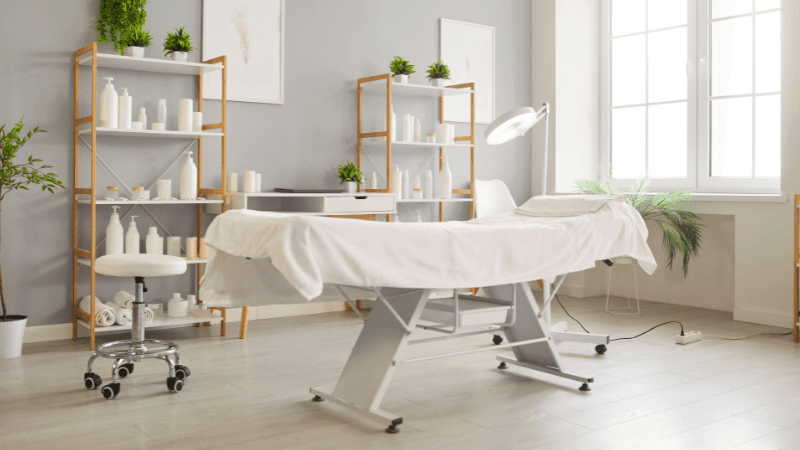
Types of cosmetic procedures
Cosmetology procedures aren't a guessing game, but rather three clear categories: skincare, hardware, and injection cosmetology. Each offers its own level of intervention, pace, and results. We'll explore the differences between these procedures and how to choose the one that's right for you—without rushing or unnecessary jargon. And if you want to get straight to the point, here are the procedures included in our cosmetology program at our Dnipro salon .
What are cosmetic procedures?
Cosmetology procedures are facial and body skin care methods that address specific aesthetic concerns, from simple moisturizing to serious correction of age-related changes. Cosmetology is performed by a cosmetologist or a cosmetologist-esthetician. The difference lies in their education and certification in injectable and instrumental techniques: a physician can perform a full range of procedures, including beauty injections, while an esthetician can only perform skincare and basic techniques.
All facial procedures are divided into three categories based on the depth of their impact. Skin-care treatments focus on the surface of the skin and are suitable for regular, gentle care. Machine-based treatments utilize technology—lasers, radio waves, and ultrasound—and produce more noticeable and lasting results. Injectable treatments intervene most deeply: the product is injected directly into the skin's layers, so a physician's involvement is essential.
Non-invasive treatments: what's included and when is it enough?
Skincare cosmetology is the most gentle category: no skin punctures, no long recovery time, and minimal contraindications. This includes facial cleansing (we wrote about the types of cleansing in detail in a separate article), chemical peels, thermolifting, non-needle mesotherapy, and microcurrent therapy.
Chemical peels renew the top layer of skin using acids, helping with pigmentation, post-acne, and a dull complexion. Thermolifting gently warms the deeper layers, stimulating collagen and elastin production—the effect is cumulative yet natural. Needle-free mesotherapy and microcurrent therapy deliver beneficial substances to the skin and stimulate metabolic processes without a single puncture.
Treatments are usually sufficient if the goal is to maintain skin tone rather than address existing wrinkles or ptosis. This is more of a regular maintenance routine than a one-time solution.
Hardware cosmetology: what methods are used and for what purpose
Hardware cosmetology utilizes technology where manual techniques and acids are no longer effective. SMAS lifting and RF lifting work at the muscular-aponeurotic layer, tightening the facial contours without surgery through natural cell regeneration. Laser rejuvenation and photorejuvenation (IPL therapy) even out skin tone, combat pigmentation and rosacea, and stimulate collagen production. Microneedling involves controlled microtraumas of the skin that trigger skin renewal from within. Laser hair removal also falls into this category technically, although it addresses a different issue.
The difference with treatment methods lies in the depth and durability of the results: hardware treatments act not only on the surface, and the effect lasts longer, but recovery may also take a little longer.
Injectable cosmetology: what do beauty injections do?
Injectable cosmetology is when results are targeted and achieved quickly, and the product is injected directly into the desired layer of skin. Botulinum toxin therapy relaxes facial muscles and smoothes expression lines. Biorevitalization involves hyaluronic acid injections that restore skin firmness and elasticity and replenish moisture lost with age. Injectable mesotherapy infuses the skin with microelements and stimulates cell regeneration. Contouring reshapes the face, reshapes the volume and proportions, PRP therapy uses the patient's own blood plasma for rejuvenation, and thread lifting tightens facial contours using self-absorbable threads.
All injection procedures are performed exclusively by a cosmetologist with a medical degree—this is not a case where you should skimp on the specialist's qualifications.
Indications and contraindications: who is suitable for cosmetic procedures?
Indications for cosmetic procedures are determined individually based on skin type, age, and specific aesthetic concerns, such as pigmentation, wrinkles, decreased skin tone, and enlarged pores. There are several general contraindications, applicable to most procedures: pregnancy and breastfeeding, acute inflammatory processes and skin infections, cancer, bleeding disorders, and individual intolerance to any of the product's components.
The exact list of indications and contraindications for a specific procedure will be determined by the doctor during the consultation; choosing an injection or hardware technique based on an online description is not recommended.
How does a consultation with a cosmetologist proceed?
The first visit to the cosmetologist begins with a skin diagnosis: the specialist assesses your skin type and sensitivity, clarifies your medical history, and discusses previous treatments. Based on this, a personalized plan is proposed—a specific procedure or course of treatments, as well as a recovery period, if needed. The cosmetologist will warn you in advance about possible side effects and what to avoid before and after the procedure, from sun exposure to active acids in your home care routine.
If a specialist immediately suggests a specific, expensive procedure without examining or asking about your skin's condition, this is a reason to be wary, not a reason to agree.
How to choose a cosmetic procedure: where to start
If the list of three categories is more intimidating than helpful, here's a simple guide. Want to maintain your skin and prevent problems? Start with skincare; it's forgiving and requires no downtime. If you have a specific concern—pigmentation, tone, fine wrinkles—instrumental methods address it more precisely and last longer. If you need quick and visible results by a specific date, injectable cosmetology is the way to go, but only after a consultation with a doctor.
And the main rule that always applies: the procedure is chosen not by advertising or a friend with a similar problem, but by a cosmetologist - after examining your skin.
Frequently asked questions about cosmetic procedures
What types of cosmetic procedures are there?
All cosmetic procedures are divided into three groups: care (non-invasive), hardware-based, and injection-based—a detailed analysis of each category is provided above.
What cosmetic procedures are considered the most effective?
There's no clear winner—effectiveness depends on the specific treatment. Botulinum toxin therapy is often effective for expression wrinkles, hardware-based techniques for skin tone, and regular treatments for prevention.
Is it possible to have cosmetic procedures during pregnancy?
Most injection and device procedures are contraindicated during pregnancy and breastfeeding. Skin care treatments should only be used after consultation with a doctor, who will evaluate the ingredients used.
How often can you have cosmetic procedures?
It depends on the type: treatments can be done on a regular schedule—every few weeks—while hardware and injection treatments require intervals ranging from several weeks to several months—the exact schedule is determined by a cosmetologist.
How long does recovery take after cosmetic procedures?
Treatments typically require no recovery time. After mechanical procedures, slight redness may occur for 1-2 days, while injection procedures may cause slight swelling or bruising, which resolves within a few days.
How to choose a cosmetic procedure if you don’t know where to start?
Start with a consultation with a cosmetologist, rather than searching for a procedure based on your symptoms. A specialist will evaluate your skin and offer a plan that will address your specific needs, not the most popular one on the internet.

Facial cleansing: what it is and how to choose the right type
Your skin constantly gives you signs: clogged pores, blackheads, a dull complexion—a familiar sight for almost everyone. Facial cleansing is a procedure that quickly and noticeably solves this problem, but choosing the right type can often be confusing: mechanical, ultrasonic, or combination—what are the differences, and which is right for you? If you want to book a cosmetology appointment in Dnipro right away, follow the link https://alvibeauty.com/ru-ua/salons/dnipro/cosmetology . But if you want to understand the basics first, read on.
What is facial cleansing?
Let's take a closer look at what a facial cleansing actually is . Simply put, it's a deep cleansing of the skin, removing sebum and dead skin cells that regular washing doesn't remove. Over time, pores become clogged, blackheads and milia appear, and skin appears dull.
A professional cleanse removes all of this in one session, while also normalizing sebaceous gland function and accelerating skin renewal. Achieving this effect at home is difficult—a cosmetologist's hands and specialized tools like the Uno spoon work much more delicately and precisely.
Types of facial cleansing
Facial cleansing methods —mechanical, ultrasonic, and combination—differ in their operating principles and indications. Mechanical cleansing removes deep impurities using manual or instrumental methods, ultrasonic cleansing is gentler and suitable for sensitive skin, and combination cleansing combines both methods when one isn't sufficient.
Let's look at each one in more detail below—this will make it easier to understand which facial cleansing is right for your skin.
Mechanical facial cleansing
Mechanical facial cleansing is a classic method: a cosmetologist steams the skin or applies a loosening gel to open the pores, and then manually or with a tool—for example, an Uno spoon or a Vidal needle—removes sebum plugs and clogged pores.
It is primarily indicated for oily and problematic skin with prominent comedones. A drawback is the possibility of redness for 1-3 days, so the procedure should not be scheduled before an important event. It is contraindicated for active herpes and any skin lesions. In other cases, it is best to consult with a cosmetologist during an in-person consultation.
Ultrasonic facial cleansing
Ultrasonic facial cleansing is a gentler option. A metal scrubbing paddle creates microvibrations and acoustic waves that gently exfoliate dead skin cells and wash away impurities without putting pressure on the skin. Its non-invasive nature is its main advantage: there's virtually no redness, and no recovery time is required. It's ideal for dry and sensitive skin, and can also be used as a maintenance treatment between deeper cleansings. Contraindications include acute inflammation and skin growths; in questionable cases, the decision rests with the cosmetologist.
Combined facial cleansing
Combination facial cleansing combines mechanical and ultrasonic techniques in a single session: first, ultrasound softens impurities and removes the surface layer, then deeper sebum plugs and comedones are removed manually or using a tool, while vacuum drainage helps draw out residual impurities from the pores. It's chosen for skin prone to oiliness and breakouts, where gentle cleansing alone isn't enough, but a more gentle mechanical cleansing is desired. It's a kind of golden mean between effectiveness and comfort.
How often should I do a facial cleansing?
The exact frequency depends on your skin type. Oily and problematic skin typically requires exfoliation every 4-6 weeks, normal and combination skin every 2-3 months, and dry and sensitive skin 3-4 times a year is sufficient. For post-acne and those prone to breakouts, it's best to discuss the frequency with a cosmetologist—there's no one-size-fits-all answer; much depends on the current condition of your skin.
Facial cleansing at home
Home care—scrubs, acid peels, ultrasonic brushes—helps maintain skin clarity between visits to the cosmetologist, but they don't replace a professional facial. A professional simply has more control over the process: sterile instruments and the ability to accurately assess the condition of pores reduce the risk of skin injury or infection. Home care is preventative, while a salon cleaning is a solution to an existing problem.
How to choose the right type of facial cleansing
If your skin is oily, with prominent blackheads and comedones, consider mechanical or combination cleansing. For dry and sensitive skin, ultrasonic cleansing is more comfortable. If you're unsure, start with a consultation with a cosmetologist: the specialist will assess your skin type and the degree of pore clogging, and then advise you on which facial cleansing will provide the best results without unnecessary discomfort. There's simply no single best option—the solution is always tailored to your specific skin type.
Frequently Asked Questions
Is it possible to do a facial cleansing during pregnancy?
In most cases, mechanical or combined peeling is not recommended due to potential discomfort and increased skin sensitivity during this period. Check with your cosmetologist—they often recommend a gentler ultrasonic alternative.
Is it painful to have a facial?
Mechanical cleansing can feel sensitive, especially in the T-zone, but modern cosmetologists use warming gels for comfort. Ultrasonic facial cleansing causes virtually no discomfort.
Can men have facial cleansing?
Yes, and this is a fairly common request: men's skin is usually thicker and oilier, so the cosmetologist selects the technique and intensity of the procedure taking these characteristics into account.
Is it possible to do a facial cleansing during menstruation?
Cosmetologists usually recommend postponing the procedure for a few days—during this period, the skin is more sensitive and the pain threshold is lower, especially with mechanical cleansing.
When can I apply makeup after cleansing my face?
You should put away decorative cosmetics for at least 12-24 hours—your skin needs time for the pores to narrow a little, and any slight redness, if any, to subside.

What's the difference between a cosmetologist and a dermatologist: who should you see?
A pimple before an important meeting isn't a reason to panic, but it is a reason to figure out who you're going to see. A cosmetologist and a dermatologist serve different purposes, and confusion between them can sometimes cost more than the procedure itself. If you need a specialist now, you can find a list of cosmetologists and salons in Ukraine at https://alvibeauty.com/ru-ua/salons/dnipro/cosmetology . We'll break down the differences between these two doctors right now: dermatologist or cosmetologist, and who's right for you.
What is a cosmetologist—and why is it not the same as an “injection specialist”?
What is a cosmetologist? A question rarely asked before sitting in the chair. A cosmetologist specializes in skin care and appearance: cleansings, peels, hardware and injection procedures, and post-treatment home care. A cosmetologist works with already healthy skin that needs improvement:
- skin imperfections;
- dull tone;
- , minor age-related changes.
A dermatologist treats diseases—that's how the roles are divided between these two specialists. Opinions differ on what exactly a cosmetologist without a medical degree should be able to do, and this is one case where it's best to check their qualifications beforehand, rather than after the first procedure.
The initial consultation with a cosmetologist is usually just for this purpose: the specialist examines the skin, asks about allergies and previous treatments, and only then suggests a plan. If the consultation is skipped and you're immediately called in for a procedure, this is a cause for concern, not a way to save time.
What is a dermatologist: a doctor, not a cosmetic specialist
A dermatologist is a physician with a full medical education who diagnoses and treats skin conditions, from fungus and dermatitis to suspicious moles. The difference in expertise between a cosmetologist and a dermatologist is fundamental: a dermatologist is responsible for the health of the skin, while a cosmetologist is responsible for its appearance.
It's a bit like the difference between a dentist and a teeth whitening specialist: one treats, the other improves the appearance of already healthy teeth. It's easy to confuse these roles because their tasks sometimes overlap on the same skin, but their approach and responsibilities are different.
When to see a dermatologist and when it’s too early
When to see a dermatologist depends on specific symptoms, not the overall health of your skin. A rash that doesn't go away for weeks, itching without an apparent cause, or a mole that's changed shape or color—these are all things that people should see a doctor for, not a salon. If your skin simply looks tired or you're looking for preventative care, that's not a reason to see a dermatologist—that's when it's time for a cosmetologist.
When to see a cosmetologist, and what can they really do?
When to see a cosmetologist: When there's no underlying medical condition, but you want to improve the results: cleansing, moisturizing, correction of minor skin imperfections, and home care after treatments. A cosmetologist is good at:
- Aesthetic tasks, but does not replace a dermatologist where a diagnosis is needed.
- If after his procedure the problem does not go away, but appears again, this is a signal to return to the doctor, and not try another salon.
Sometimes, you need not just one specialist, but both: for example, a dermatologist can relieve inflammation, while a cosmetologist can restore the skin's appearance after treatment. When a comprehensive approach is needed, a good clinic will offer a combination of both specialists, rather than relying on just one.
Cosmetologist vs. Esthetician: Why It's No Big Deal
A dermatologist-cosmetologist is a separate title, often confused with a regular cosmetologist. In practice, the term "cosmetologist" covers two different levels of training, and the difference between them isn't a matter of paperwork, but rather what the specialist is actually allowed to do with your skin.
Higher medical education: what a cosmetologist must complete
A medical degree in cosmetology is a must for a cosmetologist: a medical school plus postgraduate specialized training. Only such a specialist is qualified to administer injections, use certified prescription medications, and manage patients according to an individualized treatment plan, not a one-size-fits-all approach. They are also expected to adhere to clinical protocols and maintain sterility—this truly protects you from complications, not just a bureaucratic formality on paper.
Secondary medical education and cosmetologist-esthetician: where is the limit of competence?
A cosmetologist-esthetician completes medical school and training courses without a university degree, sometimes working alongside a cosmetology nurse who assists with procedures. This training is sufficient for cleansing and care. However, more invasive injections and hardware procedures are not their area of expertise, and an honest specialist will explain this during the consultation rather than taking on everything.
Who treats acne: a dermatologist or a cosmetologist – and why many people make mistakes
Whether a dermatologist or a cosmetologist treats acne is a matter of deciding where the most costly mistake is. Mild breakouts and oily skin care are the job of a cosmetologist. But moderate to severe acne, especially with inflammation and scarring, is a dermatocosmetic issue requiring diagnosis and is treated by a dermatologist. Many people first go to a cosmetologist simply because it's easier to get an appointment, but then waste months on treatments that don't address the underlying cause—monitoring the progress of treatment in these cases is more important than quick results.
Can a cosmetologist work without a license? An important question before making an appointment.
Can a cosmetologist work without a license ? Yes, if we're talking about cosmetologists and aestheticians offering basic services: this requires a medical school diploma and certifications in specific procedures, not a medical license. However, injectable and hardware-based techniques with medical risks require a full medical education and permission to practice as a physician. The difference lies in the scope of procedures: basic care can be provided without a medical license, but injectable and hardware-based techniques cannot.
How to check a specialist's diploma and license before a visit
You can ask for diplomas and certificates right during the consultation—essentially the same as your first consultation with a cosmetologist, with just one additional question. A reputable clinic or salon will show the specialist's documents and clarify their level of training for your procedure. If the answer is a vague "don't worry, everything's fine," it's time to look for another specialist.
Frequently asked questions
Can a cosmetologist work without a license?
A cosmetologist-esthetician works with a medical school diploma and certificates; a medical license is not required for basic procedures—it is only required for injection and medical techniques.
Who treats acne - a dermatologist or a cosmetologist?
Mild breakouts - see a cosmetologist, moderate to severe acne with inflammation - see a dermatologist, because this is already a diagnosis, not a cosmetic problem.
How many sessions do you need with a cosmetologist?
It depends on the procedure and the condition of the skin: one-time procedures like cleansing do not require repetition, and for course treatments, the cosmetologist determines the exact number of sessions individually during the consultation, rather than in advance.
When is the effect of cosmetology procedures visible?
After cleansing and peeling, the effect is noticeable immediately; after a course of treatments, it takes several sessions for the results to accumulate.
How much does a cosmetologist consultation cost?
The price depends on the clinic, city, and appointment format—from a basic examination to a consultation with the selection of a personalized care plan.
What are the most common mistakes made when choosing a cosmetologist?
They choose based on price or proximity to home, not qualifications, and don't ask for a diploma in advance—a mistake that can be easily avoided with one question during the consultation.

Men's mullet haircut: what it looks like and how to choose one
This style's reputation often outstrips its appeal: some remember the 1980s, others recent fashion shows and Korean dramas. In reality, a mullet haircut is all about the logic behind the shape, and only then about the style. If you're looking for a listing, the Men's Haircuts section on the AlviBeauty website ( https://alvibeauty.com/ru-ua/salons/kremenchuk/hairdressers/mensHaircuts ) in Kremenchuk allows you to discuss the look with a hairstylist in person. Here, we'll explore the mechanics: what makes up the shape and what you can adjust to suit your personal style.
What does a mullet haircut look like and what makes its shape recognizable?
The term "mullet" refers to the overall shape, but its exact appearance depends on the difference in length between the sections—easy to recognize even without a photo. The sides and sides are trimmed short, sometimes almost shaved in contrasting versions. The crown retains volume and texture, while the back is noticeably longer than the rest of the head. There's almost always a contrast in length between the sections, some sharp, others softened. The ear contour—with open ears and a clear line—can be sharp or softened with thinning. Search terms sometimes use the reversed wording, "mullet haircut," but in Russian, "mullet haircut" is more natural.
The jagged cut at the nape and textured strands on top enhance the sense of movement rather than geometry—the mullet here is closer to an oversized coat than a tailored suit. If you're looking for photos of a mullet haircut, pay attention to the length of the sides relative to the nape, the definition of the transition, and the cut—this way, the shape is recognizable in person.
What to consider in the form:
- temples and side areas;
- back of the head;
- bangs and contour around the ears.
What types of men's mullets are there?
Men's mullet haircuts differ not by a single feature, but by a combination of length and contrast—these are more like coordinates along two axes than competing options.
Modern and classic men's mullet
The classic version maintains a sharp line between short sides and a long back, without any gradual fades. The modern men's mullet often softens this line: a men's mullet with a fade adds a smooth taper at the sides, while thinning removes excess weight from the back. The choppy ends and textured crown serve the same purpose in both versions—the classic version simply achieves it more dramatically.
Short, long and Korean mullet
A short men's mullet reduces contrast by bringing the sections closer together. A long men's mullet enhances the contrast and allows for more freedom in styling the back of the head. The Korean men's mullet stands apart: it typically features a pronounced curtain fringe and gently graduated sides, and the contrast is usually lower than in the classic mullet.
Who suits the mullet haircut and what can be adjusted?
The principle here is slightly different than with the face shape list. The final look is influenced not so much by the face shape as by hair density, hair growth direction, and hair texture—the degree of contrast is adjusted to these parameters. It's similar to choosing eyeglass frames: the shape is the same, but the fit on a specific face determines whether the result will look natural.
If your hair is thick, you can soften the contrast between the zones. With fine hair, a slightly more defined line often helps maintain the shape, and the direction of hair growth at the back of the head determines how evenly the length will fall without styling.
What parameters can be changed:
- length of the temples;
- the severity of the transition between zones;
- the shape of the bangs;
- the length of the back of the head.
How to choose the length of the back of the head, temples, and bangs
There's no single required length for a mullet—there's a range within which the shape can still be considered a mullet. The appropriate length for a mullet depends on the contrast you're willing to wear: the shorter the sides, the more noticeable the contrast with the back, even if the back itself isn't grown out very much.
A men's mullet with bangs adds another dimension. Short bangs leave the contrast between the temples and the nape of the neck as the main element of the shape. Long bangs or curtain bangs soften the silhouette and make the transition less obvious. There's no mandatory option—the choice depends on which part of the look you want to emphasize.
How a mullet works on straight, wavy, and curly hair
It's not the shape itself that changes hair type, but how it reads after styling, and no one type works worse here than another.
A mullet on straight hair reveals the cut line as honestly as possible: asymmetry in length is immediately noticeable, and a neat cut is especially important for this style. Waves work in the opposite direction: a mullet on wavy hair softens the transition almost on its own, blurring the lines between the zones.
The shape changes most significantly on curls: after drying, the length visually shortens, and a mullet on curly hair rarely does without careful thinning.
How to style a mullet and when styling is optional
Whether or not a mullet should be styled is more a question of desired effect than necessity. If the cut is done with the hair's growth in mind, the shape can be maintained by the natural texture—especially on wavy and curly hair, where the crown already has volume.
How to style a mullet for a more put-together look: A lightweight, matte-textured product on towel-dried hair is usually sufficient, without a tight hold that will make transitions between sections difficult. For wavy and curly hair, a diffuser can be used instead of air-drying. This style doesn't require a special set of products—the quality of the haircut is more important than the amount of products on your head.
What's the difference between a mullet, a shag, and a cascade?
The mullet relies on a distinct division of zones: short sides and a longer back, with a demarcation between them almost always present, even if softened. The shaggy is constructed differently—the layers and texture are distributed more evenly, without a pronounced contrast between the back and the rest of the head. The cascade is a gradual change in length from the crown to the ends, without a sharp transition between zones.
Frequently Asked Questions
How to get a mullet haircut?
The easiest way to get a mullet haircut is to discuss the degree of contrast and the shape of the bangs with your stylist in advance—this will determine the length of the back of the head and how short the sides are cut.
What kind of hair is a mullet suitable for?
The shape can be adapted to any hair structure: straight, wavy, and curly hair show the transition between zones differently and require different degrees of thinning.
What hair length is needed for a men's mullet?
There is no strict minimum: what is more important is not the absolute length, but the difference between the temples and the back of the head, which can be achieved on both medium and longer hair.
Is it possible to get a mullet without a noticeable long tail?
Yes, the short men's mullet is built on a moderate difference in length: the back of the head is noticeably longer than the temples, but without a very elongated silhouette.
How often does a man's mullet need to be adjusted?
The frequency depends on the rate of hair growth and the chosen degree of contrast: the shorter the temples, the faster the border growth is noticeable.
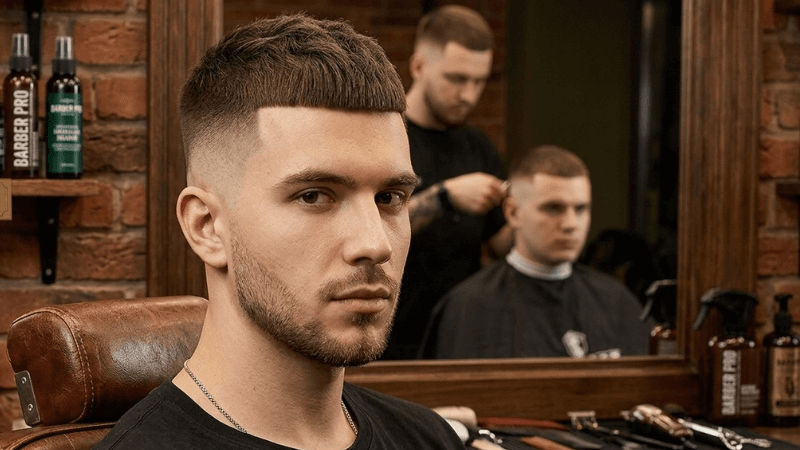
Caesar Haircut for Men: Who It Suits and Which One to Choose
Some haircuts demand immediate attention due to their volume or complex styling. The Caesar cut is more relaxed. It's recognizable by its short top, hair swept forward, and neat bangs. The men's Caesar cut is prized for its put-together look: it typically requires less time in the morning than longer styles.
In the AlviBeauty catalog, you can browse the men's haircuts section and choose a hairstylist in the Men's Haircuts Kremenchuk section. If you're considering a Caesar cut , it's best to decide in advance not whether it suits you or not, but rather which style you want:
- classical,
- short,
- textured,
- or with a more noticeable transition.
What does a Caesar haircut look like and why is the bangs so important?
The basic design of a Caesar haircut is simple: the crown is kept short, the sides and back are cut shorter, and the hair on top is swept toward the face. But it's the bangs that give it its distinctive look. In the classic version, they're straight or slightly softened, with no high rise at the roots.
The bangs here act as a frame for the graphic: a few millimeters change, and the effect is completely different. A short line creates a more defined silhouette, a slightly longer length softens the forehead, and texture removes excess geometry. Therefore, a Caesar cut isn't a rigid pattern. The stylist adjusts it to the direction of hair growth and the desired contour.
Barbers and hairdressers often recommend a top length of approximately 2.5–5 cm, but this isn't a universal standard. It's more practical to see how the hair falls forward without constantly fighting against natural growth. This is more important than a fancy number in the description.
Classic, short and textured Caesar
A classic Caesar cut maintains a smooth transition between the top, sides, and back. A short Caesar cut creates a tighter outline and typically requires less styling. A textured version allows for more movement on top and better accommodates natural waves.
Sometimes you'll also see the term "Caesar cut." The name is the same, but the result is determined by three factors: the length of the top, the shape of the bangs, and the transition. These factors make the Caesar cut look sharp, soft, or more athletic.
What is the difference between the top length and the fringe line?
The shorter the crown, the easier it is to maintain a cohesive silhouette. Longer hair adds texture and allows for subtle variations in the direction of the strands. Overly long bangs gradually draw the hair into a crop or simply a short haircut with bangs.
When looking for a Caesar haircut photo, it's helpful to look beyond the frontal shot. A side view better shows the short sides, the transition in length, and the shape of the back. This is where you can tell whether you're looking at a Caesar or a similarly styled haircut.
When you need a smooth transition at the temples and back of the head
The smooth transition softens the shape and connects the crown with the short sides. A more noticeable contrast adds a modern touch, but doesn't automatically turn the Caesar into a fade. A fade is a transitional technique, and the Caesar is primarily recognized by the direction of the hair on top and the bangs.
A transition is like sharpening: it changes the impression of the outline, but shouldn't interfere with the main shape. Therefore, it's more helpful for the artist to show the desired transition height and top length than to ask for an exact replica of someone else's photo.
Who suits the Caesar haircut based on their face shape and hair type?
A Caesar cut is often considered for oval, square, and oblong faces, but the face shape shouldn't be a barrier. For a round face, you can keep a little more height on top and lighten the bangs; for a high forehead, leave the front line more prominent.
On straight and coarse hair, the contours are more clearly defined. On soft or wavy hair, a textured version works better. A Caesar cut on curly hair is also possible, as long as you leave enough length for the curl and don't try to force it into a perfectly straight line.
It's more helpful to ask not "who can't have a Caesar cut?" but rather what shape can be achieved with specific hair. This approach doesn't limit the individual and gives the stylist more room for fine-tuning.
What is the difference between Caesar and Crop?
The Caesar cut and crop are closely related: both are short, can be paired with short sides, and are often worn with hair forward. Therefore, they can be easily confused.
The Caesar cut typically has a smoother, more composed front. Crop cuts often feature more texture, a jagged edge, and a more noticeable contrast at the top. Modern versions can be more convergent, so it's not worth judging based on the bangs alone.
The practical guide is simple: if you want a crisp, short fringe and a subtle geometric shape, look toward a Caesar cut; if you want a more textured top, a crop is more often the choice. It's best to keep the comparison brief, lest you confuse the two distinct intentions.
How to style a Caesar cut and when you can do without styling
For a short style, it's often enough to simply blow-dry it in the direction of hair growth and tweak it with your fingers. If you want texture on top, you can add a bit of matte paste or another lightweight product. The goal is to maintain the direction, not make the bangs stick out.
A hairdryer isn't always necessary. It's helpful if your hair grows upward, spreads out to the sides, or you want a little more volume at the crown. First, use the air to create the desired direction, then add product if needed.
The most convenient option is one that respects the natural direction of hair growth. A well-chosen length saves more time than applying a strong hold every morning.
How often should I trim my hair and maintain a clear outline?
Some hairdressers and barbers use a 3-4 week guideline. This is a normal starting point, but not a universal rule. Some people lose their fringe faster, while others grow their bangs out sooner.
The signal for a correction is simple: the fringe line is losing its shape, the transition at the temples is becoming heavier, and the back of the head is losing its clear contour. Sometimes, it's enough to refresh the edges rather than change the entire length.
Frequently Asked Questions
What is the difference between a Caesar haircut and a crop?
A Caesar cut typically has a straighter fringe and a more relaxed top. A crop often has more texture and a jagged edge.
Who suits the Caesar haircut?
The Caesar cut can be adapted to different face shapes by varying the length of the bangs, the height of the top, and the fade at the temples. The direction of hair growth and texture are also important.
Can you do a Caesar cut on curly or wavy hair?
Yes, usually they leave a little more length on top and soften the front line so as not to fight the natural curl.
How often does a Caesar haircut need to be trimmed?
Typically, 3-4 weeks is the target. The exact timeframe depends on the rate of hair growth and how quickly the bangs and trim are lost.
What hair length do you need for a Caesar?
There's no set number. Descriptions suggest a range of approximately 2.5–5 cm at the top, but the stylist chooses the length based on the hair texture and the desired fringe shape.
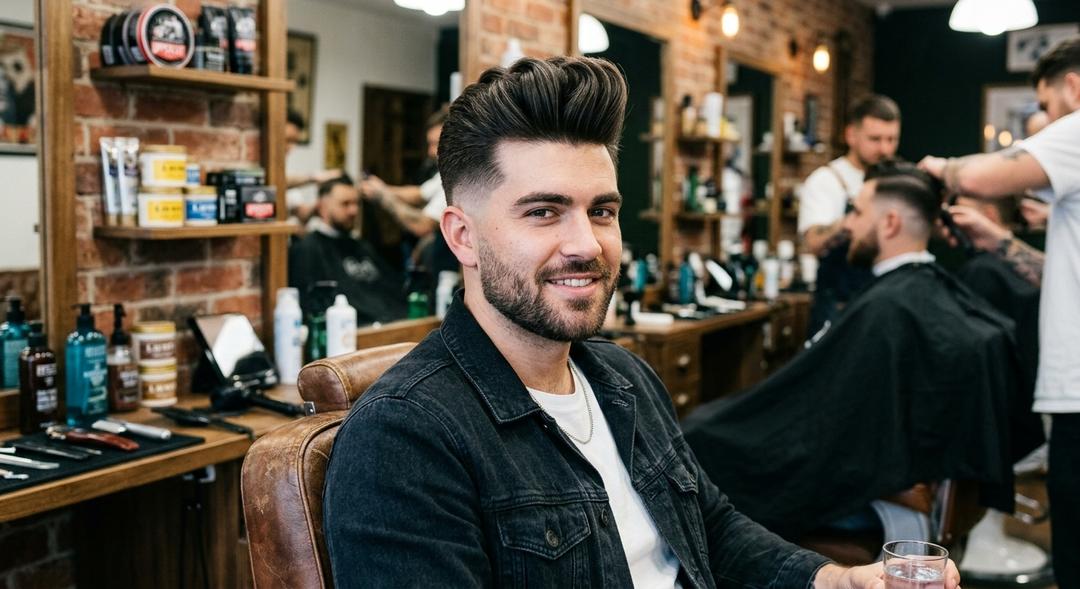
Pompadour Haircut: From Elvis Presley to Kremenchuk Barbershops
The pompadour haircut for men has long ceased to be the preserve of rock stars and hipsters. Today, it's available at any barbershop, and you can find it on the website https://alvibeauty.com/ru-ua/salons/kremenchuk/hairdressers/mensHaircuts , and the line of people wanting it never gets shorter.
The secret to the pompadour haircut is simple: no other haircut creates such a contrast between the disciplined sides and the almost daring freedom on top. It's like a business suit with an unexpectedly vibrant lining—subdued on the outside, full of character on the inside.
Pompadour: The hairstyle that Elvis didn't comb—he styled
Almost everyone who has ever googled the word "pompadour" knows that the Pompadour hairstyle was named after the Marquise de Pompadour, the mistress of Louis XV.
It's no secret that it only gained real popularity among men two centuries later, thanks to Elvis Presley, who introduced the fashion among rock 'n' rollers and bikers.
What's less obvious is that the haircut's structure hasn't changed much since then—except that barbers have learned to make it considerably less fiddly. While styling a pompadour in the 1950s required an hour and a glass of brilliantine, the modern pompadour, with its smooth sides, is held together with a single blow-dry and a drop of paste.
Technique: How to Create a Pompadour Haircut
At first glance, the pompadour haircut follows a simple rule: the sides and back of the head are cut short or shaved, and the crown is left long for volume.
A barber or hairdresser uses a clipper and trimmer along the contour, and then uses thinning scissors to comb out excess weight at the roots so that the hair does not fall out, but holds its shape on its own.
Few people realize that it's the smooth transition between the short sides and the long crown—not the length itself—that determines whether a haircut looks expensive or sloppy. A good barber spends almost more time on this transition than on the rest of the silhouette: it's here that the symmetry of the lines is most often lost if the stylist is in a hurry.
Pompadour, fade, and undercut: how to avoid confusion
Pompadour, fade, and undercut: how to avoid confusion
From the side, it's easy to confuse a pompadour with an undercut, a fade, or a couple of other similar hairstyles—in all of them, the sides are often shortened, and the difference seems unnoticeable. In fact, each haircut has its own distinctive accent:
- An undercut is a sharp, almost graphic contrast between short sides and long strands on top (for more details, see the article "Undercut").
- Fade is the most smooth, smoky disappearance of hair to the skin, without a single visible border (for more details, see the link to the article "Fade").
- Crop - a textured short fringe that is not combed back (for more details, see the link to the article "Crop").
- The Canadian cut is an even length throughout the head, without any pronounced accent on one area (for more details, see the link to the article “Canadian Cut”).
- The quiff is a shorter, more textured cousin of the pompadour.
- British - maintains the same length throughout the head, without pronounced volume on the crown.
The pompadour isn't about the transition itself, but rather what happens at the top: controlled, slicked-back volume. That's why barbers often combine it with a fade or undercut—it's not a violation of the rules, but simply two different solutions for two different areas of the head.
Who suits a pompadour: an analysis based on face shape
A pompadour's face shape works almost like a painting's frame—it doesn't determine whether the work will be successful, but it certainly influences how it's perceived at first glance. An oval face is lucky: it allows you to experiment with any crown height without fear. A round face isn't adverse to a pompadour—on the contrary, the vertical volume visually lengthens the proportions—but barbers usually immediately suggest pairing it with a fade on the sides to enhance the effect. A square face should be a little more careful not with the cut itself, but with the level of smoothness: sharp cheekbones appreciate a mirror-like cut without harsh lines at the temples, otherwise the cut will emphasize what you want to soften. This isn't a limitation or a death sentence—it's simply a reason to discuss with your stylist not "to do or not to do," but "how exactly to style it."
How to style a pompadour yourself, without a barber
Even those who've never worn a pompadour know the basic algorithm for styling it, but they rarely talk about it step by step:
- Wash your hair and dry it with a towel, but not completely dry.
- Apply a small amount of wax or paste, rubbing it between your palms.
- By lifting at the roots rather than smoothing from top to bottom, create volume in the front and crown areas.
- Comb the strands back with a round brush.
- Fix the shape with a hair dryer at medium temperature.
If volume is still lacking, barbers recommend a light backcombing at the roots before waxing—a technique that's almost invisible, but it's what saves fine hair from looking "stuck" by the end of the day. Incidentally, if you're looking for "pompadour haircut photos" before your appointment, consider bringing a daylight photo rather than a glossy poster image—this way, the barber can more accurately assess your hair's texture. And if you're determined to get a pompadour but aren't ready to fight the blow-dryer every day, ask for a short pompadour—a version with minimal volume that holds itself naturally, with little or no styling.
Frequently Asked Questions
What is a pompadour haircut?
This is a men's haircut with short-cropped or shaved sides and back of the head and noticeable volume on the crown, which is combed back.
How to make a pompadour hairstyle?
The barber cuts the contours with a clipper and trimmer, thins the crown for lightness, and then fixes the style with a hairdryer and styling product - wax, gel or paste.
How long do you have to grow your hair for a pompadour?
For noticeable volume on the crown, 5–7 cm of length is usually enough; with shorter hair, the effect will be noticeably weaker.
What is the difference between a pompadour and a crop or undercut?
A crop is about textured bangs that aren't styled back, an undercut is about a sharp contrast in length at the temples, and a pompadour is defined by volume and combing at the top.
How often should you get your haircut updated at the barber's?
On average, once every 3-4 weeks, so that the contour on the temples and the back of the head does not lose its definition, and the top length remains manageable when styling.
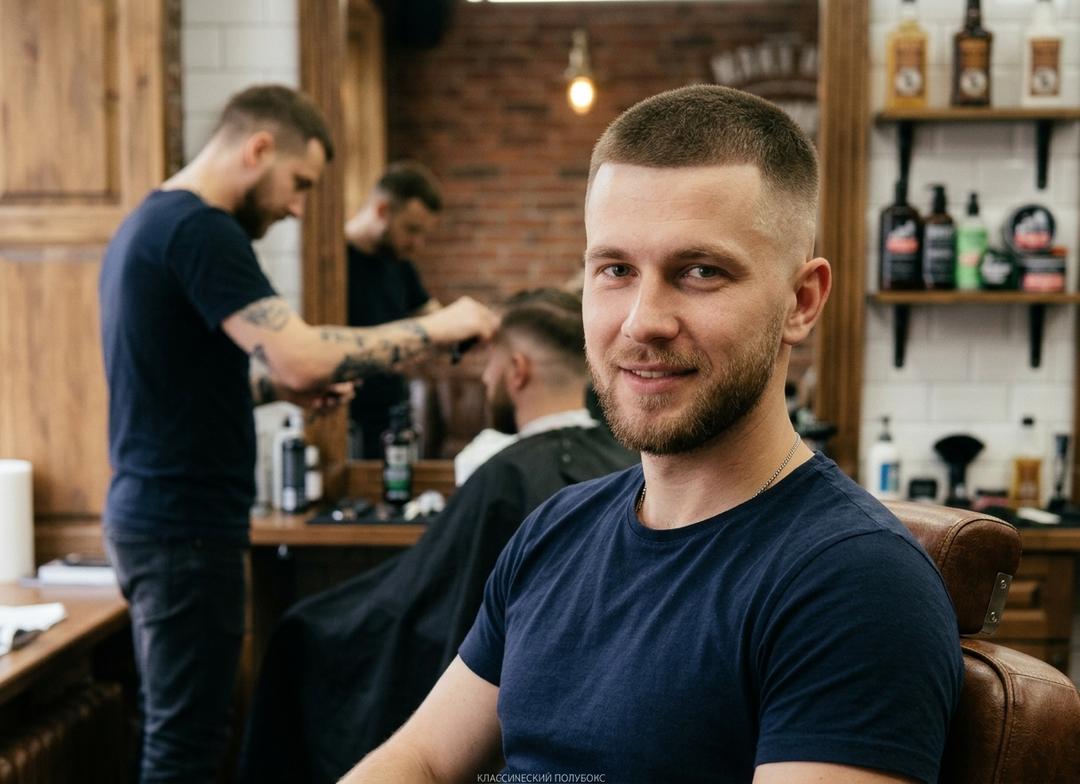
Half-box and box haircuts: what's the difference and who suits them?
The men's side-swept haircut is one of those hairstyles you don't spend half an hour discussing in front of the mirror: either yes or no, thank you. At AlviBeauty barbershops and hair salons in Kremenchuk, "Men's Haircuts" — https://alvibeauty.com/ru-ua/salons/kremenchuk/hairdressers/mensHaircuts — it's requested almost as often as a fade or a side-swept cut, and it's not just a one-season trend: this cut is over a hundred years old, something you probably didn't consider when choosing it for yourself or your man. The side-swept haircut seems simple until you try to explain to the barber how it differs from a side-swept cut.
Semi-boxing is not boxing, although many people confuse it
From the outside, a crew cut and a half-bob look similar: short on the sides, slightly longer on top. In conversation, they're sometimes referred to by the same name—and that's manageable, as long as it's just a compliment at the door. Barbers and hairdressers demand precision: a few centimeters of confusion results in a haircut that doesn't go either way.
Where is the line between the two haircuts?
The difference lies in the length of the hair on the crown and where it transitions into the shorter section. A box cut is shorter on top, with the transition starting higher, closer to the crown. A semi-box cut leaves the hair a couple of centimeters longer on the crown, and the edging line extends lower, toward the temples and back of the head. That's why the semi-box cut is called the "little brother of the box cut": the same principle, but softer and with more length to spare.
The hairstyle's military origins are quite real: a similar style was worn by recruits in the Continental Army, who were prohibited from having long hair according to regulations, and the hairstyle got its modern look from the rowers of Yale University, and was later adopted by Harvard and Princeton.
Short or long – how to choose your option
The half-undercut is a haircut with variations, not a single, rigid template. Most often, barbershops request one of these options:
- classic - a difference of one or two centimeters between the temples and the crown, neat and without pretension;
- elongated - more volume on top, the strand can be combed to the side or lifted with your hands without styling products;
- with bangs - usually in the elongated version, combed to the side, not forward;
- without a hairdryer or styling - with a slight chaotic effect at the back of the head, where the carelessness actually requires a precise cut.
Men's barbers use 3-6 mm attachments on the sides and 6-9 mm attachments closer to the crown, adjusting the transition to the shape of the head. The choice between options is almost never about fashion, but rather about how much time a person is willing to spend on their hair in the morning.
What type of head shape would this haircut suit best?
What face shape is best suited for a side-swept haircut ? This is a question barbers are asked almost more often than any other. The side-swept haircut is almost universally flattering: it suits round faces, visually elongating them, and square faces, softening the harshness of the cheekbones with volume on top. A side-swept haircut is a nearly foolproof option for men with classic facial proportions, and these are the majority of those in the barber's chair.
The only area worth considering is a long, narrow face. Not because the cut "dosn't suit you," but because the extra length on top can make your features look even longer—this is a good reason to ask your barber about a shorter crown or a side-swept fringe for balance. The same goes for body type: petite men are advised to keep their undercut shorter and tighter, as this adds a sense of solidity to their figure.
And if the hair is coarse or curly
On curly and thick hair, a half-bob style works differently than on straight hair: the short section holds its shape without issue, while the barber leaves the top slightly longer and textures it. Otherwise, the curls "lift," and the silhouette disappears by the second day. For this type of hair, stylists often recommend a longer version to reduce the struggle of styling in the morning.
Morning without a hairdryer: why a semi-boxed hairstyle is easy to maintain
The half-bobbed haircut remains popular precisely because it doesn't require a daily hairdryer and mousse routine. A good half-bobbed technique is to create a smooth transition so seamless that it's hard to pinpoint the point where the short hair ends and the crown begins—much like when you can't pinpoint the point at dawn where night ends and morning begins.
All the care for a semi-box haircut is based on a few simple habits:
- run your hand through damp hair after a shower - without a hair dryer or mousse;
- refresh the edging line every three to four weeks, for the extended version - every five to six;
- For the longer version, make a side parting with your hands, without a curling iron or gel.
Few men believe the maintenance is so simple until they try it themselves. A short buzz cut can be tried on any hair length starting from a couple of centimeters—the cut doesn't require a base, which is different from an undercut, which is much more sensitive to the starting length.
In the summer, on the road, on the go—why a semi-box won't let you down
A side-swept crop is a better choice for an active lifestyle than longer haircuts: it doesn't crease or clutter under a cap or hard hat—where hair typically gets tangled, a side-swept crop is simply short. Barbers recommend the side-swept crop more often than other crops for summer: the short sides and back reduce heat buildup, while the length on top still holds its shape.
A side-swept haircut is the most common image people look at before visiting a barber, and the difference between "sloppy" and "deliberately sloppy" is immediately apparent in the photo: it's the work of a professional, not an accident.
Frequently asked questions about the half-box haircut
What is the difference between semi-boxing and boxing?
The half-bob is a variation of the bob with a longer top and a slightly lower fade, at the nape of the neck rather than the crown. The difference is a couple of centimeters, but it's precisely this difference that changes the entire silhouette.
Who suits the semi-box haircut?
Suitable for almost all face shapes and most hair types, except for very soft and fine hair that lacks volume on top. A narrow, elongated face and a slender build aren't limitations, but rather a reason to discuss the length with your barber.
How often should the semi-box be updated?
Every three to four weeks for classic lengths, every five to six weeks for longer lengths. The guide is not the calendar, but the rim at your temples.
Is it possible to do a semi-box on curly or thick hair?
It's possible and even necessary, with some adjustments to technique: the top is left longer and textured, otherwise the curls rise up and the shape is quickly lost.
Short or long half-box – how to choose?
A short cut holds its shape longer and requires little styling, while a longer cut allows for more freedom in styling and bangs. The choice often depends less on fashion and more on how much time it takes to style your hair in the morning.
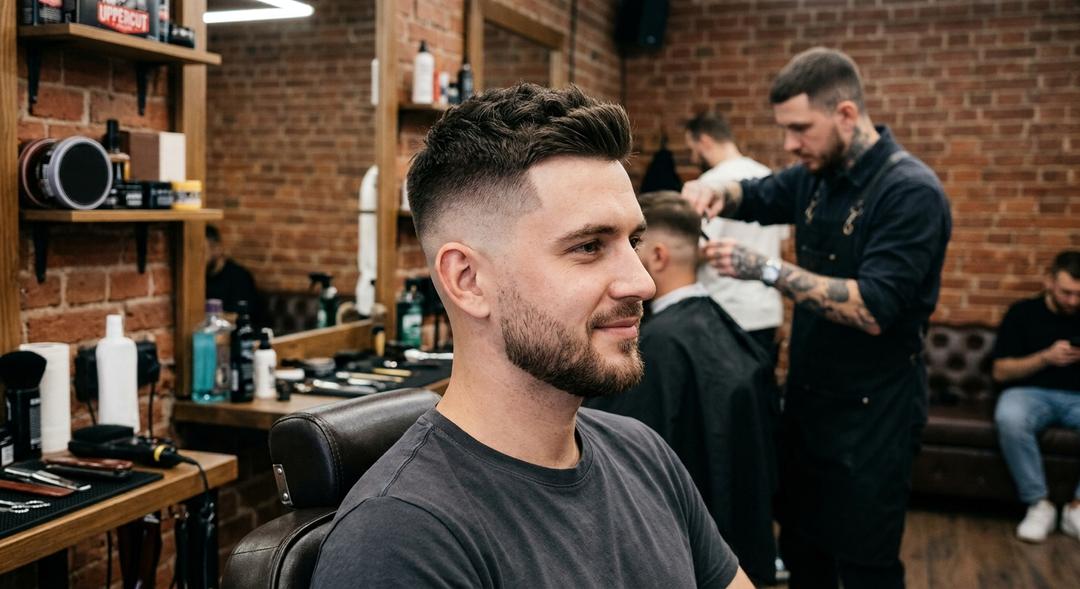
Fade Haircuts for Men: Types and How to Choose
If you've been told "let's do a fade" at the barbershop or hair salon and nodded along, not really understanding what they were talking about, this article is for you, whether you're the one sitting in the chair or the one choosing a haircut for your man. A men's fade haircut isn't just "shorter on the sides": it's a technique where the hair tapers from the back to the crown without a sharp line. Understanding the different types is easy, and finding your perfect look at AlviBeauty is even easier if you know what to look for on the website https://alvibeauty.com/ru-ua/salons/lviv/hairdressers/mensHaircuts .
What is a Fade—and Why It's More Than Just "Shorter on the Sides"
Most people know a fade simply as a "cut with a transition": short at the neck, longer at the crown. That's true, but it only explains half the story. A fade (from the English "fade" meaning "to disappear") isn't a separate haircut, but a technique for working the sides and back of the head that a barber can apply to almost any men's hairstyle, from a crop to a classic.
The smooth transition here works like dawn: there's no formal boundary between night and day, but at some point it's already light, and the hair changes length imperceptibly, without steps or creases. Incidentally, if a barbershop lists both a fade cut and a fade haircut , don't be alarmed—they're the same technique, just worded differently in the service description.
Few people realize that a "fade haircut" and a "men's fade haircut" are actually the same thing; the only difference is how you formulate your request to the barber.
Five Faces of the Fade Technique – Let's Break Down the Types
All fade types differ in one thing: where the transition begins and how abruptly it is defined. If you think of it like a volume scale at a party, a low fade is a quiet background, a medium fade is a comfortable volume for conversation, and a high fade is full bass. Technically, the transition is created by shading—a smooth, machine-smooth blending without sharp steps, which makes the transition line appear more smoky than defined. There are five variations of this technique:
- low fade - transition almost at the neck;
- middle fade - the transition begins above the ears;
- high fade - the transition at the temples, the most contrasting;
- extended fade (taper fade) - a stretched transition without a sharp point;
- Fade with scissors - without a machine, the softest in contrast.
Below are more details on each type.
Low Fade
The fade starts almost at the neck, leaving most of the head relatively long. It's the most understated and versatile option—suitable for both business looks and those who aren't ready for dramatic contrasts. Less well known is that a low fade exposes the least amount of scalp, making it more forgiving of minor irregularities in the scalp than its higher counterparts.
Middle Fade
The fade begins roughly above the ears—hence its other name, the classic fade: this is how military men have been cutting their hair for decades. It looks great in both the office and the gym. Less obvious: the mid-length fade requires less styling products than you might think—the shape holds almost naturally, without any styling.
High Fade
The contrast here is most noticeable: the length on top versus the almost bare skin on the sides. When the fade reaches all the way to the scalp, this extreme case is called a skin fade. A bold choice for those who aren't afraid of attention. Few people specify the style beforehand, but a high fade is especially demanding of the scalp shape and tone—the barber evaluates this before, not after, picking up the clippers.
Extended Fade
The transition here is extended along the entire length, without a sharp point of disappearance—hence the English name "taper fade." The haircut blends softly with a beard and a slightly longer top. Few people know: an extended fade is closest in feel to an undercut, but without its sharp edge at the temples.
Fade with scissors
A clipper-less, no-cut option—the transition is created solely with scissors, making it softer and less contrasting. It's perfect for those who want a fade but aren't ready for the rigor of a barbershop look. Be aware: this technique requires a more experienced stylist than the classic clipper fade, as it's harder to correct a mistake with scissors.
How to keep your fade looking fresh—and when it's time to go to the barber
Everyone knows that a short haircut holds its shape longer than a long one—and this applies to fades too. On average, a neat look lasts 2-3 weeks after a fade. What's less obvious is that it's the fade line, not the top length, that fades the fastest—the line begins to blur by the end of the second week, even if the hair hasn't visibly grown out much. To keep your fade looking fresh:
- Use a light styling paste or clay rather than gel—gel creates a “wet” effect that quickly makes your hair look dull;
- pay attention to the transition line, and not to the length at the top - it “goes away” first;
- Visit your barber once every 3-4 weeks—regularity keeps your hair in shape better than rare, radical corrections.
It's this regularity, not the intensity of the cut, that determines how long a fade haircut will keep you looking like you just left the barbershop.
Frequently asked questions about the fade haircut
What is the difference between a fade and a crop?
A crop is a haircut with a specific shape and texture on top, while a fade is a technique for treating the sides and back. They're not an either-or choice: a crop on top pairs beautifully with a fade on the sides; they're more of a duet than a competition.
What is the difference between a fade and a half-box?
A half-bob is a specific length and shape of the haircut, while a fade is the transition between lengths. A half-bob can be created with either a fade or a sharper edge; a fade simply softens the transition.
Who is a fade suitable for – based on hair type and face shape?
Fade looks equally good on straight, wavy, and curly hair—only the degree of contrast varies. There are no strict contraindications for face shape, but barbers typically recommend less contrasting styles for those who want to soften sharp features rather than emphasize them.
How long does a fade last and when should I update my haircut?
A fade haircut lasts on average 2-3 weeks, but the transition line fades first. The optimal interval for visits is every 3-4 weeks if you want the shape to remain defined rather than blurry.
Is it possible to do a fade with just scissors, without a clipper?
Yes, this is a separate type—the scissor fade, which we've already discussed above. The transition is softer and less pronounced than with a machine, so this option is chosen by those who want a fade effect without a strictly defined line.
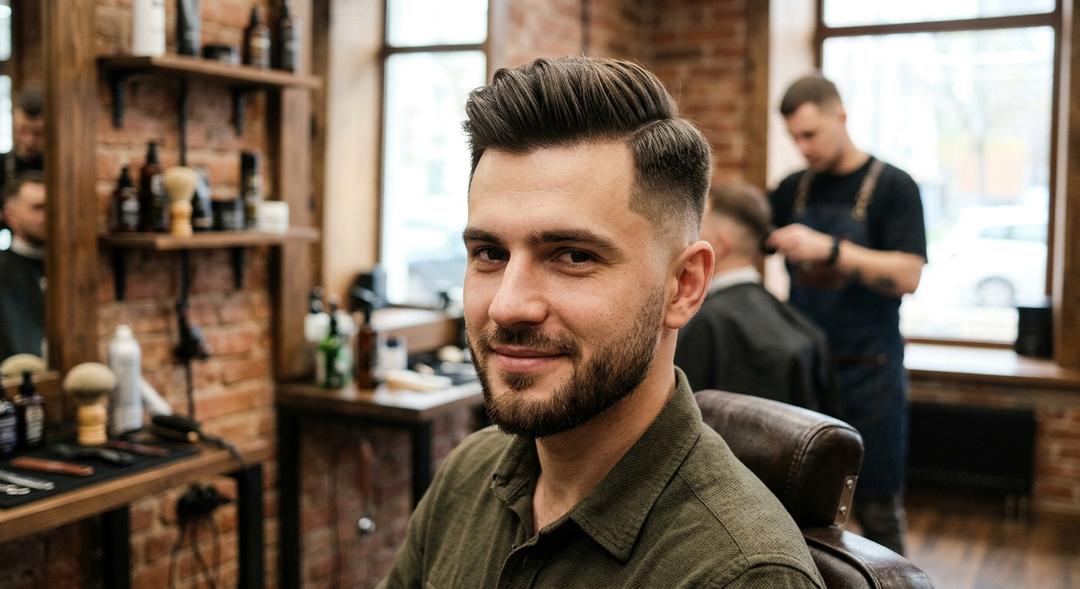
The Canadian Men's Haircut: A Universal Classic for Any Man
This haircut had a name long before it became one of the most recognizable men's hairstyles—and almost no one today remembers what it was originally. The men's Canadian haircut is a rare example of a transformative hairstyle: like a good jacket that's equally appropriate for a meeting or a party, it adapts to the occasion, not the other way around. If you're already looking at men's haircuts in Lviv from Alvi Beauty, the Canadian is almost certainly on your shortlist—and not just for men: women have a similarly named haircut, but that's a whole other story, unrelated to the men's Canadian we're discussing here.
Why is this haircut called the "Canadian"?
Most have heard the usual version: the haircut got its name from Canadian hockey players, whose neat, short backs and sides captivated Soviet spectators during the historic hockey Super Series of the 1970s. This version is correct, but incomplete. Long before hockey, a similar uniform existed in the navy—in the USSR, among Soviet sailors, it was called the "kanatka."
- the hair was cut straight,
- as if on a tightrope,
- hence the name.
The disciplined naval silhouette was simply waiting for its big name—and it got one when Canadian athletes accidentally showed the world the same idea from other stands. You don't need to know this to book a haircut, but it's nice—when the hairdresser specifies the length of your sideburns, you understand exactly where that proportion came from.
Who is the Canadian haircut suitable for?
Barbers agree on one thing: the Canadian cut is primarily about the balance between length and shape. A longer top and shorter sides truly work on almost any face shape and hair texture—even the most discerning barbers agree. The only differences are in the details: for an elongated face, a barber will leave a little more length on the sides, while for a square face, they'll add volume on top to soften the features. Fine hair finds it easier to hold its shape at a shorter length, while thick hair feels more comfortable with a longer cut. But here's the takeaway, which many only learn in the barber's chair:
- A Canadian woman is not chosen “to match a face type” using a template – she is adapted to a specific person,
- and that's why the same haircut looks different on different men,
- while remaining recognizable.
Types of Canadian haircuts
Classic Canadian
A smooth transition from short sides to a longer crown, a neat silhouette without harsh contrasts—a look equally appropriate for the office and an evening event. This is the style barbers typically recommend for those considering a new hairstyle.
Sports (modern) Canadian
A shorter length, minimal styling time, and a slightly more pronounced contrast between zones. What many simply call a "convenient option for an active lifestyle" is increasingly being done using a technique similar to a fade or taper—a smooth gradient without a clear boundary. Few clients even mention the word "Canadian" when choosing this cut from a photo—but essentially, it's the same thing, just with a more modern twist. Occasionally, you'll find rarer variations—a long Canadian with a fully grown-out top or a model version with side-swept bangs—but they all share the same principle of contrast between the length on top and the sides.
How to style and care for a Canadian
Here, the Canadian haircut for men truly lives up to its reputation for being low-maintenance: wash, blow-dry, and style—and for many, that's all there is to it. For a more pronounced result, a small amount of paste or medium-hold wax is sufficient. Three effective styling options allow you to switch up your look without a trip to the salon: slicked back—the quickest and most versatile option; side-swept—a little more formal, requiring a neat parting; and no styling—a subtle, natural tousle that suits many more than it first appears. A conclusion rarely voiced: the shorter the haircut, the more it resembles a T-shirt made of good fabric—the less you fuss with it, the better it fits, and overpaying for strong hold products for a few hours out of the house is usually unnecessary.
FAQ
Why is this haircut called Canadian?
The name stuck thanks to Canadian hockey players who popularized this uniform in the 1970s, although a similar silhouette—called the "rope"—was seen even earlier, among Soviet sailors.
What is the difference between a Canadian and an undercut?
In an undercut, the line between the short sides and the long top is usually sharp and contrasting, without a smooth transition. In a Canadian cut, on the other hand, the transition is smooth—and this softness is the main visual difference.
What is the difference between a Canadian and a British woman?
The key detail is that smooth transition at the sides and back. Remove it, and you'll get a sharper silhouette, commonly known as the British cut.
How often do I need to renew my Canadian passport?
On average, once every 3-5 weeks, depending on the rate of hair growth and how clearly you want to see the border between the zones.
Is it possible to make a Canadian yourself at home?
Basic styling—yes, no problem. But it's best to leave the actual haircut to a professional: too much depends on the precise angle of the cut and high-quality thinning, which is difficult to replicate in front of a mirror.
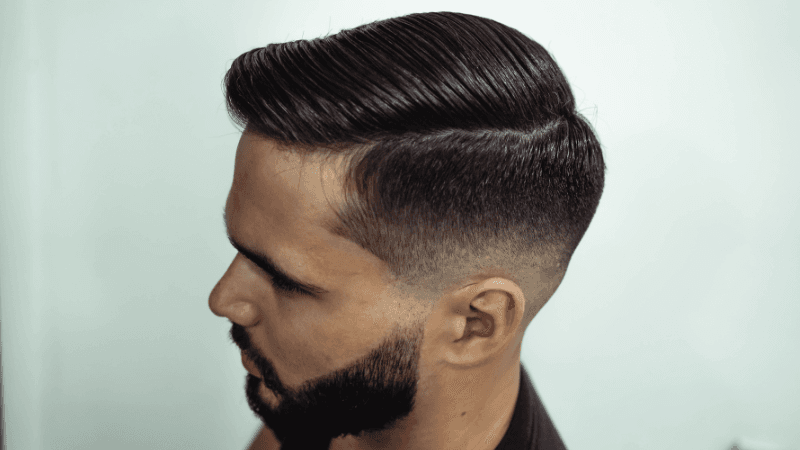
Men's Undercut Haircut: Bold in Look, Easy to Maintain
The undercut haircut is instantly recognizable—where other hairstyles taper off gently, here the sides are abruptly cut, as if by a ruler. For some, it looks too bold, for others, it's just what the classic style was missing. If you're already eyeing an undercut for yourself or a man, let's figure out together who it really suits and how to maintain it without turning your mornings into a ritual.
Undercut: What is this haircut and why is it chosen?
Essentially, the men's undercut haircut relies on one key principle: the hair on top remains long, while the sides and back are cut almost to nothing—without a smooth transition. The separation of the zones is as fundamental as the contrast in hair length overall. This is the sharp transition that's noticeable even from a distance.
Few people know that the current fashion trend has a nearly century-long history: the hairstyle was already worn by preppy students and hipsters in the mid-20th century, and barbers still sometimes call the short version with shaved sides the military style, in honor of the soldiers for whom this length did not interfere with wearing a helmet.
Who suits an undercut, and who should consider a different option?
The undercut is most often suited to men with straight or slightly wavy, medium-coarse hair and oval or square faces: the crisp edge visually elongates and balances the features. On fine, light hair, the contrast in length is less striking.
This doesn't mean that the undercut doesn't suit curly hair—professionals disagree on this point:
- Someone advises to cut the top shorter,
- someone, on the contrary,
- leave the length,
- so that the curls don't stick out.
It's like choosing heels to match a dress: there's no one-size-fits-all answer, just what suits your figure—and it's best to ask your stylist for advice rather than guess.
Types of Undercut: Three Characters of One Haircut
The undercut isn't just one haircut, but three in one idea: the difference between the options isn't in the technique itself (the sides and back of the head are almost completely cut off), but in the length of the top and the sharpness of the transition.
One barber or hairdresser will make an undercut discreet, another will make it almost flamboyant, and both will be right. Few people notice, but the shorter the top, the less room for error the stylist has—on longer versions, imperfections are easier to hide under the hair's own weight.
Short - businesslike and strict
The short undercut is the classic undercut once sported by both clerks and military personnel: minimal length on top, with a crisp edge on the sides. It doesn't require extensive styling and is the first thing that comes to mind when people think of the undercut haircut for men who want to look put-together from morning to night. Few people realize it, but the short version is the easiest way to disguise a receding hairline at the temples—the length on top draws attention where it needs to.
Long - with a claim to audacity
An extended undercut leaves 8-10 cm or more on top—enough to style a tousled top with shaved sides or, conversely, smooth it down. The difference from a classic undercut is patience:
- The longer the top, the more often you will have to reach for the hair dryer.
- Not everyone knows that historically the long version appeared first.
- Short versions came later, as a practical military response.
Cut off - no compromise
The undercut (or disconnection, in barber parlance) is the most abrupt of all: the transition isn't just short, but ends in a single line without a single millimeter of smoothness. The tricky part is that the more defined this line is, the more quickly the growing-out edge becomes visible, so it's best to shorten your barber visits rather than spread them out.
How to style an undercut: back or sideways
How to style an undercut is a matter of hair growth angle, not personal taste: most men's hair naturally falls to one side, and it's easier to adjust to that angle than to fight it every morning. A less obvious point: the barber will see this during the cut and will be honest if the natural hair growth doesn't align with the desired style.
Combed back
A slicked-back hairstyle is the most versatile way to style an undercut: it pairs well with both a shirt and a T-shirt. A medium-hold gel or paste on slightly damp hair is all you need. Many are surprised, but this style isn't about severity, but about saving time: on straight, manageable hair, it lasts all day without any curling.
Side-swept
A side-swept top looks softer and slightly more casual—for those who don't want to look too done up. Texturizing cream works better here than gel. A less obvious barber tip: keep the parting slightly wavy rather than perfectly straight—this will make the style look more natural and less "flowy" by evening.
Undercut Care: Minimal Effort, Maximum Effect
Maintaining an undercut haircut revolves around two key elements: a trim every 3-4 weeks at the barber's and the right styling products—wax for definition on the short version and paste for light texture on the longer version. Styling an undercut every day is a matter of two minutes in the morning, not a long fuss in front of the mirror.
The haircut is often combined with a beard (the undercut with a beard has long been a barbershop classic), with a fade (the undercut with a fade softens the line at the temples), and even with bangs (the undercut with bangs leaves a little more length in the front). A little-known fact: it's the frequency of visits to the barber, not the technique itself, that determines whether a hairstyle will look like a truly iconic haircut or simply unkempt.
Undercut or crop – what's the difference?
Barbers explain the difference between an undercut and a crop with one phrase: a crop has a soft transition and an even texture throughout the head, while an undercut has a sharp, almost graphic contrast between the temples and the crown. It's like the difference between watercolor and graphic art: in one case, the colors flow into each other, while in the other, there's a clear, almost hard line. If you're unsure what you're seeing in the barbershop mirror, look at that transition—whether it's smooth or abrupt—and the question will be answered.
Answering frequently asked questions
Who suits an undercut, and who should consider a different haircut?
It looks best on straight or wavy, medium-thick hair and an oval or square face shape. On fine, light hair, the contrast is less noticeable, but this is a matter of taste, not a hard and fast rule.
What's the difference between an undercut and a crop—and how can you tell them apart?
Look at the transition: with a crop it’s smooth and the texture is even across the entire head, while with an undercut it’s sharp, with shaved temples and a noticeably longer top.
How long does an undercut last and when is it time to go back to the barber?
On average, 3-4 weeks, after which the edging loses its definition, which is the whole point of the haircut.
How to style an undercut without looking disheveled?
Use gel or paste for a crisp backcombing, or texturizing cream for a more relaxed side-swept look.
Is an undercut suitable for curly hair?
Yes, but it's best to discuss the top length and styling method with your stylist—barbers have different opinions here, and there's no universal recipe.
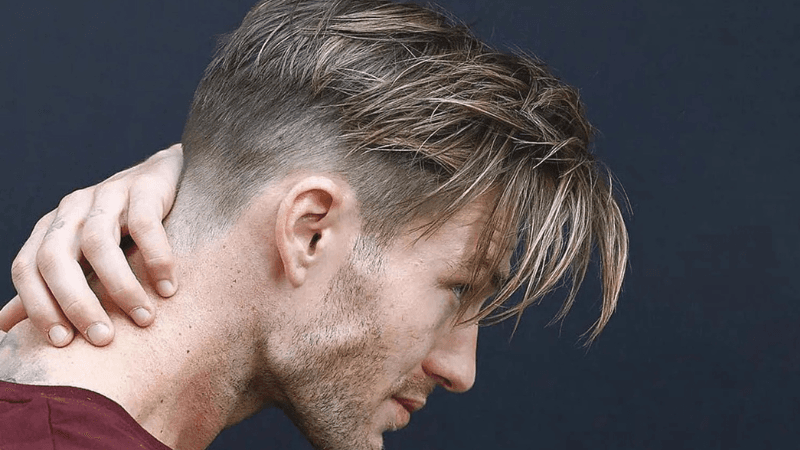
Men's curtain haircut: who suits it and how to choose the right length
Good curtains never obscure the view from the window; they frame it beautifully. A men's curtain haircut works on the same principle: the parting is straight, centered, and the strands softly frame the face rather than obscure it.
Hence the name "curtains," curtains that are slightly parted but not drawn all the way. Men's haircuts, called "curtains," are also called this, and it's not a mistake, but simply a colloquial version of the same name.
Barbers and hairdressers have brought back this cut from the 90s, and it's now one of the most common requests in the barber's chair.
A curtain haircut is perfect for men who aren't ready for drastic changes but want to freshen up their look. If you're unsure whether it's right for you, or what hair length to start with, let's break it down.
For your haircut, visit the men's hairdressers in Lviv at AlviBeauty.
Who suits a curtain haircut: a breakdown based on face shape
The curtain haircut for men is not about strict boundaries; each face shape simply has its own best option for length and volume.
Oval face.
Almost any version of curtains goes here; you can safely experiment with the length and parting without fear of making a mistake.
Round face.
It's better to choose an elongated option: long strands visually lengthen the face, while a short version is more likely to emphasize roundness.
Square face.
Here, stylists disagree: some believe soft strands at the cheekbones soften features, while others believe the crisp geometry of the curtain clashes with an already expressive jawline. It's wiser to come in for a consultation and try it on: an online photo is no substitute for a stylist's own eyesight.
Triangular face.
With a wide forehead and a narrow chin, volume works well, and a light cascade balances the proportions.
What length should the hair be for curtains?
How long to grow your hair for a curtain depends on its thickness and texture, but a good guideline is 10-15 cm at the crown, which is enough for a full parting and strands around the face.
If your hair is shorter, the stylist will create a temporary cut with extended bangs and then finish it off with a true "curtain" cut when it grows out. On medium-length hair, a short men's curtain cut looks put-together and easy to maintain.
Long locks are already a men's long curtain hairstyle, a more expressive, almost bohemian option: that same old-money aesthetic that many are now reaching for. If you come across the phrase "long curtain hairstyle," it's the same thing, just the words are different.
Types of curtain cutting
This haircut has several stable variations:
- curtains with shaved temples - a contrast of short and long, bold and requires more frequent correction;
- Korean curtain haircut is a little denser, with straight thick bangs and light volume;
- asymmetrical curtain haircut with an offset parting, one side is longer than the other;
- Multi-layered haircut creates more lightness and movement in the strands;
- Curtains for curly hair with waves or curls look even more interesting than on straight hair, but styling will take a little more time.
What's the difference between a curtain and an undercut?
They're often confused, but they're different stories. The undercut is all about contrast: short sides and volume on top. The curtain cut and the undercut differ primarily in the parting and the length of the strands near the face—the emphasis here is on them, not on the contrasting lengths. You can combine both techniques (the very same "curtain cut with shaved sides" from the list above), but this is more difficult to maintain and requires more frequent visits to the barber.
Do I need to install curtains?
Should you style your curtains every day? This is a question almost every barber hears. If you've done a good haircut, you'll barely need to style them: just lightly dry your hair with your hands, add volume at the roots, and that's it. This is the "no-style" look most often described in reference to this cut. Good curtains are like comfortable jeans that fit so well you forget you're wearing them: you wear the haircut, not the haircut itself. A few drops of texturizing product will suffice for a subtle wave around the face, but a men's curtain cut should be left to a professional: it's not a hairstyle you should try to recreate at home using a video from your phone.
Post-haircut care
Hair of this length will hold its shape longer if it's not over-dried: a low-heat blow-dry and a moisturizing treatment once a week will significantly extend the life of your style. Our stylists offer a full list of recommendations and care products.
Frequently asked questions about curtain cutting
Who suits curtain cutting?
Curtains can be flexibly adjusted to almost everyone's face shape, thanks to the length and parting. A specialist will advise you more precisely during a consultation.
What length should hair be to cut curtains?
10 cm or more on the crown is enough for a full parting and strands near the face.
What is the difference between a curtain and an undercut?
An undercut is a contrast of lengths (short shaved sides and volume on top), while a curtain is about the parting and strands around the face. Sometimes they are combined.
Do you need to put up curtains every day?
No, if the haircut is done well: a light hand drying and a drop of texturizing product is enough.
Is the curtain cut suitable for curly hair?
Yes, and often it looks even more interesting when the wave near the face becomes part of the image, and not something that you have to fight with.
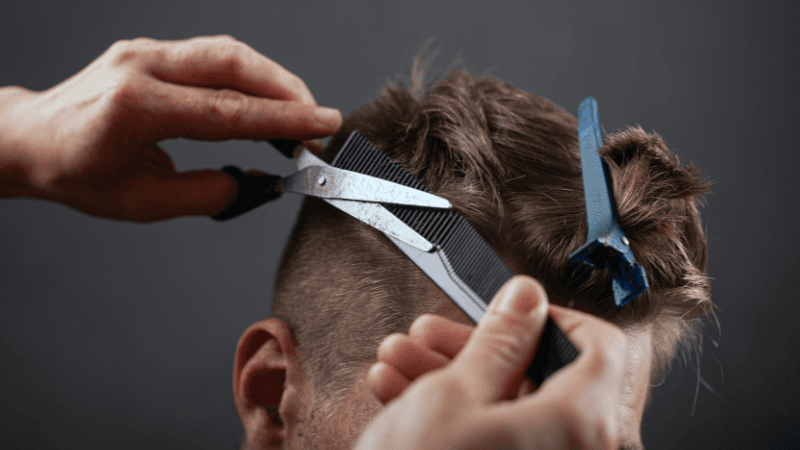
Men's crop haircut: what types there are and who suits them
The crop haircut has been one of the most popular men's hairstyles for several seasons now, and it's clear why.
It combines short sides with a voluminous, textured top, is easy to style, and flatters almost any face. If you're considering it for yourself or someone you care about, let's break it down: the different options, who they're suitable for, and what's important to discuss with your barber. If you decide to book an appointment, you can browse our selection of men's haircuts in Lviv and choose a barber at https://alvibeauty.com/ru-ua/salons/lviv/hairdressers/mensHaircuts .
What is a crop haircut and what makes it special?
The men's crop haircut is essentially simple: the sides and back of the head are cut short, leaving noticeably more length on the crown, which is styled forward or to the side.
The technique of doing a crop is often confused with a Caesar, but with a Caesar the bangs are short and even across the entire head, while with a crop the top is noticeably longer and more textured.
The advantages of this haircut include minimal styling time and the ability to hide bald spots.
The downside is regular visits to the barber to ensure the transition between zones doesn't become overgrown.
What types of crops are there?
The crop isn't just one hairstyle, but a whole family of variations that differ in the length of the top and the way it tapers off at the temples. Here are the six main ones most often offered by barbers and hairdressers:
- A classic crop is a basic option: short sides, a neatly styled top with wispy bangs. Suitable for business attire.
- A short crop has a minimal difference between the length of the crown and the temples, requiring almost no styling.
- The elongated crop on the crown remains noticeably longer, and you can experiment with styling it to the side or back.
- The textured crop top is worked to create a naturally tousled, voluminous look.
- The crop with a side fade transition is done with a smooth gradient, from the skin to the length at the crown, without a sharp border.
- The French crop is a variation with short bangs and a pronounced contrast in length, which looks good on a high forehead.
The length of the hair for the crop depends on the chosen option: the shorter the side sections, the more contrasting the voluminous top will look.
Who suits a crop haircut?
By face shape
A crop looks especially good on oval and square face shapes, as the cut emphasizes clean lines. Round faces should opt for a longer top, while elongated faces should opt for a classic crop with blunt bangs, which visually balance the proportions.
By hair type
The cut works equally well on straight and curly hair, with the texture working to enhance the look. For fine hair, the crop adds visual volume thanks to the thinning and light backcombing at the roots.
Who won't suit a crop?
If your hair is very fine and naturally textureless, your crop may lack volume without daily styling. Men with a pronounced cowlick on top should discuss this with their barber beforehand, as the cowlick can interfere with the bangs' proper placement.
How to care for a cropped top so it keeps its shape
Maintaining a crop haircut is simple: basic washing and a light blow-dry are sufficient. For styling, barbers recommend medium-hold clay or paste; they hold the shape without leaving the hair sticky, unlike gel, which is best reserved for smoother styles.
Styling takes just a couple of minutes: apply a small amount of product to your fingertips and lift strands at the roots. It's best to have your hair restyled by a barber about every 3-4 weeks, otherwise the transition between zones begins to blur.
Brad Pitt and George Clooney have both sported cropped haircuts at different times, choosing different versions from a neat classic to a more textured one.
Frequently asked questions about crop haircuts
Who suits a crop haircut?
It adapts flexibly to almost everyone's face shape and hair structure, from straight to curly.
What is the difference between a crop and a fade?
A fade is a technique for creating a smooth transition to the sides that can be used in a variety of haircuts, including crops. A crop is a general haircut shape, with a short bottom and a voluminous top.
Do you need to style your crop every day?
Short and classic options don't necessarily look good without styling, but textured and elongated crops need a couple of minutes of attention in the morning.
How often should I get my crop updated at the barber's?
On average, once every 3-4 weeks to maintain a clear transition between zones.
Is a crop good for curly hair?
Yes, natural texture even plays into your hands; the haircut will look more voluminous without any extra effort.

Wolf Cut: What It Looks Like and Who It Suits
The Wolf Cut is a layered style with noticeable texture, volume on top, and longer strands in the back. It's less formal than classic short haircuts: the hair can hang loosely around the face, with individual strands remaining free-flowing. See more men's haircuts at AlviBeauty:https://alvibeauty.com/ru-ua/salons/poltava/hairdressers/mensHaircuts
The name "Wolf Cut" is often found alongside "Mullet," but they are not the same haircut. The Wolf Cut typically has softer transitions between lengths, and the layers are distributed throughout the entire shape. Therefore, before visiting a hairstylist, it's best to look not only at the name but also at photos of the specific result you're hoping to achieve.
What is a Men's Wolf Cut?
The men's Wolf Cut is built around a combination of layers of varying lengths. The top is given more texture and volume, while the hair at the back is left longer. Depending on the style, the difference between the zones can be subtle or quite pronounced.
There's no set length for this haircut. The Wolf Cut can be adapted to short, medium, and longer hair. The shape itself also varies: one version looks softer, while another approaches a mullet with a noticeably longer nape.
Bangs are also optional. They can be short and textured, left long, parted to the sides, or blended into the side strands.
Who is the Wolf Cut suitable for?
When choosing a men's wolf cut, it's best to consider your hair structure and how it lies without styling. Wavy hair often naturally shows layers and texture. Straight hair sometimes requires additional styling, especially if you want pronounced volume on top.
Density also affects the result. On thick hair, a stylist can remove some volume and distribute the mass into layers. On thinner hair, it's important not to thin too much, to avoid creating sparse sections.
Before choosing a form, it is worth considering:
- hair length and thickness;
- straight, wavy or curly texture;
- direction of natural hair growth;
- the desired length of the back of the head and front strands;
- How much time are you willing to spend on daily styling?
Therefore, it's best to decide whether the Wolf Cut is right for you based on more than just your face shape. Hair texture and your usual styling can have a greater impact on the final result than the model's name alone.
Wolf Cut for short, medium and long hair
On short hair, the Wolf Cut is more compact. The top remains textured, the back is slightly longer, but the contrast between the sections is usually subtle. This option is suitable for those who want to maintain the characteristics of the Wolf Cut without significantly increasing the overall length.
Medium-length hair is more layered. You can leave the crown voluminous, the side strands extended, and the back longer. This length allows you to vary the direction of the front strands and the parting.
The long wolf cut looks softer due to the increased amount of hair. The transitions between layers are smoother, and the result is more dependent on the natural movement of the strands. It's especially important to decide in advance how much length to leave in the back.
How is Wolf Cut different from Mullet?
The Wolf Cut and Mullet are indeed similar. In both cases, the hair at the back can be longer than the top and sides.
The Mullet is typically characterized by a pronounced contrast between the relatively short hair at the front and sides and the long back. The Wolf Cut emphasizes layers, texture, and gradual transitions.
The line between these styles isn't always strict. Modern variations can combine features of both cuts. Therefore, the name a person gives to a hairstylist doesn't necessarily define the exact shape.
Wolf Cut for straight, wavy and curly hair
On straight hair, individual layers are usually quite clearly visible. If your hair is heavy and quickly loses volume, the crown may require additional styling after washing.
Wavy hair provides natural texture and movement, making the transitions between layers visible even without complex styling.
The Wolf Cut is also possible on curly hair, but you need to consider the degree of curl and the change in length after drying. The same haircut on straight and very curly hair will produce different results.
What bangs go with the Wolf Cut?
There's no single fringe option for the men's Wolf Cut. Its shape depends on the length of the front strands, the hair texture, and how the person wears it.
Short, textured bangs further accentuate the layers in the front. The longer strands can be swept across the forehead, to the side, or parted. A longer wolf cut can be paired with curtains, with the front strands parted to the side.
If your hair consistently grows in a certain direction, it's best to take this into account when choosing a style. Changing your natural growth direction on a daily basis is usually more difficult than adapting your haircut to it.
How to Style a Men's Wolf Cut
The difficulty of styling depends on the length and texture of your hair. If your hair naturally retains its texture, after washing, it may be enough to simply blow-dry it in the desired direction and then use your hands to distribute the strands.
For more pronounced volume, lift the top section at the roots while drying. It's not necessary to smooth all the layers completely: one of the hallmarks of the Wolf Cut is the noticeable movement of the hair.
If you're looking for a haircut that doesn't require extensive daily styling, it's worth discussing this with your stylist in advance. This way, the shape can be tailored closer to the natural hair fall, rather than a look that requires careful styling to achieve the desired result.
What to show the hairdresser before a haircut
The phrase "I want a wolf cut" can mean a variety of things. Photos of the same name feature both soft, layered shapes and styles with a pronounced elongation at the nape.
Before cutting, it is useful to:
- save 2-3 photos with a suitable shape;
- Show the desired length of the back of the head separately;
- determine the length and direction of the bangs;
- say whether you need pronounced volume on the crown;
- Explain how noticeable the difference should be between the top and back of the head.
This way, the hairdresser gets guidance not only by the name, but also by the specific details of the future haircut.
Frequently Asked Questions
What is a Wolf Cut for Men?
This is a layered cut with a textured top and longer hair at the back. The length, number of layers, and contrast between sections may vary.
Are Wolf Cut and Mullet the same thing?
No. The mullet is typically characterized by a more pronounced contrast between the short sections and the long back. The wolf cut is built primarily on layers, texture, and a more gradual distribution of length.
Is it possible to do a wolf cut on short hair?
Yes. The short version retains the layered top and a slight length at the back, but the difference between the zones is less pronounced.
Is Wolf Cut suitable for straight hair?
Yes. Layers are clearly visible on straight hair. If your hair lacks natural volume, you may need to style it to maintain the shape on top.
Can you do a wolf cut on wavy hair?
Yes, the waves naturally highlight the texture and movement of the individual layers.
Is it necessary to have bangs?
No. The wolf cut for men can have short or long bangs, with parted front strands or no bangs.
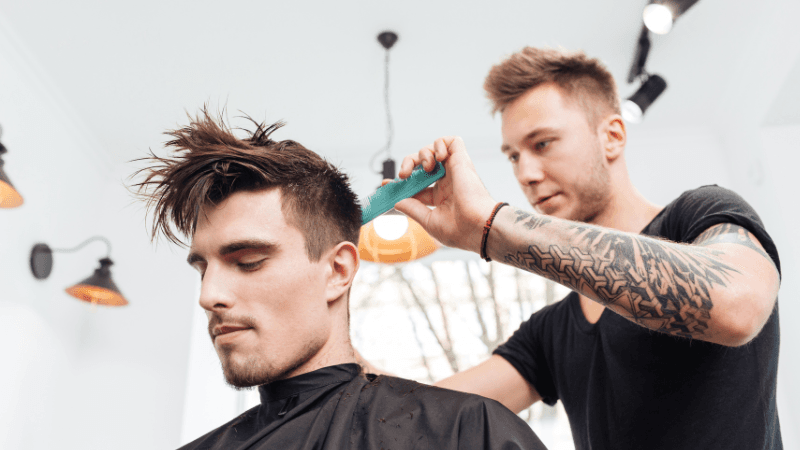
Men's haircuts for a triangular face: which hairstyles are suitable
It's best to choose a haircut not only by name, but also by facial proportions, hair type, and how much time a man is willing to spend on styling. Men's haircuts for triangular faces can vary in top length, fringe shape, and sideburns, so the same style can look different on different men.
If you already have a general idea of what you're looking for, you can browse men's haircuts in Poltava here:https://alvibeauty.com/ru-ua/salons/poltava/hairdressers/mensHaircuts . Before your appointment, it's helpful to save a reference image and note the length, fringe, or sideburn shape you prefer.
What does a triangular face shape look like in men?
A triangular face shape in men is typically characterized by a wider forehead and a narrower lower forehead. The cheekbones may be prominent, and the chin may be noticeably narrower than the upper part of the face.
Sometimes, the opposite shape—one with a wide jawline and a narrower forehead—is called triangular. Therefore, it's better to look not only at the name of the shape, but at the actual proportions:
- the width of the forehead, cheekbones and lower part of the face;
- how much the face tapers towards the chin;
- hairline and direction;
- natural volume without styling.
What men's haircuts are suitable for a triangular face?
When searching for hairstyles for triangular faces, men often consider options that allow for control over volume, bangs, and length on top.
Quiff and Pompadour
A quiff leaves a longer top. The bangs can be lifted or swept to the side. A pompadour requires more volume and typically takes more time to style.
Canadian and British
Both styles feature length on top and shorter sides. Hair can be styled back or to the side. If you're looking for a simple, everyday look, there's no need to leave too much length on top.
Undercut
The undercut is built on the contrast between short sides and a longer top. The stronger this contrast, the more prominent the cheekbones and sides of the face are. Therefore, it's best to choose the sideburn length based on your specific proportions rather than the haircut's name.
Side Part and Curtains
A side part is perfect for those who like a side part. Curtains, or "curtains," involve longer bangs parted into two sides. This style often looks more natural on wavy hair, while straight hair may require styling.
Caesar and Crop
The Caesar and Crop are ideal for those who want a short cut without much volume. The texture of the top and the shape of the bangs are key. These styles are generally easier to maintain on a daily basis than the high Quiff or Pompadour.
What kind of bangs suit a man's triangular face?
Bangs change the appearance of the upper part of the face. Side bangs create a diagonal line, long bangs partially cover the forehead, and curtain bangs distribute the hair to both sides.
Men's hairstyles for triangular faces with bangs should be chosen based on the direction of hair growth. If the strands constantly return to their original position, complex styling will quickly become awkward.
A men's haircut for a triangular face should look good not only immediately after visiting the hairdresser, but also as it grows out.
How hair volume and length change facial proportions
Volume at the crown adds height, while volume at the sides adds width to the top. Short sides open up the face more. A softer transition creates less contrast.
A longer top offers more styling options: pulled back, parted, or left natural. However, longer hair typically requires more maintenance.
How to choose a haircut based on your hair type
Straight hair shows off a crisp parting and bangs well. Wavy hair naturally creates texture. Thick hair holds its shape better, but becomes heavier with length. Fine hair has a harder time maintaining volume.
Therefore, the same haircut for a triangular face can look different on straight and wavy hair. A stylist can change the length or texture while maintaining the overall look.
Which haircuts are easier to style every day?
If a man doesn't want to spend a lot of time doing his hair in the morning, it's best to take this into account before getting a haircut:
- easier to care for - Crop, Caesar and shapes that match the natural direction of the hair;
- moderate styling - Canadian, British, Side Part;
- More time - Quiff, Pompadour and long Curtains.
This is not a hard and fast rule: a lot depends on the thickness, texture and direction of growth.
What to show the hairdresser before a haircut
Simply calling someone "Undercut" or "Canadian" isn't enough. It's better to show one or two references and clarify what exactly they like: the top length, the sides, the fade, the bangs, or the parting.
If you find men's haircuts for triangular faces in different collections, compare the details. A similar name can conceal significantly different shapes.
Frequently Asked Questions
What men's haircuts are suitable for a triangular face?
You can consider a quiff, Canadian, British, undercut, side part, curtains, Caesar, and crop. The choice depends on the length, bangs, and hair type.
How can you tell if a man has a triangular face shape?
Typically, the forehead is wider than the lower part, and the face gradually tapers towards the chin.
What kind of bangs suit a man with a triangular face?
Side-swept, long, or parted. It's important to consider the natural direction of the hair.
Should I make short whiskeys?
You can, but the shorter they are, the more the cheekbones and upper part of the face are revealed.
What haircuts are suitable for straight and wavy hair?
Most models can be adapted to both types. The texture, volume, and styling method will differ.
Which men's hairstyles are easier to style?
Most often, these are short forms that match the natural direction of hair growth.
Will Quiff, Undercut, Canadian and British work?
Yes, but the length of the top and temples is best adapted to the specific person.
What should I show to the master?
A reference image with the desired length, fringe shape, sides, and fade. The haircut's name is best used as a guideline rather than as the sole explanation.
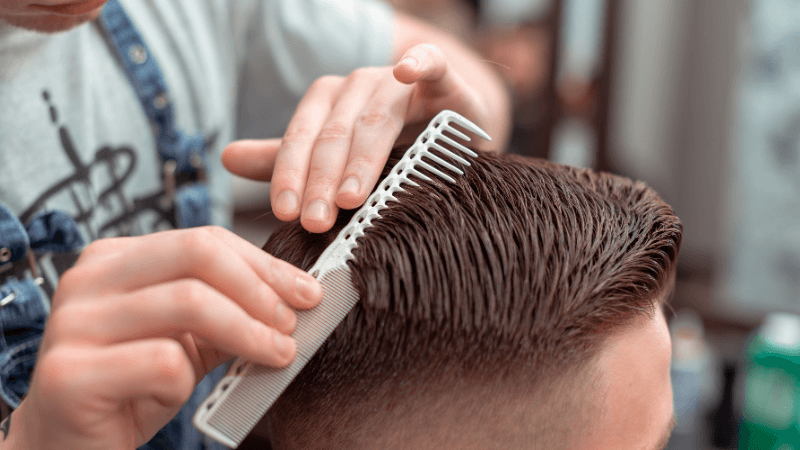
Modern Men's Haircuts: Fashionable and Stylish Options for 2026
Choosing a haircut doesn't start with the name, but with how a man usually wears his hair every day. Some people prefer a short cut without the hassle of styling, while others want volume on top, bangs, or the ability to change the direction of their hair. You can browse men's haircuts athttps://alvibeauty.com/ru-ua/salons/poltava/hairdressers/mensHaircuts , and in this article, we'll explore the differences between modern men's haircuts and what to look for before visiting a hairstylist.
What men's haircuts are in fashion in 2026?
Today, a haircut's relevance isn't determined by its fashionable name alone. What matters most is the combination of hair shape, length, texture, and how comfortable it is to wear every day.
Short cuts like buzz cuts and crops, faded shapes, and more textured ones remain popular. Medium-length cuts offer more options for volume, side parts, and movement. If you keep the top longer, you can choose a quiff, undercut, or a slicked-back style.
Therefore, fashionable men's haircuts for 2026 can look completely different. One man might opt for a short, textured crop, while another might opt for a more voluminous cut with a longer top. The general principle is that a haircut should work not only immediately after leaving the salon, but also in everyday life.
What modern men's haircuts can you choose?
Short Haircuts: Buzz Cut, Crop, and Fade
The buzz cut is perfect for those who prefer minimal length and a clean shape. The hair is kept short, so complex styling is usually not required. However, the look depends heavily on the neatness of the contours and the transition between lengths.
A crop allows for a little more freedom. A textured crop features noticeable individual strands on top and often sweeps the hair forward. It's perfect for those who want to maintain the practicality of a short haircut but add texture.
A fade isn't a specific haircut, but a way to create a transition from short to longer hair. Therefore, it's important not just to tell your stylist, "I want a fade," but also to specify the length on top and how contrasting you want the sides.
Haircuts with texture and volume: Crop and Quiff
If you want more movement in your hair, consider texture and volume. A quiff typically requires more length on top than a crop. The hair is lifted and swept back or slightly to the side.
This option allows you to change your hairstyle, but it will take more time in the morning. If your hair holds its shape well, the task is easier. If it quickly loses volume, you may need a blow-dryer and a little styling product.
The crop is simpler in this regard: the shape is shorter, and the texture can look expressive even without complex styling.
Long Top Haircuts: Undercut and Slick Back
An undercut emphasizes the noticeable difference between the top and shorter sides. The contrast can be dramatic or subtle—it's best to discuss this with your stylist beforehand.
A slick back requires the hair on top to be long enough to be slicked back. This is where hair type comes into play: some hair easily holds its shape, while others require a blow-dryer or styling product.
If you're looking for a more relaxed look, you don't have to go for a dramatic transition. A longer top can be paired with soft sides for a more natural look and a more relaxed growth curve.
How modern men's haircuts differ from each other
A name alone doesn't always convey the final look. Two stylish men's haircuts may differ in just a few details, but they can be visually perceived as completely different.
When comparing, it is worth paying attention to:
- the length of the hair on top and on the sides, the smoothness or contrast of the transition, the presence of bangs and a parting;
- hair texture, volume, styling direction, and how well the shape is maintained without styling.
For example, short sides with noticeable volume on top create a more pronounced contrast. A soft transition in length creates a more relaxed silhouette. Bangs can completely change the look of a crop, and a side part adds structure to a longer shape.
Therefore, it is better to choose not only between the words Fade, Quiff or Undercut, but between specific visual features.
How to choose a modern men's haircut
First, it's worth assessing your hair type. Straight, wavy, and curly hair hold their shape differently. Hair thickness also matters: the same haircut can look completely different on thicker hair than on thinner hair.
Face shape can also be taken into account, but it shouldn't be turned into a rigid rule. It's more helpful to consider several factors at once: the natural direction of your hair, its texture, your usual length, and your willingness to style it.
If a man doesn't like using a hair dryer or styling products, it's best to avoid styles that require constant volume. If, on the other hand, he likes to change the direction of his hair, part it, or comb it back, the length on top should be preserved.
So the choice becomes practical: not “what’s most fashionable now,” but “what modern men’s haircut will be comfortable for me to wear.”
Which men's haircuts are easier to style every day?
Short cuts are usually the simplest. A buzz cut requires virtually no styling. A crop often only requires a few simple touch-ups or subtle texture enhancements.
A quiff requires more attention because its signature feature is volume. A slick back also depends on the hair's direction and usually requires at least minimal hold.
An undercut can be either simple or elaborate, depending on how much length is left on top and how it's intended to be worn.
Therefore, it's best to choose men's haircuts without complicated styling based on your actual routine. If you only want to spend a minute or two on your hair in the morning, it's a good idea to let your stylist know right away. Then they can suggest a style that won't require daily grooming.
What to show the hairdresser before a haircut
A haircut's reference is much more helpful than its name alone. Even crop, fade, and undercut come in many variations.
Before your visit, you should prepare:
- two or three references and show what length on top, shape of the temples, bangs or transition you like;
- Explain how you usually style your hair, whether you use a hair dryer, and how much time you want to spend on your hair care in the morning.
You can show your stylist what you don't like in other photos. For example, the sides are too short, the fade is too harsh, or there's too much volume on top. This often helps clarify the desired result.
A good reference isn't a directive to copy someone else's appearance. It's a way to agree on hair length, shape, and direction.
Frequently Asked Questions
What men's haircuts are considered modern and fashionable now?
Trendy styles range from short buzz cuts, crops, and fades to more voluminous quiffs and longer-topped cuts. It's not just the men's haircut trends that matter, but also how well the chosen style suits your hair and grooming habits.
How to choose a modern men's haircut for your hair type?
It's important to consider your hair's texture, thickness, natural growth direction, and ability to maintain volume. If your hair is difficult to style, it's more practical to choose a style that holds up naturally.
Which men's haircuts are easier to style every day?
Buzz cuts and short crops typically require minimal time. Quiffs, slick backs, and other styles with noticeable volume or direction often require a blow-dry or styling tool.
What is the difference between Fade, Crop, Quiff and Undercut?
A fade describes the way the length transitions at the sides and back. A crop is a short cut with texture on top. A quiff emphasizes volume and a lifted front. An undercut features a distinct difference between the longer top and shorter sides.
What modern haircuts can be worn with bangs or partings?
Bangs or a side part can be combined with various hair shapes, as long as the top is kept at the right length. The specific option depends on the texture and natural direction of the hair.
What should I show my stylist to get the haircut I want?
It's best to use several photos and explain what exactly you like: the length on top, the sides, the transition, the bangs, the parting, or the direction of the hair.
Which men's haircuts hold their shape best as they grow out?
Haircuts with a gentle transition in length and without a sharp contrast between zones typically respond more smoothly to changes. However, much depends on the growth rate and hair structure.
How do you know if a haircut will work without complicated styling?
Consider how your desired shape is maintained. If your hair constantly requires volume, blow-drying, and hold, you won't be able to completely avoid styling. If the shape is maintained thanks to the length and cutting technique, daily maintenance will be easier.
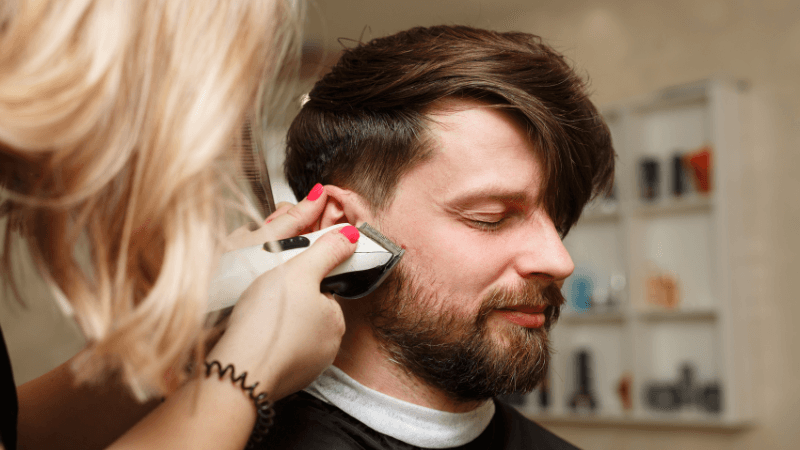
Men's medium length haircuts
A medium-length cut offers more flexibility than a short one: you can part your hair, swept back, leave bangs, or maintain a natural flow. But the sheer number of options makes choosing difficult. The same long top can look completely different depending on the length of the sides, the direction of the hair, and whether you're ready to style it in the morning.
Therefore, choosing medium-length men's haircuts is easier than just choosing the name. First, decide what length you want to keep and how you plan to wear your hair on a regular basis. You can learn more about men's haircuts in Poltava athttps://alvibeauty.com/ru-ua/salons/poltava/hairdressers/mensHaircuts .
What is considered average hair length for men?
Medium length doesn't have a single, universal centimeter limit. Even specialized materials use different ranges. It's more practical to focus on the hair's capabilities: it's long enough to have a noticeable parting, bangs, volume, or a slicked back style, but it's not yet considered a full-length hairstyle.
Length distribution is crucial. You can keep the top longer and noticeably shorten the sides, or you can leave more hair on the sides and back. Therefore, men's haircuts for medium-length hair differ not so much in overall length as in silhouette.
If you like a specific reference, look first at three zones:
- top,
- whiskey
- and the back of the head.
It is their combination that determines whether you get a compact shape, a loose flow, or a more pronounced version with long bangs.
What medium-length men's haircuts can you choose?
Some styles open up the face and sweep the hair back. Others retain bangs or a parting. There are also options where the length is distributed more evenly. Therefore, it's easier to compare haircuts based on how they look in everyday life.
Flow and curtains: shapes with natural hair movement
Flow, or Bro Flow, is perfect for those who prefer a free-flowing style without rigid geometry. Length remains noticeable, and strands are typically swept back or slightly to the side. Natural movement is more important than precise hold.
Curtains have a different accent: a center parting and front strands that diverge to the sides. Long bangs become part of the silhouette and partially frame the face. If the center parting falls naturally, this style is usually easier to wear every day than a style that requires constant blow-drying.
Quiff and Pompadour: haircuts with volume and comb-over
A quiff involves adding length to the front. Hair is lifted and swept back or slightly to the side, creating a fuller look on top.
The pompadour relies on even more pronounced volume and contrast between the top and sides. This shape requires control: if the hair naturally falls forward or in different directions after washing, achieving the desired silhouette will be more difficult without a blow-dryer.
Therefore, it's important to choose these options not only based on appearance. Consider whether you're willing to regularly change the direction of your hair.
Slick Back and Undercut: Longer Top Options
The slick back is easily recognized by its slicked-back style. It's important to keep enough length on top so the hair can be pulled back in one direction.
The undercut works on contrast: a longer top is paired with much shorter sides. It can be styled:
- back,
- to the side or more freely,
- Therefore, the same base gives several ways to wear the haircut.
If you want to keep the hair on top but remove excess volume at the temples, a men's haircut with an elongated top may be more convenient than a shape with the same length all over.
Men's bob and layered haircuts
The bob is distinctive in that the length isn't just on top. The sides and back are also part of the shape. This creates a softer silhouette than haircuts with short sides.
Layered cuts use varying lengths of strands to prevent the hair from looking like one heavy mass. Layers can highlight texture and natural waves. This style is especially appealing to those who want more length and don't want to constantly pull their hair back.
How does a long men's haircut differ from a medium length one?
The terms overlap somewhat. A long men's haircut doesn't necessarily mean shoulder-length hair. It often refers to a style that retains noticeably more length on top, in the bangs, on the sides, or at the back compared to a traditional short haircut.
Therefore, long men's haircuts can also be medium-length. For example, a short sideburn with a long top is one approach. A bob with long sides is another.
When hair can be pulled back into a noticeable ponytail or length becomes the dominant feature of the entire hairstyle, demand gradually shifts toward long men's haircuts. For our purposes, intermediate styles are more important, where the length allows for styling freedom but still remains a part of the cut.
Men's medium length haircuts without styling
The phrase "no styling" sounds convenient, but it shouldn't be taken literally. The longer your hair, the more its shape is affected by the direction of growth, sleep, humidity, and drying method.
It's easier to wear a style that works with the natural direction of your hair. If your parting naturally falls in roughly the right place, you won't have to re-shape it every morning. The same goes for flow cuts or layered styles with natural texture.
Styles with high volume, a sharp back sweep, or a direction opposite to the natural hair growth usually require more time.
Therefore, when choosing men's medium-length haircuts without styling , it is better to look not for a promise of "nothing to do," but for an option without complicated daily styling.
How to Choose a Medium-Length Men's Haircut
Start not with the name of the haircut, but with how you want to wear your hair.
If you like an open forehead, consider a slicked back, quiff, slick back, or flow. If you want to keep some front strands, consider a curtain cut, a cut with long bangs, or a bob.
The next issue is the sides. Short sides make the difference between the top and sides more noticeable. Keeping the length on the sides creates a softer silhouette.
Then evaluate the style. A center or side part that follows the natural direction of the hair is usually easier to maintain. A more voluminous or slicked-back style will require more attention.
So, a medium-length men's haircut is chosen not by a single fancy name, but by a combination of length, style, and the time you are willing to spend on your hair.
What to show the hairdresser before a haircut
A name alone is often not enough. Flow, undercut, or even bob can all look different.
It's best to save several references with similar lengths and determine in advance what you like about them:
- how much hair to leave on top;
- how short should the temples be;
- Do you need long bangs?
- do you want a center or side parting;
- plan to wear your hair back or loose.
If a particular area is important, mention it before the haircut. Saying "I want to keep the length on top" gives the stylist more useful information than just the style name.
Frequently Asked Questions
What men's haircuts are suitable for medium length hair?
Options include flow, curtains, quiff, pompadour, slick back, undercut with a longer top, man bob, and layered cuts. Choose based on the desired hair direction, the length of the sides, and how much time you're willing to spend on styling.
What is considered average hair length for men?
There's no single standard. Typically, we're talking about a length that allows for defined bangs, a parting, a slicked-back style, or a loose, layered look, but isn't yet considered a full-blown long hairstyle.
Which medium-length men's haircuts are easier to wear without complicated styling?
Styles that follow the natural direction of the hair are simpler. Flow cuts, loose layered options, or a traditional parting often require less control than a high pompadour or a crisp slick back.
How does a long men's haircut differ from a medium length one?
"Medium length" describes hair length, while "extended" often describes the shape of a relatively shorter haircut. Therefore, these terms can overlap.
How to choose a medium-length men's haircut if you don't want to spend a lot of time styling your hair?
Pay attention to where your hair falls after you blow-dry it, and choose a style that utilizes that flow. The less you have to change your natural parting, lift your hair, or pin it back tightly every day, the easier it will be to maintain.
What should I show my hairdresser to maintain the desired length and shape?
It's best to take two or three reference photos and show the desired top, sides, back, and bangs separately. This way, it's easier for the stylist to understand the specific result you're looking for, rather than just the haircut's name.
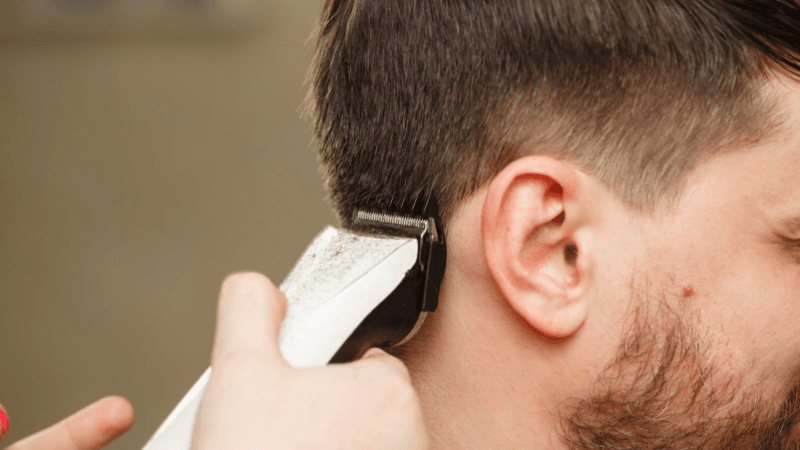
What to do if a man's hair is cut too short
Shorter than desired is unpleasant, but not critical. Once cut, the length can't be restored, but the shape can often be adjusted, and there are ways to make the regrowth period less awkward. It's easiest to finda hairstylist you can comfortably explain the task to in advance—then any subsequent trims will be less stressful.
No matter how you frame the problem— what to do if a man's haircut is too short , what to do, or how to fix a short men's haircut—the bottom line is the same: the length can't be restored, but the shape can usually be improved. Let's break it down step by step.
What to do immediately if you get a shorter haircut than you wanted
First, don't panic and don't ask the stylist to "fix" it by cutting it a little more: this often only worsens the shape. Evaluate the result independently of your emotions: compare what you asked for and what you got—is the overall length a couple of centimeters shorter, or is the problem localized, such as cutting the sides or the back too short.
When a barber cuts a man's hair too short , the first reaction is usually confusion, not anger, and that's okay: a couple of minutes to simply appreciate the result won't ruin anything.
If you're still in the technician's chair, mention it right away—it's easiest to make adjustments while you're still standing. Ask them not to touch:
- the rest of the length until you see the overall result.
- If your haircut is already finished and you are at home, do not rush to arrange a new touch-up on the same day.
- let your hair "settle" for a day or two,
- in daylight the shape often looks different,
- than in a barber's chair under the lamps.
Is it possible to fix a haircut that is too short?
The search term "men's haircut cut too short " is one of the most frequently searched terms, and it almost always leads to the same question: can anything be done right now? The answer depends on what exactly went wrong. If the problem is an uneven transition between zones—for example, a sharp contrast between the temples and the crown—this can usually be mitigated by smoothing the transition, slightly trimming the shape, and trimming any flyaways. However, there's no way to restore the length that was already cut—it's worth accepting this right away to avoid wasting time on futile attempts.
If you feel like your first stylist can't handle it anymore or you've lost trust, try another. Sometimes it's easier to go to a place that specializes in short men's styles, like a barbershop . An experienced barber can adjust your fade, straighten your lines, and make sure your haircut looks like a conscious choice rather than a mistake.
When it's better not to cut anything else
If the overall shape is even and the only issue is the length, it's best to stop and avoid further trimming. Any attempt to "trim" a short haircut almost always results in even less length, not more precision. The exception is if there's a truly obvious flaw: severe asymmetry, an uneven edge, or a noticeable fade that's noticeable. In other cases, the best solution is time.
How to make a short haircut neater right now
Before your hair grows out, you can make sure the result looks neat and not haphazard. Matte clay or hair paste can help texture short strands and slightly distract from the length—unlike wet-look gels, which, on the contrary, emphasize the short shape. Changing your parting or combing your hair to the side can sometimes change the look of your haircut more than you might think.
A beard or stubble is a useful technique: facial hair shifts the focus away from the scalp and balances the proportions. Headwear—a cap or beanie—is a good temporary solution for the first few days while you're getting used to the new length, but don't wear them constantly just to hide the haircut—it's more likely to be noticeable than not.
What to do while your hair is growing back
Men's hair grows an average of 1–1.5 centimeters per month—there's no way to speed this process up, and promises to speed it up aren't accurate. A realistic guideline is a few weeks for a noticeable transition and a couple of months for the haircut to return to its natural shape.
The first week is usually the hardest—the shape is still unfamiliar, and styling doesn't always work the first time. Then it gets easier: hair grows unevenly, and this often helps—for example, bangs or the top quickly provide something to work with when styling.
What to tell your hairdresser at your next haircut
To avoid a repeat of this situation, at your next appointment, don't just state your desired length verbally; show a photo or a specific guideline—for example, "leave the same length as you currently have on top." If in doubt, ask your stylist to cut your hair a little longer than you think you need: you can always trim it back, but you can't put it back.
If you've already decided where to get your next haircut, it's easier to look not for the first hairstylist you come across, but for someone who consistently offersmen's haircuts in Poltava and understands the difference between "short" and "too short."
A similar scenario— what to do if a man's hair is cut too short —is no less common, and the logic is the same: first assess what happened, then decide whether any adjustments are necessary. But if you phrase the question differently—if a man's haircut is cut too short, what should you do in such a situation—the answer still boils down to the same steps: don't panic, assess the scale of the problem, and don't agree to unnecessary adjustments.
Frequently Asked Questions
Below are short answers to the most frequently asked questions about short men's haircuts: what to do if you cut your hair too short.
What to do if you cut your hair too short?
First, assess what exactly is wrong—the entire length or just a specific area. Localized issues, like an uneven transition, can often be corrected by another stylist, but a cut length cannot be restored—you're left waiting for it to grow out and using styling as a temporary solution.
How long does it take for hair to grow back after a short haircut?
On average, hair grows 1–1.5 centimeters per month. The exact rate depends on hair structure and individual characteristics, so don't expect quick results.
What to do with a bad short haircut?
If the problem is the shape, you can try getting it adjusted by another stylist. If the problem is only the length, the best solution is usually time and careful styling, rather than a new haircut.
What to do if a man's hair is cut short?
The logic is the same as in other cases: evaluate what can be corrected immediately and what cannot, use styling, a beard, or a hat as temporary solutions, and do not agree to additional correction unless clearly necessary.
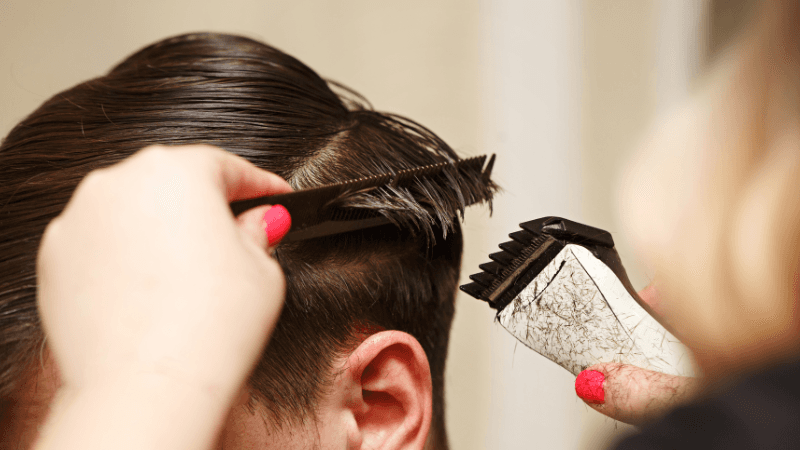
Why Men's Haircuts Look Good in the Salon, But Not at Home
Straight out of the salon, hair usually looks neat. The hairdresser has already dried it in the desired direction, distributed the volume, and applied a little styling product if needed. So why does a men's haircut look good in the salon is a natural question, especially when the results at home change after just one wash.
When styling products are washed out and hair dries normally, its natural direction, curls, coarseness, and growth patterns become more noticeable. Therefore, if a man's haircut doesn't hold its shape after washing , it doesn't necessarily mean the hairstylist did a poor job. First, it's important to determine whether the style is simply gone or whether the shape itself is truly uncomfortable for everyday wear.
Visithttps://alvibeauty.com/ru-ua/salons/poltava/hairdressers/mensHaircuts to find popular men's haircutting services in Poltava.
https://alvibeauty.com/ru-ua/salons/poltava/barbershops/mensHaircuts
Why does my hair look different after the first wash?
At the salon, the client sees the finished result. The hair is washed or moisturized, blow-dried, lifted where volume is desired, and styled in the desired direction.
After a home wash, everything starts all over again. Water removes most of the styling product, and the hair gradually returns to its natural growth pattern.
That's why the question of why hair lies differently after washing is most often connected not with the washing itself, but with how the hair was dried afterwards.
Hair length, thickness, texture, and coarseness also influence the shape. One section may naturally fall downward, another may rise at the roots, and the cowlick at the crown often changes direction. The shorter the hair in this area, the more noticeable this behavior can be.
Why does my hair look good after going to the hairdresser, but not at home?
A hairdresser can see your head from all angles and understand where to direct your hair while drying. They can lift the top, smooth the sides, avoid cowlicks, or change the direction of the airflow to create a neat, sleek look.
At home, men often take a more straightforward approach: dabbing their hair with a towel, drying it in any direction, or letting it dry naturally. As a result, the same length can look completely different.
Therefore, the phrase "my hair looks great after the hairdresser but not at home" doesn't point to a single, specific reason. Sometimes, changing the blow-dryer is enough. In other cases, after rinsing out the styling product, it becomes clear that the shape is too dependent on the blow-dryer and hold.
When the problem is in home styling
Styling men's hair at home doesn't have to be exactly like having a professional do it. But if your hair isn't looking great after a haircut , there are a few simple things to check first:
- which way are they dried,
- does this direction coincide with natural growth?
- and whether the form needs light fixation.
If your hair falls neatly into place again after drying it properly, you probably don't need to change your haircut.
Hair is not dried in the direction of growth
Wet hair is easier to change direction. If you constantly blow-dry it against the grain or vigorously rub it back and forth with a towel, individual strands may start to stick out after drying.
This is especially noticeable at the temples and crown, where the direction of hair growth can vary even over a small area of the head.
Before styling, it's helpful to notice where your hair naturally falls. Sometimes, drying correctly means working with it rather than fighting it.
Lack of direction and focus
Not every men's haircut requires paste, wax, or other styling products. But if the hairstylist created volume with a blow dryer and lightly set the shape, a regular blow dry at home will produce a softer result.
This raises the question of why a haircut only looks good after styling . In some cases, styling is indeed part of the intended shape. This is normal, as long as a person is willing to dedicate a few minutes to styling beforehand.
The problem begins when, without strong hold, it is almost impossible to get the hair into a neat shape, even though the man asked for a simple haircut for every day.
Home drying is not the same as salon drying
Much of the difference between a salon and home haircuts is often not the amount of products used, but the technique used with the hair dryer.
The airflow direction helps style hair from the roots. For added volume, the stylist can slightly lift:
- the desired area with your fingers or a comb,
- and shorter sections,
- on the contrary, to smooth it out.
At home, you don't have to imitate your hairdresser's every move. It's much more helpful to ask at the salon which direction to dry the top, sides, and the area with pronounced fringes.
When the problem might be in the haircut itself
Not all cases can be explained by home drying. If the same areas are constantly falling out, the hair doesn't hold its shape even after careful styling, and the shape only exists with strong hold, it's worth looking at the haircut itself.
The direction of hair growth, curls, length of individual zones and volume distribution are important here.
The master did not take into account the direction of growth and curls
Hair rarely grows uniformly across the entire head. There's often a cowlick on the crown, the temples may grow slightly to the side, and the hairline at the front has a distinct direction.
If such a section is shortened without taking into account its behavior, the hair may rise up or go to the side after washing.
Therefore, it is important to consider the natural direction of hair growth after a haircut during the process, especially if a person does not plan to use strong styling products on a daily basis.
Length and volume are poorly distributed
The shape depends not only on the overall length. It's also important where the hair is left and where it's removed.
If the top section is too heavy, the volume can quickly fall off. If a particular section is shortened more than the growth direction allows, strands of hair will stick out.
The geometry of the haircut should take into account not only the external silhouette immediately after drying, but also the natural fall of the hair after a normal home drying.
The haircut only holds its shape after styling.
The need for styling doesn't necessarily mean a bad haircut. Some styles specifically require a blow-dry and a small amount of styling product.
But if a person wanted a practical option, and without several treatments and a long drying time the shape completely disappears, this issue should be discussed with the master.
Sometimes the solution isn't a stronger hold, but a different length or a more comfortable volume distribution.
Why does my hair stick out or hang in different directions after a haircut?
If your hair is sticking out after a haircut, it's helpful to first identify the specific area.
Short, coarse hair at the temples may stick out from the scalp. On the crown, a cowlick is often the cause. Longer strands on top may spread out in different directions if they're left to dry without a specific direction.
Don't judge your haircut only immediately after washing. Blot your hair, gently dry it in the direction of your cut, and see the results without applying too much product.
If the problem disappears after a few blow-drys, the problem was most likely due to your styling. If one section of your hair frizzes the same way every time, regardless of the drying method, it's best to take it to a hairdresser.
How to replicate salon results at home
Styling at home shouldn't take as much time as a salon visit.
After washing, first gently pat your hair dry with a towel. Avoid rubbing it vigorously.
Observe the natural direction of your hair and begin blow-drying according to the desired style. Where volume is desired, you can gently lift the hair with your fingers or a comb. Shorter sections can be more easily guided to the desired position after drying.
When your hair is almost dry, first evaluate the shape without using any strong styling products. If hold is really needed, use a small amount of a suitable product.
This makes it easier to understand how to style your hair after washing and how suitable the style itself is for daily use at home.
How to tell if the problem is in the styling or the haircut itself
It's best to do a simple home test.
Wash your hair, gently pat dry, and blow-dry in the direction of hair growth and desired shape. Avoid using large amounts of wax, paste, or gel at once.
If the basic silhouette returns after proper drying, the difference between salon and home was most likely due to styling technique.
If the same areas continue to stick out, the hair constantly goes in the wrong direction, or the shape is practically nonexistent without strong hold, the problem should be discussed with a hairdresser.
It's helpful to clearly explain what happens after the first wash at home. This will help the specialist understand whether adjustments to the length, volume distribution, or specific areas need to be made.
On AlviBeauty, you can compare available men's haircuts in Poltava and schedule a service. Before your haircut, it's a good idea to tell your hairdresser how much time you're typically willing to spend on styling. This helps you choose a style that will be comfortable not only in the chair but also at home.
And if you're still in Kyiv, you can find our services for men on the website https://alvibeauty.com/ru-ua/salons/kyiv/hairdressers/mensHaircuts .
Frequently Asked Questions
After the first wash, it can be difficult to tell whether the change in shape is normal or whether the result truly requires adjustment. Below are brief answers to the most frequently asked questions about at-home styling and how a haircut will behave after a salon appointment.
Why does my hair look good after going to the hairdresser, but not at home?
In the salon, the hairdresser sets the direction with a blow-dryer, controls volume, and applies styling products if needed. After washing, this effect partially disappears, so the hair returns to its natural shape.
Should a good men's haircut lie flat?
Not necessarily. It all depends on the length, texture, and style of the hair. But if a man has asked for a practical haircut, it shouldn't require complicated daily styling just to look neat.
Why does my hair start to stick out or fall in different directions after the first wash?
This can be due to the direction of hair growth, cowlicks, coarseness of the hair, the length of certain sections, or the way you dry your hair at home. This is especially noticeable on short sides and the crown.
How can you tell if the problem is with your home styling or the haircut itself?
Dry your hair in the direction of the shape and avoid using strong hold at first. If the shape returns, it's likely due to styling. If the same areas continue to pop out, discuss the shape with your stylist.
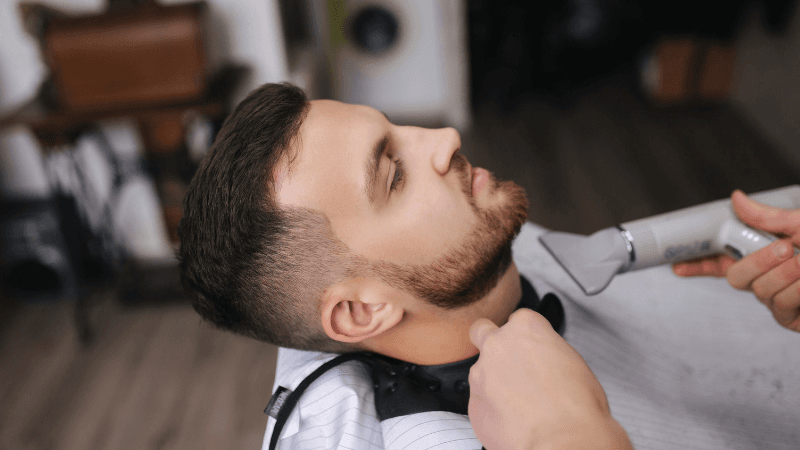
I didn't like my haircut: what to do and how to tell your hairdresser
"Execute, don't pardon"—that's roughly the internal dialogue of a client looking in the mirror and realizing the result isn't what they dreamed of. Even experienced hairdressers can get bad haircuts , and the question " I didn't like the haircut, what should I do? " is the most pressing concern at such moments. If you're still deciding where to go next, you can check out the websitehttps://alvibeauty.com/ruua/salons/kharkiv/hairdressers/mensHaircuts and avoid some of the problems below.
I didn't like my haircut: where to start
Don't get up from your chair feeling offended. Assess the result calmly: perhaps the problem isn't the stylist, but rather the styling that wasn't finished yet—a haircut at home, without a hairdryer or professional products, often looks different.
If the sensation has not changed after 24 hours, proceed to the next step.
I ruined my haircut, what should I do first?
I ruined my haircut. What should I do first? How to fix a bad haircut depends on what exactly went wrong. But the order of actions is almost always the same:
- Don't just leave silently: voice the problem right away in the chair or within a week, while many salons offer a guarantee of free correction.
- Write down exactly what's wrong—length, asymmetry, shape. A general "I don't like it" won't help the stylist.
- Take a photo in daylight - it will be easier to show the problem to the second specialist.
- Don't grab scissors at home: self-correction almost always makes the situation worse.
What should you do if your hairdresser ruined your haircut more than you think? If your haircut is seriously ruined, talking to your stylist isn't just a formality, but the only chance to fix it without going to another salon. If your stylist refuses to acknowledge the problem, the question arises: which stylist should you go to after a bad haircut? It's best to choose another salon for an unbiased assessment. What should you do if your new stylist ruins your haircut again? The same process applies: specifics, photos, and the receptionist.
How to tell your hairdresser that you don't like the result
How can I tell my hairdresser I don't like the result so that the conversation doesn't become awkward? "I don't like it" sounds like a judgment of the hairdresser, not the work. How can I tell my hairdresser what I don't like so they'll listen and not get defensive? Point to the area—the temple, the back of the head, the length of the bangs—and explain how it doesn't meet expectations.
How to talk to your stylist about a haircut without conflict: keep a calm tone, thank them for what went well, and only then address what needs to be corrected.
What to show instead of explaining with words
A reference photo for your hairdresser resolves most misunderstandings before the haircut. But a reference photo is also useful afterward—show a photo of your desired look next to the final result, and it will be easier for your stylist to understand the difference.
What to do about a bad haircut: a man's perspective on conversation
Men are less likely to complain to their barbers out loud, a habit that stems from their habit of avoiding embarrassment over their appearance. This is why the search query " what to do about a bad men's haircut " consistently appears in search results, even though articles focusing on men are almost nonexistent. How can a man quickly fix a bad haircut? The same principle applies: be specific instead of general, and talk about it immediately, not a week later.
What a hairdresser really wants to hear
A hairdresser needs information, not emotion. "Something's wrong" doesn't help fix the job, but "it's short here, and uneven there" does. A good hairdresser isn't hurt by specifics, but by the silence of a client who leaves dissatisfied and simply doesn't return.
Client Rights in the Event of a Bad Haircut: What the Law Says
In addition to speaking with the hairdresser, clients have legally enshrined rights in the event of a poor haircut. If the service is poorly rendered, consumer protection laws allow for a free re-cut, a discount on the haircut, or a waiver of payment, depending on the severity of the problem.
When can you request a free correction?
Free haircut touch-ups are standard practice at most salons, and they're available within 3-7 days. A free haircut re-cut is only possible if the issue is genuinely related to the stylist's work, and not because you changed your mind at home.
When it comes to compensation
If a haircut correction after a poor result is physically impossible, you can negotiate a discount on the haircut or waive the payment entirely. Compensation for a bad haircut through the courts is a last resort: salons that value their reputation resolve the issue on the spot—for them, a complaint to the salon is worse than a discount for the client.
How to avoid a bad haircut next time
Talking after a bad haircut is about dealing with the consequences. It's easier to prevent them.
- Bring a photo to the consultation, not a description “by eye”.
- Discuss not only the length, but also the face shape, hair type, and styling that you can recreate at home.
- Ask the master for his opinion - an experienced specialist will adjust his wishes to suit your needs.
- Don't be silent during the process: if something goes wrong during the haircut, say so right away.
How to explain to your hairdresser what you really want is best decided before you get into the chair, not after disappointment.
Frequently Asked Questions
Is it possible to avoid paying for a bad haircut?
Yes, if the work is poorly done and the hairdresser refuses to fix it. Can you demand compensation for a botched haircut in this case? Yes, but this is usually done through a written complaint or a court case.
Where can I complain about a bad haircut in Ukraine?
First, contact the salon administrator. If the issue is unresolved, where to next complain about a bad haircut in Ukraine? A written complaint, and if there's no response, take it to court.
What should you say if you get your hair cut too short?
What to say if you've cut your hair too short: Explain the desired length and ask if the shape can be adjusted without further shortening.
How to get a refund for a bad haircut at a salon?
To get a refund for a bad haircut at a salon, write a complaint to the administrator describing the problem and requesting a refund.
How much time do I have for a free haircut correction?
How long does it take to get a free haircut correction? Usually 3-7 days. This is the salon's internal policy; please check when making an appointment.
If talking to a professional doesn't help, and you want to start fresh, a men's haircut in Kharkiv with trusted professionals will help you avoid making the same mistake.
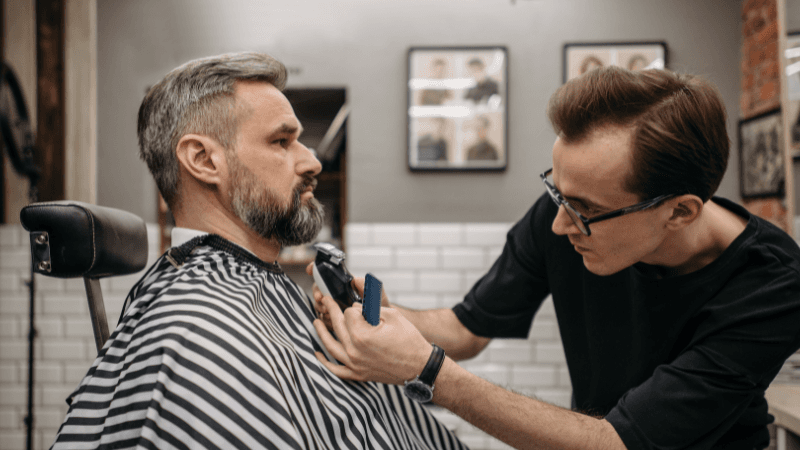
A Man's Personality Based on His Hairstyle: What's True and What's a Hairdresser's Myth
In twenty minutes of a haircut, I learn more about a client than their new colleague will in a month. People in the chair usually remain silent, but what a person is willing to change about their haircut says far more than any online test. You cansee a directory of hairdressers and salons in Kharkiv at the end of the article—but for now, let's figure out what's real and what's fictional here.
Is it true that you can read a person's character by their haircut?
Judging a man's personality by his hairstyle is the subject of dozens of online quizzes: choose a picture and find out who you are. The problem is that these quizzes aren't written by hairdressers, but by copywriters for lifestyle publications who have never cut their own hair. In these texts, a man's personality is determined by a single photo—without considering why the person chose this length: fashion, laziness, or a boss's request.
Whether one can truly determine one's personality by one's hairstyle is a question that doesn't have a definitive "yes." A haircut doesn't reveal innate traits, but rather a current decision: how much time a person is willing to spend on styling, how important it is to fit into a dress code. It's more of a snapshot of one's current priorities than a lifelong personality diagnosis.
Why are hairdressers skeptical of personality tests? Because we see the flip side: the same man can go from a grown-out bob to a tight crew cut in three years, not because he "became a different person," but because he changed jobs.
What does a short haircut say about a man?
A short haircut most often signifies not a strict character, but a lack of time for grooming in the mornings - it is a practical choice, not a statement of discipline to the world.
What a haircut really says about a man
Stripped of all the mystique, a haircut is a nonverbal signal that can be read instantly and without words. A hairstyle acts as a nonverbal signal just like clothing: the other person can read it within seconds, even before you speak.
In practice, people read three things:
- well-groomed - a fresh cut line versus an overgrown and sloppy shape;
- appropriateness - whether the haircut is suitable for the situation the person is in;
- effort - is it clear that they are taking care of their appearance, or is everything left to chance.
What does an unkempt hairstyle say about a man?
There really is a pattern here, and it's simpler than any test: an unkempt hairstyle doesn't say anything about a person's character—it suggests they either don't care or don't have the time. Others add a second theory: "If they don't take care of themselves, maybe they're the same way in business."
Hairstyle as Status: A View from the Barber's Chair
A man's hairstyle and status are a connection that's evident every day, but it doesn't work as well as people think. Expensive clothes can't save a man with an unkempt head of hair, but a neat haircut maintains his status even without brand names on his body.
How a hairdresser gauges a client's status: not by hair length, but by the regularity of their visits. A man who gets his hair cut every three weeks by the same hairdresser projects stability, regardless of what he wears. A man's social status here isn't determined by the cost of a haircut, but by the predictability of his grooming. This is precisely how a haircut changes a man's perception in others—not by a change in his appearance, but by the consistency of his style.
The calling card of an image is a common phrase, but it is accurate: the haircut is the first thing you see, even before the handshake.
The first seconds of meeting: how others read your image
First impressions and haircuts are formed faster than the first sentence. How others judge a man by his appearance—by the contrast between his face and hair: asymmetry or unkempt sides are noticeable before the color of his jacket.
Self-confidence and a haircut are linked not because the shape "gives" confidence, but because a person who is happy with their reflection in the mirror holds their posture differently. Charisma and style aren't about a specific haircut, but rather how well it matches the way a person feels about themselves.
How to look more respectable with a haircut
The easiest way is to remove the contrast between the top and bottom of the hairstyle: an abrupt transition from very short temples to a long top reads as carelessness, not style, even if that was the intention.
Business Environment: When a Haircut Works for Status
A man's business image and haircut are especially noticeable in situations where decisions are made quickly—during negotiations, interviews, and first meetings with clients. A man's haircut for an interview doesn't have to be boringly classic, but it should be clean and finished—untrimmed edges are seen as careless.
A haircut for a business meeting works on the same principle: a haircut and professionalism are linked not by a rigid cut, but by neatness. An overly "safe" business look, lacking any personal touches, also comes across as a lack of confidence, not reliability.
Before an important meeting, a hairdresser usually checks three areas:
- the temple line - it should be clear, without “steps”;
- transition at the back of the head - a sharp and untidy outline gives away an unfresh haircut;
- bangs or top - should not fall in front of your eyes or require you to adjust your hair with your hands while talking.
Why a neat haircut inspires confidence
A neat haircut and reputation are connected simply: if a person pays attention to details that are not essential, most likely, he also pays attention to details that are important in his work.
Where to get a haircut that works for you
Personality tests based on hairstyles are fun to read, but it's not the haircut itself that creates status and first impressions, but its consistency. The quickest way to figure this out is with a hairstylist who sees you, not a quiz picture.A men's haircut in Kharkiv can be found through the AlviBeauty catalog.
Frequently Asked Questions
Is it really possible to determine a person's character by their hairstyle?
Definitely not - a haircut is more likely to reflect current priorities and circumstances than innate character traits.
Does a haircut affect the success of negotiations?
Indirectly, yes: a neat haircut reduces the risk that the interlocutor will be distracted by external details instead of the content of the conversation.
How often should you change your haircut for status?
On average, once every three to four weeks - regularity is more important than the haircut itself.
What is more important for status: clothes or hairstyle?
Hairstyle is usually read faster than clothing, because it is visible even before the interlocutor has looked at the suit.
What haircut inspires confidence?
Any work that is carefully executed and completed in form - the sharpness or softness of the lines are secondary in comparison to the purity of execution.
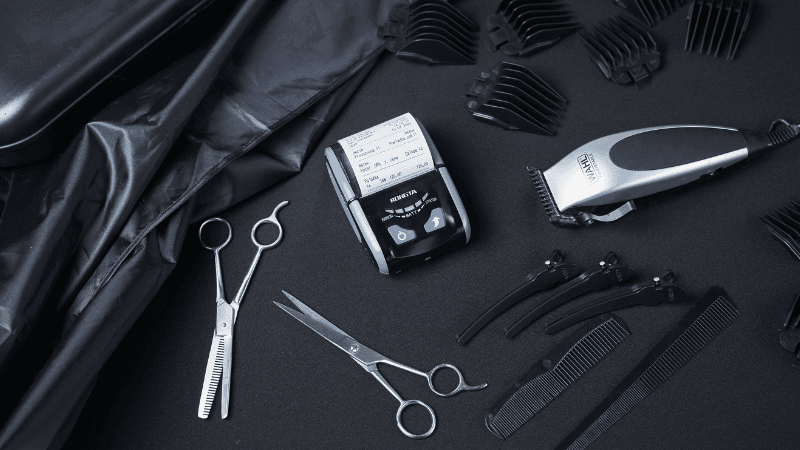
Clipper or scissors haircut: what do barbers really choose and why?
The client in the chair almost always formulates their request the same way: "Make it shorter, but not like with clippers." Five minutes later, it turns out that the barber is actually using clippers on the sideburns—just not so roughly. The difference between a haircut with clippers or scissors isn't in which tool is "more appropriate," but in the purpose for which the barber uses it. If you're looking fora men's haircut in Kharkiv and want to understand what's going on in the chair, it's worth first understanding the rationale behind the choice, and then looking through the catalog of barbers and salons on the website.
Clippers vs. Scissors for Men's Haircuts: What's the Difference in Practice?
Whether it's better to cut hair with clippers or scissors is a question without a universal answer, and any experienced barber will confirm this. Clippers offer what scissors physically cannot: a perfectly even length over a large area in minimal time. Scissors offer what clippers cannot: individual control over each strand, a natural cut, not a chopped-off one.
The difference between a clipper and a scissors haircut is noticeable not only to the eye but also to the touch: clippers leave hair denser and stiffer, while scissors leave hair softer and more manageable. Whether a clipper or scissors haircut is better depends not on fashion, but on three factors: hair texture, head shape, and how much time you're willing to spend styling your hair in the morning.
Haircuts with clippers: pros and cons
The pros and cons of men's haircuts with clippers and scissors rarely exist separately in real-life practice—but clippers have distinct strengths that scissors can't replicate.
- Absolutely uniform length throughout the entire treatment area without the risk of missing a strand
- Speed - cutting takes significantly less time than a full-fledged scissors session
- Clear geometric transitions on the temples and back of the head
- A haircut with clippers in the morning without styling - the short length holds its shape on its own
Which attachment on the machine decides everything
The right attachment for a men's hair clipper isn't determined by the desired length itself, but by where that length is. A short attachment on the sides and back, plus a longer one on the crown, creates a smooth transition. A single attachment throughout the entire head is the easiest to maintain and also the simplest in design.
The barber switches attachments gradually precisely because a sharp step between zones is instantly visible to the eye, while a smooth transition is not.
The clipper also has a downside, and any honest barber will point it out: it's more difficult to adjust to the individual shape of the skull than scissors. Where correction is needed—to smooth out a protruding nape or conceal asymmetry—the clipper works blindly, simply following the preset height of the attachment.
Direction of hair growth when cutting with clippers
The direction of hair growth when cutting with clippers is another detail that only a professional eye can detect. Curls on the crown or an uneven growth pattern at the back require either a different angle with the clippers or a manual trim with scissors—otherwise, some hair will appear out of place.
Is it possible to completely replace scissors with a clipper?
Machine or scissors for thick, coarse hair
For thick, coarse hair, clippers or scissors often win here: they tame unruly texture and create a neat result without additional styling. However, clippers or scissors for fine hair are the opposite: clippers don't visually add volume to thin strands, while proper graduation with scissors adds lightness and thickness where it's lacking.
A separate issue is whether clippers are suitable for thinning hair. A short cut does indeed visually conceal a receding hairline better than a regrown strand, which is why clippers are often recommended for thinning hair on the crown.
Skull shape and growth direction: why the machine doesn't always cope
When choosing clippers or scissors, the shape of the scalp is a factor that clients typically don't consider at all, but a barber keeps in mind from the very first moment. With a flat back or noticeable asymmetry, the same guard will produce different visual results on different people—the clippers don't discriminate between head shapes, they simply cut at a predetermined height.
Fade with a machine or scissors
A fade with a clipper or scissors is a separate issue: you can create a smooth, smoky transition using both methods, but experienced stylists use scissors and a comb to create a more blurred effect, while with a clipper, you have to gradually change attachments to achieve the same softness.
Why do barbers almost always combine both tools?
Why do barbers combine clippers and scissors? Because in real life, the "either/or" question is rarely asked. Can clippers completely replace scissors? Theoretically, yes, for very short and simple shapes. But as soon as a haircut introduces even a single length transition or textured element on the crown, it's impossible to achieve with just clippers.
The 2-in-1 Technique: What It Looks Like in Practice
In practice, it's simple: clippers are used to shape the sides and back of the head, where speed and precision are key, and scissors are used to finish the crown and top section, where texture and smoothness are desired. Polishing the ends with scissors after clipping is the final touch, eliminating the choppy appearance and making the transition between sections seamless.
How a barber decides which tool to choose
A barber decides which tool to use not based on instructions, but on a combination of factors: hair type, head shape, desired result, and how much time the client is willing to spend on styling. Why is a scissor cut more expensive than clippers? It's precisely because scissor cutting takes more time and requires more precise control, not because it's a more prestigious tool.
Polishing the ends with scissors after the clipper
Sometimes the answer is even simpler: can you cut your own hair with clippers at home? Yes, if it's a simple cut with a single attachment and no transitions. Cutting your own hair with clippers at home is perfectly feasible for basic shapes, but as soon as you start fading or reshaping your skull, it's wiser to trust a professional.
Where to get a men's haircut in Kharkiv
If you've read this far, you already understand more about choosing the right tool than most clients in the chair. All that's left is to choose a stylist who's equally confident with both clippers and scissors and can decide what's right for your hair and head shape. You can browse barbers and salons that offer men's haircuts in Kharkiv in the AlviBeauty directory, where you can also see reviews and prices of specific stylists.
Frequently Asked Questions
How long does a haircut with clippers last?
Typically 34 weeks to noticeable regrowth - longer than a scissor cut due to the shorter base length.
Is clipper haircut suitable for thinning hair?
Yes, a short length visually hides bald spots better than grown-out strands—the clipper is often recommended for this particular case.
Is it possible to cut your own hair with clippers?
For a simple haircut with one attachment, yes. As soon as a length transition or fade occurs, it's best to leave it to the barber.
Clippers or scissors for fine hair?
More often, scissors are used: the correct graduation visually adds volume, whereas the machine does not “thicken” thin hair.
Why is cutting with scissors more expensive than cutting with clippers?
Working with scissors takes more time and requires more precise control from the technician, hence the difference in price.
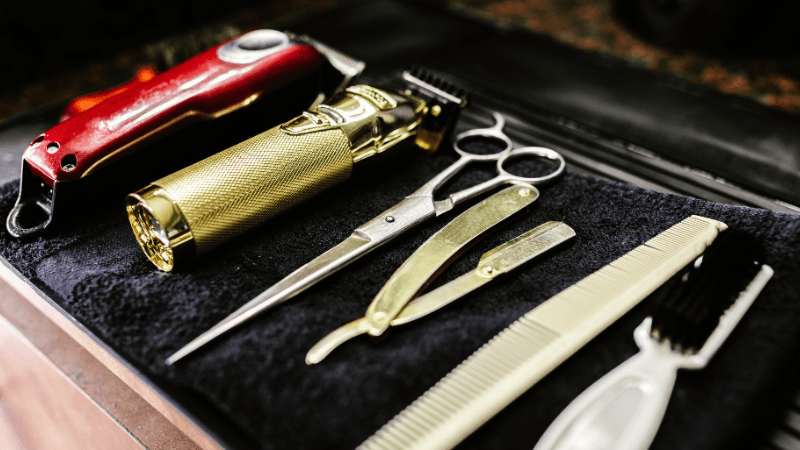
How often should a man get his hair cut to keep it in shape?
A Kharkiv resident typically notices not the haircut date, but the moment when the shirt collar starts to rub against their overgrown neck. The question of how often a man needs a haircut actually depends not on the calendar, but on the type of haircut and the rate of hair growth—for some, it's two weeks, for others, a month and a half. You can find barbers and hairdressers in Kharkiv offering men's haircuts on the websitehttps://alvibeauty.com/ruua/salons/kharkiv/hairdressers/mensHaircuts . In the meantime, let's figure out how often men need a haircut and how to tell when it's too late.
How long should I wait to see the barber again after a haircut?
Men's hair growth rate is fairly constant: on average, hair grows 1–1.5 cm per month, and this can't be controlled by diet or shampoo. However, the frequency of barber visits depends not on the number of centimeters, but on how noticeable this growth is with a specific haircut.
With short hairstyles, even a few millimeters at the temples are visible to the naked eye—the hair on the crown and the edging are the first to indicate it's time for a refresh. With looser hairstyles, hair grows unevenly, but it's less noticeable, and how often a man gets a haircut is more a matter of habit than strict necessity.
Frequency by haircut type
Most men's haircuts follow a simple rule: if you establish a consistent schedule—every two to three weeks or every six weeks—your haircut will hardly ever lose its shape. Regularity is more important than a precise date: a regular barber will quickly notice where your hairline tends to "sag" first and suggest the correct interval for your specific head. There's also a seasonal nuance: many men's haircuts differ between summer and winter—in summer, they tend to get shorter and more frequent haircuts, while in winter, men can usually afford an extra week or two, as hair under a hat grows out more unnoticeably.
Frequency by haircut type
In short, here's a guideline for visit frequency:
- Fade and ultra-short haircuts - every 2-3 weeks
- Classic short (Canadian, semi-box) - every 3-5 weeks
- Extended and styled haircuts - every 5-8 weeks
Short haircuts and fades
Men's short haircuts are the most demanding in terms of maintenance. Fade growth is noticeable after just one and a half to two weeks: the distinct line blurs first, and the question of how often to get a haircut during a fade is a valid one—ideally every two weeks, three at most, after which the cut's geometry simply disappears.
Classic haircuts
A classic men's haircut—a buzz cut, a side-swept comb-over, or a flattop—lasts noticeably longer: 3–5 weeks. How long a classic men's haircut lasts depends on the thickness of the hair: the thicker the hair, the faster the shape loses its definition, and which haircut holds its shape longer is more a question for the barber than the calendar.
Long haircuts
Longer cuts are much more forgiving. How long a haircut lasts at this length is usually 6-8 weeks, sometimes longer. How long a men's haircut lasts depends on whether you're willing to get a haircut once a month or prefer less frequent trims. Does a man with this hairstyle need a monthly haircut? No, unless you're striving for perfect definition.
How to know when it's time for a haircut
Why a haircut quickly loses its shape is a question that's easier to answer based on facts than to predict. There are usually a few obvious signs:
- The haircut looks untidy even immediately after styling, and sometimes it just looks untidy in the morning.
- The shape of the haircut is blurred, the outline of the haircut loses its clarity
- The temples and the back of the head have grown out more noticeably than the top. It’s easy to tell that the temples have grown out: run your hand against the hair growth.
- There is fluff on my temples that can't be removed with a comb.
- The haircut requires correction at least once a week to look decent.
How to tell when it's time to visit a barber? Don't rely on the calendar, but rather on these signs. What happens if you don't get a haircut often? Nothing catastrophic, but your haircut loses its shape. How to fix this without going to the barber is an open question: at-home trimming with clippers usually only worsens asymmetry. How often should you trim your hair to avoid this? Every 3-4 weeks, even without a full haircut, just to refresh the outline.
Where to get a men's haircut in Kharkiv
How often to go to a barber in Kharkiv, or how often to go to a barbershop, is essentially the same question as "how often does a man need a haircut?" The answer varies from person to person, but having a regular barber is usually more convenient than constantly searching for a new one.The AlviBeauty hairdressing directory brings together barbers and barbershops in Kharkiv offering men's haircuts—you can browse by neighborhood and schedule an appointment at your preferred time, without having to fit into someone else's schedule.
How often should you get a haircut to look well-groomed? It's not about frequency per se, but about not putting off your barber visit until it becomes noticeable to others. You can booka men's haircut in Kharkiv right now, without waiting until Monday.
Frequently Asked Questions
How often should I get a haircut when fading?
Optimally, every 2 weeks, maximum 3 - after that, the clear transition lines begin to blur, and the fade looks simply like a grown-out haircut.
Is it possible to go 2 months without a haircut?
For a short haircut, no, the shape will fall apart long before then. For a long or classic haircut, it's perfectly fine, as long as you're not looking for perfectly defined lines.
How many weeks does a short haircut last?
On average, 2-3 weeks, for some men - up to 4 if hair grows slower than average.
How do you know if your temples have grown back?
The easiest way is to run your hand against the grain: if you feel noticeable stubble where there used to be a smooth line, it's time to see a barber.
How many times a month should a man get his hair cut?
For most men, once every 3-4 weeks is enough. Only those with very short or ultra-short haircuts need more frequent haircuts.
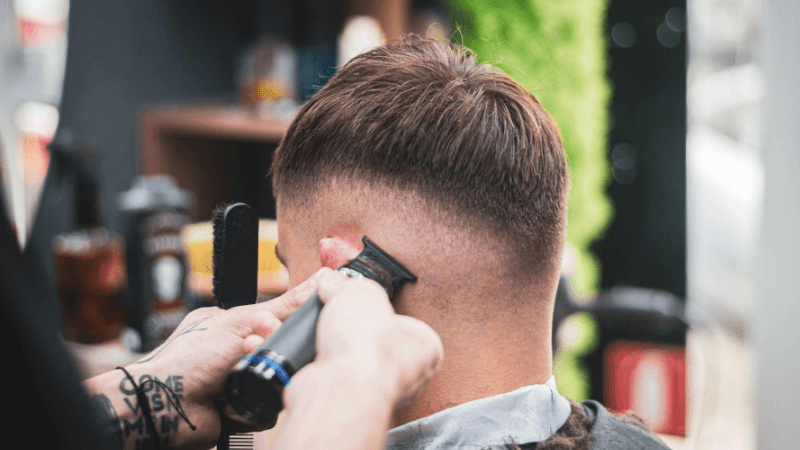
Barbershop or hair salon in Kharkiv: what do you pay more for?
Barbershops in Kharkiv are no longer a rarity—barber signs can be found on almost every street next to traditional hair salons. But the question "barbershop or hair salon" remains unanswered for many men: what's the real difference between a barbershop and a hair salon, and is it worth the extra cost? Before deciding what you're paying more for, you canexplore the options available among Kharkiv's barbershops and salons .
Barbershop vs. Hair Salon: What's the Difference in Simple Terms?
The difference between a barbershop and a hair salon isn't the sign or the trendiness of the word "barber." A men's hair salon in Kharkiv almost always works with both men and women: the same barber might cut your hair and color another client's hair an hour later. A barbershop specializes only in men.
The history of barbers spans centuries—precursors of barbers date back to antiquity, and the culture of men's barbershops as a distinct establishment emerged in the United States in the early 20th century. Today, it's more of a philosophy than just a service.
Whether you get a better haircut at a barbershop or a hair salon isn't quite the right question: quality depends on the individual hairdresser, not on the sign on the door. So what's the point of a barbershop? It's the narrow specialization and attention to detail, which are harder to achieve when you're cutting hair for men, women, and children all in the same day.
Who's cutting your hair: a barber or a hairstylist?
The question of whether a barber or hairdresser is not about title, but about specialization. A barber's qualifications are based on a narrow but comprehensive set of skills: men's haircuts, beard grooming, and shaving. A general hairdresser's work is broader, encompassing men's, women's, and children's haircuts, as well as coloring.
What's the difference between a barber and a general stylist?
Why is a barber better than a hairdresser in specific areas—precision in detail: the fade line, beard shape to match the face contour. Why a barber and not a hairdresser? If you need this kind of narrow specialization, not the versatility of a hairdresser.
Ambience and Instruments: What You're Really Paying More For
The barbershop atmosphere isn't just a pretty word. A rugged interior, leather barber chairs, and sometimes whiskey or coffee while you wait your turn. In spirit, it's a true men's club, not just a service outlet.
The list of services at a barbershop is usually wider than at a regular hair salon:
- men's haircuts, styling and hair styling
- haircut and shaving, including with a straight razor
- Professional cosmetics for men - waxes, clay, beard balms
Barber tools are a separate expense item: straight razors, barber chairs, and specialized clippers cost significantly more than the standard barbershop equipment.
Straight razor, royal shave and beard care
Beard and mustache trimming, facial and scalp massage, gray hair camouflage—all of this is often reserved for barbershops. What does a royal shave include? A hot towel, lather, a straight razor, and aftercare—a whole ritual, not just a clean shave. Beard grooming at a barbershop typically includes choosing a beard shape to suit your face type and recommendations for home remedies.
How much does a haircut cost at a barbershop or hair salon in Kharkiv?
The average cost of a haircut at a barbershop in Ukraine is higher than at a regular barbershop, and the price varies depending on the skill level of the barber and the city. The cost of a haircut at a barbershop in Kharkiv is a question without a single answer: an intern's price may be close to that of a barbershop, while a top barber's price may be several times higher.
The average cost of a haircut at a barbershop depends on the type of establishment. But whether you should pay more at a barbershop depends on what you actually need. Is it worth paying more for a haircut at a barbershop if you only want a short haircut without a beard? Not always.
Why are barbershops so expensive? You're paying for the barber's specialized skills, more expensive tools, and time. Where to get a cheaper haircut for men in Kharkiv depends on the individual barber, not the sign on the door.
Appointment or no appointment: what's more convenient for a man in Kharkiv?
A walk-in haircut at a regular hair salon is common: you show up and get your place in line. Walk-in appointments at barbershops are often mandatory, especially for popular barbers. Do you need an appointment at a barbershop? Generally, you do, if you want to see a specific barber. Can you walk-in at a barbershop without an appointment? Sometimes, yes, but you'll have to wait for a scheduled appointment.
Where to go for a haircut in Kharkiv: how to choose
Where a man goes for a haircut in Kharkiv depends on the need, not the fashion. The decision between a barbershop or a hair salon is determined by three practical criteria:
- Budget. If you just need a haircut without styling or a beard, a barber shop will solve the problem faster and more affordably.
- Anything you need besides a haircut. Beard styling, a royal shave, and grooming consultations—that's the barbershop area.
- How much time are you willing to spend? Barbershops usually take longer and often require an appointment, while hairdressers are quicker.
Whether it's better to go to a hairdresser or a barber isn't determined by price alone, but by the range of services you need. What's the difference between a barber and a hairdresser, in simple terms? A barber specializes in men's hair, while a hairdresser is a jack-of-all-trades. You can find and comparemen's haircuts in Kharkiv by price and location in one directory.
Frequently Asked Questions
What is the difference between a barbershop and a regular hairdresser?
The barber specializes only in men's haircuts and beards; the hairdresser works with various types of hairstyles and clients of both genders.
Why are barbershops so expensive?
Due to the narrow specialization of the master, more expensive tools and time for detailed development of the form.
How often should you go to the barber?
Classic shapes last 46 weeks, clear transitions (fades) require updating every 23 weeks.
Do I need to register for the barbershop in advance?
With popular barbers, yes, as a rule, especially if you want to get to a specific barber.
Where can I get an inexpensive men's haircut in Kharkiv?
It's easier to compare prices and services from different professionals and salons in one catalog—it makes it easier to find an option that fits your budget.