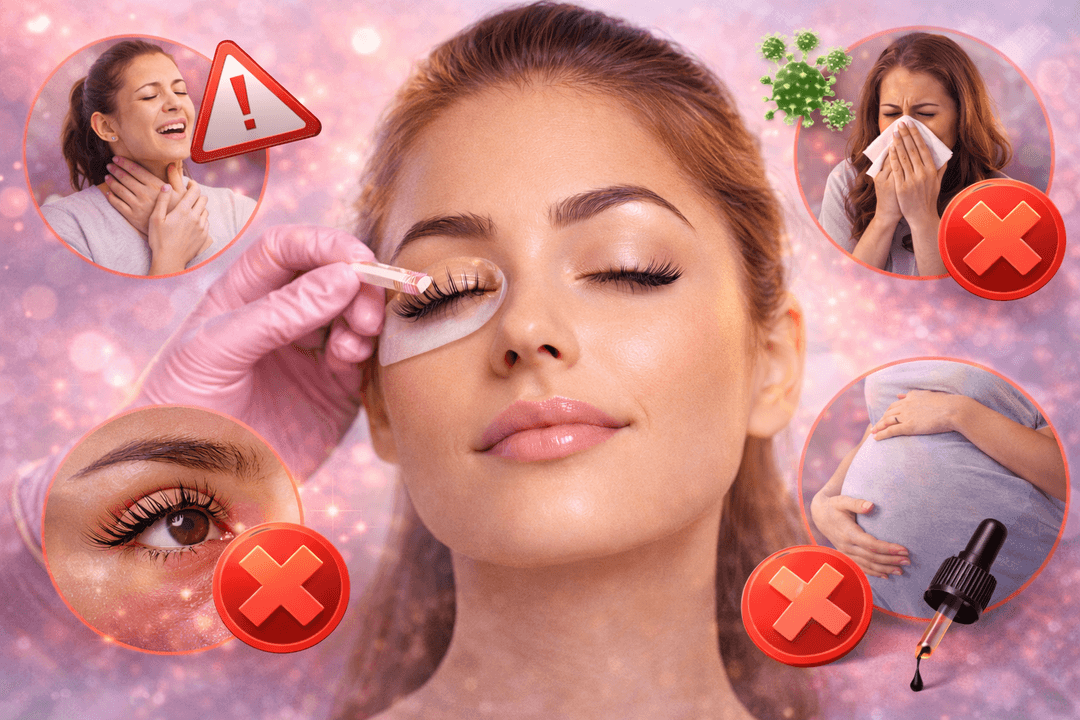
Who shouldn't have eyelash lamination?
Who shouldn't have eyelash lamination is one of the most important questions to ask before scheduling the procedure. While lamination is considered a relatively gentle and safe procedure, there are some situations where it's best to postpone it. It's important to consider your eye condition, eyelid sensitivity, and individual body characteristics.
Before the procedure, make sure you have no contraindications and that your eyelashes are in good condition. If you're planning eyelash lamination in Bangkok , it's convenient to choose a specialist in advance and book an appointment through specialized beauty salon booking platforms, such as AlviBeauty.
Quick Answers: What's Important to Know Right Away
Can everyone get eyelash lamination?
The procedure is suitable for most people, but there are situations when it is better to postpone it.
What are the contraindications for eyelash lamination?
The main limitations are related to inflammatory eye diseases, allergies to the composition and damage to the skin of the eyelids.
Is it possible to do lamination during pregnancy?
Sometimes the procedure is possible, but the results may be less predictable due to hormonal changes. You can read more in this article: Can I get eyelash lamination during pregnancy?
Is it possible to do lamination if you have allergies?
If you are prone to allergic reactions, it is better to do a sensitivity test first.
When is the best time to reschedule the procedure?
If your eyes are irritated, watery, or red, it is best to postpone the procedure temporarily.
What are the contraindications for eyelash lamination?
Despite the popularity of the procedure, there are situations where eyelash lamination is contraindicated . This primarily relates to eye health and the condition of the skin around the eyes.
The procedure is generally not recommended for those with inflammatory eye conditions. If there are signs of conjunctivitis, irritation, or infection, it is necessary to treat the underlying condition first before returning to cosmetic procedures.
Severe allergies to cosmetics may also be a contraindication. During lamination, special compounds are used that affect the hair structure. If your skin is prone to allergic reactions, it's best to consult a specialist beforehand.
Another factor may be damage to the eyelid skin. If there are scratches, irritation, or inflammation, it's best to postpone the procedure until the skin has fully recovered.
What eye diseases are contraindications?
Eye conditions deserve special attention. Even if the procedure is considered safe, certain conditions may require a temporary postponement.
These conditions include inflammatory processes, irritation of the mucous membrane of the eye, and infectious diseases. For example, if there are signs of conjunctivitis, styes, or severe eye redness, it is necessary to first address the underlying condition before returning to cosmetic procedures.
Chronic eye conditions should also be taken into account. If your eyes often react to cosmetics, water, or tire quickly, it's best to discuss the procedure with your stylist beforehand. Sometimes, the specialist may suggest a sensitivity test or a gentler formula.
This caution helps to avoid discomfort during the procedure and make the result as comfortable as possible.
When is it better to postpone eyelash lamination?
Sometimes a procedure isn't completely prohibited, but it should be temporarily postponed. These are so-called temporary restrictions, which are quite common.
For example, it's best to postpone lamination if your eyes have recently been irritated or if you experience increased sensitivity. Sometimes, after a cold or seasonal allergies, your eyes may react more strongly to any cosmetic procedure.
It's also important to consider the recovery period after ophthalmological procedures or surgeries. In such situations, it's important to give your eyes time to fully recover.
If in doubt, the technician will usually recommend waiting a few days or weeks to ensure the procedure is as safe as possible.
Is it possible to do eyelash lamination during pregnancy and if you have sensitive eyes?
One of the most common questions is whether eyelash lamination can be done during pregnancy. In most cases, there are no strict contraindications, but the results may vary.
Hormonal changes sometimes affect the structure of hairs, so curls may last less than usual. This is why stylists sometimes recommend taking individual physiques into account.
Those with sensitive eyes should also exercise caution. If your eyes frequently water or react to cosmetics, it's best to discuss the procedure with your stylist beforehand and, if necessary, perform a sensitivity test.
You can read more about the safety of the procedure in the article Is eyelash lamination harmful: pros, cons, and consequences .
How to understand that it is better to postpone the procedure
Sometimes your body itself tells you that now isn't the best time for cosmetic procedures. There are several signs that indicate it's best to postpone lamination for now.
These conditions include eye redness, itching, or increased tearing. It's also worth paying attention to the condition of the skin on your eyelids: if it's irritated or damaged, it's best to postpone the procedure.
In such cases, it's enough to wait a little while for the condition to normalize. After that, you can confidently schedule your procedure.
Which eyelashes are best not to laminate?
Sometimes the problem isn't eye health, but the condition of the eyelashes themselves. There are situations where lamination may not produce the desired results.
For example, if your eyelashes are severely damaged or weakened after frequent cosmetic procedures, it's best to restore them first. In such cases, lash technicians often recommend using strengthening serums or taking a break between treatments.
Lamination may also be less effective if your lashes are very short or grow in different directions. In these situations, your lash technician may suggest alternative treatments.
It is important to remember that an experienced specialist always assesses the condition of the eyelashes before the procedure and can recommend the most suitable option.
Is it possible to do eyelash lamination after eyelash extensions?
Another common question relates to previous procedures. Many women want to know how to restore their eyelashes after long-term extensions .
As a rule, lash technicians recommend removing the eyelash extensions completely first and allowing the natural lashes time to recover. Usually, one to two weeks is enough for the lashes to strengthen and the lamination procedure to proceed properly.
If your eyelashes are significantly weakened after extensions, your lash technician may recommend first performing maintenance procedures or using special strengthening products.
Is it possible to do eyelash lamination after eyelash extensions?
Another common question relates to previous procedures. Many women wonder if they can have eyelash lamination after eyelash extensions.
As a rule, lash technicians recommend removing the eyelash extensions completely first and allowing the natural lashes time to recover. Usually, one to two weeks is enough for the lashes to strengthen and the lamination procedure to proceed properly.
If your eyelashes are significantly weakened after extensions, your lash technician may recommend first performing maintenance procedures or using special strengthening products.
After restoring natural eyelashes, lamination helps give them a beautiful curl and a neater appearance.
.
Where to find eyelash extension specialists in Bangkok
If there are no contraindications and you want to undergo the procedure, it's important to choose an experienced specialist. The quality of the specialist's work and the materials used directly impact the outcome.
You can find lash lift specialists and salons in Bangkok on the AlviBeauty platform. There, you can compare prices, read reviews, and choose a convenient appointment time.
It is also useful to read other materials on the topic before the procedure: for example, “ How long does eyelash lamination last ?” or “Eyelash lamination or tinting - which is better ?”
What alternatives to eyelash lamination exist?
If lamination is temporarily contraindicated, there are other ways to make your look more expressive.
For example, you can try eyelash tinting, which helps enhance your eyelashes' natural color. This procedure takes less time and is suitable even for those not ready for more complex cosmetic procedures.
Eyelash strengthening treatments are also popular. They help improve the condition of eyelashes and prepare them for future treatments.
In some cases, professionals recommend combining several treatments to achieve the most natural and accurate results.
Frequently Asked Questions
Is it possible to do eyelash lamination if you have a cosmetic allergy?
If you are prone to allergies, it is better to do a sensitivity test before the procedure.
Is it possible to do lamination after eye inflammation?
It is better to perform the procedure only after complete recovery.
Is lamination suitable for thin eyelashes?
Yes, the procedure often helps to visually make eyelashes more neat and expressive.
Is it possible to do lamination if you have sensitive eyes?
In some cases it is possible, but it is better to discuss this with the master in advance.
Is it necessary to have a consultation before the procedure?
If there are any concerns or eye sensitivity, a consultation prior to the procedure would be helpful.