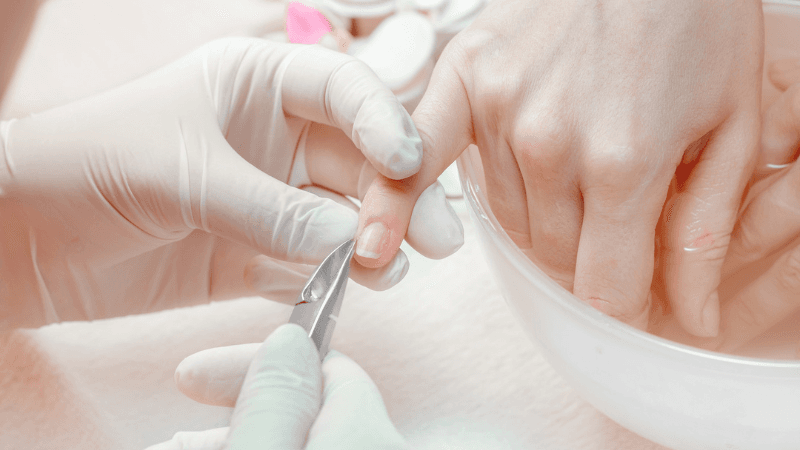
How often can you get a manicure: recommendations from professionals
How often can you get a manicure ? One of the most common questions asked of nail technicians. And everyone's situation is different: some go once a month and think it's fine, while others schedule weekly appointments and worry about damaging their nails. Let's break it down by manicure type: specific figures, no fluff. If you want to book an appointment right now, manicures and pedicures in Kyiv are available online throughout Ukraine.
What influences the frequency of manicures? 4 main factors
There's no set schedule. Manicure frequency depends on four factors:
- Nail growth rate. On average, nails grow 2-3 mm per month. But for some, cuticles are visible after just a week, for others, after three. Monitor yourself: as soon as the cuticle starts to look untidy, it's time.
- Manicure type. Gel polish lasts longer than classic polish, and hardware polish lasts longer than edged nails. Therefore, the frequency directly depends on what you're doing.
- Lifestyle. Washing dishes without gloves, contact with chemicals, and working with your hands all accelerate the deterioration of the coating. An office worker and a construction worker will have different manicure schedules.
- Nail condition. Thin, brittle nails require more careful and frequent care. Strong nails allow for breaks.
How often to get a manicure by type: specific figures
The frequency of manicures depends on the type of procedure. Let's look at each type.
How often should I get a hygienic manicure?
Every 7-10 days if cuticles and nails are growing quickly. Every 2-3 weeks if growth is slow. There are no contraindications for a hygienic manicure regarding frequency—the skin around the nails and their shape can be maintained at least weekly.
Classic manicure with polish
A classic manicure with polish is also done every 7-10 days. The polish itself lasts 3-5 days, but the shape and cuticles are refreshed at exactly this interval.
How often should I get a hardware manicure?
How often should I get a hardware manicure ? Every 10-14 days. After hardware treatment, cuticles grow back more slowly than after trimming. This is the main advantage of this technique. For more information on the difference, see the article "Hardware vs. Combination Manicure: What's the Difference ?"
How often should I get a gel polish manicure?
How often should you get a gel polish manicure ? Every 2-3 weeks, or every 14-21 days. Wearing the polish for longer than 4 weeks is not recommended, as moisture collects under the peeling edge, creating a breeding ground for fungus.
Nail extensions
Nail extensions require touch-ups every 3-4 weeks. If you wait longer, the stress on the natural nail plate increases, causing it to thin. For more information on extensions, see the article " Nail Extensions: Everything You Need to Know Before Your First Visit ."
SPA manicure and paraffin therapy
SPA manicure and paraffin therapy – once a month. These are deep-hydrating treatments, usually combined with a regular manicure.
5 Signs It's Time to Visit a Nail Technician — Not by the Calendar, but by Your Nails
Sometimes you need to look not at the calendar, but at your hands. Here are five signs:
The first sign
The cuticles look untidy, and hangnails have appeared. This is a major sign, regardless of how many days have passed.
The second sign
Even a single chip in the polish can trap moisture and bacteria. You can't walk around with the exposed edge.
The third sign
Peeling gel polish. Bacteria can develop under the peeling coating. This isn't just a cosmetic issue—it's a concern for the health of your nails.
The fourth sign
The nail has grown so much that it's lost its shape. This is especially noticeable on short nails.
The fifth sign
Discomfort or dryness around the nail is a sign that the nail and cuticle need professional care.
It's better to book an appointment ahead of schedule than to wait for the nail to peel. You can read about booking online in our blog here: Online Manicure and Pedicure Appointments .
Taking a Break Between Manicures: Why and How Long
Nails suffer not so much from the coating itself as from its removal. Acetone and filing down the top layer gradually thin the nail plate. After 3-4 consecutive gel polish applications, give your nails a rest for 1-2 weeks.
During your break: apply a healing polish with calcium and keratin. Use cuticle oil daily. If your nails are thin and brittle, add masks with natural oils; tea tree oil is good for restoring the nail plate.
After a break, nails return strong. Without a break, they become thin and begin to break.
How often should men get manicures?
How often should men get manicures? This question is rarely asked, but it's unwise. Men also need regular nail care. The optimal interval is every 10-14 days for a hygienic manicure without polish. If your nails grow quickly or your work involves public speaking, then every 7-10 days.
A men's manicure requires no polish—just shaping, cuticle trimming, and polishing. This takes 20-30 minutes.
Care between appointments: What really makes your manicure last longer?
A few habits that work.
- Apply cuticle oil daily. This isn't just a decorative treatment; it actually prolongs the results by 3-5 days. Pterygium growth slows, and the skin around the nail looks neater for longer.
- Wear gloves when washing dishes and cleaning. Water and chemicals are the main enemies of polish. A manual manicure and an office worker's manicure last differently for this very reason.
- Top coat. If your gel polish has faded, apply a clear top coat over it. This will restore shine and extend the life of your polish.
- Nail vitamins. Biotin, zinc, and calcium will make your nails stronger and slower to grow. This affects how often you get a manicure.
For more information on home care between visits, see the article " Nail Care at Home Between Visits to the Nail Technician ."
When you can't get a manicure
There are almost no contraindications for a hygienic manicure. The exceptions are open wounds and inflammation around the nail.
Gel polish manicure should not be done in the following cases:
- Nail fungus. Thick nails create a moist environment, which accelerates the growth of fungus. See a dermatologist first, then a nail technician.
- Onycholysis—the separation of the nail plate from the nail bed. A coating will visually conceal the problem, but it will worsen it.
- Allergies to gel polish components. If itching, redness, or peeling occurs after a manicure, this is an allergy. Do not continue.
- Weakened nails after long-term nail extensions. First, take a 2-4 week break and apply treatment polishes, then return to the polish.
- Regarding UV lamp safety: LED and UV lamps for manicures operate in the 350-410 nm range. This is safe; waves below 295 nm are harmful. The radiation level during a manicure is less than 10 minutes in the sun.
Frequently asked questions about how often you can get a manicure
Is it possible to get a manicure once every 2 weeks?
Yes, this is the optimal frequency for a gel polish manicure. For a hygienic manicure without coating, it's a little more frequently, once every 7-10 days.
How often can you get a gel polish manicure?
Every 2-3 weeks. That's 14-21 days. Wearing gel polish for more than 4 weeks is not recommended, as bacteria can develop under the peeling edge.
Nail fungus - can I get a manicure?
Hygienic treatments are recommended only after consultation with a dermatologist. Gel polish should not be used until the nails are completely healed. A thick coating creates an ideal environment for fungal growth.
Is it possible to get gel polish if you have diabetes?
Use with caution. Diabetes impairs blood circulation and weakens the immune system. Any damage to the nail heals more slowly. It's best to consult with your doctor and choose a specialist with experience working with diabetic feet.
How often should I get a manicure if my nails are growing fast?
If your nail grows 3-4 mm per week, apply gel polish every 10-14 days and a hygienic polish every 7 days. Rapid nail growth requires more frequent touch-ups.
Related articles
If you want to delve deeper, here are some resources that continue this topic. They cover how to choose a manicure technique for your cuticle type, how to care for your nails at home between appointments, and how to schedule an appointment online without calling.