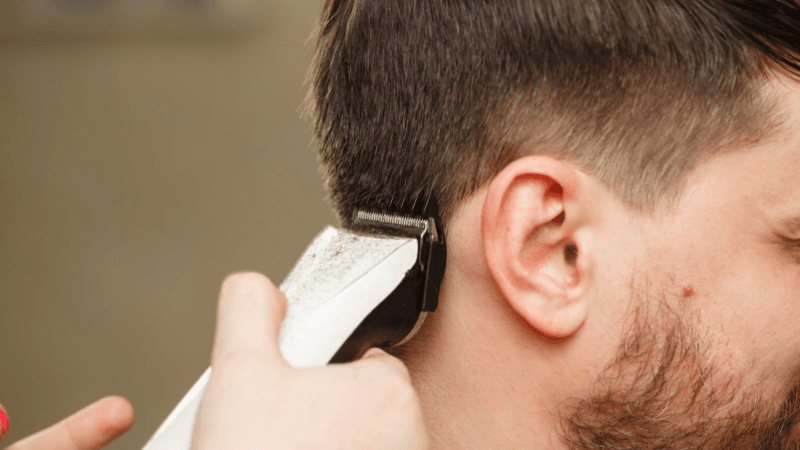
What to do if a man's hair is cut too short
Shorter than desired is unpleasant, but not critical. Once cut, the length can't be restored, but the shape can often be adjusted, and there are ways to make the regrowth period less awkward. It's easiest to finda hairstylist you can comfortably explain the task to in advance—then any subsequent trims will be less stressful.
No matter how you frame the problem— what to do if a man's haircut is too short , what to do, or how to fix a short men's haircut—the bottom line is the same: the length can't be restored, but the shape can usually be improved. Let's break it down step by step.
What to do immediately if you get a shorter haircut than you wanted
First, don't panic and don't ask the stylist to "fix" it by cutting it a little more: this often only worsens the shape. Evaluate the result independently of your emotions: compare what you asked for and what you got—is the overall length a couple of centimeters shorter, or is the problem localized, such as cutting the sides or the back too short.
When a barber cuts a man's hair too short , the first reaction is usually confusion, not anger, and that's okay: a couple of minutes to simply appreciate the result won't ruin anything.
If you're still in the technician's chair, mention it right away—it's easiest to make adjustments while you're still standing. Ask them not to touch:
- the rest of the length until you see the overall result.
- If your haircut is already finished and you are at home, do not rush to arrange a new touch-up on the same day.
- let your hair "settle" for a day or two,
- in daylight the shape often looks different,
- than in a barber's chair under the lamps.
Is it possible to fix a haircut that is too short?
The search term "men's haircut cut too short " is one of the most frequently searched terms, and it almost always leads to the same question: can anything be done right now? The answer depends on what exactly went wrong. If the problem is an uneven transition between zones—for example, a sharp contrast between the temples and the crown—this can usually be mitigated by smoothing the transition, slightly trimming the shape, and trimming any flyaways. However, there's no way to restore the length that was already cut—it's worth accepting this right away to avoid wasting time on futile attempts.
If you feel like your first stylist can't handle it anymore or you've lost trust, try another. Sometimes it's easier to go to a place that specializes in short men's styles, like a barbershop . An experienced barber can adjust your fade, straighten your lines, and make sure your haircut looks like a conscious choice rather than a mistake.
When it's better not to cut anything else
If the overall shape is even and the only issue is the length, it's best to stop and avoid further trimming. Any attempt to "trim" a short haircut almost always results in even less length, not more precision. The exception is if there's a truly obvious flaw: severe asymmetry, an uneven edge, or a noticeable fade that's noticeable. In other cases, the best solution is time.
How to make a short haircut neater right now
Before your hair grows out, you can make sure the result looks neat and not haphazard. Matte clay or hair paste can help texture short strands and slightly distract from the length—unlike wet-look gels, which, on the contrary, emphasize the short shape. Changing your parting or combing your hair to the side can sometimes change the look of your haircut more than you might think.
A beard or stubble is a useful technique: facial hair shifts the focus away from the scalp and balances the proportions. Headwear—a cap or beanie—is a good temporary solution for the first few days while you're getting used to the new length, but don't wear them constantly just to hide the haircut—it's more likely to be noticeable than not.
What to do while your hair is growing back
Men's hair grows an average of 1–1.5 centimeters per month—there's no way to speed this process up, and promises to speed it up aren't accurate. A realistic guideline is a few weeks for a noticeable transition and a couple of months for the haircut to return to its natural shape.
The first week is usually the hardest—the shape is still unfamiliar, and styling doesn't always work the first time. Then it gets easier: hair grows unevenly, and this often helps—for example, bangs or the top quickly provide something to work with when styling.
What to tell your hairdresser at your next haircut
To avoid a repeat of this situation, at your next appointment, don't just state your desired length verbally; show a photo or a specific guideline—for example, "leave the same length as you currently have on top." If in doubt, ask your stylist to cut your hair a little longer than you think you need: you can always trim it back, but you can't put it back.
If you've already decided where to get your next haircut, it's easier to look not for the first hairstylist you come across, but for someone who consistently offersmen's haircuts in Poltava and understands the difference between "short" and "too short."
A similar scenario— what to do if a man's hair is cut too short —is no less common, and the logic is the same: first assess what happened, then decide whether any adjustments are necessary. But if you phrase the question differently—if a man's haircut is cut too short, what should you do in such a situation—the answer still boils down to the same steps: don't panic, assess the scale of the problem, and don't agree to unnecessary adjustments.
Frequently Asked Questions
Below are short answers to the most frequently asked questions about short men's haircuts: what to do if you cut your hair too short.
What to do if you cut your hair too short?
First, assess what exactly is wrong—the entire length or just a specific area. Localized issues, like an uneven transition, can often be corrected by another stylist, but a cut length cannot be restored—you're left waiting for it to grow out and using styling as a temporary solution.
How long does it take for hair to grow back after a short haircut?
On average, hair grows 1–1.5 centimeters per month. The exact rate depends on hair structure and individual characteristics, so don't expect quick results.
What to do with a bad short haircut?
If the problem is the shape, you can try getting it adjusted by another stylist. If the problem is only the length, the best solution is usually time and careful styling, rather than a new haircut.
What to do if a man's hair is cut short?
The logic is the same as in other cases: evaluate what can be corrected immediately and what cannot, use styling, a beard, or a hat as temporary solutions, and do not agree to additional correction unless clearly necessary.