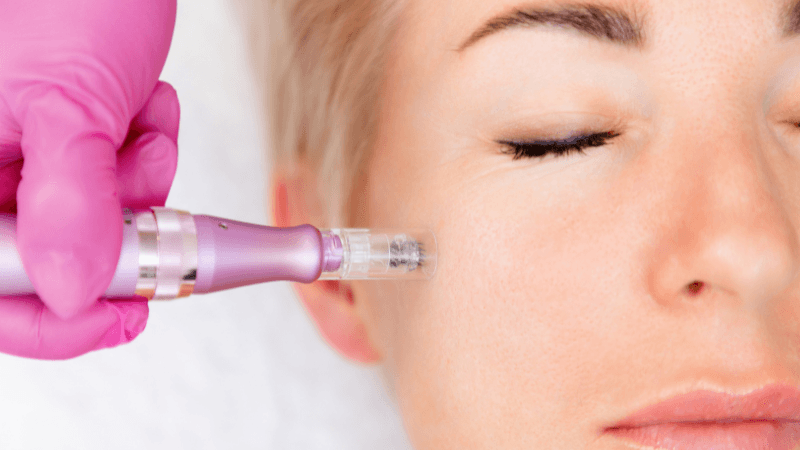
Cosmetology for women over 50
If you increasingly notice fatigue in the mirror even after a good night's sleep, and your facial contours seem to have "slipped" over the past year, you're not alone, and it's not due to laziness or lack of self-care. After age 50, your skin undergoes processes that homemade creams can't address, but properly selected cosmetic treatments for women over 50 can.
Now, let's go straight to the point: what's changing, what can be done about it, and how to choose the right one for you. We'll be happy to help. Visit our website: https://alvibeauty.com/ru-ua/salons/kharkiv/cosmetology.
What happens to your skin after 50 – and why?
After age 50, estrogen levels in the body decline—this isn't just some abstract figure you'll find in a brochure, but a real reason why skin loses its density and elasticity. Estrogen directly affects the production of collagen and elastin—the proteins that keep skin firm—and the amount of hyaluronic acid, which is responsible for hydration. When these levels decline, the face loses its contours, and wrinkles—those that used to smooth out overnight—persist. This is a natural process, not a sign of anything wrong. That's why rejuvenating treatments after age 50 are now chosen not for "beauty," but as a conscious effort to care for skin that genuinely needs extra support.
Home care after 50: what's actually possible and what's not
A good cream is a base, not a solution. Home skincare after age 50 can moisturize and support the skin's barrier to some extent, but it doesn't penetrate deeply enough to influence collagen production or tighten the skin's contours—the molecules of most active ingredients are too large to penetrate beyond the top layer of skin. This isn't a reason to abandon home remedies—just be honest about their role: a hydrating serum in the morning and a nourishing cream in the evening prolong the results of treatments and support the skin between visits to a specialist, but they alone won't solve the problem of tightening or volume correction. They complement professional care, not replace it.
Hardware techniques: how hardware cosmetology helps the face
Hardware-based methods work gently and gradually, with no downtime, making them often the first step toward renewed skin. They're particularly effective against pigmentation and mild tissue sagging—changes that are already noticeable but don't yet require more serious intervention. The advantage of these procedures is that you can immediately return to your normal life—no need to take time off or stay home for several days.
What clinics most often offer:
- SMAS-lifting is an ultrasonic lifting of deep layers of skin without surgery; the effect builds up over several months and lasts up to two years.
- RF lifting is a radiofrequency heating that stimulates the body's own collagen and tightens the facial contours from the inside.
- Laser facial resurfacing renews the top layer of skin, evens out skin tone, and smooths out fine wrinkles in just a few sessions.
- Photorejuvenation (IPL) – works with pigmentation and vascular manifestations, returning the skin to an even, rested tone
A cosmetologist usually combines two or three methods from this list—this way, the effect is more noticeable than from one isolated procedure.
Injectable procedures: what is most often chosen after 50
If hardware methods are no longer sufficient, the next step is injection procedures after 50 years.
Contour plastic surgery restores volume in areas where the skin is particularly thin—cheekbones, nasolabial folds, temples. With age, it's the loss of volume, not just wrinkles, that makes facial features look tired. Biorevitalization with hyaluronic acid restores hydration to tissues from within, not just from the surface—the effect is noticeable after just the first or second treatment.
Botulinum toxin therapy relaxes facial muscles where wrinkles have become static and do not smooth out with rest, while plasma therapy and mesotherapy initiate the skin's own restorative processes, relying on its own resources rather than external fillers.
Mesotherapy works well as a maintenance course between more serious treatments—skin requires regular, not one-time care. The doctor will select a combination of techniques individually, based on your specific skin needs: there's no one-size-fits-all procedure for everyone over 50.
Thread lifting and regenerative methods
Thread lifting is a non-surgical way to tighten the facial contours: biodegradable threads secure the tissues in the desired position while simultaneously stimulating collagen production at the injection sites, so the effect builds gradually and lasts for over a year. Recovery after the procedure is short—a few days of mild swelling—and the results become truly noticeable within a week. Regenerative methods, such as exosome therapy, are also worth mentioning. This is one of the most cutting-edge developments in cosmetology, helping the skin regenerate at the cellular level and combining well with other treatments, enhancing their effects rather than replacing them.
When is plastic surgery needed?
There's a clear line that's important to be clear about: if you have significant tissue ptosis or a significant loss of facial contour, cosmetic procedures after age 50 provide supportive, but not dramatic, results—and a good specialist will tell you this upfront, rather than suggesting a tenth course with no effect.
In this case, it makes sense to consider plastic surgery—for example, blepharoplasty for drooping eyelids, which interfere not only with appearance but sometimes also with vision, or a circular facelift for significant age-related tissue sagging, when a dramatic, rather than maintenance, result is needed.
This is not a "failure" of cosmetology, but simply a different tool for a different task - and the decision about it is always made together with the doctor, after an honest assessment of what will actually produce the desired result.
How to choose the right procedures for yourself
The best guide isn't a procedure trend or reviews from friends, but a consultation with a cosmetologist who will evaluate your skin and create a personalized plan. Cosmetic procedures after 50 aren't a single "magic" technique, but always a comprehensive approach: every skin ages at its own pace and has its own unique challenges, meaning the treatment plan is tailored individually, not based on a template.
To avoid getting lost in your choice, follow a few simple steps:
- Start with a consultation with a dermatologist-cosmetologist - it is difficult to understand the depth of skin changes on your own
- Discuss expectations honestly: what can realistically be adjusted now, and what will take time and several stages
- Check the contraindications for you personally - each method has its own
- Go from simple to complex - hardware methods often provide a good start, and then the plan can be expanded.
Contraindications and what to pay attention to
Each technique has contraindications, ranging from blood clotting disorders and anticoagulant use to a tendency toward keloid scarring, exacerbations of skin conditions, a history of cancer, and pregnancy or breastfeeding. These are not mere formalities, but rather factors that directly impact the safety of the procedure and the outcome.
Therefore, before any intervention, an in-person consultation and examination is essential—the specialist should see your skin in person, ask questions about your health, and only then propose a plan, rather than acting on a template based on a "photo on the internet."
Frequently Asked Questions
What procedures should a cosmetologist perform after age 50?
Most often, this is a combination of hardware methods (SMAS-lifting, RF-lifting) and injections (biorevitalization, contour plastics) - a specific set is selected by a doctor after an examination.
What is the best injection for a woman after 50 years?
Biorevitalization for hydration and contour plastic surgery for volume restoration are usually combined, but the solution is always individual.
How to tighten the oval of the face after 50 years?
SMAS lifting and thread lifting work well – both affect the deep structures of the skin without surgery.
What is the most effective rejuvenation procedure after 50?
There is no single “most effective” procedure—its effectiveness depends on which specific skin problem is most pronounced in you.
How quickly can you rejuvenate your face after 50 years?
Hardware methods provide a noticeable effect after just a few sessions, but lasting results usually take several months to form.
Are there any contraindications for procedures after 50 years?
Yes, each method has its own list of possible treatments, from blood clotting problems to exacerbations of skin diseases, so an in-person consultation is required.
When is cosmetology no longer helpful and surgery is necessary?
When tissue ptosis is severe and the facial contour has changed significantly, a specialist will honestly recommend a surgical solution.