Bloga
Why does cream sting your face? Causes and what to do.
You applied the cream, and after a few seconds, your face started to tingle or burn? Your first instinct is to assume the product is "working."
But why a cream stings your face depends on more than just the cream itself. Sometimes your skin reacts to the active ingredient, sometimes its protective barrier is already irritated, and sometimes a specific formula genuinely doesn't suit you. If you'd like to discuss your skin condition with a specialist, you can find cosmetologists in Brovary at https://alvibeauty.com/ru-ua/salons/brovary/cosmetology .
Cream stings your face: when is it normal and when isn't it?
A slight tingling sensation and a severe burning sensation are not the same thing. Some active ingredients can indeed cause a short-term warming or tingling sensation. This can happen, for example, with retinol, vitamin C, or AHA/BHA acids. However, severe discomfort shouldn't be taken as proof of a cosmetic's effectiveness.
If the stinging sensation after using a cream becomes a new concern after changing your skincare routine, first evaluate the reaction itself, not the product name. Does the mild sensation subside quickly or does it intensify? Is there only a tingling sensation, or is there redness, itching, swelling, or severe dryness?
You should be wary if:
- the burning sensation intensifies, the skin noticeably reddens, itches or swells;
- rashes, blisters, oozing, or soreness appear;
- The unpleasant sensations are repeated with each application and become stronger.
In this case, it is better not to “wait until you become addicted” to the drug.
Why does the cream sting the skin after application?
The culprit isn't always a single ingredient. Sometimes the formula is the real problem, while other times the cream simply gets on skin that's already overly sensitive.
Active ingredients may cause a tingling sensation.
Retinol, AHA/BHA acids, and vitamin C are active ingredients. Skin may react particularly sensitively to them at the beginning of use, at high concentrations, or when multiple active ingredients are added to a skincare routine.
Therefore, the question of why cream stings the face often arises especially after a new skincare routine. It's important to consider the entire regimen, not just the last product applied. For example, your skin might become irritated after applying acids in the evening, and then react unpleasantly to your regular cream in the morning.
A damaged skin barrier reacts even to regular cream.
There is a more unexpected scenario: the product is familiar, the composition is simple, but the skin still stings after applying the cream .
Then it makes sense to look at the condition of the protective and hydrolipidic barrier. Frequent exfoliation, aggressive cleansing, dry air, frost, insufficient hydration, and a routine that's too rich in active ingredients can make the skin more reactive.
In this state, even things that were previously tolerated calmly cause irritation.
Sometimes the formula of the product itself is irritating
A new reaction may not be related to creams in general, but to a specific formula: active ingredients, fragrance, preservative, or a combination of ingredients. Individual sensitivity doesn't mean the product is bad. It may simply not be suitable for your skin at the moment.
Why did my usual cream suddenly start to sting?
This scenario is particularly confusing. The jar is the same, but the sensation is different.
The cause may lie outside the cream itself. In recent days, you may have started using retinol, used acids more often, added a scrub, cleansed your face more thoroughly, or experienced seasonal dryness. Your skin's protective barrier changes, so a product that felt comfortable yesterday may feel different today.
It's helpful to mentally rewind your skincare routine a few days ago, rather than automatically blaming the last product you applied.
How to understand: the problem is in the cream or in the condition of the skin
There is no home test that will give you a 100% diagnosis, but there are some clues.
If the reaction occurs only with one new product and recurs with each use, the formula is naturally suspect. However, if the irritation is caused by various products, regular moisturizer, or even water, more attention should be paid to the condition of the skin and its protective barrier.
And if, after applying the cream, your face turns red, is accompanied by severe itching, swelling, a rash, or a reaction beyond the area of application, you shouldn’t decide on your own that it’s just “sensitive skin.”
What to do if the cream stings or burns your face
The first step depends on the severity of the reaction. If the burning sensation is severe or increasing, it's best to rinse the product off with cool or comfortably warm water. After this, there's no need to test the skin with five more new products.
For the near future, the logic of leaving is simpler:
- gentle cleansing without additional exfoliation;
- the usual basic moisturizing, which previously did not cause a reaction;
- a break from acids, retinol, scrubs and other irritating active ingredients;
- sun protection for skin if the product is well tolerated.
Once the discomfort has subsided, it's best to reintroduce active products gradually. This will make it easier to determine at what stage the skin begins to react again.
When is it better to wash off the cream and not apply it again?
Do not tolerate the product if the burning sensation is severe, increases, or becomes more noticeable after each use. The same applies if itching, severe redness, swelling, rash, or pain occur simultaneously.
If the reaction is mild and occurs after using an active ingredient, it's best to evaluate it based on its dynamics rather than the "it stings, it's working" principle. Skin comfort is also an important part of normal skincare.
When should you show your skin reaction to a dermatologist?
Consultation is necessary if symptoms do not resolve after discontinuing the medication, the reaction occurs to several different products, or severe swelling, blisters, oozing, severe itching, or pain occurs.
If there is sudden, significant swelling of the face or lips, especially if breathing becomes difficult, seek immediate medical attention.
Frequently Asked Questions
Is it normal for the cream to sting my skin a little?
Some active ingredients may cause a slight, short-term tingling sensation. However, a strong, increasing, or long-lasting burning sensation should not be considered normal simply because the ingredients contain active ingredients.
Should I wash off the cream if my face burns after applying it?
If the sensation is intense, intensifies, or if redness, rash, or swelling develops, it's best to rinse the product off. If a barely noticeable, brief tingling sensation occurs without any other changes, you can monitor the reaction, taking into account the product's ingredients.
Why did my usual cream suddenly start stinging my face?
Your skin's condition may have changed. Frequent exfoliation, a new product, dry air, or existing irritation can make it more sensitive even to familiar formulas.
Why can even moisturizer sting my skin?
Moisturizer isn't applied in a vacuum. If the protective barrier is already compromised, the skin may react even to a product that isn't harsh on its own.
How do you know if the problem is in the cream and not in the condition of your skin?
One guideline is the number of products causing the reaction. If only one new product stings, its formula is likely to be the culprit. If multiple familiar products and water are causing the reaction, it's worth paying attention to the condition of your skin.
Why does cream sting my cheeks but not my forehead?
Different areas of the face can vary in dryness and sensitivity. The cheeks often react more severely, especially if the skin there is already irritated or dry.
When should a reaction to a cream be shown to a dermatologist?
If symptoms are severe, recur, do not resolve after discontinuing use, or are accompanied by severe itching, swelling, rash, blisters, oozing, or pain, it is best to consult a dermatologist.

Why does my face turn red after washing and showering?
You wash your face with your usual foam, dry it, and your cheeks and nose look like they've just been out in the cold. If your face turns red after washing , first consider not just your skin color, but the circumstances: what kind of water you used, what you cleansed your face with, whether you rubbed it with a towel, and how quickly the redness fades. You can find a specialist for an in-person skin assessment at https://alvibeauty.com/ru-ua/salons/brovary/cosmetology .
The redness itself is called erythema. It occurs when superficial blood vessels dilate, temporarily increasing blood flow to the skin. After warm water, this reaction may be brief. But if your face simultaneously burns, itches, flakes, or remains red for a long time, it's worth looking for another trigger.
My face turns red after washing: what exactly is happening to my skin?
To understand why your face turns red after washing , it's convenient to divide the reaction into two parts.
The first is vascular. Capillaries react to temperature changes and dilate. This is especially noticeable in thin and reactive skin.
The second is irritation. If the skin barrier is weakened, regular cleansing can be more noticeable: the water stings, the foam leaves a tight feeling, and the skin becomes redder more quickly. In this case, the problem isn't necessarily with a specific product. Sometimes a combination of hot water, vigorous cleansing, and rubbing can work.
Why does my skin turn red after washing?
Most often, it makes sense to check three things.
Hot water and sudden temperature changes
Very warm water increases blood flow to the skin's surface. This is why redness is usually more noticeable afterward. At the same time, prolonged contact with hot water can increase dryness and discomfort.
If your face turns red after drinking water , compare the reaction after hot water with comfortably warm water. This is a simple way to understand how much of a difference temperature makes.
Cleanser, surfactants and too intense cleansing
Surfactants are essential for a product to remove sebum, makeup, and impurities. However, overly vigorous cleansing for specific skin types can increase dryness and irritation.
A particularly telling scenario is when several sensations appear after washing: redness, burning, and tightness. This is a reason to check not only the brand of the product, but also the frequency of cleansing, the amount of product used, and other active ingredients in the skincare routine.
Towel, scrubs and mechanical friction
Sometimes the problem appears after bathing. A person vigorously rubs their face with a towel, brushes their skin, or uses a scrub—and mechanical irritation is added to the vascular reaction.
Therefore, redness after cleansing doesn't always mean the foam isn't right. The method of cleansing itself may be the culprit.
Why does my face get redder after a shower?
The scenario of a red face after a shower is slightly different from a regular wash. In the shower, the skin is exposed to heat for longer, the water is often hotter, and steam appears around it. In response, blood vessels dilate more, causing the cheeks or the entire face to appear flushed.
If the redness quickly subsides after leaving the bath and there's no burning, itching, or swelling, it could be a short-term reaction to the heat. However, regularly taking very hot showers is still not a good idea for sensitive skin: this can lead to dryness and irritation.
How do you know if this is a temporary reaction or if your skin is already uncomfortable?
Look not only at the intensity of the color, but also at what happens next.
Short-term redness after heat exposure is not the same as persistent irritation. If the skin gradually returns to its normal color and there are no other discomforts, the situation is different from redness that lasts for hours.
Pay attention to four signs:
- redness does not subside for a long time or appears even without contact with water;
- at the same time, severe burning, itching or pain appears;
- the skin regularly peels and becomes very tight after cleansing;
- the reaction has sharply increased after using a new product, acid, retinoid, or other active cosmetic product.
What to do if your face turns red after washing
I'm wondering what to do about my face redness after washing. I'd like to try a new jar of cream, but it's better to start simpler.
Check the care in order:
- replace the hot water with comfortably warm water and observe the reaction for a few days;
- wash your face without brushes, scrubs or vigorous rubbing with a towel;
- If a reaction occurs after using a new cleaning product, temporarily remove it and do not introduce other new products at the same time;
- If your skin is irritated, do not try to "polish" it with additional acids or frequent exfoliation.
This makes it easier to understand the cause. If you change the foam, cream, serum, and water temperature all at once, you won't know what exactly influenced the results.
When is it best to show redness to a dermatologist?
Not all redness after bathing requires treatment. But home observation shouldn't turn into endless experimentation.
It's a good idea to consult a dermatologist if the redness becomes persistent, appears regardless of washing, and is accompanied by noticeable swelling, pain, severe itching, oozing, or a widespread rash. A consultation is also necessary if the reaction gradually worsens or if dilated blood vessels are constantly visible on the face.
Rosacea, contact dermatitis, and other conditions can't be reliably determined simply by how red your cheeks are after a shower.
Frequently Asked Questions
Is it normal for your face to turn red immediately after washing?
A brief reaction to the water temperature is possible. What's more important is how quickly the skin returns to its normal state and whether there is burning, itching, or other symptoms.
How long can redness last after washing?
There's no universal number of minutes. If the redness regularly persists for hours, intensifies, or is accompanied by discomfort, it's best to consult a specialist to determine the cause.
Why does my face turn red even from regular water?
Water can only be a trigger. If the skin is highly reactive or has an irritated barrier, it can react even without an aggressive cleanser.
Why does my face get redder after a shower than after washing my face?
Showers typically have a higher temperature, longer contact with water, and steam. All of this can further dilate superficial blood vessels.
Should I change my cleanser if my face is red after using it?
Not always. It's best to test the water temperature, amount of product, and friction first. If the reaction occurred specifically after a new product, temporarily discontinuing it will help determine the connection.
Why does my face turn red and burn after washing?
A burning sensation combined with redness is more likely to indicate skin irritation than a flushed complexion alone after exposure to heat. The cause could be overly vigorous cleansing, a compromised skin barrier, or a reaction to a cosmetic product.
When should you see a dermatologist about redness after washing your face?
If it doesn't go away, occurs without an obvious trigger, gets worse, or is accompanied by severe itching, pain, swelling, or a rash.
Why does my facial skin become rough and what can I do about it?
Just recently, your foundation applied smoothly, but now it feels like your fingers are catching on your cheeks or chin. If you're trying to figure out why your skin has become rough , don't rush to get out your scrub or buy another jar of cream. This change can have several causes, and your skincare routine depends on what's happened to your skin.
If you want to show your skin to a specialist, you can find cosmetologists in Brovary on the website https://alvibeauty.com/ru-ua/salons/brovary/cosmetology .
Rough facial skin: what exactly has changed
We often use the word "rough" to describe different sensations. For one woman, small, dry flakes appear. For another, her face looks normal, but the surface feels rougher to the touch. For a third, along with the roughness, there's tightness, redness, or sensitivity.
Therefore, rough facial skin alone doesn't explain the cause. It's helpful to first look at the accompanying symptoms.
If there's noticeable flaking, the skin may be losing moisture and retaining it less effectively in the stratum corneum. If the surface has simply become rougher, dead skin cells may be more noticeable. And if your face stings and turns red after using your usual cream or serum, it's worth checking whether your skincare routine has become too intense.
Roughness is often associated with dryness, dehydration, and a weakened skin barrier. When skin has difficulty retaining moisture, the surface may feel less smooth, and your usual cosmetics may suddenly feel uncomfortable.
Why can facial skin suddenly become rough?
The most useful question here is not "which cream should I buy?", but "what has changed recently?"
Common causes can be found among familiar things:
- hotter water, a new cleansing gel, too frequent cleansing, scrubs, acids, peels, or several active products at the same time;
- dry indoor air, heating season, cold, wind, sudden weather changes, or a new cosmetic product that caused tightness.
If your facial skin feels rough to the touch after using acids, a scrub, or a new active product, don't automatically consider this a normal stage of renewal.
A mild, short-term reaction is not the same as persistent irritation. If your skin burns for a long time, becomes noticeably red, feels very tight, or becomes increasingly dry, it likely requires a more gentle treatment.
What happens to the skin barrier and stratum corneum?
Think of the top layer of skin as a carefully constructed wall. The cells are like bricks, and the lipids between them help retain moisture and protect the surface.
When the protective barrier is functioning properly, the skin retains water better and reacts more calmly to external irritants. If lipids become deficient or the barrier is damaged, moisture evaporates more quickly.
This is where the familiar sensations arise: tightness, dryness, roughness, increased sensitivity.
The stratum corneum is also important. Its surface is constantly renewed: old cells gradually shed, and new ones take their place. If this process is disrupted or the skin is exfoliated too vigorously, its smoothness may disappear.
Therefore, concepts such as skin barrier, stratum corneum, skin lipids, NMF and transepidermal water loss are interconnected.
You don't need to memorize the terms. The main thing is to understand the principle: a rough surface doesn't always mean the skin needs to be scrubbed harder or exfoliated more often.
Why does the cream soften the skin, but the roughness remains?
It's a familiar situation: you apply cream in the evening, your face feels softer, but in the morning you can feel the roughness again with your fingers.
The cream may temporarily relieve the feeling of dryness and help the skin retain moisture. But if the underlying cause persists, the problem will return.
For example, if your skin is exposed to hot water, harsh cleansers, or multiple acidic products every day, a moisturizer alone isn't enough.
When it comes to dryness and roughness, it's important to look at your overall skincare routine, rather than looking for just one "saving" product.
Exfoliation deserves a special mention. If dead skin cells have accumulated on the surface, gentle exfoliation can sometimes be appropriate. However, red, itchy, or irritated skin should not be literally "polished off."
It's so easy to get the opposite effect: even more sensitivity and dryness.
What to check first in care
Don't change your entire makeup bag in one evening. The more products you remove and add, the more difficult it will be to understand what exactly affected your skin.
Start with four things:
- Wash your face with warm, not hot, water and use a gentle cleanser;
- temporarily reduce the use of products that cause burning, dryness, or severe tightness;
- leave a clear moisturizer and daytime sun protection;
- Do not rub your face with a towel, scrub or brush in an attempt to mechanically remove roughness.
After this, observe your skin for several days.
If it feels less tight, sensitivity decreases, and the surface gradually becomes softer, then simplifying care has been helpful.
It's much easier to understand how to remove roughness from your facial skin than to test a new peel, serum, mask, and cream all at once.
How to get smooth skin without excessive exfoliation
The question of how to make facial skin smooth often leads to one obvious solution: take a scrub or acid and exfoliate the surface more intensely.
But smoothness depends not only on the number of keratinized cells.
If the protective barrier is irritated, the skin first requires a more relaxed regimen. In this situation, additional exfoliation may delay results rather than speed them up.
The goal of this treatment is to gradually restore comfort: reduce dryness, help the skin retain moisture, and eliminate irritants.
If roughness appears after an active skincare routine, it's sometimes helpful to simplify your routine for a while. Once your skin calms down, you can gradually reintroduce active products and monitor the reaction.
And one more thing. Living skin always has pores and a natural microrelief. It doesn't have to look like a filtered photograph. Smooth skin is, first and foremost, skin without noticeable dryness, irritation, or an unpleasant roughness to the touch.
When you shouldn't try to fix rough skin yourself
If the problem appeared after a new remedy and quickly subsides after its discontinuation, it is often enough to reconsider the care.
But there are situations when it is not worth experimenting further.
If the roughness persists for a long time, quickly worsens, or constantly returns without an obvious cause, it is best to discuss the condition of your skin with a specialist.
This is especially true in cases where severe itching, pain, noticeable swelling, oozing, deep cracks, crusts, or spreading rashes occur.
Roughness is a symptom, not a diagnosis. It can accompany various skin conditions, so if symptoms are severe or persistent, the cause should be assessed individually.
Frequently Asked Questions
Can skin be rough without flaking?
Yes. Sometimes the skin appears completely normal, but a rougher surface can already be felt with your fingers. Roughness may appear before noticeable scaling or be accompanied by changes in the stratum corneum without noticeable flaking.
Why does my skin become rough after using acids?
This could be due to overuse of acids, high concentrations, a combination of several active ingredients, or an individual skin reaction. If burning, dryness, and redness occur simultaneously, it's best to temporarily reduce your active skincare routine.
Can you remove rough skin with a scrub?
Not always. If your skin is dry, sensitive, or irritated, mechanical friction can make things worse. First, it's important to understand why the roughness is occurring.
Why doesn't moisturizer remove roughness?
Because cream doesn't always address the underlying cause. If the skin continues to be irritated by hot water, harsh cleansing, or excessive use of active ingredients, the moisturizing effect may only be temporary.
How do you know if your current skincare routine isn't suitable?
Pay attention to any recurring burning, increasing tightness, redness, itching, or worsening of the condition after using a certain product. This is especially true if the reaction occurs every time you use it.
Can oily skin be rough?
Yes. Active sebum production doesn't mean the skin retains moisture well. Oily skin can also be dehydrated, irritated, and rough to the touch.
When should you see a dermatologist for rough skin?
If the roughness does not go away, becomes more severe, or is accompanied by severe itching, inflammation, pain, cracking, oozing, or a spreading rash, it is best to consult a doctor.
Why does my facial skin feel tight after washing?
You wash your face, pat it dry with a towel, and within a minute you're already itching to apply cream. This sensation is familiar to many, but it alone doesn't accurately determine what's happening to your skin. If you're trying to figure out why your skin feels tight after washing , it's best to look beyond just the "bad" cleanser and consider the entire situation: the water, the cleansing ingredients, and how your skin feels the rest of the time.
You can find a cosmetologist in Brovary at https://alvibeauty.com/ru-ua/salons/brovary/cosmetology .
What happens to your skin when it feels tight after washing?
Cleansing removes impurities, sebum, and some surface lipids from the skin's surface. If cleansing is too vigorous or the skin is already sensitive to treatment, a feeling of dryness, tightness, or a slight burning sensation may occur after cleansing.
This doesn't automatically mean your skin is dry or dehydrated. Skin can also feel tight after washing in people with oily or combination skin. Therefore, simply looking at the label "for dry skin" or "for oily skin" isn't enough.
The stratum corneum and skin lipids help retain moisture. If cleansing temporarily alters this balance, skin may feel less comfortable. That's why it's helpful to take the feeling of tightness as a signal: it's worth checking what's happening while you're cleansing.
What to check first: the water, the product, or the treatment itself?
Don't throw out your entire makeup bag at once. It's much more helpful to check a few items at a time:
- did you feel a tightness after using a new gel or foam;
- does it get worse after a hot shower;
- does the same sensation occur after drinking plain water;
- Have you recently used acids, peeling or other active ingredients?
- Is the tightness accompanied by redness, burning or peeling?
If it tightens only after cleansing
Consider when the problem began. If your face feels tight after washing, specifically after changing your cleanser, this is a good reason to temporarily simplify your routine and assess your skin's reaction.
Overly aggressive cleansing, using too much product, or prolonged contact with foam can increase discomfort. It's more important not to look for a single "bad" ingredient, but rather to consider how your skin feels after the entire process.
If your skin feels tight even after water
In this case, the product isn't necessarily the only cause. Water temperature, water hardness, and the current skin condition may also play a role.
Hot water usually feels more pleasant, especially in winter, but it can increase the feeling of dryness. Water that's too cool doesn't automatically improve cleansing. Most people find moderately warm water more comfortable.
Hard water contains more mineral salts. Some people experience skin discomfort after drinking it, although this symptom alone cannot determine the cause.
If the problem appeared after acids or peels
Acids, scrubs, and other exfoliating products are also worth considering. Sometimes the problem isn't caused by a single cleanser, but by too many active steps in your skincare routine.
If cleansing is gentle, but your skin suddenly starts to sting or turn red after adding new active ingredients, it makes sense to first reconsider your entire skincare regimen.
How to tell if it's not just your cleanser
When tightness persists, the skin begins to burn, turn red, peel, or react to regular products, the causes of tight skin after washing may be broader than simply choosing the wrong foam.
A feeling of tightness alone rarely provides a complete answer. It's more important to look for other changes.
If your skin feels calm during the day, doesn't become red or irritated, and discomfort only appears after a specific cleansing, it's logical to start with that.
If you experience severe itching, noticeable swelling, pain, oozing, widespread rash, or a sudden worsening of the condition, it is better not to experiment with new cosmetics, but to seek medical advice.
Why does the cream relieve the tightness, but it comes back?
It's a familiar scenario: I wash my face, feel uncomfortable, apply cream, and within a few minutes everything feels comfortable again. The next day, the story repeats itself.
Cream can indeed reduce the feeling of dryness and tightness. But if you find yourself having to urgently "save" your skin after every cleanse, it's worth investigating why the unpleasant sensation keeps recurring.
This is especially true if the urge to immediately apply cream after cleansing has become a daily question. In this case, it's more beneficial to check the cleansing process, water temperature, and active ingredients than to simply add another layer of care each time.
How to change your skincare routine without changing your entire makeup bag at once
Start with simple changes:
- Wash your face with comfortably warm, not hot, water.
- You don't need a lot of the product for one wash: gently distribute it over damp skin and rinse off as soon as you've finished cleansing.
- Do not rub your face with a towel, but gently blot away the water.
- If you use multiple acids or exfoliants, do not add new ones until you understand how your skin reacts.
- After cleansing, apply your usual moisturizing care and observe whether the sensation changes after washing.
This makes it easier to understand which factors are truly influencing your skin's condition. If you change everything at once, you won't know what exactly helped.
When home care is no longer enough
If your skin feels tight after washing and you're still wondering what to do even after you've changed the water temperature, simplified cleansing, and eliminated obvious irritants, there's no need to buy products at random.
A cosmetologist can assess the skin's overall condition: not only its type, but also its response to cleansing, dryness, irritation, and other changes. This is especially helpful when tightness appears unexpectedly or is accompanied by new symptoms.
In case of severe inflammation, severe itching, pain, swelling or widespread rash, it is no longer necessary to choose cosmetic treatments, but rather to consult a doctor.
Frequently Asked Questions
Is it normal for my skin to feel tight after washing before applying cream?
A short-term change in sensation is possible, but severe or constantly recurring tightness is a reason to reconsider cleansing and other stages of care.
How can you tell if it's your cleanser or your skin condition?
Consider when the problem began. If discomfort arose after trying a new product and subsides after stopping it, there may be a connection. If the tightness occurs independently of the product or is accompanied by other symptoms, there may be a broader cause.
Why does my skin feel tight even after drinking regular water?
The sensations can be influenced by the temperature and hardness of the water, as well as the current condition of the skin. A reaction to the water alone cannot determine the exact cause.
Why does the cream relieve the tightness, but it returns after the next wash?
The cream may temporarily restore a feeling of comfort, but it does not eliminate the factor that causes discomfort during cleansing.
Can oily skin feel shiny and tight at the same time?
Yes, oily shine and a feeling of tightness can coexist. Sebum levels and skin comfort are not the same thing.
When should I see a specialist if I feel tightness after washing my face?
If it persists despite changes in care, becomes more severe, or is accompanied by redness, burning, itching, flaking, or other new symptoms.
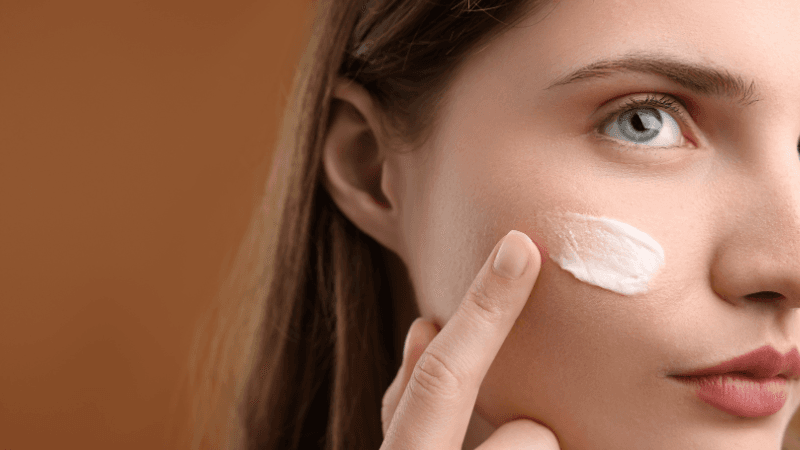
Why does cream roll off my face and what should I do?
The cream spreads well, but when I run my fingers over my face or apply SPF, small pellets appear on my skin. Sometimes this only happens under makeup, but other times the product starts to clump almost immediately. Why does the cream roll off my face ?
The reason could be the amount of product, the sequence of your skincare routine, the combination of textures, or the application method itself. If you'd like to learn more about your skincare routine with a professional, you can find options at https://alvibeauty.com/ru-ua/salons/kremenchuk/cosmetology .
Why does the cream roll off after application?
The first thing to check is the amount of product. A thick layer stays on the skin longer. If you immediately apply another product on top or start vigorously rubbing your face, the remaining product may clump into small clumps.
But why does cream roll off after application if you only use a small amount? Then it's worth looking at your entire skincare routine. There might be a serum underneath the cream, sunscreen on top, then primer and foundation. Individually, the products work fine, but when applied in multiple layers, they start to behave differently.
The problem is especially noticeable in the morning, when you want to apply all your skincare products quickly and move straight to makeup.
Cream is rolling into pellets: what to check first
Cream pilling doesn't necessarily mean it's bad or doesn't suit your skin. Sometimes, changing just one step of application is enough.
Most often it is worth checking:
- Are you applying too much cream, serum or SPF?
- does the previous layer have time to spread before the next one;
- Do not rub the skin for too long after application;
- does the problem only occur when two specific agents are combined;
- Are there too many layers on the face at once?
It's more effective to change one condition at a time. If you reduce the amount of cream you use today, remove the serum, and simultaneously change your SPF, you won't be able to figure out the cause.
Why does cream roll off after applying serum or SPF?
Serum, cream, and sunscreen form several successive layers. If one layer remains on the surface, the next one can begin to displace it as it spreads.
For example, the cream works well on its own. The serum also doesn't cause any problems. But when combined, they tend to clump together. This doesn't necessarily mean one of the products should be thrown out. Sometimes, combinations simply don't work well together.
Try applying products separately on different days or temporarily skipping one intermediate step. This will make it easier to understand where the creasing begins.
Apply SPF with particular care. Rubbing vigorously over several previous layers can make the problem more noticeable.
Why does cream roll under foundation?
Sometimes, your skincare routine looks flawless until you apply makeup. Then, your brush, sponge, or fingers begin to move the base layer, causing clear or grayish pellets to appear on your face.
It's not just your foundation that needs to be checked here. The cause could be too much foundation underneath.
If you use the "serum → cream → SPF → primer → foundation" routine, you're applying several different formulas to your skin at once. The more you rub them together, the more likely it is that one of the layers will start to clog.
Try shortening your morning routine and see if the problem persists. Sometimes one extra step can have a bigger impact than the foundation itself.
How to tell if your cream is peeling or your skin is flaking
These two situations are easily confused.
Cosmetic pellets usually appear after applying the product and become more noticeable when rubbed in. They can roll under your fingers and be easily removed from the surface.
Peeling skin looks different. Dry patches are noticeable even without a new cream, and are often accompanied by tightness, roughness, or discomfort after washing.
Distinguishing between them is useful for another reason. If you mistake makeup pilling for flaking, you might start using peels or acids more often, even though the problem was simply with application technique.
Conversely, real peeling should not be explained solely by the fact that “the cream has rolled off again.”
Cream is rolling off my face: what to do?
If your face cream is rolling off , you don't have to start by buying new cosmetics. First, try a simple experiment.
- Apply a little less cream and see if the result changes.
- Do not apply the next product immediately after the previous one.
- Reduce the number of layers in your morning skincare routine for one day.
- If the problem only occurs after using SPF or foundation, test these two products specifically.
- Distribute the product gently, without rubbing the skin for a long time.
- Do not continue to use the cream if it noticeably changes in smell, color or consistency.
This makes it much easier to find the specific place where the problem occurs.
Why does cream roll off my skin when everything was fine before?
Sometimes the same cosmetics will work well for a few weeks and then suddenly start to clump.
This isn't always due to skin changes. Consider whether a new SPF, toner, serum, or primer has recently been released. It's possible that it's not the cream's formula itself that has changed, but rather the combination of products around it.
The amount of product you use also affects the results. Even your regular cream can start to cake if you apply it in a thicker layer.
Therefore, it is better to determine why cream rolls off the skin by successively eliminating the causes, rather than by immediately replacing the entire cosmetic bag.
Does rolling mean the cream is not suitable?
Not necessarily. It's important not to confuse the two different situations.
If the product causes persistent burning, itching, severe redness, or other discomfort, the question concerns the reaction of the skin itself.
If there is no discomfort and the problem only appears when applying the next layer, the cause may be related to the combination of formulas or the application technique.
This means that a cream may suit your skin, but it may not work well with your serum, SPF, or makeup.
How to understand that the cream is to blame
The easiest way is to check it separately.
Apply the usual amount of product to cleansed skin, without using a serum first and without immediately covering it with SPF or foundation.
If pilling occurs even with this method, pay attention to the amount of product and the application method. If the cream itself spreads evenly, but the problem only occurs after applying the next product, it's likely the combination of the layers that needs to be addressed.
This small test provides more information than trying to change your cream, serum, and makeup base all at once.
Frequently Asked Questions about Rolling Cream
Why does the cream roll off my face immediately after application?
A common cause is applying too much product or vigorous rubbing. Try reducing the amount of cream and see if the results improve.
Why does the cream roll off after using the serum?
Two products may work well separately, but they may clump when separated. Test the cream without the serum, then return it to compare results.
Why does SPF roll off over the cream?
It's possible to have too much of your previous products on your skin. Sometimes a simpler morning regimen and gentle application of SPF without excessive rubbing helps.
Why does foundation roll off along with skincare?
The foundation itself may not be the culprit. The underlying layers of cream, SPF, or primer can shift during makeup application and form lumps.
Do I need to wait after applying the cream?
There's no one-size-fits-all formula. A simple rule of thumb is to apply the next layer when the previous one has spread evenly and doesn't move when lightly touched.
Does rolling mean that the cream is of poor quality?
No. Even the best product can crease due to the amount of product used, the method of application, or combination with other cosmetics.
When is it better to stop using the cream?
If, in addition to rolling, its smell, color, or consistency changes, or the product begins to cause significant discomfort, you should not continue using it.
How to understand that cosmetics are not suitable for your skin
A new cream seems to fit the description, but after applying it, your face starts to sting, a tight feeling develops by evening, or a few days later you notice new breakouts. How can you tell if the product isn't suitable , and when could the change in your skin's condition be related to something else entirely? It's not just one symptom that matters, but rather what changes occurred after the new product was introduced.
If you find it difficult to figure it out on your own, you can find a specialist on the website https://alvibeauty.com/ru-ua/salons/kremenchuk/cosmetology .
What are the signs that cosmetics are not suitable for your skin?
Skin doesn't have to be perfectly smooth after the first use of a new product. But constant burning, itching, or severe tightness shouldn't be tolerated for the sake of the promised results.
If you're trying to figure out the signs that a cream isn't right for you , it's especially important to compare your skin's condition before and after it appears.
Situations that have not occurred before may raise alarm:
- the skin regularly burns, itches, or becomes noticeably red after application;
- an unusual tightness or dryness has appeared;
- local peeling occurred;
- new breakouts or closed comedones have appeared;
- the skin has become oily faster, although at the same time it feels uncomfortable;
- The product leaves a heavy sticky film and lingers on the face for a long time.
One such symptom doesn't necessarily prove that cosmetics are to blame. For example, dryness may coincide with a cold snap, and breakouts with other changes in skincare. It's much more helpful to remember which product appeared immediately before the reaction and whether the reaction recurs after using it.
How to understand that a face cream is not suitable
The cream stays on the skin for a long time, so it is usually easier to notice a change in sensations after using it than after a product that is immediately washed off.
How do you know if a cream isn't working ? Check to see if your face becomes more red, if there's a burning sensation, if any tightness or new comedones appear after you've incorporated the cream into your daily routine.
However, it's more difficult to tell if a face cream isn't suitable if you've started using a new toner, serum, or acidic product at the same time. In this situation, several products can trigger a skin reaction at the same time.
Therefore, it's more convenient to introduce unfamiliar cosmetics gradually. If the condition changes, it will be easier to identify which product caused it.
Why does the cream sting, burn, or cause redness?
A slight tingling sensation is possible with some active formulas, but a pronounced or increasing burning sensation should not be taken as necessary evidence that the product is "working."
Why does my cream sting my face ? There could be various reasons. Your skin could already be irritated, your skincare product could contain multiple active ingredients, or you might simply not tolerate a particular formula well.
Acids and retinoids can also increase discomfort, especially if the skin already reacts with dryness and tightness.
Sometimes even your usual moisturizer starts to sting unpleasantly, even though it never caused any problems before. In this case, it's important to consider the current state of your skin barrier rather than immediately declaring the cream itself "bad."
If significant swelling, severe itching, a widespread rash, or a rapidly worsening reaction occurs, it's best not to rely on guesswork. External symptoms alone cannot reliably determine whether it's an allergy or another type of irritation.
Why do pimples and clogged pores appear after using cream?
After using a new product, one pimple may appear, but this is not enough to decide that the cream is clogging pores.
There is more reason to pay attention to it if, after introducing the product, the same type of closed comedones or rashes gradually appear in areas where the skin was previously calm.
It's important to review your entire routine. Along with your cream, you may have changed your SPF, cleanser, makeup, or other products. If there have been multiple changes, determining the cause becomes more difficult.
Don't blame severe or persistent breakouts on a single, unsuitable jar. Acne may have other causes that require evaluation by a dermatologist.
Why does my skin become dry, tight, or flaky after using cosmetics?
Sometimes the reaction doesn't manifest as a bright redness. The skin gradually becomes less comfortable: after washing, you immediately want to apply cream, peeling appears around the nose, and your usual skincare products start to sting.
This condition can occur with overly vigorous cleansing or using too many products containing acids, retinoids, and other active ingredients. If skin already feels dry and tight, adding even more active ingredients in the hopes of achieving faster results is usually not a good idea.
Tightness and flaking alone don't indicate which product is to blame. Again, chronology helps: what you started using before the sensation changed.
How to understand which product is causing irritation
One of the most awkward situations is trying to correct a reaction with a new product. A cream causes redness, then a restorative serum appears, then a new cleanser is used. After a few days, it's difficult to tell what your skin likes and what bothers you.
If you need to know how to tell if a product isn't suitable for your skin , start with something simple: remember the date it appeared, when the reaction occurred, where exactly it occurred, and whether it recurred after subsequent applications.
If you've tried several new products, temporarily return to a familiar, basic routine that your skin has previously tolerated well. This doesn't replace a medical diagnosis, but it helps eliminate unnecessary variables and identify patterns.
What to do if the cosmetics don't suit you
There's no need to buy multiple "restorative" products on the same day. The more changes you make to your skincare routine, the more difficult it is to figure out what your skin is reacting to.
- Stop using the product if you experience a severe adverse reaction. Continue using your familiar gentle cleansing routine, your usual moisturizing regimen, and your appropriate daytime protection.
- Don't immediately replace it with another active agent. See if your condition improves after discontinuing it.
- If there were several new products, reintroduce them gradually, one at a time.
- Don't try to remove flaking with frequent peels and don't treat new breakouts with harsh products.
- If you have severe or persistent redness, swelling, severe itching, pain, oozing, or widespread rash, consult a doctor.
This sequence is more useful than trying to find the "bad ingredient" based solely on the label.
When a reaction to cosmetics requires consultation with a specialist
Minor discomfort and a severe inflammatory reaction are two different situations. If the discomfort disappears after discontinuing the product and doesn't return, it's usually easier to adjust your home routine.
If the condition continues to worsen, itching increases, swelling, a painful rash, cracks, or the reaction spreads beyond the area of application, you should not experiment with new products.
The same applies to breakouts that persist regardless of the cream used. Constantly changing cosmetics in this situation can only complicate understanding the cause.
Frequently asked questions about inappropriate cosmetics
How do you know if a face cream is not suitable?
Pay attention to any changes after application: recurring burning, itching, redness, tightness, new breakouts, or comedones. A reaction that reoccurs after repeated use of the same product is especially telling.
Is it normal for the cream to sting a little after application?
This depends on the product's composition and the current condition of your skin. A brief, mild tingling sensation doesn't always indicate a problem, but a strong, prolonged, or increasing burning sensation isn't worth enduring for the sake of results.
Why does my face become red and itchy after applying cream?
This could indicate irritation or another reaction to the product. It's impossible to determine the cause based on this symptom alone. If itching and redness are severe or worsen, it's best to remove the product and seek medical advice.
How do you know if a cream is clogging your pores?
A single pimple after using a new cream doesn't prove anything. Suspicion becomes more substantiated if new similar comedones or breakouts regularly appear after introducing the product, especially in previously unaffected areas.
Can a new cream cause acne?
This coincidence is possible, but there are many causes of breakouts. Therefore, evaluate your entire skincare routine and don't try to attribute persistent acne to just one cosmetic product.
What to do if cosmetics cause irritation?
Remove the offending product and temporarily switch to your usual minimal skincare routine that your skin tolerated well. If the reaction is severe, worsens, or persists, it's best to consult a specialist.
How can I tell which skincare product is causing the reaction?
Remember which products were added immediately before the change in your skin's condition. If there were several, it's more difficult to determine the cause. Therefore, it's better to introduce new cosmetics gradually rather than all at once.
Dehydrated Oily Skin: Understanding and What to Do
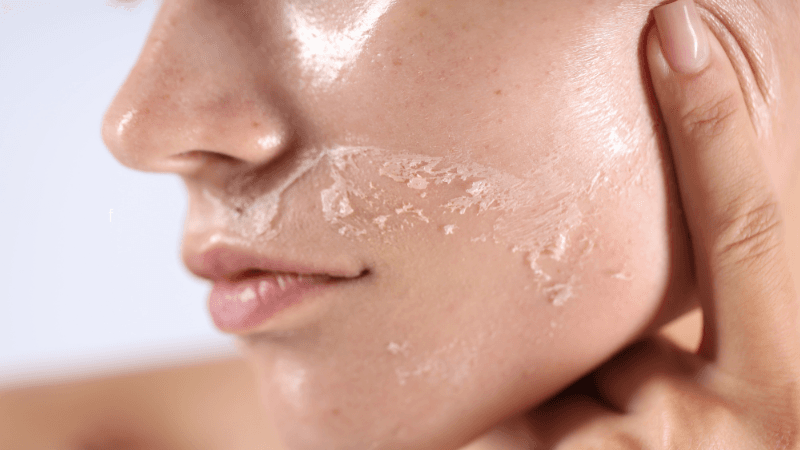
My forehead and nose start to shine during the day, but after washing my face, my cheeks feel tight. It seems counterintuitive: skin is either oily or dry. In practice, these sensations can be combined. Dehydrated oily skin continues to produce sebum, but it also retains moisture less effectively in the stratum corneum. If you're having trouble distinguishing between your skin type and your skincare needs, you can find a specialist in the cosmetology section in Kremenchuk .
Can oily skin be dehydrated?
Yes. Oiliness and the amount of water in the stratum corneum describe different characteristics of the skin. Sebum creates a lipid film on the surface, but by itself doesn't mean the skin is sufficiently hydrated. Therefore, the question of whether oily skin can be dehydrated is entirely logical.
Oily skin may experience a persistent shine in the T-zone, and after cleansing, tightness, roughness, or localized flaking may appear. This isn't a reason to automatically change your skin type from "oily" to "dry." It's best to first consider when the discomfort began and what your skincare routine was like beforehand.
How to tell if your skin is dehydrated: key signs
A single symptom isn't enough to diagnose yourself. It's better to look at several changes simultaneously and compare them to your normal skin condition. The question of how to tell if your skin is dehydrated is especially relevant if the oily shine remains but the feeling of comfort has disappeared.
Signs of dehydration may include:
- tightness after cleansing, although after a few hours the T-zone shines again;
- localized roughness or fine flaking;
- dull skin appearance and more noticeable uneven texture;
- familiar acids or other active agents suddenly become worse tolerated;
- The moisturizer relieves the discomfort for a short time, but the feeling of dryness quickly returns.
These are guidelines, not a home medical test. Severe itching, soreness, severe redness, cracking, or rash require a different evaluation and may not be related to simple dehydration.
Dry or dehydrated skin: how to tell the difference
Dry skin is a skin type. It typically produces less sebum and therefore often requires more lipid-rich skincare. Dehydration is a condition that can occur in different skin types.
Therefore, having both oily and dry skin doesn't necessarily mean your skin type has suddenly changed. If your face continues to get shiny, but the tightness has only recently appeared, consider whether your cleansing routine, the frequency of using acids or retinoids, or other skincare steps have changed.
This is more helpful than trying to determine the condition based on a single "pinch test" or how quickly the cream is absorbed.
Why does oily skin become dehydrated?
A common situation is the desire to eliminate shine at any cost. People choose a stronger gel, wash their face until it feels squeaky clean, add a mattifying toner, and use acids more often. As a result, the unpleasant tightness can worsen.
Dry air, sun exposure, and the combination of several active ingredients also affect the skin barrier. There's no single culprit. It's more helpful to look for changes that coincide with the onset of discomfort.
It's especially important not to attribute any oiliness to dehydration. If your skin has always been shiny, it could be a characteristic of your skin type. The goal of skincare in this situation is to restore comfort and support the skin barrier, not to promise to completely stop sebum production.
My face is shiny, but feels tight after washing: what to check first
Start with cleansing. If you're tempted to apply cream immediately after using a gel, and this hasn't happened before, consider the product, water temperature, and frequency of cleansing. More aggressive cleansing won't necessarily make oily skin more comfortable.
Then, consider your active ingredients. If you're using acids, retinoids, and other products that can irritate your skin, the appearance of tightness is a reason to reconsider the frequency and combination of products.
Afterwards, evaluate your hydration. Oily skin also needs a cream or emulsion, but the texture should be comfortable. There's no need to switch to a heavy, nourishing cream just because you're feeling dry.
What to do if oily skin is dehydrated
If you're looking for solutions for oily, dehydrated skin , don't overhaul your entire makeup shelf. Start with the basics and see how your skin changes.
1. Use gentle cleansing without leaving a lingering feeling of tightness after washing.
2. Maintain clear hydration. Formulas may contain glycerin, hyaluronic acid, and other moisturizing ingredients.
3. Add a cream, fluid, or emulsion of a suitable texture. Ceramides and other lipid components can support the skin barrier.
4. Do not increase the frequency of acids and peels just because of peeling.
5. Use appropriate sun protection during the day, especially if your skincare routine contains products that increase your skin's sensitivity to the sun.
The point of this regimen isn't to find one "magic" jar. First, we remove the obvious sources of discomfort, then leave a base that your skin tolerates well.
How to tell if your dehydrated skin care is working
It's better to focus on sensations and progress rather than promises of results in a certain number of days. A good sign is that after cleansing, you no longer feel the urge to immediately resort to cream. Roughness gradually decreases, flaking occurs less frequently, and basic products don't cause a burning sensation.
Oily shine may not disappear completely. This is normal: our goal is not to change your skin type, but to reduce signs of dehydration and make skincare comfortable.
If the condition does not improve, or if severe irritation, itching, soreness, or rash occurs, it is best not to continue experimenting on your own.
Frequently Asked Questions About Oily, Dehydrated Skin
Why does oily skin peel and feel tight after washing?
If this sensation has recently developed, consider any changes in your skincare routine. A new cleanser, more frequent use of acids, or multiple active products at once can coincide with the onset of dryness and discomfort. If flaking persists, intensifies, or is accompanied by itching, pain, or noticeable redness, don't automatically attribute it to dehydration.
How do you know if your dehydrated skin care is working?
Don't look for one "main" symptom. Focus on your everyday sensations: after cleansing, your skin no longer feels like it's rushing to apply cream, rough patches become less noticeable, and products that previously caused discomfort are tolerated more easily. Oily shine may persist, however, because the goal of this type of care is to restore skin comfort, not change its type.
What is the difference between dry skin and dehydrated skin?
Dryness often describes skin types with less sebum. Dehydration is a current condition that can also occur in oily skin types.
Which cream should I choose for oily, dehydrated skin?
Look for a comfortable texture and tolerability. Lightweight creams, fluids, and emulsions with moisturizing and barrier components are often convenient.
Can acids and peels be used if you are dehydrated?
If your skin is already tight, flaky, or irritated, there's no need to increase the frequency of acids and peels. It's best to gradually reintroduce active ingredients once your basic skincare routine is comfortable again.
How do you know if your dehydrated skin care is working?
Pay attention to how your skin behaves in everyday life: after washing, you don't immediately want to reach for cream, dry patches bother you less often, and your usual basic products can be applied again without burning or discomfort.
Autumn Skincare: What to Change as Cold Weather Sets in
It's easy to fall into the trap of thinking that the weather has cooled down, meaning it's time to immediately switch up your foam, serum, and cream. In fact, good fall skincare doesn't start with a new makeup bag, but with monitoring your skin. If you feel tightness after washing your face, and your usual cream isn't enough by evening, it's time to rethink your routine. If everything is comfortable, there's no need to change products just because the calendar says something. And if your skin needs more than just home care, you can find a specialist in the cosmetology section in Kremenchuk .
Why you need to change your skincare routine in the fall
Cold air and wind outside, drier air at home after turning on the heating—the conditions are changing. Under these circumstances, some people's skin loses its comfort more quickly, becoming dry or feeling tight. Therefore, it's better to tailor your skincare routine in the fall to your skin's condition, rather than following the universal rule of "starting in September, you need a rich cream."
The main mistake here is changing everything at once. Then, after a week, it's difficult to tell which remedy helped and which, on the contrary, proved unnecessary.
How to understand that summer skin care is no longer enough
First, look not at the jars, but at how you feel. A situation that didn't happen during the summer might be a signal to reconsider your routine.
- after washing my face became tight;
- dry areas appear by mid-day;
- the usual light cream no longer provides a feeling of comfort;
- the skin reacts more strongly to cold wind;
- After the start of the heating season, the dryness became more noticeable.
One such symptom doesn't necessarily mean you need to completely change your skincare routine. It's more important to understand at what stage the discomfort began.
How to care for your skin in autumn: what to change in your routine
To answer the question of how to care for your skin in the fall , the principle is simple: keep what works and change only the weak links.
Gentle cleansing without tightness
If your skin feels comfortable after washing, you can leave the cleanser on. However, if persistent tightness occurs, it's worth checking to see if your cleanser has become too aggressive for the new conditions.
There's no need to try to compensate for dryness with even more thorough cleansing. The purpose of cleansing remains the same: to remove impurities and product residue without making your skin feel like it's about to be immediately slathered in cream.
Moisturizer and cream: should you switch to a thicker texture?
The rule that "everyone needs a thick cream in autumn" is too blunt. Oily, combination, and dry skin may require completely different textures.
If your usual product is sufficient, stick with it. If your skin becomes dry faster, try a more comfortable creamy texture or adjust your moisturizing step. This is a smarter way to decide how to change your fall skincare routine , rather than buying the entire seasonal line at once.
Serum isn't a must-have in autumn either. It's needed when it addresses a specific need in your routine.
Do you need SPF in autumn?
Autumn alone doesn't mean you need to put away sunscreen until May. UV intensity fluctuates throughout the year, so it's important to consider the conditions, the time of day outside, the UV index, and your skincare routine.
You should be especially careful about sun protection if your routine includes products that increase your skin's sensitivity to ultraviolet radiation, or if you are prone to pigmentation.
Skin care during the heating season: what to do if your skin is dry
Skin care during the heating season has its own unique feature: problems can start not outside, but indoors. When heating reduces indoor humidity, skin can become dry faster. This is why a product that was sufficient in September can sometimes feel too light in November.
If you've developed dry skin in the fall, what should you do first? Don't try to add five new products at once. First, check the simple things: how gently are you washing your face, is your usual cream sufficient, and has the air in your home become noticeably drier?
A humidifier can help increase humidity in the room, but it's not a substitute for proper skin care. If dryness becomes severe, is accompanied by cracking, severe itching, burning, or persists for a long time, it's best to discuss the problem with a dermatologist.
What you shouldn't change just because it's autumn
If your skin is comfortable with your usual cleansing routine, there's no point in looking for an "autumn" foam. A light cream also doesn't have to be put on the shelf just because August is over.
The same applies to active ingredients. Autumn isn't a sign to automatically increase the amount of acids, retinoids, or other active ingredients. They should be added based on specific needs and skin tolerance.
It is this approach that separates seasonal adaptation from a complete change of makeup bag.
Autumn Skin Care Mistakes
More often than not, the problem arises not because there are “too few resources” in the routine, but because the changes are made too abruptly.
- change your cleanser, serum, and cream immediately, and then try to understand the cause of the reaction;
- choosing the thickest cream just because it got cold;
- intensify cleansing when the skin already feels tight;
- completely abandon sun protection according to the calendar;
- abruptly add several active agents at once.
The best guideline in the fall is not the number of jars, but the condition of the skin after each usual step.
Frequently Asked Questions
How do you know when it's time to change your skincare routine in the fall?
Compare the sensation to summer. If you experience tightness after washing, your usual cream isn't enough, or the dryness intensifies after turning on the heating, it might be worth adjusting a specific step in your skincare routine.
Should I switch to a thicker cream in the fall?
Not necessarily. If your usual cream still provides comfort, there's no need to change it just because of the season. A thicker texture makes sense when your skin truly needs the same moisture.
What should I do if my skin becomes dry after turning on the heating?
Check your cleansing and moisturizing routine, as well as your home's humidity. If the dryness is severe, itchy, cracked, or persistent, consult a dermatologist.
Should I change my skin cleansing routine in the fall?
Only if your previous cleanser starts to leave your skin feeling dry or tight. If your skin feels fine after washing, there's no need to change your cleanser.
Do you need SPF in the fall when there is almost no sun?
Ultraviolet radiation doesn't disappear with the summer. The need and level of protection depend on the UV index, the time spent outdoors, and your skincare routine.
Is it possible to keep summer skincare routine if your skin is comfortable?
Yes. The calendar itself isn't a reason to change your work routine. Adjusting it based on your skin condition makes sense.
What are the most common mistakes people make when caring for their skin in the fall?
Most often, people change their entire routine too abruptly, overload it with new products, or choose heavier textures without any real need.
Why foundation accentuates skin texture and what to do about it
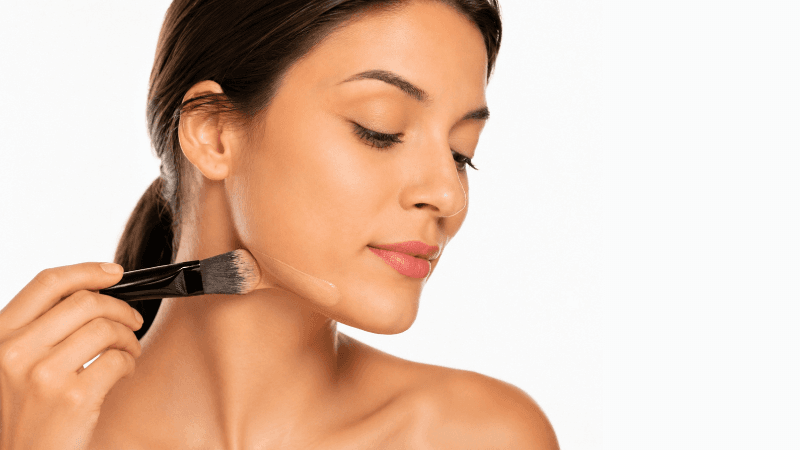
Without makeup, skin looks quite even, but after applying foundation, pores, dry patches, or fine lines suddenly become more noticeable. Sound familiar? To understand why foundation accentuates skin texture , it's first important to determine what exactly has changed after applying it. Sometimes it's the condition of your skin, sometimes it's the product itself or the amount of product used. If your skin condition raises questions and you'd like to discuss your skincare routine with a specialist, consider visiting a cosmetologist in Kremenchuk .
Texture alone doesn't mean there's something wrong with your skin. Pores, fine lines, and a slight texture are all normal features of vibrant skin. Foundation doesn't have to smooth your face like a filter. The problem begins when the texture appears noticeably more pronounced after application than before.
What exactly can foundation make more noticeable?
Before changing your makeup bag, look at your face in normal daylight. Different areas may look uneven for various reasons.
Most often, the tone emphasizes:
- pores near the nose and on the cheeks;
- dry or flaky areas;
- fine lines around the eyes and mouth;
- uneven texture and individual traces of post-acne.
It's important to distinguish between color and texture. A redness or spot can be visually covered with pigment. A pore, line, or depression can't simply be "painted over" with another thick layer. Sometimes, it's precisely the attempt to further conceal texture that makes it more noticeable.
Why does foundation highlight pores?
The question of why foundation accentuates pores often arises, even among those who use primer. Pores may be visible before makeup, but after applying the product, additional contrast appears around them: the pigment is distributed across the skin's surface, leaving a textured appearance.
The effect is especially noticeable when applying a large amount of product to one area. Instead of visual smoothing, the result is a dense layer that accentuates surface irregularities.
Powder doesn't always help either. Too much powder, especially on dry areas, can make the finish appear more matte and rough.
Therefore, primer isn't a one-size-fits-all solution. If pores are still clearly visible after applying it, it's worth looking not only at the base but also at the foundation itself, its amount, and finish.
Dryness and flaking: why foundation reveals what's almost invisible without makeup
A dry patch is sometimes barely visible on clean skin. After applying pigment, its edges become more visible, making it appear as if the foundation has "created" the peeling.
That's why there's no single explanation for why foundation accentuates skin texture . If unevenness is visible even before applying makeup, the problem likely lies in the skin's surface. If your skin looks comfortable without foundation, but after applying a specific product, your face becomes rough, it's time to evaluate the product itself.
However, there's no need to rush to remove dry patches with a harsh scrub before applying makeup. The cause of persistent peeling is a skincare issue, and it's more important to understand how it interacts with makeup.
When the problem is in the foundation itself
Even with normal skin condition, two foundations can look completely different.
The result is influenced by the product's texture, coverage density, and finish. A very dense layer provides better coverage of the skin's tone, but can also make its micro-relief more visible. A highly matte finish can sometimes highlight dry areas, while a pronounced shimmer can draw attention to the texture where light reflects off the surface.
This doesn't mean there's one "right" finish for everyone. It's much more helpful to see how a specific product performs on your skin.
If the reason why foundation accentuates pores is only an issue with one specific product, while coverage looks fine with another, the reason is unlikely to be limited to skincare.
Why More Foundation Can Only Make It Worse
When you want to conceal an uneven spot, the natural reaction is to add a little more product. However, the skin's texture is different in color from the spot itself: additional pigment doesn't physically even out the surface.
A thick layer can collect near pores, dry areas, or fine lines. So, instead of a smoother complexion, the opposite effect occurs.
The principle here is simple: apply a small amount first, observe the result, and add more coating only where you really need to even out the color.
This is especially useful to remember if you want to understand why foundation emphasizes skin texture after the second or third layer.
Why primer doesn't always hide texture
Primer can visually smooth out certain areas or change the behavior of the next product, but it does not erase the natural texture of the skin.
If you apply a lot of dense foundation on top of the primer and then several more layers of powder, the amount of makeup may overlap the possible effect of the base.
Therefore, the situation of "I bought a primer, but my pores are still visible" is entirely possible. In this case, it makes sense to evaluate the entire product combination rather than looking for another base.
What can I change to make my foundation less likely to highlight my skin texture?
If you want to understand how to make the coating visually smoother, start not by buying a new product, but by understanding when the problem appears.
- Look at your skin before applying makeup. If dryness or flaking is already noticeable, it's worth checking the condition of your skin first.
- Try reducing the amount of foundation and adding a second layer only locally.
- Compare the result with another type of coating or finish if the problem occurs with only one product.
- Don't try to cover up all the relief with a lot of powder.
- If you use a primer, evaluate the result without it: an additional layer is only necessary when it truly improves coverage.
This approach is more useful than the endless search for the “perfect” foundation, because it helps you understand the cause of your particular situation.
How to tell if it's your skin or your foundation
The easiest guide is to compare your skin before and after applying the product.
If dry patches and flaking are clearly visible even before applying makeup, the problem begins before foundation. If skin appears even, but pores or fine lines become noticeable after applying a certain product, it's worth checking the texture, finish, and quantity of the product.
If the problem only occurs in certain areas, there's no need to change your entire makeup routine. Pores may be more prominent near the nose, foundation tends to gather in lines under the eyes, and a thick layer of foundation looks unsightly in dry areas.
It’s much easier to find the cause than to completely change your skincare and makeup routine every time.
Frequently Asked Questions
Why does foundation highlight pores?
Pores become more visible when the coverage creates additional contrast with the skin texture or gathers around it. The amount of product, its texture, and finish also influence the results.
Why are pores still visible even with primer?
Primer can reduce their visual visibility, but it doesn't eliminate the natural texture. The effect also depends on the foundation and the number of subsequent layers.
Why does foundation look grainy on my skin?
This is what coverage can look like on dry areas, when there is too much product, or if a particular formula does not spread well across the skin's surface.
Can powder enhance skin texture?
Yes, especially if there's a lot of it or the skin in that area is dry. Powder can make the surface appear more matte and rough.
How to prevent foundation from emphasizing skin texture?
First, identify what exactly has become more noticeable. Use less product, add coverage locally, and evaluate whether the texture and finish of a particular product suits your skin.
Is it possible to completely hide skin texture with foundation?
Makeup can't completely eliminate natural pores, lines, and micro-relief. The realistic goal is to avoid visually enhancing them and maintain natural coverage.
How do you know if it's the foundation that's the problem?
If your skin looks comfortable without it, but the problem only appears after applying a specific product, it's worth checking its quantity, texture, and finish.
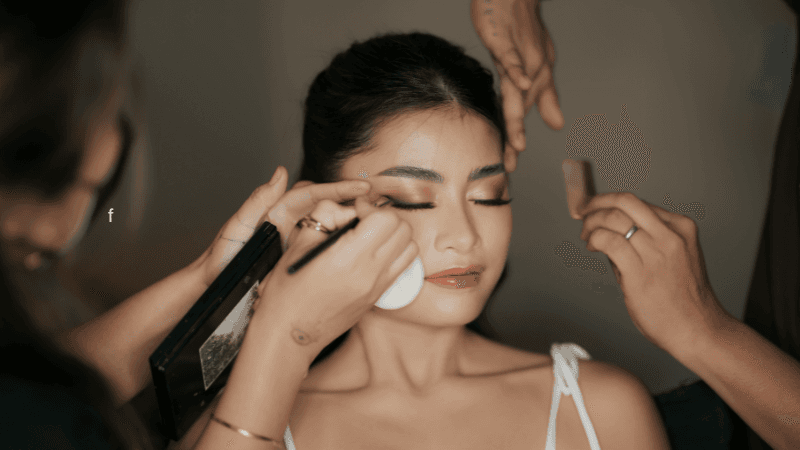
How to prepare your skin for makeup so your foundation goes on evenly
Sometimes, in the morning, you do everything as usual: wash your face, apply cream, and select your favorite foundation—and suddenly the coverage starts to bunch up near your nose, highlight dry areas, or appear patchy. In this situation, the problem isn't always the foundation itself. Sometimes, adjusting your skin prep is enough. Below, we'll discuss how to prepare your skin for makeup , which steps are truly necessary, and when an extra layer of skincare just gets in the way. If you'd like to have your skin assessed by a specialist first, you can visit https://alvibeauty.com/ru-ua/salons/kremenchuk/cosmetology .
Why does the foundation lay unevenly even after leaving?
Well-moisturized skin usually looks more even under foundation, but the principle "the more care, the better" doesn't apply here. If you apply several thick products one after the other and then immediately apply makeup, the next layer may blend poorly or start to crease.
Another situation: skin appears smooth without makeup, but after applying pigment, dry patches and uneven texture become more noticeable. This doesn't mean you need to immediately use a scrub or exfoliant before every makeup application. Aggressive experimentation right before an important event will likely only add to the unpredictability.
Therefore, preparation begins not with the number of jars, but with understanding what the skin needs today.
How to prepare your skin for makeup step by step
Unless there is significant dryness or irritation, the basic sequence can be quite short.
- Gently cleanse your skin with your usual cleanser.
- Apply a light serum if you already have one in your routine.
- Use moisturizer in an amount that is comfortable for your skin.
- During the day, apply your regular SPF and let the layers settle.
- Add primer only when it really solves a specific problem.
This minimal approach is often more convenient than trying to use all your skincare products at once before applying foundation.
Cleansing without the feeling of tightness
Washing removes residue from your nighttime skincare routine, sebum, and impurities. However, your skin shouldn't feel overly dry afterward. If your face already feels tight after cleansing, applying a second coat of foundation is unlikely to improve the appearance.
The goal of this stage is simple: to get clear skin without the desire to urgently apply half a jar of cream.
Moisturize and apply SPF before makeup
If you're trying to figure out what to apply to your face before applying makeup , moisturizer remains a basic product. Its texture should match your skin and your skincare routine.
During the day, SPF is applied as part of a regular morning routine. After applying cream and sunscreen, it's helpful to give the skin a little time to calm down. There's no universal timer for all products; it's best to follow the product's texture and the manufacturer's recommendations.
When you need a primer and when you can do without it
Primer isn't a must for good makeup. It can be useful for reducing shine in specific areas, visually smoothing texture, or changing the finish of your makeup.
If your skin looks comfortable without a primer and the foundation is evenly applied, you can skip the additional layer. Therefore, the question "Do I need a primer?" is best decided based on the results, not the "everyone does it" principle.
What to apply to your face before makeup and in what order
The question of how to prepare skin before makeup often boils down to the order of products. For most everyday situations, it's simple: cleanse, follow your usual skincare routine, apply SPF during the day, and then apply primer if needed.
A serum isn't necessary just because you're applying makeup. If you use it regularly and it works well with the rest of your skincare routine, there's no need to change your routine. However, testing out several new products the morning before a photo shoot, wedding, or important meeting is a bad idea.
The main guideline: before applying foundation, the skin should feel comfortable, and the surface should not remain covered with a thick, wet layer of makeup.
How to prepare dry skin if your foundation accentuates flaking
If your skin is dry, you might want to add more cream, but the amount of product alone doesn't guarantee an even result. It's better to prioritize your skincare routine and use your favorite products immediately before applying makeup.
If your foundation highlights dry patches, how you prepare your skin for makeup depends on their condition. Avoid mechanically removing all the flakiness right before applying makeup. On makeup day, it's safer to avoid experimenting with harsh scrubs and unfamiliar acidic products.
This section only covers makeup preparation. If your skin is constantly peeling, or if there's a noticeable burning sensation or irritation, the cause goes beyond the scope of a regular makeup prep.
What's best not to do right before applying makeup?
Before an important makeup application, it's usually better for your skin to have predictability rather than rushing to make it "perfect."
- Don't test several new skin care products at once.
- Don't use an aggressive scrub just for a smoother tone.
- Don't apply too many thick layers "just in case".
- Do not start applying foundation while the previous treatment is still noticeably visible on the surface.
This approach is especially useful if your makeup has previously periodically peeled off for no apparent reason.
How to understand that the problem is no longer in skin preparation
Sometimes you can follow a perfect skincare routine but still not be satisfied with the results. Then it's time to look at the foundation itself.
Coverage that's too thick can make texture more noticeable. A product that was previously suitable in summer may feel different in winter. Both the amount of foundation and the application method can have an impact.
So, what to apply to your face before makeup is only half the battle. If your skin looks comfortable after applying makeup, and problems only appear after applying a specific foundation, endlessly adding new creams and foundations is pointless. The problem may lie with the product itself or the way it's applied.
Frequently Asked Questions
What should I apply to my face before applying makeup?
Typically, your usual moisturizing regimen, SPF during the day, and primer when needed are sufficient. The number of steps depends on your skin type and the products you use.
Should I use primer before foundation?
No. If the foundation spreads well without it, you don't need to use a primer.
How long should I wait after applying the cream before applying makeup?
There's no set time. Let the product spread and follow the instructions: the skin shouldn't feel excessively wet or sticky.
Why does foundation apply unevenly even after preparing the skin?
The cause may be dry areas, excess care, the characteristics of the foundation itself, or the method of its application.
How to prepare dry skin so that the foundation doesn’t emphasize the flaking?
Use your usual gentle skincare routine and avoid trying to exfoliate your skin intensely immediately before applying makeup.
Can too many skincare products ruin your makeup?
Yes, too many layers can make it difficult to apply the next product, especially if the previous products have not yet spread over the skin.
How do you know if the problem is with your foundation and not your skin prep?
If your skin looks and feels comfortable after using a foundation, but unevenness only appears after using a specific foundation, it's worth evaluating its texture, amount, and application method.
My face swells in the morning.
Facial swelling in the morning is caused by fluid accumulation in the interstitial spaces of soft tissues. In most cases, this is a physiological phenomenon that resolves on its own.
However, if the swelling doesn't subside, increases, or is accompanied by other symptoms, it's a sign to get examined. If you experience persistent facial swelling, we recommend consulting a specialist cosmetologist for a personal consultation.
Why it happens: Physiology
The mechanism of morning swelling is associated with the characteristics of blood circulation and lymph flow during sleep.
During the day, you're in an upright position. Gravity helps: blood and lymph move upward (from your legs to your heart) thanks to muscle contractions and valves in your veins. When you lie down, this movement slows.
At night, when lying horizontally, fluid is distributed evenly throughout the body. Visible swelling occurs in areas where tissues are loose and can accommodate more fluid (eyelids, cheeks, soft palate, neck).
If you sleep in a position that puts pressure on the lymphatic vessels (for example, with your face in the pillow or with your neck twisted), the outflow of fluid is further impeded.
Important: if the swelling goes away within 30–60 minutes after waking up and standing, this is normal, physiological edema.
5 Main Causes of Morning Swelling
Reason 1: Excess sodium
Salt retains water—this isn't a theory, but a physical property of osmosis. A high sodium concentration in the cellular space causes an influx of water there.
Sources of hidden sodium: pickled vegetables (one cucumber = 300–400 mg sodium), smoked meat (100 g smoked breast = 800 mg), canned fish, processed foods, cheese, soy sauce.
The recommended daily intake of sodium is 1,500–2,300 mg. Most people consume 3,000–5,000 mg.
Mechanism: excess sodium → the body retains water for dilution → at night, fluid accumulates in the loose tissues of the face.
What to do:
- Limit sodium after 5:00 PM (dinner 3 hours before bed).
- Choose low-sodium foods: fresh vegetables, poultry, fish, eggs.
- Don't add salt to your dinner - use lemon, vinegar, herbs.
Reason 2: Lack of sleep and stress
Sleep disruptions disrupt hormonal balance in two ways:
Pathway 1 – Cortisol: Sleep deprivation activates the sympathetic nervous system (the "combat alert" mode). Cortisol remains elevated, causing the kidneys to reabsorb sodium and water to maintain blood pressure. Result: fluid retention at night.
Pathway 2 – Inflammation: Sleep is the period of recovery for the lymphoid system. With less than 6–7 hours of sleep, immune cells do not fully recover, leaving systemic microinflammation. Inflammation causes swelling.
Stress exacerbates both effects.
What to do:
- Sleep 7–9 hours at the same time every night.
- Bedroom: cool (18–20°C), dark, no noise.
- Avoid coffee after 2:00 PM (caffeine's half-life is 5-6 hours).
- If stress is constant, add physical activity during the day (even a 20-minute walk).
Reason 3: Hormonal fluctuations
In women of reproductive age, swelling is often associated with the cycle:
Three to seven days before menstruation, estrogen levels drop and progesterone levels rise. This combination disrupts the water-electrolyte balance—sodium reabsorption in the kidneys increases, leading to fluid retention.
While taking oral contraceptives (especially those with high doses of ethinyl estradiol), there may be persistent swelling due to chronic hormonal exposure.
During pregnancy, swelling is normal (the volume of circulating fluid increases by 30–50%).
Progesterone deficiency (rare) can cause swelling at any time during the cycle.
What to do:
- Keep track of when the swelling is at its peak—whether it coincides with your cycle phase.
- If it matches, it is normal and temporary.
- A week before your period, limit sodium even more strictly.
- If swelling is persistent or interferes with your life, discuss changing your contraceptive or getting tested for progesterone deficiency with your gynecologist.
Reason 4: Improper diet
Three factors act together:
Late-night overeating: Food consumed less than three hours before bedtime is still being processed overnight. This causes microinflammation in the digestive system and activates cytokines (inflammatory signals). Inflammation increases vascular permeability → edema.
Fatty foods: digest slowly (6-8 hours), requiring more blood flow to the gastrointestinal tract. This diverts blood from other organs and increases pressure on the lymphatic system.
Alcohol: first dilates blood vessels (vasodilation), then dehydrates. The body, sensing dehydration, activates water retention → further swelling.
What to do:
- Dinner at 18:00–19:00 (at least 3 hours before bedtime).
- Dinner: protein + vegetables, no oil, no sauces.
- Alcohol maximum 1-2 times a week, with plenty of water.
Reason 5: Pathological causes (when a doctor is needed)
If the swelling does not go away or increases, it may be a symptom of a disease.
Nephrotic syndrome (impaired kidney function): the kidneys lose protein into the urine. Plasma oncotic pressure decreases, causing fluid to leak into the interstitial space. Systemic edema (all over the body, including the face). Symptoms include morning and evening swelling, foamy urine, and rapid weight gain (2–3 kg per week).
Hypothyroidism (thyroid insufficiency): metabolic rate decreases. The kidneys filter fluid less effectively, causing sodium and water retention. Swelling is soft and non-stringent, often affecting the face, arms, and legs. Symptoms include persistent swelling, weakness, coldness, fatigue, weight gain, and dry skin.
Heart failure: The heart pumps poorly, causing blood to pool in the upper half of the body (venous congestion). Swelling of the face, hands, and neck occurs. Signs include swelling and shortness of breath, chest tightness, rapid or irregular heartbeat, and fatigue.
Allergy and angioedema: rapid swelling (within hours), often unilateral. Can be dangerous if the throat is swollen.
What to do:
- If the swelling does not subside within 2-3 hours or increases day by day, consult a doctor.
- Take the following tests: complete blood count, biochemistry (creatinine, urea, albumin), TSH (thyroid), ECG (heart), and complete urine analysis.
- Make an appointment with your general practitioner – they will coordinate the examination.
How to quickly reduce swelling
Cold compresses (5 minutes, 80% effective)
Take two ice cubes and wrap them in a thin cloth (to prevent frostbite). Apply them along the massage lines:
- Line 1: from the center of the forehead to the temples.
- Line 2: from the inner corner of the eye along the undereye cavity to the temple.
- Line 3: from the center of the cheek along the cheekbone to the ear.
- Line 4: from the chin to the earlobes.
Repeat each line 3-4 times. The cold constricts blood vessels (vasoconstriction), drawing fluid out of soft tissues. The effect is greatest within the first 15 minutes after waking.
Lymphatic drainage massage (3–5 minutes)
Apply the cream. Use gentle stroking movements (no pressure), in the direction of lymph flow.
- From the center of the forehead to the temples and further to the lymph nodes behind the ears.
- From the bridge of the nose to the corners of the jaw and to the lymph nodes.
- From the chin to the earlobes.
- From the sides of the neck down to the collarbone (to the supraclavicular lymph nodes).
This stimulates contraction of the lymphatic vessels and accelerates drainage.
Physical activity (10 minutes)
Muscle contractions pump lymph. Ten squats, twenty jumping jacks, or light stretching will get the circulation going. Swelling subsides faster than with static sitting.
Frequently Asked Questions
Why does facial swelling appear in the morning and not during the day?
During the day, you're upright, and gravity helps fluid drain downward. At night, when you're horizontal, the fluid is distributed evenly and accumulates in the soft tissues of the face. Furthermore, the lymphatic system slows down at night when you're sleeping and not moving.
Is facial swelling in the morning always a sign of illness?
No. If the swelling subsides within 30-60 minutes of waking up and standing, this is normal. It only becomes a problem if the swelling persists, increases day after day, or is accompanied by other symptoms (lower back pain, weakness, shortness of breath).
Can salt cause facial swelling overnight?
Yes. If you eat a lot of pickled vegetables, smoked meat, or other salty foods in the evening, your body will retain water overnight to dilute the sodium. This will cause noticeable swelling within 8-12 hours. The effect is greatest if you eat less than 3 hours before bed.
Why does lack of sleep cause swelling?
Lack of sleep increases cortisol (the stress hormone), which causes the kidneys to retain sodium and water. Furthermore, sleep deprivation prevents the immune system from fully recovering, leaving microinflammation, which increases swelling.
What is the most effective method for reducing facial swelling?
Cold compresses work best (80% effective within the first 15 minutes). Cold constricts blood vessels, drawing fluid out of soft tissues. Lymphatic drainage massage and physical activity are secondary, but they enhance the effect. All three methods combined produce results within 10–15 minutes.
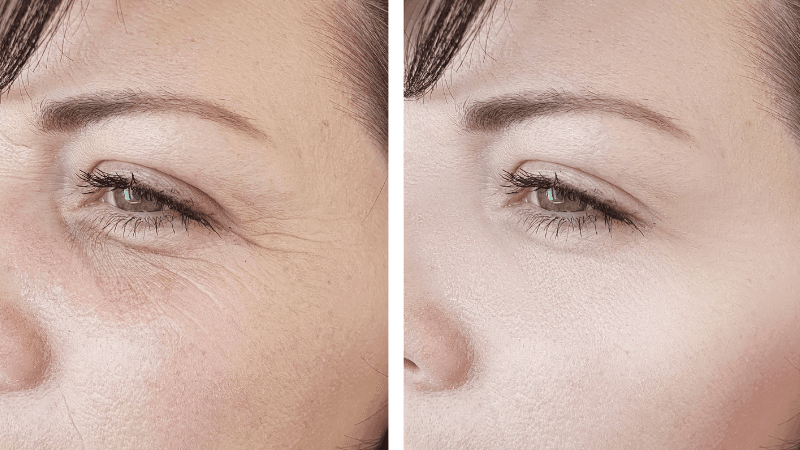
Why does one side of the face age faster than the other?
In the photo, the right cheek appears slightly heavier, there are more wrinkles near one eye, and one nasolabial fold is somehow more noticeable than the other. Sound familiar? Just because one side of your face seems to be aging faster doesn't necessarily mean there's something wrong. Slight asymmetry is natural, but with age, the difference between the sides can become more noticeable. If you'd like to assess the changes without a selfie, but rather with a professional, you can consult a cosmetologist by following the link to the website https://alvibeauty.com/ruua/salons/vinnytsia/cosmetology .
Let's take a look, without the horror stories, at why one side of the face ages faster and which of the reasons can actually be changed.
Why the face may age unevenly
The face isn't initially made up of two perfectly identical halves. The shape of the bones, the position of the soft tissues, the muscle function, and even the usual facial expressions vary slightly. With age, these small differences sometimes become more noticeable.
This is also confirmed by studies of facial asymmetry: with age, the degree of difference between the right and left halves of the face can increase. But this doesn't necessarily mean one side is "bad" and the other "young." More often, it's a combination of several small factors.
What a girl usually notices first:
- one nasolabial fold is deeper than the other;
- there are more small lines near one eye;
- one eyebrow or corner of the lips is positioned slightly differently;
- the contour of one cheek appears heavier.
Facial expressions and muscles don't work quite the same way.
Try smiling in front of a mirror. For most people, the movements on the right and left sides aren't perfectly mirrored. One side may be more active in smiling, squinting, or raising an eyebrow.
Therefore, wrinkles on one side of the face may appear more pronounced. This is especially noticeable in areas where facial expressions are repeated many times: near the eyes, between the eyebrows, and near the nasolabial fold.
But there's no need to deliberately "smile less" with one side of your face. Facial expressions are a normal part of life, and slight asymmetry in itself is not a medical condition.
Natural facial asymmetry becomes more noticeable with age.
One side of the face may have slightly different soft tissue volume, cheekbone position, or muscle function. While the skin is firm and elastic, the difference is barely noticeable. Later, it may become more noticeable.
Therefore, when one side of the face ages faster , it is more correct to think not about one mysterious reason, but about the sum of features that over the years have acted slightly differently on the right and left.
Why wrinkles on one side of the face may be worse
Wrinkles are just one of the features we use to evaluate a face. The appearance of age is also influenced by the volume of tissue, the position of the eyebrows, the contour of the cheeks, pigmentation, and the quality of the skin.
Because of this, the phrase "the right side looks older" doesn't always mean there are simply more wrinkles on the right. Sometimes one line is deeper, and sometimes several details are different.
How we look at ourselves is also important. A front-facing camera, side lighting, and a familiar angle can easily exaggerate subtle differences. Therefore, a single selfie isn't the best tool for assessing aging.
Can sleeping on one side increase facial asymmetry?
When sleeping on your side, your face actually comes into contact with the pillow, and your skin experiences mechanical pressure and deformation. Studies have shown that characteristic compression lines can form during sleep.
But caution is key here. Another study found no simple link between preferred side of sleep and which side women had more wrinkles or sagging tissue on. Therefore, the formula "sleep on the right side, and you'll definitely age faster on the right side" is overly simplistic.
Sleep is one possible factor, not the only explanation.
How UV and photoaging affect the sides of the face
There's more evidence here. UV radiation accumulates damage to the skin and, over time, is associated with wrinkles, age spots, and loss of skin smoothness. This process is called photoaging.
If one side of the face receives more sun exposure over the years, the signs of photoaging could theoretically also be distributed unevenly. A study of people with long-term asymmetrical UVA exposure through a window found differences in wrinkles, roughness, and skin unevenness between the sides.
This is one of the reasons why daily sun protection is more beneficial than a fashionable attempt to “erase” the difference that has already appeared.
What can you do if one side of your face looks older?
If you're concerned about why one side of your face ages faster and it remains a question every time you look in the mirror, start not with procedures, but with observations.
Can:
- check to see if you are applying sunscreen evenly over your entire face;
- notice repetitive facial expressions, but do not try to control them completely;
- pay attention to your usual sleeping position without the idea of “lying still all night”;
- maintain skin with basic hydration and sun protection;
- compare changes in the same lighting, not in random selfies.
Moisturizing skincare can make fine lines less noticeable, and regular sun protection helps prevent further sun damage. But creams can't reshape the facial anatomy or make the two halves of the face mathematically identical.
When facial asymmetry is no longer just a cosmetic issue
A slowly changing slight asymmetry and a sudden change in half of the face are completely different situations.
If one side of your body suddenly becomes weaker, droops, or exhibits significant asymmetry, along with numbness, speech impairment, or other acute symptoms, don't seek a solution in cosmetics. This is a reason to seek medical attention.
If the changes are gradual and the issue is purely aesthetic, it is best to first calmly evaluate them with a specialist, and only then decide whether any adjustments are necessary.
Frequently asked questions
Why does one side of the face age faster than the other?
There's usually no single cause. Appearance can depend on natural asymmetry, facial expressions, accumulated sun exposure, skin condition, and other individual factors.
Why are wrinkles more noticeable on one side of the face?
One side may be slightly more active in facial expressions, have different anatomy, or receive different external loads. Therefore, individual lines on the right and left sides sometimes appear different.
Can sleeping on one side increase facial asymmetry?
Sleeping on your side puts pressure on your skin, but research doesn't support the simple rule that your preferred side will make you look older. Sleeping on your side should be considered one possible factor, not the sole cause.
Why is one nasolabial fold deeper than the other?
The cause may be natural facial asymmetry, differences in facial expressions, and age-related changes in soft tissues. It's impossible to determine the exact cause from a single fold without assessing the face as a whole.
Is it possible to reduce the difference between the right and left sides of the face?
Sometimes, it's possible to reduce the impact of external factors—for example, by protecting your skin from the sun and maintaining a proper skincare routine. But the goal shouldn't be to create a perfectly symmetrical face: slight differences between the sides are natural.
When does facial asymmetry require medical attention?
If it occurs suddenly or is accompanied by weakness, numbness, speech impairment, or other unusual symptoms, a medical evaluation is needed, not a cosmetic experiment.

Wrinkles on the face after sleep: why they remain and how to remove them
Morning, look in the mirror—and there's a line on your cheek that definitely wasn't there the night before. Sometimes it disappears while you're drinking coffee, and sometimes it lingers until almost lunchtime. If lines on your face start appearing regularly after sleep , it's best to first figure out what's going on with your skin, rather than rushing to buy a new cream.
If necessary, you can assess your skin condition and select treatment options through a cosmetologist in Vinnytsia .
Why do wrinkles appear on the face after sleep?
While sleeping, your face can rest against your pillow for several hours. This is especially noticeable when lying on your side or stomach: the skin shifts, gathers, and experiences pressure. Therefore, in the morning, a line may appear on the cheek, near the eye, on the forehead, or in the nasolabial fold area.
However, wrinkles after sleep shouldn't be automatically considered age-related. If the line quickly smooths out after waking, it's likely the skin was temporarily deformed due to pressure. Another situation is when the same area wrinkles regularly, and the crease becomes more noticeable over time.
The condition of the skin itself also matters. When it's properly hydrated, the surface usually appears smoother, while dryness makes fine lines more visible. However, cream doesn't change your head position while you sleep or relieve pressure on the same area.
Sleep wrinkles and post-sleep wrinkles: what's the difference?
The term "sleep wrinkles" refers to lines that are not so much related to facial expressions as to mechanical compression and displacement of the skin during sleep. These lines are also called compression wrinkles.
When the fracture after sleep quickly goes away
The easiest way to assess the situation is to look at your face not only immediately after waking up, but also a little later. If the line gradually disappears on its own, the break was temporary.
It's like the mark left by a fold of clothing on the body: the pressure is gone, and the skin gradually returns to its normal state.
Why kinks after sleep may last longer
If the same area experiences pressure every night, the line may become more noticeable. Skin characteristics also play a role: its firmness, elasticity, moisture level, and UV exposure.
But a single morning wrinkle doesn't necessarily indicate the "degree of skin aging" or a lack of collagen. A single line on the cheek isn't enough to draw such conclusions.
How to remove wrinkles on your face at home
If you're looking to remove wrinkles on your face after sleeping , it's best to start with simple steps. Avoid vigorously rubbing your skin, applying ice until it turns red, or trying to literally "knead" the wrinkle.
Can:
- gently wash your face and apply your usual moisturizer that suits your skin;
- give your face some time after waking up;
- do not stretch or rub the fracture area;
- see if the line decreases during the morning.
How to quickly smooth your face after sleep
If the wrinkle is temporary, time is your best friend. Moisturizer can make fine dry lines less noticeable, but promising that a cream will "erase" the wrinkle in a couple of minutes is wrong.
If you notice noticeable swelling along with lines in the morning, don't automatically assume they're all the same problem. Facial puffiness and mechanical skin rupture are different conditions.
Moisturizing and night care: what can help your skin?
Regular basic skincare is more beneficial than searching for a special "sleep wrinkle cream." Gentle cleansing, proper moisturizing, and daytime sun protection help maintain healthy skin.
Facial massage can be used as part of your skincare routine if it's comfortable for you. However, don't expect massage to remove established, stubborn wrinkles on its own.
Side Sleeping Wrinkles: How Position and Pillow Affect Wrinkles
When a person sleeps on their side, part of their face is in contact with the pillow for several hours. When sleeping on their stomach, pressure on certain areas of the skin can also be significant. Therefore, creases after sleep may be more noticeable in areas where the cheek or other area of the face was pressed harder against the surface during the night.
But sleeping on your back shouldn't be a mandatory anti-aging routine. If it makes it difficult to fall asleep, constantly waking up, and not getting enough sleep, this habit won't be of much use.
It's better to pay attention to simple things:
- does your face sink too deeply into the pillow?
- does the pillowcase gather into large folds?
- Is it possible to change the position a little to reduce the pressure on the cheek?
- Is the pillow height and neck position comfortable?
The phrase "creases on the face from the pillow" sounds unnatural in the text, so it's best not to insert it automatically. In the article, the meaning is covered by the normal wording: creases and folds that appear due to the pressure of the face on the pillow.
What to do if the kinks don't go away after sleep
If the line appears in the morning and then remains visible even on a relaxed face and repeats day after day, this is already different from the usual short-term imprint after sleep.
Home care can maintain skin's moisture and appearance, but creams aren't guaranteed to remove a deep, persistent wrinkle. In this situation, it's best to have your skin examined by a specialist to determine what exactly has formed: a temporary fold, a static wrinkle, severe dryness, or a combination of factors.
Therefore, there is no long catalog of Botox, fillers, RF lifting, and other procedures here. The correction method is chosen not based on the word "break" alone, but rather based on the area, the severity of the line, and the condition of the skin.
How to Prevent Wrinkles and Folds While You Sleep
It's impossible to completely control your body position all night. And turning sleep into a constant battle against wrinkles isn't necessary either.
It's much more beneficial to change things that can be controlled without causing discomfort: strong, repetitive pressure on one area, an uncomfortable pillow, and overly aggressive skincare. If your skin is prone to dryness, it needs appropriate basic skincare and proper hydration.
The key is to look not at a single, random line in the morning, but at its progress. Does it disappear on its own? Does it always appear in the same place? Does it last noticeably longer than before? Such observations are more helpful than looking in the mirror every morning for a new wrinkle.
Frequently asked questions about sleep creases and wrinkles
Why does one line on my face disappear quickly in the morning, while another remains longer?
A temporary wrinkle usually gradually smooths out once the pressure on the skin is removed. If the same line appears regularly and remains visible for longer, its severity may be influenced by repeated mechanical pressure, dry skin, or an already formed static wrinkle.
What should I do in the morning if I have a noticeable wrinkle left on my cheek after sleeping?
If the fold is temporary, it usually takes a little time. You can gently wash your face, apply your usual moisturizer, and avoid rubbing your skin. Aggressive massage, strong skin stretching, or attempts to quickly "soften" the line are unnecessary.
How can I tell if this is just a regular pillow mark or a sleep wrinkle?
A typical pillow mark gradually becomes less noticeable after waking. Sleep wrinkles are most often associated with recurring lines that appear in the same places due to pressure and skin displacement during sleep and can persist over time.
Is there any point in changing your sleeping position if the creases always appear on the same side?
If you're constantly pressing the same side of your face into the pillow every night, reducing the repetitive pressure can be helpful. However, there's no need to specifically monitor your body position throughout the night. A good, comfortable sleep is more important than trying to lie still.
Can a pillow make facial wrinkles worse after sleep?
The pillow itself isn't the only cause of wrinkles. But if the cheek is pressed hard and for a long time, the skin experiences mechanical pressure and displacement. Therefore, head position, pillow shape, and pillowcase folds can all influence the appearance of morning wrinkles.
When should you see a cosmetologist about recurring facial creases?
If a line regularly appears in the same place, doesn't smooth out after sleep, or remains noticeable even when the face is relaxed, it's a good idea to have your skin evaluated by a specialist. This will help you distinguish a temporary wrinkle from a more permanent one, and avoid choosing skincare or treatments at random.

How to remove forehead wrinkles at a young age
Raise your eyebrows, relax your face—but still have a fine line? In your 20s and 30s, this can be more surprising than the first gray hair. But how to remove forehead wrinkles depends primarily on what you're seeing: a trace of active facial expressions or a line that's already begun to set. If you'd like to consult a specialist, you can find a cosmetologist in the cosmetology section in Vinnytsia .
The good news: forehead wrinkles at a young age don't mean the skin has suddenly "aged." The forehead is constantly moving. We express surprise, frown, raise our eyebrows, and squint. While the skin rebounds well, lines are only visible during movement. Later, some of them may remain visible even at rest.
Why do wrinkles appear on the forehead at a young age?
The most obvious reason is active facial expressions. The frontalis muscle works every time you raise your eyebrows, and the skin folds in roughly the same places.
But facial expressions alone don't explain everything. How quickly a wrinkle stops smoothing out completely depends on skin characteristics, UV exposure, genetics, and skincare routine. UV radiation is associated with photoaging, so SPF is needed long before a deep wrinkle appears, not just when it does.
That's why forehead wrinkles appear at a young age—it's not a question of a single "bad habit." Usually, several factors are at play.
It is worth paying attention to:
- active facial expressions and the habit of constantly raising or frowning eyebrows;
- regular sun protection, skin moisturizing, smoking and other lifestyle factors.
Lack of sleep or stress can affect the appearance of the face, but you shouldn’t look for a diagnosis or “lack of a specific vitamin” in a single line on the forehead.
Expression lines on the forehead or a folded forehead: how to tell the difference
Try this simple test in front of a mirror. It's not a substitute for a consultation, but it can help you understand the logic.
When the line appears only during facial expressions
Raise your eyebrows. Horizontal lines appear on your forehead. Now relax your face completely.
If they've almost disappeared, it's most likely dynamic lines associated with muscle movement. These are often the first wrinkles to become noticeable on the forehead .
In this case, the goal isn't to immobilize the face. It's much wiser to maintain the skin's condition and not accelerate the formation of the line.
When a wrinkle remains even when at rest
If the brows are already relaxed but the furrow is still visible, the line has become more consistent. Both muscle activity and the condition of the skin itself are important here.
The more pronounced the wrinkles are, the less you should expect from promises like “we’ll smooth it out with one cream in a week.”
Forehead Wrinkles: What to Do at Home
If you've noticed early wrinkles on your forehead for the first time, it's logical to start not with panic or a list of procedures.
The base is boring, but useful: sun protection, gentle cleansing, moisturizing and suitable active ingredients.
Cream, retinol, hydration, and SPF: what can help your skin?
The cream can improve the hydration and appearance of the skin, but you shouldn't expect it to turn off the work of the facial muscles or completely eliminate the formed wrinkles.
Retinoids are used in skincare to address signs of photoaging and skin texture, but active skincare should be introduced gradually, taking into account tolerance. SPF helps reduce cumulative UV exposure.
Hyaluronic acid, peptides, and other moisturizing ingredients can maintain skin's comfort and appearance. Regular use is more important than a shelf full of ten jars.
Massage and exercises for forehead wrinkles: what to expect
Massage can be a nice part of a skincare routine, but the promise of it "erasing" a stubborn wrinkle sounds too good to be universally true.
The same goes for exercises. If you actively exercise an already very mobile forehead without understanding the technique, it's logical not to expect any exercise to automatically smooth out the skin.
Therefore, it is better to think of home care as a way to maintain the quality of your skin, rather than as a replacement for all professional methods.
How to remove forehead wrinkles if home care isn't enough
If you're still concerned about how to remove forehead wrinkles at a young age , the most helpful next question is: what exactly forms this line?
For one girl, it appears almost exclusively due to active muscle activity. For another, the quality of her skin has already noticeably changed. For a third, both factors are present.
The choice of professional approach also depends on this.
A cosmetologist may discuss methods that:
- reduce excessive facial activity;
- work with the quality, texture and condition of the skin.
There's no "top five" list of procedures here. Botulinum toxin therapy, laser therapy, and hardware-based treatments all address different issues and have their limitations. Choosing a procedure before understanding the cause is like buying medication before you know what's causing the pain.
How to prevent early forehead wrinkles from deepening
There is no need to check your face in the mirror every hour and forbid yourself to smile or be surprised.
It's much more practical to protect your skin from the sun, avoid over-drying it with harsh skincare, and avoid trying to use all the popular products from social media at once.
If the line only appears when you're moving, that's no reason to fight your facial expressions. If it gradually becomes more noticeable at rest and bothers you, it might be worth discussing the situation with a professional.
The main idea is simple: what to do about forehead wrinkles isn't a matter of just one cream or one procedure. First, you need to understand the scenario and then choose a solution.
Frequently asked questions about forehead wrinkles in young adults
Why do forehead wrinkles appear at a young age?
Most often, active facial expressions, individual skin characteristics, and cumulative sun exposure are important factors. Age is only one factor.
Is it possible to remove forehead wrinkles at home?
Home care can improve skin's moisture, texture, and appearance. Creams alone usually can't completely eliminate stubborn wrinkles.
How can you tell if your forehead wrinkle is a mimic one or a static crease?
If the line appears with movement and disappears when the face relaxes, it's more likely to be dynamic. If it remains still, it's more stable.
Does forehead wrinkle cream help?
The cream is useful for moisturizing and maintaining the skin's barrier function, but its effectiveness depends on the cause and depth of the line.
Is it possible to remove forehead wrinkles with massage or exercise?
They are not a universal way to remove existing wrinkles. Massage can be considered a complementary treatment.
How to remove forehead wrinkles without Botox?
It depends on how pronounced the line is and what's causing it. For early changes, care and sun protection are important; other methods are discussed individually with a specialist.
How to prevent early wrinkles from becoming deeper?
Use SPF regularly, keep your skin hydrated, apply products carefully, and don't wait until the line becomes more pronounced if it bothers you.
How to remove Venus rings on the neck and why they appear
Two or three horizontal lines on the neck can be noticed at 22 and even 35 years old. Therefore, the first thing I want to say is that age is not the only explanation. If you're trying to figure out how to remove rings of Venus on the neck , first look not at your date of birth, but at the folds themselves: how noticeable they are at rest, what the skin around them looks like, and whether the lines change when you straighten your neck.
If you'd like to discuss this with a specialist, you can look at options for cosmetology services at https://alvibeauty.com/ruua/salons/vinnytsia/cosmetology .
What are the rings of Venus on the neck and how can you tell if they are what you are?
Simply put, rings of Venus are horizontal lines or folds on the neck. They don't always indicate significant skin aging. Horizontal lines are also common in young people, and they can become more noticeable with age and changes in skin quality.
There's another simple everyday guideline. A crease that appears only when the head is tilted sharply and almost disappears in a neutral position is different from a line that's visible even when the neck is relaxed. The latter is usually more difficult to change with home care alone.
Therefore, it is better to evaluate the rings of Venus on the neck not by the principle of “they are there or not”, but by the depth, the condition of the skin and whether they are visible at rest.
Why do Venus rings appear on the neck?
There's no single answer to the question of why Venus rings appear . The neck is constantly moving and bending, and the skin in this area is quite thin and can be more sensitive than the skin of the face.
Over the years, the appearance of lines is also affected by collagen changes and sun exposure. Frequent head-down viewing can further accentuate horizontal folds, hence the popular name "tech neck."
More often than not, it makes sense to look at several factors at once:
- anatomical features and a tendency towards horizontal lines;
- age-related changes in the skin and loss of its elasticity;
- regular sun exposure without protection;
- the habit of sitting for a long time with your head bent over a phone or laptop;
- Insufficient care of the neck compared to the face.
This isn't a self-diagnosis checklist. For example, don't automatically attribute every wrinkle to dehydration, a spinal problem, or a "lack of collagen." Cosmetic websites like to list such causes, but without an examination, they prove nothing.
How to remove Venus rings at home: what can really help
The most common mistake is expecting a cream to do what cosmetics physically can't. Home care primarily addresses the skin's surface: dryness, sun protection, and texture. It usually doesn't erase deep wrinkles that have already formed.
If you want to start without procedures, the basic plan is simple:
- Apply SPF daily not only to your face, but also to the exposed part of your neck;
- Moisturize your skin regularly, especially if it feels dry and tight after washing;
- Active ingredients such as retinoids should be introduced with caution: the skin of the neck can be more easily irritated than the skin of the face;
- keep your head tilted towards the screen less often for long periods of time;
- Do not rub or stretch your neck in the hope of mechanically “smoothing out” the crease.
Sunscreen and retinoids are indeed used in neck skincare, but retinoids for this area are usually started on a gentler regimen due to the risk of dryness and irritation.
What creams, SPF, and home care can do
They can make your skin more nourished, reduce dryness, and protect it from further photodamage. This is already beneficial. But the promise of "the cream will remove the rings of Venus in two weeks" is best left to the advertising.
Do massage and exercises help with neck wrinkles?
Massage can be a pleasant part of your skincare routine, but don't rely on it to remove a stubborn horizontal crease. The same goes for exercise. If the line isn't just related to head position, but is already visible at rest, mechanical stimulation isn't effective in correcting the crease itself.
What procedures help reduce the rings of Venus?
What's more important here isn't the procedure's name, but what exactly needs to be changed. It's like with hair: dryness and an improper haircut may look similar, but the solutions are completely different.
If you need to improve the quality of your skin
If the lines are shallow and the skin is dry, thin, and lacking elasticity, a specialist can discuss methods that focus primarily on improving the skin's quality. Cosmetic clinics use a variety of injectable and device-based approaches for this purpose. The choice depends on the skin's condition and contraindications, not on the trendy name of the procedure.
If a deep horizontal fold has formed
This is a different matter. Hyaluronic acid-based fillers have been studied for horizontal neck lines. Studies show a reduction in the appearance of lines in some patients, but the effect, duration, and risk of adverse reactions depend on the product, technique, and specific anatomy.
That's why getting rid of Venus rings on the neck can't be solved by choosing a remedy based on a photo from social media.
If the rings are combined with sagging skin of the neck
When the problem is no longer limited to a single line, but rather to decreased density or sagging tissue, the goal changes. Then, the doctor may discuss hardware-based techniques or a combination of approaches. These methods work differently than filling the horizontal fold itself, so comparing them based on the principle of "which is stronger" is inappropriate.
Is it possible to completely remove the rings of Venus and how can I prevent them from deepening?
Sometimes the appearance of wrinkles can be significantly reduced, but promising a completely smooth neck forever would be dishonest. The result depends on the depth of the wrinkle, the anatomy, the condition of the skin, and the chosen method.
It's more practical to set a different goal: instead of searching for one "perfect" method, understand what relates to skin care, what relates to the formed wrinkle, and what relates to the overall condition of the tissue. This will make it easier to avoid unnecessary procedures and unrealistic expectations.
Frequently Asked Questions about the Rings of Venus
Is it possible to completely remove the rings of Venus on the neck?
Sometimes they can be made significantly less noticeable, but complete and permanent disappearance cannot be guaranteed. Everything depends on the depth of the line and its cause.
Why do Venus rings appear even at a young age?
Because horizontal lines depend on more than just age. They can be influenced by individual anatomy and repeated neck flexion; the skin itself also changes with age. Horizontal neck lines are indeed examined in relatively young patients, too.
Is it possible to reduce the size of the rings of Venus at home?
Home care is beneficial for the condition of the skin and the prevention of additional photodamage, but deep, persistent wrinkles usually cannot be removed with cream alone.
Do creams help with horizontal folds on the neck?
Cream can moisturize and support the skin. SPF helps protect it from the sun. However, cosmetics don't act as a filler and can't physically fill in deep lines.
Is it possible to remove the rings of Venus with massage or exercise?
There's no reliable evidence to suggest that massage will remove existing horizontal wrinkles. While paying attention to posture and head positioning is possible, this won't correct an already deep wrinkle.
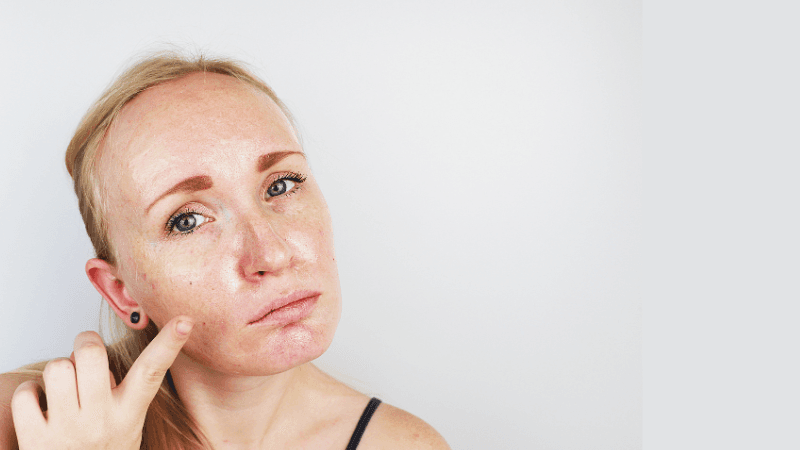
Why does facial skin become oily and what can be done about it?
Oily shine can occur even with proper skincare: skin may initially appear fresh, but after a few hours, the T-zone becomes noticeably shiny. If you're trying to figure out why your skin is oily , it's important to first determine whether this is a constant characteristic of your skin or a recent change. This will determine what changes to make to your skincare routine. If you can't find the right option yourself, you can find cosmetology services in Cherkasy at https://alvibeauty.com/ruua/salons/cherkasy/cosmetology .
Oily shine doesn't necessarily mean your skin is dirty or poorly cared for. Sebum is produced by the sebaceous glands and is part of the skin's natural defense mechanism. Problems arise when it becomes noticeably more than you're comfortable with, or when the shine is accompanied by clogged pores, blackheads, irritation, and inflammation.
Why does facial skin quickly become oily?
It's best to consider why your face quickly becomes oily not in isolation, but in conjunction with what has changed in recent weeks: skincare routine, season, skin condition, and the presence of other symptoms.
The amount of sebum produced varies from person to person. Skin type and heredity play a significant role. If your skin has been oily since adolescence, especially in the T-zone, this may be a natural characteristic.
Hormonal changes also influence the functioning of the sebaceous glands. Therefore, oiliness often fluctuates during adolescence, during different periods of the cycle, or during other hormonal changes. However, oiliness alone cannot determine which hormone is at fault, much less self-diagnose.
There are much simpler reasons. In summer, the face can become shiny more quickly due to the heat and humidity. Sometimes the condition changes after purchasing a new, thick cream or an overly harsh cleanser.
Oily skin type or temporary condition: how to distinguish
This is one of the most useful questions because the same oily shine can appear for different reasons.
My skin has always been oily.
If you've had a shiny forehead, nose, and chin for years, your pores are quite visible, and your skin quickly becomes oily after washing, you likely have oily or combination skin.
In this case, the goal of skincare isn't to "turn off" the sebaceous glands. Completely eliminating sebum is neither possible nor necessary. The goal is much more sober: to cleanse the skin without overdrying, reduce excess shine, and avoid clogging pores.
My skin suddenly became oilier.
Another situation: before, the face behaved quite predictably, but now by the middle of the day a pronounced shine appears.
Consider whether you've changed your cleansing routine, cream, SPF, or the number of active ingredients. Sometimes a new routine simply proves too harsh. The opposite can also happen: the skin becomes overly oil-depleted, becoming irritated, and the oily feeling persists.
If the change occurs suddenly and is accompanied by severe rashes, itching, cycle changes, or other unusual symptoms, it's best not to look for the cause in cosmetics alone.
The skin is oily, but at the same time tight or flaky
It seems illogical: the face is shiny, but after washing it feels tight, and dry patches appear around the nose.
This happens.
Oiliness and water content in the skin are two different things. Therefore, oily skin can simultaneously be dehydrated or irritated.
It's especially worth reviewing your skincare routine if you use alcohol-based lotions, harsh scrubs, several acids at once, or wash your face many times a day.
How to reduce oily skin at home
If you're wondering how to reduce oily skin , start not with the most powerful mattifying product, but with a simple and straightforward routine.
- Wash your face morning and evening with a gentle cleanser, avoiding a "squeaky" feeling. After cleansing, use a light moisturizer. In the morning, add a suitable SPF. If you're prone to blackheads and clogged pores, you can gradually introduce products containing salicylic acid into your routine. Niacinamide is also often used in the care of oily skin.
- If your face starts to get shiny during the day, you don't necessarily need to wash it again. Excess sebum can be gently blotted with an oil-blotting cloth. It's best to introduce new active ingredients one at a time: this way, you can more easily determine whether they're actually helping or irritating your skin.
There's no need to create a ten-step skincare routine. The more products you layer without a clear purpose, the harder it is to figure out what's right for your skin.
If a new product causes burning, persistent redness, or severe peeling, this isn't a sign that the product is "working well." It's time to simplify your skincare routine.
What mistakes can increase oily shine?
When oily skin bothers you, you want to solve the problem as quickly as possible: cleanse thoroughly, dry it out, add acid, and then apply a mask on top.
This is where it's easy to go overboard.
Most often, care is hindered by:
- Frequent washing, alcohol-based products and attempts to cleanse the skin until it squeaks;
- simultaneous use of several strong active ingredients and frequent exfoliation;
- completely abandoning moisturizer just because your face is shiny without it.
Another pitfall is assessing your skin only immediately after washing. Just because a strong gel leaves your face matte for the first twenty minutes doesn't mean the product is suitable. Much more important is whether there's any tightness, irritation, or the urge to constantly apply something soothing.
When increased oiliness is a reason to consult a specialist
Oily skin in itself isn't a disease. However, sudden changes in skin condition sometimes require a proper consultation rather than a new jar.
If oiliness appears suddenly and inflammation increases, painful areas, itching, or other new symptoms appear, it is best to consult a dermatologist.
It also makes sense to see a specialist if you have been consistently following basic care for several months, but your skin is constantly irritated or the situation is getting worse.
A cosmetologist can help assess your current skin condition and select the right treatment. If there are signs of skin disease or severe acne, a consultation with a dermatologist is a better option.
Frequently Asked Questions
Why does my skin become oily just a few hours after washing my face?
The sebaceous glands continue to produce sebum throughout the day. If you have oily skin, shine can return quite quickly. It can also be exacerbated by heat, improper skincare, and skin irritation.
Should I wash my face more often if my face gets oily quickly?
There's usually no need to wash your face constantly throughout the day. Too frequent cleansing can irritate your skin. For basic skincare, gentle cleansing in the morning and evening is usually sufficient.
Do oily skin need to be moisturized?
Yes. Sebum content and moisture content are not the same thing. Oily skin can also feel tight and dehydrated. It's better to choose comfortable, lightweight textures.
Can oily skin peel?
Yes. This combination is possible, especially with aggressive skincare or irritation of the skin's protective barrier. If oiliness is accompanied by severe flaking, it's best to first reconsider your cleansing routine and the number of active ingredients you use.
Which acid is suitable for oily skin?
Salicylic acid is often used in oily skin care, especially if you're prone to clogged pores and blackheads. However, the frequency of use depends on the specific product and your skin's sensitivity.
Is it possible to completely get rid of oily skin?
If this is your natural feature, the goal of care is not to permanently change your skin type, but to control excess shine, maintain comfort, and reduce the risk of clogged pores.
When can oily skin be related to more than just skincare?
If your skin has changed dramatically and oiliness is accompanied by severe inflammation or other unusual symptoms, it's best to discuss the situation with a dermatologist rather than trying to determine the cause yourself.
How to shrink pores on your face and make them less noticeable
In the morning, your skin looks fine, but when you're near a window or after applying foundation, every little spot on your nose and cheeks suddenly becomes visible. Sound familiar?
If you're looking for ways to shrink pores on your face , let's start with an important point: you can't and shouldn't completely "close" them. Pores are a natural part of your skin. However, you can make them visually less noticeable if you understand why they're prominent. And if home care isn't helping, you can explore beauty treatment options in Cherkasy at https://alvibeauty.com/ruua/salons/cherkasy/cosmetology .
Why do pores on the face become more visible?
A pore is an opening in a hair follicle through which sebum is released to the surface. Its size largely depends on skin characteristics and genetics. However, anatomical size is one thing, and how noticeable the pore is quite another.
If there's too much sebum, it mixes with dead skin cells. The follicle opening becomes clogged, blackheads appear, and the skin's surface appears less even. This is why oily and combination skin often appears "porous."
There's another scenario. With age, skin gradually loses elasticity, and UV radiation accelerates these changes. The tissue around the pore becomes less dense, making its contour more visible.
That's why there's no single answer to the question of why pores on the face are enlarged . For one woman, the main cause is sebum and blackheads, for another, it's irritated, dry skin, and for a third, it's changes in density and texture.
Is it possible to shrink pores on the face permanently?
The short answer is no. And that's okay.
If you're asking whether it's possible to shrink pores on your face so that they'll "close" and never reappear, makeup won't do that. The follicles remain part of the skin.
But you can influence what makes pores especially noticeable: excess sebum, clogging, uneven texture, dehydration, and loss of elasticity.
That's why it's more accurate to say not "remove pores," but rather "reduce their visibility."
This is an important distinction. It saves you from endlessly buying products that promise "perfectly smooth, pore-free skin."
How to understand why your pores are visible
Before buying another serum, look at your skin in normal daylight. It's not just the pore itself that matters, but everything that happens around it.
Oily shine, blackheads and clogged pores
If, just a few hours after washing, you notice shine, blackheads on your nose and chin, and your pores appear darker, you should pay attention to sebum and cleansing.
In this situation, it is more useful to work with the blockage than to try to “pull” the skin.
Salicylic acid is a BHA and works well in the oily environment of the hair follicle. It helps remove excess sebum and dead skin cells. Niacinamide can complement this regimen, especially if oily shine is also a concern.
Dryness and irritation, but pores are still visible
Sometimes my skin is shiny in the T-zone, but after washing it feels tight, and flaking appears near the nose. The urge to cleanse my face even more often is usually a hindrance.
Harsh gels, alcohol-based lotions, frequent scrubs, and multiple acids can disrupt the skin's protective barrier. The skin's texture becomes more uneven, making pores even more visible.
In this case, it’s best to first restore your skin’s comfort: gentle cleansing, moisturizing cream, and a temporarily simpler routine.
Pores have become more visible with age
If there are few blackheads and the oiliness is not pronounced, but the pores on the cheeks have gradually become more visible, the cause may be a change in the elasticity of the skin.
There's no point in endlessly "cleansing" your face. Regular sun protection, sensible skincare, and skin-renewing actives are more important.
How to shrink pores on your face with home care
A search for "what to do about enlarged pores on the face" often leads to dozens of jars and conflicting advice. In reality, the basic procedure is much simpler.
- Cleanse your skin gently morning and evening, and remove makeup and SPF completely before bed. If you're prone to blackheads, you can gradually add salicylic acid. Even oily skin needs moisturizing, and SPF helps protect against sun damage.
- Introduce one new active ingredient at a time. Niacinamide is suitable for oily skin, AHAs help with surface texture, and retinoids can be used for skin renewal. But if you mix everything at once, irritation will only make the skin texture worse.
Don't judge a product after just two uses. Consistency is more important in pore care than constantly switching masks and serums.
What mistakes make enlarged pores even more noticeable?
Pores are especially easy targets for aggressive care: you want to steam your face, squeeze out all the contents, and wipe your skin with something “stronger.”
But this does not make the follicle smaller.
The following habits are more likely to interfere:
- washing until you feel a “squeak”, alcohol-based lotions, hard brushes and frequent scrubs;
- self-squeezing of blackheads, hot steam baths and attempts to “close” pores with ice;
- using several acids, retinoids and other active ingredients at once without skin adaptation.
I also don't recommend applying lemon juice, baking soda, or random homemade mixtures from the refrigerator to your face. Their popularity in older beauty articles doesn't make such treatments safer or more effective.
What to do if home care is not enough
If your skin is well-cared for, your cleansing routine is well-chosen, and your active ingredients are used carefully, but your pores are still bothering you, the next step is to avoid buying five more products.
The specialist first assesses what is causing the problem: sebum and comedones, uneven texture, post-acne, decreased elasticity, or a combination of several factors.
After this, professional care or procedures are discussed.
We intentionally don't list laser, hardware, and injection methods as a one-size-fits-all "pore-removal list." Each has its own indications, limitations, and goals. What's suitable for skin with post-acne and pronounced texture isn't necessarily needed by someone with an oily T-zone and blackheads.
Frequently Asked Questions
Is it possible to completely remove pores on the face?
No. Pores are a natural part of the skin. You can reduce their visual visibility, but you can't physically remove them.
What really helps with enlarged pores?
It depends on the cause. For oily and clogged skin, gentle cleansing and appropriate active ingredients, such as salicylic acid, are helpful. For irritated skin, it's more important to first restore comfort and the protective barrier.
Why are pores especially noticeable on the nose?
The nose has many sebaceous glands, so sebum accumulates there more often, causing sebaceous filaments or blackheads to form. This makes the skin texture appear more pronounced.
Can ice shrink pores?
Cold may temporarily alter the skin's appearance, but it doesn't reduce the anatomical size of the follicle. Constantly rubbing ice on your face to "close pores" makes no sense.
Does niacinamide help reduce pores?
Niacinamide can be useful for oily and combination skin and helps control shine. It doesn't physically clog pores.
Which acid is suitable for visible pores?
Salicylic acid is often used for oiliness, blackheads, and clogged skin. AHAs work more on the surface texture. The choice and frequency depend on the skin's condition and other active ingredients in your skincare regimen.
When should you see a cosmetologist?
If you've established a home routine, but your pores remain very visible, blackheads, inflammation, or uneven skin texture appear regularly, a consultation will help you understand the cause and choose the right care option.
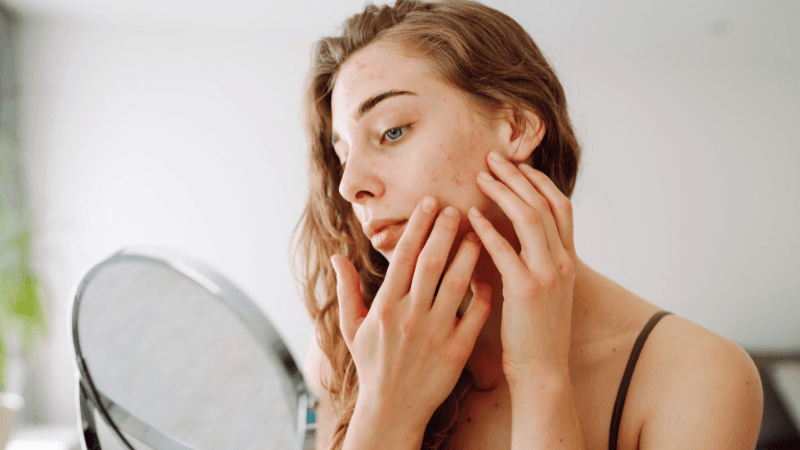
Why does my skin become dull and how can I improve my complexion?
Sometimes you don't notice right away. The breakouts haven't increased, my usual cream is still in the bathroom, but in the mirror my face looks a little gray.
Foundation doesn't really help, and without it, my skin simply feels like it lacks freshness. If dull skin has appeared, it's best to start not by buying another serum, but by asking yourself: what's changed in the last few weeks?
If you're having trouble figuring things out on your own, you can find a specialist in the AlviBeauty cosmetology section in Cherkasy .
Dullness is a description of appearance, not a separate diagnosis. One person might describe dull, dehydrated skin as dull, another might see a grayish tint, and a third might see a tired face after several nights of sleep deprivation. Therefore, the answer to the question of why skin is dull depends on what exactly has changed.
How to tell if your skin has really become dull
It's better to compare your face not with a photo from an advertisement, but with yourself a few months ago.
If your skin tone hasn't changed much, but it's rougher, matte, and looks worse under makeup, the condition of its surface may be the cause. Dry patches and small uneven areas make it appear less smooth.
It's a completely different story when the skin tone itself changes: the face appears gray, sallow, or unusually pale. This scenario shouldn't be automatically attributed to a lack of moisture.
There's a third possibility. Your skin looks more or less normal, but there are dark circles under your eyes, and your face appears tired from lack of sleep. In this case, the problem may not be your skin tone, but your overall tired appearance.
These conditions are easily confused. This leads to a common mistake: seeing a "gray face" and immediately starting to exfoliate more vigorously.
Why does facial skin become dull?
Dull skin is rarely caused by a single factor. It's much more helpful to remember when you first noticed the change.
The skin became drier
Sometimes, skin may not appear flaky yet, but after washing it feels tight, the skin tone is less even, and the surface feels less smooth. This can make the face appear more matte.
This is especially noticeable after a change of season, turning on the heating, or changing your routine.
If dryness, flakes, and irritation appear simultaneously, don't try to restore radiance with additional exfoliation. You need to address the dryness first.
There are too many active products in skin care
The scenario is quite common. The skin appears uneven—acidity is building up. You want to speed up the results, so you add a scrub or another exfoliant. After a while, your face no longer looks fresh, but drier and more sensitive.
At this point, it's easy to think your skin needs "an even better cleanse." In reality, it may need the opposite: a more gentle treatment.
Consider this option especially carefully if your dull complexion has appeared soon after a new product or an increase in the frequency of acids, retinoids, and exfoliation.
The usual rhythm of life has changed
A few weeks of sleep deprivation can quickly change the way a person perceives their face in the mirror. Dark circles, shadows, and uneven skin tone become more noticeable.
Smoking is also associated with premature skin changes. But looking for a single factor and blaming it for dullness isn't helpful. Often, several factors coincide: dry air, poor sleep, more aggressive skincare routines, and general stress.
Dull skin, tired face or flaking?
This is where you should stop before changing anything.
If the face looks worse primarily in the morning after poor sleep, and the main problem is around the eyes, it looks more like a tired look.
If your skin feels tight after washing, dry flakes are visible, and your foundation highlights certain areas, you need to address the dryness and flaking first.
With dullness, the complaint is usually different: the face has lost its freshness, the skin appears matte, the surface looks less even.
Sometimes everything happens at once. That's normal. The distinction isn't necessary for the sake of precise naming, but to avoid trying to solve every problem with acids and scrubs.
How to improve your complexion if it's due to skincare
If your skin is not inflamed, there is no significant irritation, and your complexion has not changed dramatically, first review your basic skincare routine.
- Observe what happens immediately after washing your face. If you experience persistent tightness, it's time to check your cleansing.
- Think about what active ingredients have appeared in recent weeks and whether you have increased the frequency of their use.
- Don't layer multiple exfoliation methods for faster results.
- Make sure your skincare routine includes sufficient hydration and daily sun protection.
- Evaluate changes not just in one morning, but based on the condition of your skin over time.
This approach sounds less impressive than the promise of “returning your radiance in three days,” but it helps you understand the reason.
If you want to know how to improve your complexion, the first question shouldn't be "what else should I apply?", but "what is my skin currently lacking or, conversely, overdoing it with?"
When exfoliation can help
If your skin is calm, not irritated, or flaky, gentle exfoliation can make the surface appear smoother.
The key word here is "calm."
Dullness alone doesn't mean there's a buildup of skin that needs to be removed. Sometimes, the cause is an overzealous desire to achieve smooth skin.
When is it better to avoid acids and scrubs?
A burning sensation after using your usual cream, noticeable redness, peeling, and increased sensitivity are a bad time for additional exfoliation.
In this situation, trying to achieve a healthy complexion faster can backfire. Skin becomes even drier and more irritated, and its surface appears less even.
If the reaction persists or intensifies, it is best not to continue home experiments.
Is a grey and sallow complexion also dullness?
Not always.
Phrases like "gray complexion," "sallow tone," and "dull skin" are often used to describe the same thing. But there's a difference between skin that has lost its smoothness and freshness and a true change in its natural color.
If your face simply appears matte, and after normal sleep or a change in your skincare routine, it gradually returns to its normal appearance, then it's often a question of the skin's external condition.
If the shade has noticeably changed, remains the same for a long time, and you cannot attribute this to care or seasonal dryness, you should not spend months choosing new jars.
This is especially true in cases where other changes in your health have occurred simultaneously. You can't determine the disease by your complexion, so online diagnosis lists won't help either. It's best to discuss the situation with your doctor.
Is it possible to even out skin tone with regular skincare?
It is important here not to mix different requests.
If by uneven tone you mean matte and dry areas, maintenance can actually make the surface look more uniform.
If we're talking about age spots, acne scars, or other noticeable discoloration in specific areas, that's a different matter. The question of how to even out skin tone is broader than just dullness, so one-size-fits-all advice isn't appropriate for all cases.
That's why, before looking for a product, it's helpful to determine what's bothering you: whether your entire skin has lost its freshness or whether certain areas of a different color have appeared.
What you definitely shouldn't do for the sake of "shine"
Tips for glowing skin often seem harmless until you start applying them all at once.
Lemon juice isn't a good facial treatment simply because of its acidity. Homemade mixtures can irritate skin, especially if it's already dry or sensitive.
Aggressive daily exfoliation doesn't automatically make your face look fresh. The more you scrub and "renew" irritated skin, the less it can tolerate your skincare routine.
You should also be cautious about explanations about "toxins" or the need for a special "skin detox." Such claims often lack a clear, verifiable reason.
The universal advice to drink a certain amount of water for radiance is a different story altogether. Adequate hydration is important for the body, but a glass of water won't automatically correct irritation from acids, drying cleansing, or any other specific cause of dullness.
How to restore a fresh look to your face without constantly changing makeup
When your face stops looking fresh, you might want to completely change your skincare routine. But starting over isn't usually necessary.
Look at recent changes. If dullness appeared after a new active product, it's logical to test it first rather than adding two more. If your skin becomes dry in winter, the cause may be much simpler. If the problem is more noticeable after several difficult weeks, your sleep schedule should also be considered.
Thus, it gradually becomes clear what exactly is preventing your face from regaining its fresh appearance.
If home remedies don't work, your skin continues to be irritated, or its color has actually changed, a specialist can help differentiate between a cosmetic issue and a situation that's best discussed with a doctor.
Frequently Asked Questions
Why does facial skin look dull even with good care?
Because the number of products alone doesn't guarantee anything. Sometimes a skincare routine is too intense: cleansing isn't suitable for your skin, acids are used too frequently, or several exfoliating products are added at once. It's important to evaluate not only the ingredients in your makeup bag but also how your skin reacts after each step.
How to quickly improve your complexion?
There's no universal timeframe. If the cause was dryness or an overly complex skincare regimen, the condition may gradually improve after adjusting it. If the skin tone has changed for another reason, cosmetics may not resolve the issue at all.
Can dry skin look dull?
Yes. When the surface becomes rougher and dry patches appear, the skin may appear dull and less fresh. If there is severe flaking, it's best to address that first.
Should I do a peeling if my skin has become dull?
Not necessarily. For calm skin, moderate exfoliation can make the surface appear smoother. If there's burning, irritation, or flaking, additional acids and scrubs can worsen the condition.
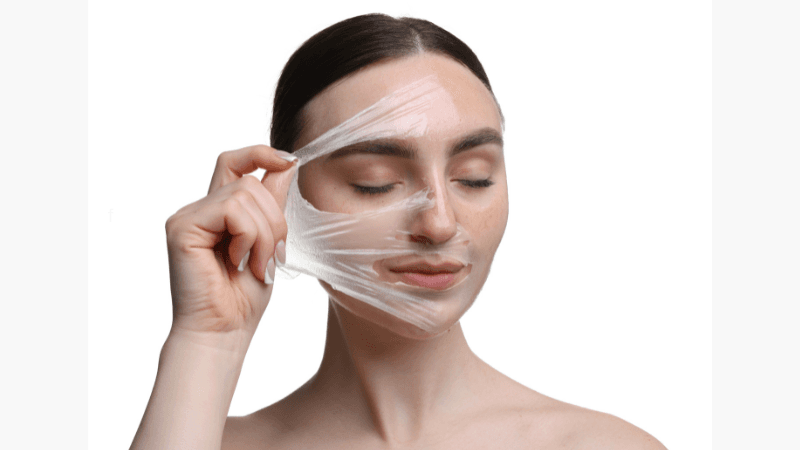
Why does my facial skin peel even with skincare and what can I do about it?
My skin feels tight after washing, and small flakes appear on my cheeks and around my nose, and my foundation accentuates each flake. If you're wondering why your facial skin is peeling , even though your cream is sitting on the shelf and working every day, it's most often due to a damaged protective barrier that's no longer retaining water. Below, we'll explore peeling facial skin: its causes, your likely scenario, and a plan of action. And if you'd like to see a specialist, you can browse available cosmetologists and compare their services at https://alvibeauty.com/ru-ua/salons/cherkasy/cosmetology on AlviBeauty.
Why is facial skin dry and flaky: What's happening to the protective barrier?
The top layer of skin is called the stratum corneum. Think of it like a brick wall: the cells are the bricks, and the lipids between them are the mortar. This mortar is the lipid barrier. Inside the bricks is the natural moisturizing factor, the substances that hold water in the skin.
When the solution is washed away, water escapes through the skin faster. Doctors call this transepidermal water loss. Cells dry out, shed unevenly, and become visible. This is what the signs of peeling skin on the face look like: flakes, roughness, and tightness after washing. Therefore, in short, the answer to why facial skin is dry and flaky is almost always the same: a breakdown of the skin's protective barrier.
Dry or dehydrated skin: how to tell the difference
These terms are often confused, although they require slightly different care. Dry skin is most often a skin type: the sebaceous glands produce little sebum, pores are barely visible, and dryness is present year-round. Dehydrated skin is a condition. It lacks water, and it affects any skin type, even oily skin with shine in the T-zone.
A simple guide: if your face is shiny by lunchtime, but your cheeks are tight and flaky, your skin is likely dehydrated. Dryness and roughness, regardless of season, are consistent with dry skin. Understanding the difference between dry and dehydrated skin is also helpful for prognosis: dehydration usually goes away when the underlying cause is removed.
Dry facial skin: reasons why it starts to peel
Dry facial skin: the causes of flaking are often external and easy to overlook. Flaking skin is a common occurrence in winter. It's cold and windy outside, and the air inside is dry during the heating season. The skin loses water all day and doesn't have time to replenish it.
Another common cause is washing with hot water. While this feels good in winter, hot water dissolves lipids faster than warm water. Some people also find chlorinated water irritating: after a swim, their face feels tighter than usual.
There are also things we have less control over. As we age, our sebum production decreases. Hormonal changes and certain medications can affect the skin. If dryness occurs along with other changes in your health, discuss it with your doctor.
Why does skin peel even with regular care?
The worst-case scenario: you're trying your best, but your skin is peeling. If you're unsure why your facial skin has become dry when it was fine before, take a look at your skincare regimen. Often, your skincare routine itself can hinder your skin's ability to recover.
The prime suspect is aggressive cleansing. A gel that leaves your face feeling squeaky clean removes some of the lipids along with your makeup. Creams patch up the wall, and in the morning, you blur it all over again. This is why your skin feels dry even after moisturizing.
The second is excessive exfoliation. Acid peels every other day, retinoids every night, enzyme powder "for smoothness," and then a scrub. Individually, each product can be good. Together, they remove the stratum corneum faster than it renews itself. Peeling after acids and peeling after retinol are especially common in the first few weeks if you start with a high frequency right away.
The third is a new product. If flakes appear a few days after using a new serum or cream, the reaction could be caused by the fragrance or another ingredient. And then the trap kicks in: you'll want to scrub off the flakes with another scrub, and the cycle continues.
How to understand the cause: when it started, where it peels, and what else bothers you
A specialist will determine the exact cause, but home observation will greatly narrow the search. Consider what has changed over the past two or three weeks and compare the following scenarios:
- Peeling started after trying a new product or active ingredients. Most likely, your skin is overloaded or reacting to an ingredient.
- It got worse with the cold weather and the heating. It looks like seasonal dryness: the skin lacks moisture and protection.
- Severe tightness after washing, and an hour later, your cheeks are peeling. The first solution is cleanser and hot water.
- Flaking skin around the nose and eyebrows, with yellowish or greasy flakes and redness nearby. This could be a sign of seborrheic dermatitis, which is a reason to see a dermatologist.
- Redness and peeling of the skin on the face with itching or burning after using a specific product. Contact dermatitis is possible, and this should also be addressed by a doctor.
If none of the scenarios work, that's also a hint: most likely, a single change of care won't be enough.
What to do if your face is peeling
If your facial skin is peeling, what to do in the first few days depends on the cause, but the starting plan is almost the same for everyone. The goal is to give your skin some rest and restore its moisture. Here's how to treat peeling skin at home if there are no signs to see a doctor:
- Put acids, retinoids, scrubs and enzymes on hold until your skin has calmed down.
- Wash your face with warm water and a gentle cleanser that doesn't leave you feeling irritated. In the morning, just water is often enough.
- Apply the cream to slightly damp skin. Look for ingredients such as ceramides, glycerin, and panthenol, which help restore the skin's protective barrier.
- Use an SPF sunscreen during the day. If it stings, choose a formula for sensitive skin.
- During the heating season, turn on a humidifier, especially in the bedroom.
If your facial skin is very dry and flaky, the plan is the same, just use a thicker cream. This is the most reliable answer to the question of how to get rid of flaky facial skin : remove what's damaging the barrier and help it restore itself. With this care, rough facial skin usually becomes softer within a few weeks.
What not to do if your skin is peeling
Don't pick at the scales or try to remove them with a scrub or brush, as this can easily cause microcracks and redness. Don't change your serums every couple of days, otherwise you won't know what's working. It's best to avoid saunas and steam baths during the recovery period.
How to restore acids and retinol to prevent peeling
There's no need to give up active ingredients forever. It's best to reintroduce them when your skin is calm: no tightness, flaking, or burning sensation for at least a week or two.
Start with one product, two evenings a week. If your skin feels calm after two weeks, add another evening. Introduce the second active ingredient once your skin has become accustomed to the first, and not on the same evening. Many people find it helpful to apply the retinoid after the cream, as it's more gentle on the skin.
If your doctor prescribed a retinoid or acid, don't stop taking it yourself. Tell your doctor about the peeling. They'll be able to advise you on how to adjust your regimen.
When do you need a cosmetologist and when do you need a dermatologist?
A cosmetologist can be helpful if you're confused about your skincare routine. They can examine your skin, help you revise your at-home regimen, and advise you on whether treatments are necessary. On AlviBeauty, you can find cosmetologists in Cherkasy and compare their offerings.
When to see a dermatologist: peeling persists for more than 3-4 weeks despite careful skin care; the spots are growing, intensely itchy, oozing, crusting, or cracking; or peeling recurrs in the same areas. A dermatologist will be able to differentiate irritation from dermatitis and other conditions and prescribe treatment if necessary. Swelling of the lips or eyelids and difficulty breathing are reasons to seek immediate emergency care.
Frequently Asked Questions
What does the body lack if the skin on the face peels?
Sometimes a vitamin or fatty acid deficiency is the cause, but this isn't the most common cause. Taking vitamins "just in case" isn't a good idea: some vitamins are harmful in excess. If you suspect a deficiency, your doctor will recommend tests.
Is it possible to quickly get rid of peeling skin on the face?
The barrier won't be restored overnight. But flakes will noticeably diminish within a few days if you remove active ingredients, wash your face gently, and apply a thick cream to damp skin.
Will drinking more water help if my skin is dry and flaky?
Drinking too little can be harmful to your skin. However, drinking extra glasses of water won't restore the damaged barrier: lipids and natural moisturizing factors (NMFs) retain water in the skin, and these are supported by skincare.
Can I wear makeup if my face is peeling?
Yes, you can. Choose creamy textures, apply them over your moisturizer, and temporarily remove the mattifying powder. In the evening, remove your makeup with a gentle, non-scrubbing cleanser.
Do you need sunscreen if your skin is peeling?
Essential: UV rays increase irritation and slow down recovery. If your regular SPF stings, choose a formula for sensitive skin.
How long does it take for skin to recover?
A guideline is several weeks of gentle care. If there's no improvement within 3-4 weeks, consult a specialist.
What does xerosis look like on the face and how does it differ from normal dryness?
Xerosis is the medical term for dry skin. It appears as roughness, fine flakes, and tightness, sometimes with cracks. If the dryness is severe, persistent, or accompanied by itching, consult a dermatologist.
Why does my face look tired even after sleep?
The night was normal; the alarm didn't ring every two hours, but the mirror still reveals heavy eyelids, dull skin, and a face that looks groggy. If you're trying to figure out why your face looks tired, don't blame sleep alone. Skin condition, puffiness, skincare, stress, and soft tissue changes all affect your appearance. If you'd like to discuss your skin condition with a specialist, you can explore cosmetology services in Cherkasy at https://alvibeauty.com/ruru/salons/cherkasy/cosmetology .
Tired Face: What Signs Create a Tired Look?
We perceive the face as a whole. Sometimes, a little puffiness of the eyelids and a dull complexion are enough to make it seem like you barely slept.
Most often, a tired appearance consists of several details:
- swelling and less defined oval in the morning;
- dull or uneven tone, dryness and fine mesh from dehydration;
- wrinkles after sleep, more pronounced nasolacrimal groove, drooping corners of the lips or a feeling of a “heavy” face.
Therefore, the question "What causes a tired face?" rarely has a single answer. Two women may look equally sleep-deprived, even though one's main problem is morning puffiness, while the other's skin remains dehydrated and dull all day.
Why does my face look tired even after a good night's sleep?
Eight hours of sleep does not cancel out everything that happens to the skin and body during the day.
When the protective barrier is compromised, skin is less able to retain water. It can appear drier, rougher, and less radiant. Dehydration isn't limited to dry skin: a feeling of tightness is sometimes combined with an oily sheen.
Another scenario is puffiness. Soft tissues may appear more swollen in the morning, especially around the eyes. The severity is influenced by individual characteristics, sleeping position, and evening habits.
Stress also affects our faces. We frown more often, clench our jaws, sleep less well, and are less aware of changes in our home care routine. By evening, tense facial expressions and decreased energy can make our features appear heavier.
Age-related changes also play a role. The term "tired aging type" is used for a face that appears fresher in the morning, but by evening, wrinkles, shadows, and loss of tone become more pronounced. However, one shouldn't define one's morphotype based solely on one characteristic.
How to understand the reason for a tired appearance by when it appears
Why does my face look tired after sleep?
If your face looks tired after sleep —specifically, in the first few hours after waking up—check to see if the situation improves by lunchtime. Quickly subsiding puffiness, pillowcase marks, and heavy eyelids are more consistent with a morning routine than with ongoing skin changes.
The tired look lasts all day
When your face remains dull morning, afternoon, and evening, sleep alone is no longer sufficient. Moisturizing, the protective barrier, aggressive cleansing, and excessive use of acids or other active ingredients should be assessed.
By evening, the face looks noticeably tired.
If you like your reflection in the morning, but in the evening, nasolabial folds, the nasal groove, and a loss of definition are more noticeable, the cause may be soft tissue issues, facial tension, and age-related changes. In this case, it's more beneficial to discuss your skin condition with a specialist than to randomly purchase another mask.
What habits and skincare mistakes make your face look tired?
Sometimes new cosmetics don't solve the problem because your skin's routine itself interferes. Squeaky-cleansing, using multiple active products at once, insufficient moisturizing, and inconsistent SPF can make dryness, irritation, and uneven texture more noticeable.
That said, there's no need to turn your skincare routine into ten stages. More jars doesn't necessarily mean better results. A clear foundation and gradual addition of active ingredients tailored to a specific goal are often more beneficial.
How to remove a tired-looking face at home
If the changes have recently appeared and there's no noticeable, persistent puffiness, it's more logical to start with simple steps. A search for how to eliminate a tired-looking face doesn't require buying half a cosmetics store.
- In the morning, do not rub or stretch the skin; if swelling occurs, you can try a cool compress and very gentle movements without strong pressure;
- maintain gentle cleansing, appropriate moisturizing and SPF, and gradually introduce new acids, retinoids and other active ingredients;
- For a few days, observe when your face looks worse: immediately after sleep, constantly, or until the evening.
The last observation is often more useful than another “express mask”.
What to do if your face constantly looks tired
If what to do if your face looks tired is no longer a morning question but a constant problem, the next step is to understand what exactly is causing this effect. A cosmetologist can assess your skin's condition, hydration level, tone, and the severity of age-related changes. After that, they can discuss skincare routines or procedures, rather than choosing them based on popularity on social media.
There are hardware, laser, and injection methods, but presenting them as a one-size-fits-all solution is misleading. Each condition, whether it's swelling, dehydration, or decreased tone, has different goals, so the approach varies.
When a tired-looking face may not be a cosmetic problem
If swelling appears suddenly, becomes severe, persists for a long time, or is accompanied by other changes in your health, it's best to consult a doctor rather than a cosmetic procedure. Cosmetic treatments are not intended to identify the causes of systemic swelling.
The same applies to situations where the skin's condition changes abruptly without a clear reason. It's more important to understand what's going on than to quickly conceal it with makeup or active skincare.
Frequently Asked Questions
How can I stop looking tired if I sleep well?
Don't just look at how long you sleep. Notice when you start to look tired, whether you have puffiness, dryness, or irritation, and whether your face changes throughout the day.
Can dehydrated skin make your face look tired?
Dehydration can make fine lines and texture more visible, making the skin's surface less smooth and radiant. Oily skin can also be dehydrated.
Why does my face look worse in the morning?
After sleep, some people experience more noticeable swelling and creases from the pressure of the pillow. If these gradually subside, this is different from a persistent tired appearance.
Does a tired face mean a tired type of aging?
No. A dull tone or puffiness alone is not enough to determine a morphotype. A tired appearance may be temporary.
Will facial massage help?
Gentle movements can temporarily reduce morning swelling in some people. Strong pressure and aggressive self-massage are not necessary.
When should you see a cosmetologist?
If basic skincare is in place and sleep is good, but dullness, dryness, puffiness, or loss of tone persists, a consultation can help determine which approach is appropriate.

Is it possible to do peeling if you have rosacea?
I want to get a peel for smooth skin and a more even tone, but I'm already seeing small veins near my nose, and my cheeks sometimes turn red even after washing my face. In this situation, the question of whether peeling is possible for rosacea is quite logical.
There's no universal "yes" or "no" answer here. What matters is what's happening with your skin right now: are there just a few noticeable blood vessels, or is your face constantly red, sensitive, itchy, and reactive to almost any active cosmetic product.
Cosmetology services in Rivne are collected at the link https://alvibeauty.com/ru-ua/salons/rivne/cosmetology .
The key is not to choose a peel based solely on the acid's name. First, understand your skin's condition and the purpose of the procedure.
Why skin with rosacea may react more strongly to peeling
Peeling removes some of the surface skin cells. After the procedure, your skin may feel redder, drier, or more sensitive for a short time.
If your face already easily reddens and reacts with a burning sensation to your usual products before the peel, additional irritation may be felt more strongly.
Therefore, peeling for rosacea should be considered not separately from the skin condition, but together with it.
A single thin vein near the nose and constantly irritated red cheeks are two completely different situations. In the latter case, it's more important to first understand why the skin is reacting this way.
Couperose and rosacea: why it's important to peel beforehand
The question of whether acids can be used for rosacea is best broken down into several more precise questions: what kind of acid, what concentration, how often it is used, and how the skin is already reacting.
Spider veins are often called rosacea. However, visible veins can also occur in rosacea.
In addition to vascular markings, rosacea can cause persistent redness, flushing, burning, sensitivity, and inflammation. This type of skin often doesn't tolerate active exfoliation well. Dermatological recommendations for rosacea typically emphasize the gentlest possible skin care and avoiding irritating products.
Therefore, if your skin not only has a few blood vessels, but also regularly burns, turns red, or becomes inflamed, you should not experiment with strong peels on your own.
Which acids require caution when treating rosacea?
The word "acid" by itself tells you almost nothing about how gentle a product will be.
The concentration, formula, exposure time, frequency of application and the condition of the skin are important.
For example, glycolic and lactic acids can irritate skin with rosacea, so they are included in recommendations for this type of skin as ingredients to be careful with.
This doesn't mean that any acid is automatically prohibited for everyone with spider veins. But buying a product just because it's labeled "for sensitive skin" isn't enough.
What kind of peeling can be used for rosacea?
What peeling is suitable for rosacea ? It's not just a question of the acid's name.
People often want to find a single, "gentlest" peel. But there's no such universal option.
Two different skin types can tolerate the same composition completely differently.
Before the procedure, it is worth considering:
- Is there any significant redness, burning, flaking or inflammation now?
- how the skin reacted to acids before;
- is there only spider veins or signs of possible rosacea;
- What problem should peeling solve?
Sometimes it's best to soothe your skin and restore your usual skincare routine before discussing exfoliation.
When is it better to postpone peeling?
If your skin is already burning, stinging, flaking, or looks noticeably irritated on the day of the procedure, there is no need to add another active treatment.
The same applies to the situation when the redness has suddenly increased without any clear reason.
With rosacea, exfoliating treatments can cause additional redness and irritation, so the need for chemical peels is best discussed separately.
It's also wise to postpone the experiment if you don't yet understand why your face is constantly red. It's more helpful to first understand the cause than to try to cover up the symptom with a new procedure.
Homemade acids and professional peels are two different things.
Homemade serum seems more harmless only because it sits on the shelf in the bathroom.
But if you use the acid too often, combine several active ingredients, or continue to apply the product despite the burning sensation, the skin can also become irritated.
Professional peels usually offer a more controlled effect, but they are not automatically suitable for sensitive skin.
Therefore, acids for rosacea should not be divided into “safe for home use” and “dangerous for professional use”.
What is more important is the reaction of the specific skin.
If after using the product your face becomes noticeably redder and stings unpleasantly every time, you don’t need to endure this for the sake of the expected result.
Can peeling remove spider veins?
If the goal of the procedure is to remove visible red veins, peeling may not be the right method at all.
It works primarily on the skin's surface. The already dilated vessel has a different "task."
Therefore, it is worth separating two desires in advance: you want to make your skin smoother or you want to remove vascular patterns.
It seems like a small thing, but this is where disappointment often arises: the procedure may have accomplished its purpose, but it was simply expected to have a different effect.
What to do if your skin turns red after using acids
The first instinct is to apply something else to calm the face faster. But when irritation occurs, unnecessary products can only confuse the situation.
For now, it's best to return to a simple skincare routine: gentle cleansing, regular moisturizing, and sun protection. It's a good idea to temporarily remove any product that causes a noticeable burning sensation or persistent redness.
For skin with rosacea, gentle cleansing, moisturizing, and avoiding friction and exfoliation if it causes irritation are recommended.
If the reaction is severe, does not go away for a long time, or swelling, pain, crusting, or other unusual symptoms appear, it is best to consult a doctor.
Frequently Asked Questions
Is it possible to do a chemical peel if you have rosacea?
This is sometimes possible if the skin is calm and there is no significant irritation. However, if there is persistent redness, burning, or rosacea, it's best to make a decision after assessing the skin's condition.
Is it possible to use acids at home for rosacea?
This may not be appropriate in all cases. If the product causes persistent burning, severe redness, or peeling, do not continue using it without examining the cause.
Which acid is best for rosacea?
There's no one-size-fits-all acid. Tolerance depends on the product's composition, concentration, and skin condition.
Is it possible to do peeling if you have rosacea?
Rosacea often causes easily irritated skin. Especially during flare-ups, vigorous exfoliation can worsen redness, so it's best not to self-treat with such treatments.
Will peeling remove spider veins?
Peeling is not intended to remove existing dilated superficial blood vessels. It has other purposes.
Why can the face become redder after acids?
The acid can cause irritation, which can make redness more noticeable. This is especially true for reactive skin.

Rosacea on the face: what to do and how to remove spider veins
First, a single thin red thread appears near your nose. Then it seems like there are more of them on your cheek. And then you're examining your face in bright light and wondering: should I buy a new cream, wait, or see a specialist?
Available cosmetology services in Rivne can be found at https://alvibeauty.com/ru-ua/salons/rivne/cosmetology .
It's best not to rush into a treatment. The word "couperose" is often used to describe anything red and vascular on the face: a single, noticeable capillary thread, a network of veins, or persistent redness of the cheeks. But the causes and approaches in these cases can vary. And sometimes, the persistent redness masks more than just an aesthetic issue, but rosacea.
So first, let's figure out what exactly you see in the mirror and what you can expect from home care in general.
Spider veins on the face: what exactly are you seeing?
Thin red or purple lines that are constantly visible through the skin are called telangiectasias. These are dilated superficial vessels. On the face, they can appear as individual threads, small "stars," or a complete network.
However, any redness doesn't necessarily mean the vessel is permanently dilated. The face can also turn red after cold, heat, exercise, or a bad cosmetic product. After a while, the color returns to normal.
Another situation is when the red line remains in one place and is clearly visible even when the skin is calm.
Therefore, the question of how to remove spider veins on the face is best started not by choosing a laser or cream, but by understanding what exactly you want to remove.
Why do blood vessels on the face become visible?
There is no single reason that explains all cases.
The skin's condition and the severity of redness can be affected by sun exposure, sudden temperature changes, irritating skin care products, and an individual's tendency to make blood vessels visible. Rosacea has its own set of triggers, and these vary from person to person.
This doesn't mean that every red spot appeared due to a hot shower or a glass of wine. That's why long lists of "causes of rosacea" online sometimes only add to the confusion.
It's more useful to look at the situation as a whole:
- the vessel remains visible constantly or redness appears only from time to time;
- In addition to the blood vessels, is there a burning sensation, severe sensitivity, rashes, persistent redness of the central part of the face, or discomfort in the eyes;
- does the face become noticeably redder after sun, heat, cold, or certain treatments;
- one or two vascular threads have appeared or a large area of skin is gradually changing.
These observations don't replace a diagnosis. However, they help the specialist more accurately explain what exactly has changed.
What can you do at home for rosacea?
Home care is necessary, but it has its limits.
If your skin easily reddens, stings after washing, and doesn't tolerate active cosmetics well, it's best to start with a gentle skincare routine. Gentle cleansing, proper moisturizing, and sun protection can reduce irritation and help the skin barrier function better.
Less really is sometimes more. Five active serums aren't necessarily more beneficial than one product your skin tolerates well.
What skincare treatments help with redness?
Good basic care does not have to promise “vascular treatment.”
Its task is simpler: not to dry out the skin, not to increase irritation and to protect it from factors that make redness more noticeable.
If your face burns, stings, or turns bright red every time you apply a product, this is a bad sign, no matter how fashionable the product is listed on the packaging.
What is best not to do if you have visible blood vessels?
When skin is already irritated, trying to "clean it harder" often works against you.
Harsh scrubs, intense friction, frequent use of acids, and other irritating treatments can increase sensitivity. This is especially important if the veins are accompanied by persistent redness or a burning sensation.
Is it possible to remove spider veins that have already appeared?
This is where the important line between care and correction of the vessel itself lies.
Cream can make skin less dry, calmer, and more comfortable. But if a capillary is already dilated and clearly visible through the skin, cosmetics usually don't make it simply disappear.
Therefore, when a person asks how to remove rosacea on the face , it is first worth clarifying what exactly they mean by rosacea.
If we're talking about visible superficial vessels, the specialist can discuss hardware-based techniques that specifically target the vascular target. The choice of technology depends on the type of vessel, the area being treated, skin color, and other factors.
When discussing laser and other hardware correction
The hardware procedure is considered when the main complaint is already noticeable vessels that do not disappear on their own.
The device, however, addresses a specific issue: it targets a visible vessel. It doesn't eliminate the skin's tendency to redden and doesn't guarantee that new vessels won't appear nearby in the future.
Therefore, the promise to “remove rosacea forever in one procedure” should raise questions.
It is much more honest to discuss which manifestations can be reduced, what results can be expected, and whether other care or a consultation with a dermatologist is necessary at the same time.
Couperose or rosacea: why it's important not to confuse them
The search for "couperose" or "rosacea" isn't random. Some symptoms can actually look similar.
In cosmetology, the word "couperose" often refers to noticeable dilated blood vessels and a vascular network.
Rosacea is a chronic skin condition. In addition to visible blood vessels, it can cause persistent redness of the central part of the face, recurring flushes, a sensation of heat or burning, and inflammatory lesions. Some people also experience eye symptoms.
Therefore, one red vascular thread on the side of the nose and constantly red, sensitive cheeks with rashes are not the same situations.
You shouldn't try to diagnose yourself based on photographs.
When is it best to see a dermatologist about spider veins?
If you are only bothered by one or two visible spider veins, the issue may remain primarily aesthetic.
But there are situations when it makes more sense to first understand the condition of the skin.
For example, if the redness has become constant, the area of redness increases, the skin regularly burns or stings, inflammatory elements or eye irritation appear.
In this case, the task is broader than simply removing a visible vessel.
Therefore, the phrase "treating rosacea" should be used with caution. Sometimes, a person truly only needs cosmetic correction of spider veins. In other situations, a diagnosis of the skin condition is required first, and then treatment of specific symptoms can be considered.
How to reduce redness and avoid further skin irritation
There's no universal list of taboos for everyone. What causes a bright red flush in one woman might go completely unnoticed by another.
Therefore, it is more useful not to exclude everything from your life, but to see what exactly makes your skin change.
You can start with a few simple habits:
- protect exposed areas of skin from the active sun every day;
- choose a treatment that does not leave behind any noticeable burning or irritation;
- do not rub your face with a towel, scrubs or hard brushes;
- If redness recurs, note possible triggers and discuss them with a specialist.
This way, care turns from a struggle with every red spot into a clear system.
Frequently asked questions about rosacea and spider veins
Is it possible to completely remove spider veins on the face?
Individual, noticeable vessels can be reduced or removed with the appropriate procedure. However, the tendency for new vessels to appear may persist, so promising "permanent" results is too categorical.
Does rosacea cream help remove already visible veins?
The cream can support the skin's protective barrier and reduce dryness and irritation. Once a vessel is dilated and persistently visible, routine skin care typically won't remove it.
How is couperose different from rosacea?
Couperose is most often understood as a noticeable vascular pattern. Rosacea is a chronic skin condition that can be accompanied by persistent redness, flushing, visible vessels, inflammation, burning, and other symptoms.
Is it possible to remove rosacea at home?
Home care can help reduce skin irritation and can reduce the appearance of temporary redness. However, visible dilated blood vessels usually require a different approach.
What should you not do if you have visible blood vessels on your face?
Avoid vigorously rubbing your skin or constantly using products that cause burning, dryness, or severe redness. Sensitive and reactive skin should be treated with particular care.
When should you see a dermatologist if your skin is red?
If the redness becomes persistent, is accompanied by a burning sensation, inflammation, severe sensitivity, or discomfort in the eyes, it is best to seek medical attention.
Can spider veins come back after removal?
The treated vessel may disappear, but this does not preclude the appearance of new vessels in other areas. Therefore, it is important to consider not only the already visible vein but also the overall condition of the skin.

How to remove dark circles and under-eye bags
The night passed peacefully, I got enough sleep, but I still look tired in the mirror. Sound familiar? Before looking for ways to remove dark circles under my eyes , it's worth understanding what exactly is causing the darkening. A cosmetologist can determine this for sure on the website https://alvibeauty.com/ru-ua/salons/rivne/cosmetology , but the first clues can also be found in the mirror at home.
Dark circles come in different forms. For some, it's a brown pigment, for others, it's visible blood vessels, and for others, it's a shadow cast by the structure of the face. Therefore, there 's no one-size-fits-all answer to how to remove dark circles under the eyes. The cream that worked for a friend might not work for you.
Let me clarify right away: I'm not talking about bruises under the eyes from a blow. A bruise after an injury heals at its own pace. If your eye hurts or your vision gets worse, you should see a doctor.
What Color Are Your Circles: How to Determine Your Home Type
Types of dark circles under the eyes are distinguished by their color and how they react to light. Stand by a window during the day, without makeup. Look straight ahead, then turn your head slightly. Then gently pull the skin under your eye toward your temple, without applying pressure.
This test suggests a direction, but it doesn't lead to a diagnosis. Often, the types are mixed: for example, thin skin with a small amount of pigment. Then, two causes must be addressed simultaneously.
Brown circles: excess pigment
A brownish tint that barely changes when you pull on your skin is most often caused by melanin. This is the pigment that colors the skin. It accumulates in excess due to sun exposure, eye rubbing, and genetics. Brown circles around the eyes are more common in people with darker skin.
Bluish circles: vessels are visible
A blue or purple tint is caused by thin skin, through which blood vessels are visible. If you gently tug on the skin, the blueness can become even more noticeable. After a sleepless night, microcirculation slows, making the blood vessels more visible. This is the reason for the purple circles under the eyes the morning after a party or a deadline.
Under-eye shadows: a matter of structure
Shine a flashlight from your phone on the front, slightly below. If the dark line has almost disappeared, it's most likely a shadow. It's caused by the depression under the lower eyelid. It can be congenital or deepen with age as volume decreases. This type of structural dark circle is often called black under-eye circles, although there may be no pigment there at all.
Swelling: circles that change throughout the day
Are the under-eye areas darker in the morning and lighter by evening? It looks like puffiness. The swelling casts a shadow, making the area appear dark. Lymphatic drainage slows at night, and a salty dinner, tears, and allergies can cause further fluid retention.
Dark Circles Under the Eyes: Causes Other Than Lack of Sleep
Lack of sleep is rarely the primary cause. Rather, it accentuates what's already there: skin becomes paler, and blood vessels become more visible. That's why dark circles under the eyes often persist, even after a full week of sleep.
When trying to figure out why dark circles appear under the eyes , heredity is the most common factor. Thin skin and deep-set eyes run in families. Another common culprit is ultraviolet radiation: it increases melanin production, causing the pigmentation under the eyes to darken. With age, collagen levels decrease, the skin becomes thinner, and the under-eye circles become deeper.
A special word about friction. Allergies can cause itchy, rubbing eyes, and the constant rubbing can darken the skin. Smoking, not drinking enough water, and spending long hours staring at a screen can make your skin duller, making dark circles more noticeable.
Sometimes, dark circles can be a sign of health. Iron deficiency causes the skin to become pale, and the blood vessels under the eyes become more visible. This can be diagnosed with a blood test prescribed by a doctor. This can't be determined by the color of the circles.
Dark circles under the eyes: what to do for each type
A common question is: what to do about dark circles under your eyes ? First, understand your type, then choose a product. Otherwise, it's easy to waste money on a cream that doesn't do the trick.
What you can do at home: cream, patches, SPF
Home care makes dark circles less noticeable. Home care won't change your facial structure. It's better to know this beforehand. When choosing a cream for dark circles under the eyes, look at the ingredients, not the claims on the packaging.
- For dark circles, you need SPF every day, even in winter, and a cream with vitamin C, niacinamide, or retinoids. Lightening takes months; a week won't do wonders.
- Caffeine cream and a cold compress in the morning can help with bluish circles. Caffeine temporarily constricts blood vessels. Retinoids, when used long-term, can make the skin tighter; it's best to apply them gradually.
- Cream is almost useless against shadows. Concealer, proper lighting, and treatments are key here.
- For swelling, use less salt in the evening, raise your pillow slightly, and apply a cold compress for 5–10 minutes.
Dark circle patches for under-eye circles refresh with cooling and hydrating properties. They're a good pre-meeting treatment, but they don't really change the color of under-eye circles long-term. If you're wondering how to brighten the skin around your eyes, start with SPF: without it, any brightening product is only half-effective.
So, the honest answer to how to remove dark circles under the eyes at home is this: You can lighten them, but you usually can't completely erase them.
What can a cosmetologist offer?
When home care isn't enough and the question of how to get rid of dark circles under the eyes remains, it's time to see a specialist. A cosmetologist first determines your skin type, and then the choice depends on that.
For pigmentation, peels or lasers are usually considered. For thin skin, procedures that moisturize and plump it, such as biorevitalization, are suitable. For deep depressions, fillers are sometimes recommended; they are administered by a qualified physician. Treatments for dark circles under the eyes are selected only after a medical examination. The number of sessions needed and the intervals are also determined by the specialist; these figures vary widely across websites.
How to conceal dark circles under your eyes in 5 minutes
While skincare is working, makeup comes to the rescue. The rule is simple: first tone down the color, then even out the tone.
A peach-toned corrector neutralizes blue tones. It also covers brown tones, and a richer apricot shade works better on darker skin. Apply a thin layer of skin-toned concealer on top. A concealer that's too light will highlight the circle instead of hiding it.
It's a different story with shadows. A thick foundation will only deepen the depression, so choose a light, reflective texture. And if you're still swollen in the morning, apply a cold compress for a couple of minutes first, then apply makeup.
Is it possible to get rid of dark circles under the eyes completely?
It depends on the type. Dark circles under the eyes from lack of sleep and puffiness go away when you change your routine. The pigment can be noticeably lightened, but without SPF, it returns.
Hereditary dark circles and shadows are more difficult. While they can be made less noticeable, they're rarely completely eliminated. It's helpful to know this before buying an expensive cream.
Dark circles under the eyes: a sign of what disease and when to see a doctor
Most often, circles indicate heredity, skin, and lifestyle. Color alone does not indicate a disease of a specific organ. Only a doctor can make such a conclusion after an examination.
When should you see a doctor about dark circles under your eyes? If at least one of the following applies:
- the circles appeared suddenly and persist, although the regime did not change;
- only one eye has darkened or the darkening is rapidly increasing;
- there is constant weakness, pallor or shortness of breath;
- in the morning, the eyelids swell along with the face or legs;
- eyes itch and water, and dark circles return every season;
- The bruise appeared after a blow, and the eye hurts or vision deteriorates.
You can start with a general practitioner or dermatologist; they'll recommend tests. If your child has rings, it's best to see a pediatrician.
Frequently Asked Questions About Dark Circles Under Eyes
Is it possible to understand what the circles are caused by their color?
Only the type: pigment, vessels, shadow, or swelling. The disease can't be determined by color; a doctor and tests are needed for that.
What is missing in the body if there are dark circles under the eyes?
Sometimes dark circles are more noticeable due to iron deficiency, but more often it's due to heredity and thin skin. Taking vitamins at random isn't recommended: get a blood test first, then consult your doctor.
Are dark circles under the eyes dangerous?
Usually no, it's a cosmetic issue. Dark circles that appear suddenly, on one side, or along with weakness and swelling should be cause for concern.
Do eye patches help with dark circles?
The patches provide a refreshing effect for several hours thanks to their cooling and hydrating properties. While convenient for a special morning, they won't remove pigmentation or shadows.
What is the best injection under the eyes for dark circles?
There's no universal injection. The choice depends on the type of ringworm, and a specialist prescribes it after an examination.
Why don't dark circles under my eyes go away even if I get enough sleep?
Sleep only relieves fatigue. Heredity, pigmentation, and facial structure are not affected by sleep.
How to quickly remove dark circles under the eyes before leaving the house?
Apply a cold compress for a couple of minutes, then apply a peach corrector and a thin layer of concealer. The whole process should take about five minutes.
What can I do to prevent dark circles under my eyes?
Apply SPF daily, wear sunglasses, and avoid rubbing your eyes. Eating less salt in the evening will also help. This won't eliminate hereditary dark circles, but it will also prevent them from getting worse.

How to remove post-acne and acne scars
The pimple has long since disappeared, but a mark remains. Sometimes it's a red or brown spot. Sometimes it's a small pit, especially noticeable in sidelight. If you want to understand how to remove post-acne , you first need to figure out what exactly has changed: your skin color or its texture.
This is important because a spot and a scar require different approaches. If you'd like to discuss your skin condition with a specialist, you can find cosmetologists in Rivne on AlviBeauty. Next, we'll explore which marks can become less noticeable on their own and when it's time to consider treatments.
Spot or scar: how to tell if a pimple has left a mark
Examine the skin in normal daylight. If the surface remains smooth and the area is only a different color, it may be a post-inflammatory scar. It can be red, pink, or brownish.
If the skin becomes uneven, a pit, depression, or raised area appears, it may be a scar.
For the first guideline, you can look at two signs:
- the color has changed, but the skin surface remains smooth;
- the relief itself changed: a depression or protruding area appeared.
This isn't a way to self-diagnose. A single area can contain both a spot and a scar. But this simple distinction helps explain why a pigmentation lightening treatment doesn't do anything to the pit.
For the same reason, there is no one-size-fits-all answer to the question of how to get rid of post-acne .
Why does acne leave marks and scars?
For those looking to get rid of acne scars , it's helpful to first determine the nature of the scar. A spot may gradually lighten, while a formed scar behaves differently.
After inflammation, the skin needs time to recover. Some people experience prolonged redness at the pimple site. In other cases, the area becomes darker due to changes in pigmentation.
With scars, things happen deeper. If inflammation has affected deeper layers of the skin, collagen production may be altered during healing. This can cause the surface to become uneven.
The risk of visible scars is higher after deep and painful inflammation. Squeezing pimples and constantly traumatizing the skin also interfere with normal healing.
What post-acne marks can go away on their own?
Some red and pigmented spots do become less noticeable over time. For some, the changes fade more quickly, while for others, they persist for months.
This is influenced by the severity of the inflammation, skin characteristics, and sun exposure. Pigmented areas may become more noticeable after exposure to ultraviolet radiation, so sun protection is essential.
With scars, the expectations are different. A slight unevenness may appear softer over time, but a deep dimple usually doesn't disappear just because a few months have passed.
There's a simple guideline. If the predominant change is color and gradually lightens, you can observe the progression. If the skin's surface shape has changed, it's best to discuss this with a specialist.
What treatments help remove acne scars?
When trying to determine which post-acne treatment is right for you, the name of the method alone isn't enough. The type of acne scar, the condition of the skin, the presence of recent inflammation, and the tendency to pigmentation are all important factors.
First, you need to determine what kind of discoloration you're dealing with. A red mark from inflammation and brown pigmentation may appear similar, but the approaches to treating them differ.
Depending on the condition of the skin, the specialist may consider:
- chemical peels, certain light or laser techniques;
- home care with suitable active ingredients and daily sun protection.
More aggressive in this case doesn't necessarily mean better. Overly intense treatments on sensitive or pigmented skin can sometimes create new problems instead of solving them.
What treatments are used for acne scars?
If a pit remains after the inflammation, the problem is already related to the relief of the skin.
Scars also vary. Some appear as narrow, deep depressions, others are wider, and still others create a wavy surface. Raised scars also occur.
Therefore, the specialist looks not only at the presence of post-acne, but also at the shape, depth, and number of changes.
Microneedling, laser and radiofrequency techniques, peels, subcision, and, in some cases, fillers can be used for correction. Sometimes, a single method is insufficient, and the doctor combines several approaches.
If inflamed areas still appear regularly on your skin, it makes sense to address active acne first. Otherwise, you could be working on old scars and developing new ones at the same time.
Is it possible to completely remove post-acne?
It depends on what exactly is left behind after acne.
The spots may become noticeably lighter. Sometimes, over time, they become almost invisible.
With scars, the goal is usually different: to reduce the depth, make the edges less pronounced, and even out the overall texture of the skin. Complete disappearance of a deep scar cannot be promised.
Therefore, if you want to understand how to remove acne scars , it's better not to look for the "strongest treatment." It's much more important to determine the type of scar and understand what realistic results are for it.
This makes it easier to avoid inflated expectations and procedures that are initially unsuitable for a specific problem.
When should you see a dermatologist about post-acne?
If new breakouts continue to appear, it's important to first address the underlying acne. This is especially important when the pimples are deep, painful, or quickly lead to new scarring.
A consultation is also necessary when it is difficult to understand whether it is a stain or a change in relief.
Before the procedure, the specialist takes into account the condition of the skin, its sensitivity, phototype, and tendency to form pronounced scars or pigmentation.
Home care can help make some discoloration less noticeable. If a deep depression has already formed in the skin, cream or serum won't be able to physically even out the texture.
Frequently Asked Questions About Post-Acne
How are acne spots different from post-acne scars?
A spot primarily changes the skin's color. A scar changes its surface, creating a depression or raised area.
Can post-acne spots go away on their own?
Some spots gradually lighten. The time it takes depends on the type of change, skin characteristics, and sun exposure.
Is it possible to remove acne scars completely?
Deep scars may remain visible even after treatment. Correction is usually aimed at reducing their depth and smoothing the skin's texture.
Which procedure is best for post-acne?
There is no single best procedure. Different methods are used for different types of scars and spots.

Botox vs. Fillers: What's the Difference and Which to Choose?
Botox or fillers —the question usually sounds like this: "What should I inject to get rid of this wrinkle?" Both procedures are performed with a fine needle, and both target wrinkles. So, it's easy to lump them together.
Let me explain in simple terms the difference between Botox and filler , and why the same wrinkle may require different solutions. Ultimately, a cosmetologist decides which injection to use after examining your face in motion and at rest.
Why are Botox and fillers confused?
Both procedures promise smoothness, but they address different causes of wrinkles.
Imagine a tablecloth on a table. If you pull on the edge, creases appear. Remove your hand, and the creases disappear. That's Botox: it works on the muscle doing the pulling, the muscle itself. But if there's a gap under the tablecloth, the creases will remain no matter how you straighten them out. You need to put something underneath. That's filler: it adds volume.
The confusion stems from the names. Botox is a brand name for a single product, botulinum toxin type A, and is commonly used to refer to all botulinum therapy. Dysport, Xeomin, and others are drugs in the same group, but each has its own dosage units, and they cannot be calculated exactly the same. And "filler" refers to an entire category of fillers.
How does Botox work?
Botulinum toxin is injected into a specific muscle. It temporarily blocks the signal from the nerve to the muscle, causing it to contract less strongly. The skin overlying the muscle stops bunching up, and expression lines are smoothed out.
The effect doesn't appear immediately. The first changes are usually noticeable within a few days, and the full results are visible after about two weeks. Then, the effect gradually fades, and after a few months, the muscle functions as before.
Botox is most often used on the upper third of the face: the area between the eyebrows, the forehead, and the crow's feet. It is also used for excessive sweating. Botox does not add volume, and it can only soften deep wrinkles that are visible at rest.
How do fillers work?
A filler is a gel injected under the skin to restore or add volume. The most common ones are made with stabilized hyaluronic acid. Other bases are also available, such as calcium hydroxyapatite or polylactic acid.
The results of hyaluronic acid fillers are usually immediately visible, but swelling can distort them in the first few days. Fillers are used for the lips, nasolabial folds, cheekbones, chin, facial contours, and under-eye area. The gel gradually dissolves.
An important advantage of hyaluronic fillers: if you are not satisfied with the result or if a complication arises, the gel can be dissolved with a special enzyme – hyaluronidase.
Biorevitalization also involves injecting hyaluronic acid, but it's liquid and unstabilized. It moisturizes the skin but doesn't create volume.
The difference between Botox and fillers, point by point
If you boil down the main differences between Botox and fillers , it would be this:
- What's injected? Botox is a drug that relaxes muscles. Filler is a filling gel.
- What it works with: Botox reduces the cause of expression wrinkles, that is, muscle movement. Filler fills in lost volume and folds.
- What kind of wrinkles? Botox works best on those visible during facial expressions. Filler works best on those visible both at rest and in hollows.
- When the results are visible. After Botox, after a few days, and the final result is seen in about two weeks. After filler, immediately, allowing for swelling.
- Is it possible to reverse the procedure? Botox can't be reversed quickly; its effects wear off gradually. Hyaluronic acid filler can dissolve.
Timeframes vary widely on different websites: for Botox, they say three to nine months, for fillers, six months to two years. The actual timeframe depends on the product and the area.
Which is better: Botox or fillers for your problem?
Asking which is better, Botox or fillers , is like asking which is better, a comb or a hairdryer. They serve different purposes. A simple test in front of a mirror can help. Frown, raise your eyebrows, smile, and then relax your face. If the wrinkle only appears when you move, it's more likely Botox territory. If it's visible even at rest, it could be a filler or a combination. This test won't provide a diagnosis, but the question will become clearer during a consultation.
Landmarks for frequently asked questions:
- Wrinkles on the forehead and between the eyebrows, crow's feet - usually botulinum therapy.
- For lips that want volume or a defined contour, use filler. Botox doesn't add volume to lips.
- Nasolabial folds are often treated with filler, but first they find out where the fold came from.
- Cheekbones, chin, oval of the face - filler if the reason is volume.
- A deep wrinkle between the eyebrows, visible even at rest, is often a combination of Botox relaxing the muscle and filler filling in the remainder.
Age is secondary here. At 30, a wrinkle may be purely expression-related, while at 50, it may already combine movement and loss of volume.
Can Botox and fillers be combined?
Yes, Botox and fillers are often combined when they address different needs. For example, Botox for the forehead and filler for the lips. But the combination alone doesn't mean you need both procedures.
The order and interval are selected based on the drugs and areas; there is no single scheme for everyone.
Risks, contraindications, and when to see a doctor immediately
After both procedures, redness, swelling, bruising, and soreness at the injection sites are common. This usually resolves on its own. Botox can sometimes cause headaches, asymmetry, or drooping of the eyebrow or eyelid if the product has affected a nearby muscle. After filler, there may be some firmness and unevenness.
A rare but serious complication of fillers is gel blockage of a blood vessel. Severe pain, sudden paleness or bluish discoloration of the skin, or any deterioration in vision after the procedure are reasons to seek immediate medical attention, without waiting for a follow-up appointment. After Botox, if you experience weakness, difficulty swallowing, speaking, or breathing, you should see a doctor immediately.
Both procedures should be postponed if you are pregnant or breastfeeding, have inflammation or infection at the injection site, or are allergic to any of the ingredients. Be sure to discuss any neuromuscular conditions, bleeding tendencies, medications, and previous injections. Botox and fillers should be administered by a qualified physician.
Frequently Asked Questions About Botox and Fillers
What's better for nasolabial folds: Botox or filler?
Most often, filler: the nasolabial fold is usually related to tissue volume. But first, the cause is determined.
What's better for the area between the eyebrows: Botox or filler?
Botox is usually used because the wrinkle is created by muscle. If the wrinkle is deep and visible at rest, a small amount of filler is sometimes added.
How long does it take for the results of Botox to be visible?
The first changes are visible in a few days, the full result in about two weeks.
How long does the effect last?
Botox treatments typically last several months, while fillers take longer. The exact time frame depends on the product and the area being treated.
Is it possible to get Botox and filler on the same day?
Sometimes yes. The order and interval depend on the drugs and areas.

Laser hair removal vs. photoepilation: what's the difference?
Laser hair removal or photoepilation is a choice that nearly everyone tired of razors and waxing faces. Online articles contradict each other: one says photoepilation is painless, another says laser.
Let's calmly figure out the difference between laser hair removal and photoepilation , and what's the truth and what's hype. The device and settings are still selected by a specialist in Zaporizhzhia after examining your skin and hair.
Why are laser hair removal and photoepilation confused?
Because they operate on the same principle. A flash of light hits the skin, and the melanin in the hair absorbs the light and heats up. The heat travels down the hair shaft into the hair follicle, damaging it. This process is called selective photothermolysis: the light "selects" a dark target and heats it.
This explains the general principles of laser hair removal and photoepilation. Only hairs with pigment are affected, so dark hairs are more easily removed than light hairs. Only hairs that are currently in the active growth phase are affected. The rest are "dormant" and will awaken later. Therefore, both treatments are always performed in a series; one treatment is not enough.
What is the difference between light: one wavelength or a whole spectrum?
Here's the main difference between laser hair removal and photoepilation . A laser produces light of a single wavelength. It's narrow and focused, like a pointer beam, and its energy is almost entirely tailored to the task at hand.
Three lasers are most commonly used for hair removal. Alexandrite (755 nm) works well on dark hair on fair skin. Diode (approximately 800–810 nm) is the most common and versatile laser. Neodymium (Nd:YAG, 1064 nm) penetrates deeper and is less reactive to skin pigment, making it the preferred choice for darker skin.
Photoepilation (IPL, intense pulsed light) is not a laser. The lamp emits light in multiple wavelengths, approximately 400 to 1200 nm, and filters filter out the excess. Think of it as a spotlight instead of a pointer: there's plenty of light, but only part of it is used, while the rest warms the surrounding skin. Therefore, proper settings and contrast between the skin and hair are especially important for photoepilation.
In practice, this makes a few differences. The window on a photoepilator is usually larger, so it can cover larger areas like the legs more quickly.
A laser is more targeted, with a wider selection of attachments for smaller areas and different skin types. Most importantly, different lasers have their own "specialization," whereas photoepilators rely more on the contrast between skin and hair.
Another name you'll see on price lists is elos epilation. This is photoepilation with the addition of radiofrequency current.
Laser and photo myths you shouldn't believe
There's a lot of controversy about these procedures online. The most common myths are:
- "The laser doesn't heat the skin at all." It does, albeit less than hair. That's why good machines have cooling.
- "A laser is an LED." A diode laser operates on a laser diode. An LED is a different and much weaker light source.
- "One of the treatments is completely painless." Both provide a sensation: warmth and a clicking sensation, like a rubber band on the skin. The intensity depends on the area, hair thickness, and cooling.
- "After the course, your hair will never grow back." It's more accurate to say that there's a permanent reduction in hair growth. Some hair may return, usually finer and lighter, especially with hormonal changes.
- "Laser removes gray hair." Gray hair has no pigment, so the light has nothing to catch. This is a limitation of both procedures.
Laser hair removal or photoepilation: which is more effective?
When comparing laser hair removal versus photoepilation , comparative studies have shown that diode lasers are more likely to achieve lasting results than IPLs. However, the difference depends greatly on the specific device. A modern photoepilator can produce good results on fair skin with dark hair, while an unsuitable laser can cause burns on tanned skin.
So, to the question of photoepilation or laser hair removal: which is more effective? The honest answer is: lasers have a more precise instrument, but the combination of the device, the specialist, and your initial characteristics determines the outcome. The number of treatments per course and the intervals vary greatly across websites. These intervals are determined after an examination because they depend on the area, color, and thickness of your hair.
What to choose for your skin and hair
The main guideline is the contrast between skin color and hair color. To put it simply:
- Light skin and dark hair - both methods are suitable, for light this is the most convenient option.
- For dark or tanned skin, a neodymium laser is more often the choice. Photoepilation is riskier here due to burns and spots.
- For light, red, or fine hair, the results of both methods are weaker; this should be discussed honestly during the consultation.
- Gray hair—no laser or photo will help. Electrolysis is the way to go.
- For the face and smaller areas, the size of the attachment is important. Photoepilators typically have a larger window, while lasers can have very small ones.
- If a woman experiences sudden growth of dark hair on her face or body, consult an endocrinologist first; hair removal does not treat the underlying cause.
Preparation, contraindications and post-procedure care
Hair is usually shaved before the procedure. Plucking, sugaring, or waxing are prohibited: the hair must be in the follicle for the procedure to work. Sunbathing and using self-tanner before the treatment are also not recommended.
Laser hair removal and photoepilation are usually postponed in cases of pregnancy and breastfeeding, active herpes, inflammation and wounds in the treatment area, a recent tan, and acute infections. It's important to inform the specialist about epilepsy, cancer, a tendency toward keloid scars, and medications that increase sensitivity to light, including isotretinoin. Moles and tattoos in the treatment area are avoided or covered.
After the session, the skin around the hairs may become red and slightly swollen, but this usually resolves on its own. Avoid sunbathing and saunas for a few days, and avoid using scrubs. Apply SPF to exposed areas. If blisters or crusts appear, consult the specialist who performed the procedure.
Frequently asked questions about laser hair removal and photoepilation
Which is more painful: laser hair removal or photoepilation?
It depends on the device and the area being treated. Typically, you'll feel warmth and a tingling sensation. The bikini area, underarms, and upper lip are the most sensitive.
How many procedures are needed to achieve results?
A course of treatment is always necessary, as only growing hair can be damaged at one time. The exact number of sessions depends on the area, color, and thickness of the hair and is determined after an examination.
Is hair removal permanent?
It's more accurate to talk about permanent height reduction. Over time, maintenance treatment may be necessary.
Is it possible to do laser hair removal in summer?
Yes, if your skin isn't tanned and you're willing to protect it from the sun. For darker skin, a neodymium laser is more often the choice. Photoepilation isn't performed on tanned skin.
Do I need to shave my hair before the procedure?
Usually yes, the day before or the day of the procedure. Plucking and waxing are prohibited. Different machines have different length requirements, which are clarified when you schedule your appointment.
Is it possible to do hair removal during pregnancy?
During pregnancy and breastfeeding, the procedure is postponed: there is insufficient safety data.
Does laser remove light and gray hair?
Light and red hairs are worse than dark ones. Gray hairs cannot be removed with laser or photoepilation; electrolysis is more suitable for them.
Does a home photoepilator work?
Home devices are weaker than professional ones. They can reduce dark hair growth on fair skin, but you shouldn't expect the same results as an in-office treatment.
What is Elos hair removal?
This is photoepilation with the addition of radiofrequency current. It works on the same principle of hair pigmentation.

Types of facial peels: what are the differences and which one to choose
You open the cosmetologist's price list, and there they have almond, yellow, TCA, enzyme, and carbon. It's easier to figure out than it seems.
I'll explain the different types of facial peels , how they differ, and what to look for when choosing. The actual ingredients are still selected by a cosmetologist in Zaporizhzhia after an examination.
Why are peel names confusing?
Peels remove dead skin cells from the skin's surface and stimulate skin renewal. The indications are clear: dull complexion, uneven skin texture, pigmentation, post-acne marks, and fine wrinkles. Peels are also named for different reasons.
Some are named for the acid they contain: glycolic, salicylic, lactic, or mandelic. Others are named for the color of the solution. The "yellow" peel is a retinoic acid, meaning the solution has a yellow tint. The "bloody" peel gets its name from the red color of the solution, which doesn't contain blood. Still others are named for the brand or the device used.
What's more important for the skin is how deep the peel works and the recovery period. The depth is determined by the acid, its concentration, pH, and the time it stays on the skin. For example, TCA (trichloroacetic acid) provides a superficial or medium-depth peel, depending on its concentration.
Types of peeling by depth: superficial, medium, deep
The most useful division is by depth. All types of facial peels can be divided into three levels:
- Superficial peels work within the epidermis, the top layer of skin. These include most AHA acids (also known as fruit acids), salicylic acid, and enzymes. Recovery time is short.
- A medium peel penetrates the epidermis and reaches the upper dermis. A classic example is TCA in a higher concentration. Peeling is already noticeable.
- Deep peeling penetrates even deeper into the dermis. It's traditionally done with a phenol-based peel. This is a medical procedure with a long recovery period.
The deeper the peel, the more powerful the effect and the higher the risks, including pigmentation. For most needs, superficial peels are sufficient, although sometimes medium-depth peels are sufficient.
Types of peelings by method of action
The second division is based on the specific method used to remove cells. These are the same types of peels , only categorized by different criteria. Therefore, the groups overlap: chemical peels can be both superficial and medium-depth.
Chemical peels: acids and enzymes
The acid dissolves the bonds between dead skin cells, causing them to shed. Each acid has its own characteristics. Glycolic acid is the smallest molecule among AHAs and penetrates quickly. Lactic acid is gentler and more moisturizing, often used for dry skin. Almond acid is larger and works more slowly, making it a favorite for sensitive skin. Salicylic acid dissolves in sebum and penetrates pores, hence its reputation for being beneficial for oily skin and acne. Retinoic acid peels are unique: they are a derivative of vitamin A, and peeling afterward is usually noticeable.
Enzyme peels use enzymes, such as papain from papaya or bromelain from pineapple. This is one of the most gentle options.
Mechanical peeling
Here, cells are removed physically: with abrasive particles, brushes (called brossage), or microcrystals during microdermabrasion. A home scrub is also a mechanical exfoliation, the lightest kind. Mechanical exfoliation is usually avoided for active inflammation.
Hardware peeling: laser and ultrasound
Laser peeling vaporizes the upper layers of the skin with a beam, and the depth is determined by the machine's settings. Carbon peeling is a carbon gel combined with a laser. Ultrasonic peeling is the gentlest of this group, primarily cleansing the surface.
What's the difference between peels in practice: recovery and season
In short, how do peels differ in real life: how many days will you look "not for photos" and what time of year can you do them?
After a superficial peel, many people go about their business the same day. After a medium peel, the face becomes noticeably flaky, and it's best to avoid important meetings on these days.
The second difference is the season. After a peel, the skin becomes photosensitive, meaning it more easily reacts to sun exposure with pigmentation. Therefore, medium and deep peels are usually performed in the fall and winter. Some gentle peels, such as almond peels, are considered all-season. However, even after these, people should never leave the house without sunscreen (SPF).
Third, a course of treatments. Superficial peels are usually performed in a series of several procedures, with cumulative effects. The cosmetologist will determine the number of treatments and intervals after a patient examination.
Home peeling and peeling at a cosmetologist: where is the line?
Home remedies are weaker: the acid concentration is lower, and the pH is milder. This is designed to make them suitable for use without the help of a specialist.
Professional formulations are stronger, and a cosmetologist monitors how long to leave them on and how the skin reacts. Medium and deep peels are not performed at home. A common home-based mistake is applying an acid, retinol, and a scrub all in one evening. This "intensification" causes skin irritation.
Which facial peel is best: how to choose the right one for your skin
The most common question: which facial peel is best ? There's no one-size-fits-all peel; there's one that's right for your skin and its needs. Age is secondary; skin condition is the deciding factor.
Which facial peel to choose? Based on your skin type, you can find guidelines for choosing the right facial peel:
- Oily skin, enlarged pores, and acne-prone skin are often treated with salicylic acid.
- Dry skin - lactic acid and mild AHA.
- Sensitive skin - to mandelic acid or enzymes.
- A dull complexion and fine wrinkles from dryness usually start with superficial peels.
- Pigmentation and post-acne often require a course or deeper peel, and an in-person examination is essential.
If you've never had a peel before, start with the gentlest option: this way you can see how your skin reacts. Rosacea and psoriasis are a separate issue: during flare-ups, peels should be postponed, and it's best to discuss the choice with a dermatologist.
You can see what cosmetic procedures are available in Zaporizhzhia on the AlviBeauty cosmetology page.
Contraindications and post-peeling care
Peels are usually postponed in cases of pregnancy and breastfeeding, active herpes, inflammation, wounds, and irritation in the treatment area, a recent tan, acute infections, and fever. Be sure to inform the specialist about any allergies, a tendency toward keloid scars, cancer, and any medications you are taking, especially isotretinoin. Before the procedure, the cosmetologist may ask you to avoid active skincare products and sun exposure for a few days.
After the peel, apply SPF daily, even on cloudy days. Don't pick at the peels, as this may leave marks. While your skin is recovering, avoid baths and saunas and avoid adding acids and scrubs to your routine. If redness or burning persists, consult the professional who performed the procedure.
Frequently Asked Questions About Facial Peels
What is the most effective facial peel?
The one that best suits your skin's needs. Deep peels provide the most powerful results, but they also carry the most risks. Superficial or medium peels are sufficient for most needs.
Which peeling is best to start with?
Start with a mild, superficial cleanser: almond, lactic, or enzyme. This way, you can see how your skin reacts, and then move on to stronger formulas.
How often can you do peeling?
It depends on the depth. Superficial treatments are done in a series with breaks, medium-depth treatments are done much less frequently, and deep treatments are done in a single procedure. The exact schedule is determined by the cosmetologist.
Is it possible to do peeling in summer?
Gentle superficial peels are possible if you use SPF daily. Medium and deep peels are usually reserved for fall and winter.
How many days does it take for skin to recover after peeling?
After a superficial treatment, a couple of days usually suffice, and sometimes there are no marks at all. After a medium treatment, recovery time is noticeably longer. The exact time depends on the composition and the skin.
What should not be done after peeling?
Sunbathing and tanning beds, exfoliating, and steaming in a steam room or sauna. Scrubs and acids also wait until the skin has recovered.
Is it possible to do peeling at home?
Yes, with home-use products and strictly according to the instructions. Medium and deep peels are only performed by a specialist.

What is the difference between mesotherapy and biorevitalization and which is better to choose?
Two procedures, both involving injections, and both possibly containing hyaluronic acid. It's no wonder that after ten minutes on the clinics' websites, everything blurs together.
We explain, without medical jargon, the difference between mesotherapy and biorevitalization, why they are often confused, and how to determine which is best for your skin. The doctor will still select the right product and treatment plan during a physical examination. This article will help you approach your doctor with the right questions. You can take advantage of these services at https://alvibeauty.com/ru-ua/salons/zaporizhzhia/cosmetology .
Why are they confused: what do mesotherapy and biorevitalization have in common?
They do have a lot in common, though. Both procedures are injections: the medication is injected into the skin with a thin needle in small doses. Both improve skin quality and don't alter facial features. Both leave injection marks visible for several days afterward, and they have similar contraindications.
But the main reason for the confusion lies in the names. They were coined for different reasons. "Mesotherapy" describes the method: microinjections into the skin. The method was proposed by the French physician Michel Pistor in the 1950s, and the name doesn't reveal what exactly is being injected. "Biorevitalization" describes the product and its purpose: hyaluronic acid for hydration. In English-language sources, similar procedures are more often called "skin boosters."
Biorevitalization is usually performed using the same microinjection technique. Therefore, some doctors consider it a type of mesotherapy, while others consider it a separate procedure. Both are correct. It's like "fried" and "potatoes": one word refers to the method, the other to the product. So, when looking for the difference between mesotherapy and biorevitalization, remember: one name answers the question "how," the other answers the question "what." Incidentally, it's the same story with types of cosmetology: they are divided according to different criteria, so the categories overlap.
Adding to the confusion is “needle-free mesotherapy”: this is the name given to hardware-based techniques that do not involve injections.
What is mesotherapy?
Imagine a cocktail tailored to a specific purpose. A meso cocktail might include vitamins, amino acids, microelements, peptides, antioxidants, and a little hyaluronic acid. The composition of two friends with different skin types might differ almost completely.
Who is mesotherapy suitable for? Those with a dull complexion, pigmentation, post-acne scars, or simply "tired" skin. Facial mesotherapy is performed on the face, neck, and décolleté. Scalp mesotherapy is a separate treatment option for hair loss. It can be part of acne treatment, but it does not replace treatment by a dermatologist.
The effect of mesotherapy is cumulative and is assessed after a course. The scientific basis for this method is heterogeneous: the compositions of the cocktails vary greatly, making their results difficult to compare.
What is biorevitalization?
The key ingredient here is hyaluronic acid. It's already present in the skin and retains water. With age, exposure to intense sun, or dry heating seasons, it can become depleted. Skin becomes dehydrated: tight, dull, and finely wrinkled from dryness.
During biorevitalization, acid is injected into the dermis. The goal is to restore moisture to the skin and support the cells responsible for collagen and elastin, which in turn maintains firmness.
Who is biorevitalization suitable for? Those whose skin is primarily dehydrated and has lost its elasticity and radiance. The procedure is performed on the face, neck, décolleté, and hands.
Differences between mesotherapy and biorevitalization: composition, objectives, course
If we summarize the differences between mesotherapy and biorevitalization in one place, it turns out like this:
- Composition. In mesotherapy, it's a mixture of different substances; in biorevitalization, it's hyaluronic acid as the base.
- Purpose. Mesotherapy addresses various objectives depending on its composition. Biorevitalization primarily addresses hydration and firmness.
- Zones. Mesotherapy is performed on the face, scalp, and body. Biorevitalization is most often performed on the face, neck, décolleté, and hands.
- Product selection. For mesotherapy, the composition is tailored to the specific application. For biorevitalization, the doctor selects a ready-made product with the required acid concentration.
- Course. Both procedures are performed in a course, but their schedules are different.
The number of sessions, intervals, and even the depth of injection vary across websites. The exact dosage depends on the product and the initial skin condition, so the doctor will determine the appropriate treatment plan.
Biorevitalization and fillers: where is the line drawn?
Fillers also contain hyaluronic acid, but it's stabilized. This dense gel holds its shape and fills in volume, for example in the nasolabial fold or lips.
Biorevitalization uses unstabilized acid. It's liquid, spreads through the skin, and gradually breaks down. Therefore, it doesn't add volume or change the contour of the face. If you want to smooth out deep wrinkles, neither biorevitalization nor mesotherapy are suitable.
Mesotherapy or biorevitalization: which is better for your needs?
Choosing based on age is a bad idea. The question "What's better at 40: biorevitalization or mesotherapy" comes up all the time, but whether you're 30, 45, or 50, it all comes down to your skin condition. Two women of the same age may come to you with similar complaints and receive different recommendations.
When asked "which is better: mesotherapy or biorevitalization?" or "which is more effective," there's only one honest answer: it depends on your skin's needs. Simply put, the choice between mesotherapy and biorevitalization is as follows:
- If the skin is dry and tight, and fine wrinkles are more noticeable in the evening, biorevitalization is often discussed.
- If you're concerned about dull skin tone, pigmentation, or post-acne, but your skin has enough moisture, mesotherapy is often the first choice.
- Hair loss - this is for scalp mesotherapy.
- If you want to restore volume or remove deep folds, you can’t do either of the two; this is for other methods.
The under-eye area is a different story: the skin there is thinner, and the doctor selects a specific treatment for it. If the skin has multiple needs at once, treatments are often combined or alternated.
Pros and cons: what to expect and what not to expect from the procedures
The advantage of mesotherapy is its flexibility: the composition can be tailored to the specific needs. The disadvantage: the results are cumulative, and there won't be any miracles after the first visit.
The advantage of biorevitalization is its targeted treatment of dehydration: skin becomes more hydrated and elastic. The disadvantage: it doesn't create volume or eliminate deep wrinkles.
General disadvantages: injection marks are visible for several days, and the effect is not permanent. How long it lasts depends on the product, skin, and lifestyle, so courses are repeated. If someone promises "10-year rejuvenation" or a lifting effect after biorevitalization, this is an exaggeration.
Contraindications and post-procedure care
Although the injections are small, mesotherapy and biorevitalization remain medical procedures. They are usually postponed during pregnancy and breastfeeding, in cases of inflammation, herpes, or skin lesions in the injection area, acute infections, and fever. The doctor will also ask about blood clotting and blood-thinning medications, autoimmune diseases, cancer, epilepsy, and allergies to components. In case of diabetes, the decision depends on how well the condition is controlled.
After the procedure, redness, mild swelling, and injection marks are common, along with occasional minor bruising. After biorevitalization, small papules are visible at the injection sites; these resolve on their own. The doctor will provide aftercare instructions. These typically include avoiding makeup for the first 24 hours, as well as saunas, tanning beds, and sun exposure for several days. The procedure must be performed by a physician with medical training.
If you'd like to see what cosmetology services are available in Zaporizhzhia, check out the AlviBeauty cosmetology page.
Frequently asked questions about mesotherapy and biorevitalization
What is better: mesotherapy or biorevitalization?
It depends on the problem. If the skin lacks moisture and elasticity, biorevitalization is often chosen. If pigmentation, dull color, or hair are concerns, mesotherapy is recommended. The final decision is made by a doctor after an examination.
What is better at 40: biorevitalization or mesotherapy?
Age doesn't dictate the choice. At 40, one woman's main concern is dehydration, while another's is pigmentation. The key is the condition of the skin.
Where to start: mesotherapy or biorevitalization?
Start with the issue that's most troubling. For severe dryness, biorevitalization is often the first step, while for pigmentation or post-acne, mesotherapy is the first.
Is it possible to combine mesotherapy and biorevitalization?
Yes, they are often combined or alternated. The procedures are usually spaced out: they are generally not performed on the same area on the same day.
Is mesotherapy and biorevitalization painful?
The needles are thin, but there are many punctures, so the sensation depends on the area and sensitivity. If necessary, a numbing cream is applied beforehand.
How many procedures are needed to achieve results?
Both procedures are performed as a course. The number of sessions and intervals depend on the product and the skin condition, so the exact schedule is determined only after a medical examination.
What are the disadvantages of biorevitalization?
It doesn't create volume or remove deep wrinkles. Injection marks and papules are visible for the first few days. The effect isn't permanent, and the procedure has contraindications.
What does the face look like after mesotherapy?
Immediately after the procedure, injection marks, redness, and mild swelling are visible, along with occasional minor bruising. This usually resolves within a few days.
How long do papules last after biorevitalization?
Typically, it takes a couple of days for the medication to gradually distribute itself throughout the skin. If the swelling persists for longer, consult a doctor.
Why isn't biorevitalization performed during pregnancy?
There is insufficient data on the safety of injection procedures during pregnancy and breastfeeding. Therefore, their use is postponed.

What types of cosmetology are there and how do they differ?
You open one website and there are three types of cosmetology. Another has five. Some laser procedures are listed as hardware procedures, while others have a separate line. And instead of a simple answer, you get the feeling that everyone has their own opinion.
In fact, the confusion is understandable. The different types of cosmetology depend on the criteria used to classify them: the method of treatment, the purpose of the procedure, or the degree of intervention. Therefore, it's better to understand the principles rather than memorize lists.
If you'd like to see what services are available in your city after reading this article, you can find options on the website https://alvibeauty.com/ru-ua/salons/zaporizhzhia/cosmetology .
Why are types of cosmetology classified differently on different websites?
Consider a regular peel. It could be considered a skincare treatment, given its intended purpose. It could be categorized according to its method of action. And if we're talking about a specific technology, another classification would emerge.
That's why the types of cosmetology on different websites do not always match.
The word "hardware-based" refers primarily to how the treatment is performed: using equipment. "Injectable" also describes the method: the medication is administered through the skin. And "aesthetic" speaks more to the goal: improving the appearance and condition of the skin.
It turns out that some names seem to be next to each other, although they answer different questions. Hence the different patterns.
Main types of cosmetology
If we remove the professional details, clients most often encounter several concepts: aesthetic and care, hardware, injection, laser, and medical cosmetology.
These aren't five closed boxes. Categories can overlap. Therefore, it's more convenient to think of the main types of cosmetology as a map that helps you understand the methods, rather than a rigid list to memorize.
Aesthetic and skin care cosmetology
Aesthetic cosmetology is a broad concept. It encompasses work on the appearance and condition of the skin. Skincare cosmetology is typically associated with cleansing, superficial peels, masks, massage, and other skincare procedures.
But the word "care" itself doesn't answer the question of what exactly is right for your skin. Two treatments can fall into the same category and address completely different concerns.
Therefore, when choosing, it is more useful to look not at the beautiful title of the section, but at the purpose of the procedure and the method of action.
Hardware cosmetology
The clue is already in the title: the cosmetologist uses equipment.
The devices can utilize ultrasound, radiofrequency energy, vacuum, microcurrents, and other physical factors. Because of this, hardware cosmetology itself is further subdivided into numerous methods.
The key is not to confuse the group with the result. The word "hardware" doesn't automatically mean "rejuvenating" or "for problem skin." It primarily describes what and how the procedure is performed.
Injection cosmetology
Here the unifying feature is different: the drug is administered by injection.
Injectable methods can include mesotherapy, biorevitalization, botulinum therapy, and other procedures. They differ in composition, objectives, and mode of action, so the term "injectable cosmetology" refers to a broad group of procedures rather than a single procedure.
That's why comparing it to hardware based on the "which is better" principle isn't entirely accurate. First, you need to understand what problem you're trying to solve.
Laser cosmetology
Laser treatments are especially easy to get confused about.
Lasers operate using equipment, so it's logical to classify them as hardware-based methods. However, there are many laser technologies and applications, and some clinics consider them a separate category.
Both options are common in practice. There's no contradiction here: one site simply displays a large group, while the other displays a subset of it separately.
Medical cosmetology
With medical cosmetology, the situation is different. Here, it's not just a matter of the method of treatment, but the medical context of the procedures and the specialist's qualifications.
Therefore, don't equate "medical" with "laser" just because both phrases end in "cosmetology." They describe the topic from different perspectives.
It is precisely these intersections that create the feeling that the directions of cosmetology are constantly changing from site to site.
What is the difference between hardware cosmetology and injection cosmetology?
The difference is simpler than it seems.
Hardware cosmetology uses equipment and various physical factors. Injectables are administered through the skin.
But here comes the most important part. These directions cannot be honestly compared by simply asking the question: "Which is better?"
It's like asking which is healthier—cream or shampoo. The answer depends on what you're planning to do.
Before choosing, the following are usually important:
- what problem is bothering you, what is the condition of your skin and how pronounced are the changes;
- How is the procedure performed, are there any restrictions, and is a recovery period required?
- Is it possible to combine the chosen method with other procedures?
Therefore, a good consultation begins with the problem, not with the name of a trendy technique.
What is the difference between a type of cosmetology and a type of cosmetic procedure?
This is where two similar concepts are often confused.
Hardware cosmetology is a specialty. Microcurrent therapy is a specific procedure within this specialty.
The same is true for injection cosmetology: it is a group of methods, while biorevitalization or botulinum therapy are separate procedures.
Therefore, the types of cosmetic procedures and the types of cosmetology itself are not the same thing.
This distinction seems like a small thing, but it makes long lists on websites much clearer.
What cosmetic procedures belong to different areas?
Treatments may include cleansing, superficial peels, masks, and massage. Hardware-based cosmetology includes microcurrent, ultrasound, and radiofrequency techniques. Injectable cosmetology includes mesotherapy, biorevitalization, and botulinum therapy.
But the same procedure can be described in different ways at the same time.
For example, a hardware procedure, in terms of its method of action, can simultaneously be rejuvenating in its purpose. These are not two different procedures. They are simply viewed from two perspectives.
This is why the question “which category does this belong to?” sometimes has several normal answers.
How to understand which direction of cosmetology is suitable for your needs
It's a familiar situation: a friend has had a procedure, loved the results, and wants to schedule the same. But a similar problem doesn't necessarily mean the same method.
First, it's best to formulate what exactly is bothering you. Dryness? Uneven texture? Fine lines? Pigmentation? Changes in skin density?
After this, it is easier to discuss suitable options.
Conventionally, the path looks like this:
- First, define the problem and the expected outcome;
- then understand what groups of methods are generally used for such a task;
- After that, compare specific procedures, their limitations and recovery.
So the choice ceases to be a lottery of beautiful names.
What to consider before choosing a cosmetic procedure
The high frequency of the word "microcurrent" or the popularity of a method on social media does not make it right for you.
A procedure's promised effect is not the only consideration. The method of application, contraindications, skin condition, recovery requirements, and the ability to combine the method with existing treatments are also important.
Be especially wary of statements like "suitable for everyone," "completely safe," or "the most effective method." In cosmetology, there are too many individual factors to make such blanket promises.
You don't need to understand all the technical jargon. If after reading this article you understand why "hardware" and "rejuvenation" aren't two competing categories within the same classification, then the hardest part is already over.
Frequently asked questions about types of cosmetology
What are the main types of cosmetology?
The most common types of cosmetology are aesthetic and skincare, hardware-based, injection-based, and medical. Laser methods may be classified separately or as hardware-based, depending on the classification principle.
How does hardware cosmetology differ from injection cosmetology?
Method of administration. The treatment room uses equipment and relevant technologies, while the injection room administers medications by injection.
Why do different websites classify types of cosmetology differently?
Because one list can be built according to the method of influence, another – according to the purpose of the procedure, and a third combines several principles at once.
Is laser cosmetology a separate field or part of the equipment industry?
Both options exist. Since laser procedures are performed using equipment, they can be classified as hardware-based. However, due to the large number of laser technologies, they are often classified separately.
How does a type of cosmetology differ from a type of cosmetology procedure?
A type of cosmetology is a broader group of methods. A procedure is a specific intervention within this group.
How do you know which area of cosmetology is best suited to a specific need?
First, you need to determine the specific problem and skin condition, and then compare the methods used in this situation. Age or popularity of the procedure alone do not determine the choice.
Is it possible to combine different cosmetology methods?
Some procedures are combined, but there is no universal scheme for all methods. Compatibility and sequence depend on specific procedures and individual limitations.

How to remove wrinkles around the eyes: what a cosmetologist can do
Sometimes you look in the mirror in the morning and your gaze is drawn not to your eyes, but to the fine lines around them. While yesterday they seemed unobtrusive, today they seem too noticeable. The first question is quite predictable: how to remove wrinkles around the eyes , and is it even possible to restore a fresher appearance to this area?
It's best to start without just the name of the procedure. Look at your wrinkles when you smile, then relax your face. If the lines almost disappear, the situation is different from when the creases remain visible even when you're not using them. This simple difference helps you understand why one method worked for your friend, while your cosmetologist might suggest a completely different one.
What wrinkles around the eyes do you want to remove?
The area around the eyes is constantly moving: we smile, blink, and squint. Therefore, expression lines are among the first to become visible. These lines, located at the outer corner of the eye, are often called "crow's feet." Movement of the orbicularis oculi muscle plays a significant role in the formation of these lines. Botulinum toxin is used in cosmetology, among other things, to correct crow's feet.
But there's another possibility. You've stopped smiling, but the line hasn't gone away. Your skin has become drier, thinner, or less elastic, and the wrinkle is now visible even when you're not smiling. That's why the question "What to do about wrinkles around the eyes?" doesn't have a one-size-fits-all answer.
Before recording, it is useful to pay attention to a few details:
- the lines appear only when smiling or remain at rest; are located at the outer corner of the eye or mainly under the lower eyelid; the skin simply looks dry or its density has noticeably changed;
- In addition to wrinkles, there is swelling, a pronounced nasolacrimal groove, excess skin, or other changes that you previously perceived as one problem.
This isn't a self-diagnosis. However, this perspective helps you more accurately explain to a specialist what's bothering you.
Expression wrinkles and crow's feet
Facial lines are caused by repetitive muscle activity. This is why they are especially noticeable when smiling or squinting. Over time, some lines may become visible even without active facial expression.
Static wrinkles under the eyes
Static lines are visible even on a relaxed face. Here, not only muscle movement but also the condition of the skin itself plays a role. With age, skin becomes thinner, drier, and less elastic; sun exposure and smoking also accelerate wrinkle formation.
If you're specifically concerned about how to remove wrinkles under the eyes , this distinction is especially important: a method designed for active facial expressions does not automatically resolve all changes in the lower eyelid.
Why do wrinkles appear around the eyes?
Age is only part of the answer. Wrinkles are a natural part of the skin's changes, but the speed and severity of these changes vary from person to person. They are influenced by UV exposure, facial expressions, smoking, skin condition, and other factors.
There's another reason why fine lines sometimes suddenly become more noticeable: dry skin. Moisturizer retains water in the skin and can make some fine lines appear less noticeable, although this doesn't mean the cream can remove a deep wrinkle that has already formed.
Therefore, when asking about wrinkles under the eyes, it is more useful to start not with the promise to “erase everything,” but with an understanding of the cause and nature of the changes.
What can actually be done at home?
Home care isn't useless. It just has its own challenges.
The basic outline is quite short:
- Protect your face from the sun with a broad-spectrum sunscreen with an SPF of 30 or higher; moisturize regularly; avoid rubbing the eye area when cleansing and removing makeup; discuss retinoids with a specialist, especially if your skin is sensitive, dry, or prone to irritation.
Moisturizing can visually soften fine lines. Retinoids are used to correct some fine wrinkles and skin texture, but they can cause dryness and irritation and are not suitable for everyone.
Where home care helps, and where it doesn’t
The cream effectively addresses skincare needs. It doesn't inhibit active facial expressions, and it doesn't become a hardware or injection procedure just because the packaging says "anti-aging."
If the goal is to rejuvenate the skin around the eyes, it's smarter to break it down into more specific tasks. Sometimes, you want to improve the skin's hydration and texture. Other times, you're bothered by crow's feet. And sometimes, a woman describes changes in the tissue under her eyes as wrinkles, which a regular eye cream clearly isn't enough to address.
What does a cosmetologist evaluate before choosing a procedure?
A good consultation doesn't start with the phrase "you need a laser." The specialist looks at the location of the lines, how noticeable they are at rest, how your facial expressions work, and the condition of the skin around your eyes.
This is how wrinkle correction methods are generally chosen: the doctor evaluates the lines, possible causes, the person's expectations, side effects, and recovery period, and then discusses suitable options.
Age may be a factor, but the number in your passport alone doesn't determine the procedure. Two women of the same age can have completely different skin and wrinkle patterns.
What treatments are used for wrinkles around the eyes?
Methods for facial wrinkles
For crow's feet lines associated with muscle activity, botulinum toxin therapy can be used. Botulinum toxin temporarily reduces contraction of certain muscles, making the lines less pronounced. The effect is temporary, and the procedure itself has potential side effects and should be performed by a qualified medical professional.
Methods for improving skin quality
When the primary concern is texture, fine lines, and skin condition, the approach may be different. Depending on the situation, the doctor may discuss topical treatments, skin resurfacing procedures, or other methods. There is no universal procedure that is suitable for every woman.
Hardware methods for the skin around the eyes
Laser skin resurfacing is a method that can reduce the appearance of certain wrinkles through skin remodeling and collagen stimulation. However, lasers vary in intensity, recovery, and risks, and the results depend on the underlying issue.
Radiofrequency technologies are also used to treat signs of aging skin, but the decision on a specific method is best made after evaluating the eye area. The AAD classifies non-invasive radiofrequency as a method for treating skin laxity, not as a universal treatment for all wrinkles.
How to choose a method, not a procedure, for advertising
The name of a procedure doesn't tell you much about whether it's right for you. "Botox," "laser," or "RF" all address different needs and have different limitations.
It's much more helpful to come to a consultation with one simple question: what exactly is causing visible wrinkles in my case, and what part of this problem can the chosen method change?
This way, the conversation becomes more concrete. You're discussing not just a trendy procedure, but the expected results, recovery, risks, and alternatives.
When the problem is no longer just wrinkles
Sometimes a woman says, "I have more wrinkles," although she's more concerned about excess skin, a pronounced furrow, or changes in the eyelid tissue. Cosmetic methods don't address all changes around the eyes.
This is a normal limit of what cosmetology can do. Even laser methods, for example, can improve the surface and texture of the skin, but are not intended to correct severe tissue sagging.
Therefore, the purpose of a consultation isn't necessarily to find the right procedure. Sometimes, a good conversation with a specialist can help you understand what exactly can be changed, what's best left alone, and what shouldn't be expected from cosmetology.
Frequently Asked Questions
How are expression wrinkles around the eyes different from static wrinkles?
Expression lines become more pronounced when smiling and squinting. Static lines remain visible even on a relaxed face. Therefore, the approach to correcting them may vary.
Is it possible to remove wrinkles around the eyes using home care alone?
Skincare can improve hydration and skin appearance, and some active ingredients can help reduce fine lines. However, established wrinkles can't always be eliminated with cream alone.
Do creams and serums help remove crow's feet?
They can improve the skin's condition and make fine lines less noticeable. However, crow's feet are closely linked to muscle movement, so facial wrinkle treatments and wrinkle correction methods address different needs.
Are injections necessary if wrinkles appear around the eyes?
No. The choice depends on the type of changes and the desired result. Topical treatments, laser treatments, and other methods are also used for different types of age-related skin changes.
How does a cosmetologist choose a procedure for wrinkles around the eyes?
The specialist evaluates the location and severity of the lines, skin condition, facial expressions, expectations, and potential risks. Afterward, suitable methods can be discussed, rather than choosing a procedure based solely on age or advertising.
Is it possible to completely remove deep wrinkles under the eyes?
Not always. Many methods reduce the appearance of wrinkles, but the results depend on the nature and severity of the changes. There is no permanent, universal solution to eliminate all wrinkles.
When is it no longer enough to use just cream?
When the problem is noticeable beyond dry skin, lines remain undisturbed, or other noticeable changes in the eye area appear alongside them, a consultation can help determine which options are feasible.