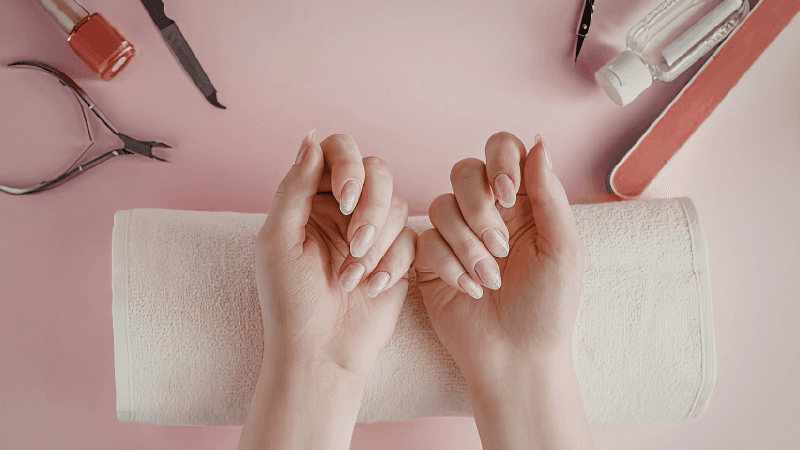
Nail care at home between nail appointments
Taking care of your nails at home between visits isn't a complicated ritual or a twenty-item checklist. It's a few simple habits that you either have or you don't. And they determine whether your manicure will last three weeks or peel after five days. The team at Alvibeauty Studio— a nail service in Kyiv, Dnipro, Kharkiv, Lviv, and other cities in Ukraine —has compiled everything that really works between visits.
Daily Minimum: 5 Habits That Work
Eighty percent of your nails' health depends on home care—not on what a nail technician does every three weeks. It sounds strange, but it's true. The technician creates the perfect foundation. You either maintain it or you don't.
- Oil only after . Apply one or two drops of cuticle oil to each nail, massaging gently—morning or evening, it doesn't matter. Pterygium grows back more slowly, the surrounding skin looks neat, and the finish lasts longer. This is the most cost-effective manicure investment of all.
- Use hand cream after every contact with water. Not just once a day, but every time. Water washes away oils from the skin and nail plate. Cream restores them. Keep a bottle by the sink—it's the only way to remember.
- Wear gloves when doing dishes, cleaning, and laundry. Household chemicals and water destroy top coats within a few days. Life hack: apply nourishing hand cream, put on gloves, and clean—your hands will be nourished and your manicure will be protected at the same time.
- Warm water, not hot. Hot water opens the pores and washes moisture out of the plate. The same applies to dishes and the shower.
- Use less antiseptics. Alcohol can dry out the nail plate if used frequently. Apply cream immediately after using antiseptic.
Once a week: easy home care
Once every 7-10 days, perform a short 15-minute ritual. Best done after a shower, when the skin is warm and the cuticles are soft.
Gently push back your cuticles with an orange stick. Don't cut them—just push them back. Remove dirt under the nail with a soft brush, not a file—the hard tip of a file can damage the connection between the nail and the nail bed.
If you need to adjust the shape, file in only one direction. Filing back and forth creates microcracks at the edge—this is where delamination begins.
Take a strengthening bath - 15 minutes once a week will noticeably change the condition of the nail plate in just a month.
5 mistakes that ruin your manicure and nails
In the previous article, we discussed why manicures and pedicures don't last: the causes and how to fix them —we covered both the technician's and the client's mistakes. This article focuses on what happens at home.
Peeling off the coating. The gel polish peeled off at the edge, and I picked it up with my finger. The top layer of the nail plate is removed along with the coating. After several such removals, the nail becomes thin and transparent. Remove only with a remover—at home or by a professional.
Trim your cuticles with scissors at home. The cuticle is a barrier that protects the nail growth area from bacteria. If you cut too deep, expect hangnails, inflammation, and uneven growth. At home, all you need is an orange stick and remover.
File in different directions. Only dry nails. After a bath or shower, the nail plate is softened, and filing in this state creates microcracks.
Wearing the coating too long. After four weeks, the coating's seal breaks under the grown nail. Moisture gets in, creating a perfect breeding ground for bacteria. Touching up every 3-4 weeks isn't a whim; it's biomechanics .
Apply oil or cream the day before your manicure. Oil penetrates the nail plate, and no degreaser will remove it completely. The result is poor adhesion and a shorter-lasting finish.
Baths and masks: 3 recipes from the kitchen
Do this once a week. Simple ingredients, real results.
- Baking soda and salt – for strengthening and protecting against fungus. 1 tablespoon sea salt (unscented) + 1 teaspoon baking soda + 500 ml warm water. Dissolve and soak your fingers for 15-20 minutes. Then apply cream or oil. Use 2-3 times a week for a course of 10 sessions. Sea salt saturates the cuticle with iodine, calcium, and magnesium. Baking soda softens the cuticle and acts as a mild antiseptic.
- Lemon-salt – for shine and toning down yellowness. 1 tablespoon of sea salt + juice of half a lemon + 500 ml of warm water. Leave for 10-15 minutes. Gently massage the remaining solution into your nails and cuticles, rinse with warm water, and apply cream. Use 1-2 times a week. Lemon juice removes yellowness from bright polishes and adds vitamin C.
- Oil with iodine – for growth and restoration. 2 tablespoons of warm olive oil + 3-4 drops of iodine alcohol solution + a few drops of vitamin E, if desired. Leave nails in for 20 minutes. Do not rinse – simply blot with a napkin. Wear cotton gloves overnight for maximum effect. Use 1-2 times a week. Iodine strengthens the nail plate and stimulates blood circulation in the growth zone.
From the Inside: Nutrition and Vitamins for Nails
No oil will help if your nails are weak from the inside. Nails are a mirror of your health. There are several signs: white spots indicate a zinc deficiency, splitting and brittleness indicate a biotin deficiency, slow growth indicates a metabolic disorder, and horizontal streaks indicate a gastrointestinal problem. If you notice anything alarming, consult a doctor first.
What really works from the inside: biotin (vitamin H) strengthens the nail plate. Zinc influences growth and structure. Calcium – from cottage cheese, cheese, almonds, and sesame paste. Omega-3 – from fatty fish, flaxseed oil, and walnuts.
Take vitamin supplements only after testing and consulting with a doctor. A fully healthy fingernail grows back in 3 months and a toenail in 6 months.
SPF on your hands: what everyone forgets
Hands are exposed to ultraviolet radiation every day—while driving, while walking, or by the office window. UV radiation destroys collagen in the skin of the hands and causes age spots. Everyone remembers about the face. No one remembers about the hands.
In summer: apply SPF 30+ cream to the backs of your hands before going outside. Reapply every two hours when outdoors. In winter: use a rich, nourishing cream to create a protective layer against wind and frost. Gloves made from natural materials—synthetics cause the skin to sweat and become dehydrated.
First aid: if your nail breaks
If you break a nail, the first rule is: don't break it any further. Don't pull or tear it off.
If the chip is small, carefully file the free edge in one direction to even out the shape. Apply a strengthening or clear coating to protect the edge from further chipping.
If your nail is deeply cracked, take it to a professional. They can restore it with acrylic powder or gel without removing the entire coating. If it gets caught on clothing and a piece breaks off, the same applies: file it down, don't pull.
When you need to see a specialist urgently, don't wait
There are situations when home care will not help and every day of delay aggravates the problem.
A green or dark color under the nail. This is pseudomonas, a bacteria that develops in the gap between the polish and the nail when exposed to moisture. You can't cover it up with a new polish. You need to remove it, treat it, and let the nail breathe.
The nail is separating from the nail bed (onycholysis). This is often a result of over-wearing or hormonal changes. It requires treatment—not a new coat of gel polish.
Inflammation, redness, or pain around the nail. This won't "go away on its own." See a nail technician or podiatrist, depending on the stage.
A good technician will redo your nails without question —and will notice things you don't see yourself. Alvibeauty technicians examine your nails and the surrounding skin at every visit, and if they notice any changes, they'll be honest with you before the procedure. You can read more about this in our blog article , "Online Manicure and Pedicure Appointments: Pros and Cons ."
Frequently asked questions about home nail care between nail appointments
How often should I apply cuticle oil?
Every day is the minimum. Ideally, morning and evening. Too much is never enough—1-2 drops per nail ensures complete absorption.
Is it possible to do baths with gel polish applied?
Yes, but not for long—up to 15 minutes. Long soaking softens the base. Oil baths are allowed without restrictions.
What should I do if my nails become thin after gel polish?
Take a 10-14 day break. Apply a keratin or calcium treatment, apply daily oil, and soak. After a month of regular care, the nail will regain its density.
Do you need a break from your manicure?
After 3-4 consecutive gel polish applications, preferably. For more information, see the article "How Often Can You Get a Manicure: Expert Recommendations ."
Do over-the-counter nail vitamins help? If there's a specific deficiency, yes. Biotin, for real brittle nails, shows results in 2-3 months. Without testing, it's not very effective.
Read also
This article concludes the series on nail care. If you want to delve deeper, here's what you should read.
1. Why does my manicure not last long?
2. How often should I get a manicure?
3. How to prepare for a manicure .
4. Hardware or combination manicure: what's the difference?
5. Nail care at home between nail salon visits
6. How to choose a manicurist in Kyiv: what to look for