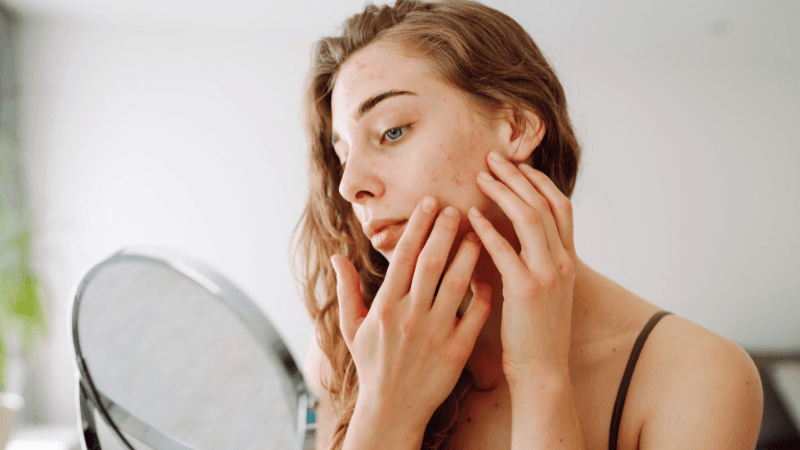
Why does my skin become dull and how can I improve my complexion?
Sometimes you don't notice right away. The breakouts haven't increased, my usual cream is still in the bathroom, but in the mirror my face looks a little gray.
Foundation doesn't really help, and without it, my skin simply feels like it lacks freshness. If dull skin has appeared, it's best to start not by buying another serum, but by asking yourself: what's changed in the last few weeks?
If you're having trouble figuring things out on your own, you can find a specialist in the AlviBeauty cosmetology section in Cherkasy .
Dullness is a description of appearance, not a separate diagnosis. One person might describe dull, dehydrated skin as dull, another might see a grayish tint, and a third might see a tired face after several nights of sleep deprivation. Therefore, the answer to the question of why skin is dull depends on what exactly has changed.
How to tell if your skin has really become dull
It's better to compare your face not with a photo from an advertisement, but with yourself a few months ago.
If your skin tone hasn't changed much, but it's rougher, matte, and looks worse under makeup, the condition of its surface may be the cause. Dry patches and small uneven areas make it appear less smooth.
It's a completely different story when the skin tone itself changes: the face appears gray, sallow, or unusually pale. This scenario shouldn't be automatically attributed to a lack of moisture.
There's a third possibility. Your skin looks more or less normal, but there are dark circles under your eyes, and your face appears tired from lack of sleep. In this case, the problem may not be your skin tone, but your overall tired appearance.
These conditions are easily confused. This leads to a common mistake: seeing a "gray face" and immediately starting to exfoliate more vigorously.
Why does facial skin become dull?
Dull skin is rarely caused by a single factor. It's much more helpful to remember when you first noticed the change.
The skin became drier
Sometimes, skin may not appear flaky yet, but after washing it feels tight, the skin tone is less even, and the surface feels less smooth. This can make the face appear more matte.
This is especially noticeable after a change of season, turning on the heating, or changing your routine.
If dryness, flakes, and irritation appear simultaneously, don't try to restore radiance with additional exfoliation. You need to address the dryness first.
There are too many active products in skin care
The scenario is quite common. The skin appears uneven—acidity is building up. You want to speed up the results, so you add a scrub or another exfoliant. After a while, your face no longer looks fresh, but drier and more sensitive.
At this point, it's easy to think your skin needs "an even better cleanse." In reality, it may need the opposite: a more gentle treatment.
Consider this option especially carefully if your dull complexion has appeared soon after a new product or an increase in the frequency of acids, retinoids, and exfoliation.
The usual rhythm of life has changed
A few weeks of sleep deprivation can quickly change the way a person perceives their face in the mirror. Dark circles, shadows, and uneven skin tone become more noticeable.
Smoking is also associated with premature skin changes. But looking for a single factor and blaming it for dullness isn't helpful. Often, several factors coincide: dry air, poor sleep, more aggressive skincare routines, and general stress.
Dull skin, tired face or flaking?
This is where you should stop before changing anything.
If the face looks worse primarily in the morning after poor sleep, and the main problem is around the eyes, it looks more like a tired look.
If your skin feels tight after washing, dry flakes are visible, and your foundation highlights certain areas, you need to address the dryness and flaking first.
With dullness, the complaint is usually different: the face has lost its freshness, the skin appears matte, the surface looks less even.
Sometimes everything happens at once. That's normal. The distinction isn't necessary for the sake of precise naming, but to avoid trying to solve every problem with acids and scrubs.
How to improve your complexion if it's due to skincare
If your skin is not inflamed, there is no significant irritation, and your complexion has not changed dramatically, first review your basic skincare routine.
- Observe what happens immediately after washing your face. If you experience persistent tightness, it's time to check your cleansing.
- Think about what active ingredients have appeared in recent weeks and whether you have increased the frequency of their use.
- Don't layer multiple exfoliation methods for faster results.
- Make sure your skincare routine includes sufficient hydration and daily sun protection.
- Evaluate changes not just in one morning, but based on the condition of your skin over time.
This approach sounds less impressive than the promise of “returning your radiance in three days,” but it helps you understand the reason.
If you want to know how to improve your complexion, the first question shouldn't be "what else should I apply?", but "what is my skin currently lacking or, conversely, overdoing it with?"
When exfoliation can help
If your skin is calm, not irritated, or flaky, gentle exfoliation can make the surface appear smoother.
The key word here is "calm."
Dullness alone doesn't mean there's a buildup of skin that needs to be removed. Sometimes, the cause is an overzealous desire to achieve smooth skin.
When is it better to avoid acids and scrubs?
A burning sensation after using your usual cream, noticeable redness, peeling, and increased sensitivity are a bad time for additional exfoliation.
In this situation, trying to achieve a healthy complexion faster can backfire. Skin becomes even drier and more irritated, and its surface appears less even.
If the reaction persists or intensifies, it is best not to continue home experiments.
Is a grey and sallow complexion also dullness?
Not always.
Phrases like "gray complexion," "sallow tone," and "dull skin" are often used to describe the same thing. But there's a difference between skin that has lost its smoothness and freshness and a true change in its natural color.
If your face simply appears matte, and after normal sleep or a change in your skincare routine, it gradually returns to its normal appearance, then it's often a question of the skin's external condition.
If the shade has noticeably changed, remains the same for a long time, and you cannot attribute this to care or seasonal dryness, you should not spend months choosing new jars.
This is especially true in cases where other changes in your health have occurred simultaneously. You can't determine the disease by your complexion, so online diagnosis lists won't help either. It's best to discuss the situation with your doctor.
Is it possible to even out skin tone with regular skincare?
It is important here not to mix different requests.
If by uneven tone you mean matte and dry areas, maintenance can actually make the surface look more uniform.
If we're talking about age spots, acne scars, or other noticeable discoloration in specific areas, that's a different matter. The question of how to even out skin tone is broader than just dullness, so one-size-fits-all advice isn't appropriate for all cases.
That's why, before looking for a product, it's helpful to determine what's bothering you: whether your entire skin has lost its freshness or whether certain areas of a different color have appeared.
What you definitely shouldn't do for the sake of "shine"
Tips for glowing skin often seem harmless until you start applying them all at once.
Lemon juice isn't a good facial treatment simply because of its acidity. Homemade mixtures can irritate skin, especially if it's already dry or sensitive.
Aggressive daily exfoliation doesn't automatically make your face look fresh. The more you scrub and "renew" irritated skin, the less it can tolerate your skincare routine.
You should also be cautious about explanations about "toxins" or the need for a special "skin detox." Such claims often lack a clear, verifiable reason.
The universal advice to drink a certain amount of water for radiance is a different story altogether. Adequate hydration is important for the body, but a glass of water won't automatically correct irritation from acids, drying cleansing, or any other specific cause of dullness.
How to restore a fresh look to your face without constantly changing makeup
When your face stops looking fresh, you might want to completely change your skincare routine. But starting over isn't usually necessary.
Look at recent changes. If dullness appeared after a new active product, it's logical to test it first rather than adding two more. If your skin becomes dry in winter, the cause may be much simpler. If the problem is more noticeable after several difficult weeks, your sleep schedule should also be considered.
Thus, it gradually becomes clear what exactly is preventing your face from regaining its fresh appearance.
If home remedies don't work, your skin continues to be irritated, or its color has actually changed, a specialist can help differentiate between a cosmetic issue and a situation that's best discussed with a doctor.
Frequently Asked Questions
Why does facial skin look dull even with good care?
Because the number of products alone doesn't guarantee anything. Sometimes a skincare routine is too intense: cleansing isn't suitable for your skin, acids are used too frequently, or several exfoliating products are added at once. It's important to evaluate not only the ingredients in your makeup bag but also how your skin reacts after each step.
How to quickly improve your complexion?
There's no universal timeframe. If the cause was dryness or an overly complex skincare regimen, the condition may gradually improve after adjusting it. If the skin tone has changed for another reason, cosmetics may not resolve the issue at all.
Can dry skin look dull?
Yes. When the surface becomes rougher and dry patches appear, the skin may appear dull and less fresh. If there is severe flaking, it's best to address that first.
Should I do a peeling if my skin has become dull?
Not necessarily. For calm skin, moderate exfoliation can make the surface appear smoother. If there's burning, irritation, or flaking, additional acids and scrubs can worsen the condition.